

Power in the Helping Professions (1971) is the Swiss Jungian analyst Adolf Guggenbühl-Craig’s book about a danger built into helping work: the helper’s drive for power, hidden inside real care. The German title is blunter: Macht als Gefahr beim Helfer, power as a danger in the helper. Social workers, doctors and therapists hold authority over people in pain, and the book asks what that authority does to them.
The book’s central image is a split. Guggenbühl-Craig treated healer and patient as two poles of one archetype that both people carry. Care turns into control when the helper keeps the healer pole and leaves the client only the role of patient. That is the thesis of this article: the safeguard against power in helping is not a more virtuous helper but one who stays in contact with their own wounds, which leaves room for the client’s own capacity to heal. Half a century later, research on therapists’ self-assessment and countertransference points at the same problem from another direction.
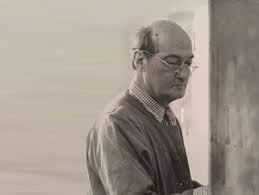
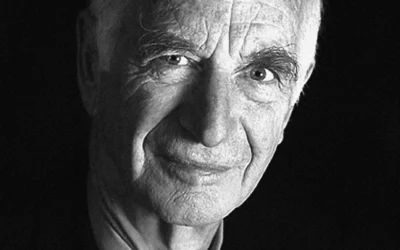
Who Adolf Guggenbühl-Craig was
Guggenbühl-Craig was born in Zurich in 1923 and died in 2008.12 His father, also named Adolf Guggenbühl, was a Zurich publisher. The son added the surname of his wife, the Scottish sculptor and singer Anne Craig, at her request and to distinguish himself from his father.3 He studied theology before turning to medicine and then spent four years in the United States, where, by the OPUS archive’s account, he received his training in psychiatry and psychotherapy. Back in Zurich he studied at the C.G. Jung Institute.13
He spent most of his career inside the institutions of analytical psychology. He was a training analyst and teacher at the Jung Institute, the school that Jung’s circle founded in Zurich in 1948, and for more than ten years he was president of its Curatorium, the institute’s governing board. He also served as president of the Swiss Society of Analytical Psychology and of the International Association for Analytical Psychology.12 He was a friend of James Hillman, the founder of archetypal psychology, and is usually grouped with Hillman’s archetypal school.3 His papers are held at OPUS Archives on the campus of Pacifica Graduate Institute in California.1
He came to the subject as a practicing clinician. In 1955 the Swiss medical publisher Karger brought out his German book on experiences with group psychotherapy in its Psychologische Praxis series, the same series that published Macht als Gefahr beim Helfer in 1971.45
An earlier version of this page carried his name in its title but described a different analyst, the London-based Jungian Gerhard Adler. Readers looking for Adler will find him in our profile of Gerhard Adler.
The argument of Power in the Helping Professions
The book is short, about 150 pages in its early English editions, and it speaks to anyone whose job gives them authority over a person in need.6 Spring Publications has kept it in print, including a 2004 edition with a foreword by John R. Haule and a revised third edition in 2021. The publisher’s summary says it teaches analysts “how to be aware of the subtle abuses of authority that can occur during therapy and counseling.”2
The starting observation is simple and uncomfortable. Helping relationships are unequal by design. The client arrives hurting, and the helper holds knowledge, status and sometimes legal power. Gianluca Cruciani, Marianna Liotti and Vittorio Lingiardi, reviewing research on why people become therapists, cite Guggenbühl-Craig for the point that the psychotherapeutic relationship is inevitably asymmetric, and they add that the asymmetry has to be carefully guarded and monitored.7
The important word in the publisher’s summary is “subtle.” The abuse in question is rarely open cruelty. It is power exercised in the name of the client’s good, which is exactly why it is hard for the helper to see from the inside. A helper who feels sure of acting for someone’s benefit has little reason to examine the satisfaction of being the one who decides.
The split archetype and the wounded healer
The idea underneath the book comes from Jung. In a 1951 essay, Jung wrote that a doctor’s own hurt gives the measure of his power to heal, and he called this the meaning of the Greek myth of the wounded physician.8 The figure usually linked to that myth is Chiron, the centaur who taught Asclepius medicine and suffered from a wound he could not cure.9
Guggenbühl-Craig turned the image into a model of the relationship. Healer and patient, in his account, are not two kinds of people but two poles of one archetype, and both are present in each person: within the physician there is a patient as well as a healer.69 The trouble starts when the archetype splits. The helper identifies with the healer pole alone and projects all the illness onto the client. The client, in turn, locates all the healing in the helper. Each becomes a one-sided figure. The helper grows inflated and always knows best. The client grows passive and waits to be fixed. What is left between them is a relationship organized around power.
The other half of the model matters as much. If the physician carries a patient, the patient also carries a healer. A split relationship leaves that capacity unused, because the person who is supposed to get better has been cast as the one who cannot do anything. A helper who keeps both poles alive, by staying aware of their own wounds and limits, makes room for the client’s healing pole to come into play.
The model traveled. C. Jess Groesbeck’s 1975 paper on the archetypal image of the wounded healer in the Journal of Analytical Psychology cites the book, and so does Laurence Kirmayer’s 2003 essay on the wounded-healer ethos in medicine.1011 Kirmayer traces that ethos through shamanism, where a healer’s calling and authority are tied to the healer’s own initiatory illness, and through the Asklepian healing cults of ancient Greece, and argues that it still bears on how clinicians are trained.11 Read through Guggenbühl-Craig, the old image works as a warning to modern professionals: a healer who forgets the wound stops healing and starts governing.
Myth and the shadow of cultural ideals
His later books apply the same move to culture at large. In each, he takes an image a society holds up as an ideal and asks what it costs the people who try to live it.
Die Ehe ist tot – lang lebe die Ehe!, translated by Murray Stein as Marriage—Dead or Alive (1977) and revised in 2008 as Marriage Is Dead—Long Live Marriage!, treats marriage as a place for individuation, which the publisher glosses as the difficult process of deepening one’s own self.212 Seelenwüsten (1980), published in English the same year as Eros on Crutches and reissued in 1999 as The Emptied Soul, approaches psychopathy as, in the publisher’s words, “not so much a deficiency of morality as it is crippled Eros,” and tries to understand the psychopath’s suffering as well as to help others protect themselves.213 It is a depth-psychological essay, not a research study, and should be read that way.
Die närrischen Alten (1986), translated by Dorothea Wilson as The Old Fool and the Corruption of Myth (1991), goes after the ideal of the wise elder. Spring’s summary says it relieves the old of having to be wise and the young of wisdom worship.214 My reading of the title, set beside his book on helpers, is that a myth is corrupted when an archetypal image such as the wise old man stops being a living image and becomes a standard people are measured against. From the Wrong Side (1995), edited and translated by Gary V. Hartman with a commentary by Sidney Handel, takes the “wrong side” of positions that psychology treats as correct.215
The common thread is the shadow of an ideal. The selfless helper, the happy marriage and the wise elder are all images a culture admires, and each, lived one-sidedly, hides its opposite. That is the same structure as the split archetype: an image stays healthy only when its other pole is kept in view.
What the research says about helpers
The archetype model is an interpretive framework, not a testable hypothesis, and no study has measured a “split archetype.” Several lines of research do describe the conditions Guggenbühl-Craig was worried about.
Helpers are often patients too. In a 2022 survey of faculty, graduate students and others affiliated with accredited clinical, counseling and school psychology programs, more than 80 percent of 1,692 respondents reported a lifetime history of mental-health difficulties and 48 percent reported a diagnosed disorder, rates similar to or higher than those in the general population.16 A review by Noga Zerubavel and Margaret O’Dougherty Wright described ways a therapist’s own struggles might benefit clinical work, along with potential vulnerabilities for some wounded healers: unstable recovery, trouble managing countertransference, compassion fatigue and professional impairment. They argued that the field’s silence about wounded healers breeds secrecy and shame.17 That is close to Guggenbühl-Craig’s point. The wound is not the danger; denying it is.
One survey suggests the inflation he described is not rare. When Steven Walfish and colleagues asked a multidisciplinary sample of mental health professionals to compare their skills with their peers’, 25 percent placed themselves at the 90th percentile and none rated themselves below average. They also overestimated how many of their clients improved and underestimated how many got worse.18
The helper’s own reactions affect outcome. Meta-analyses by Jeffrey Hayes, Charles Gelso and colleagues found that countertransference reactions were modestly linked to poorer outcomes (r = −.16), while successful countertransference management was linked to better ones (r = .39), with wide variation between studies. The management finding rests on only nine studies, and all of these are correlations, not proof of cause.19 None of this proves the archetype theory. It does suggest that many helpers carry wounds, that some overrate themselves, and that outcomes tend to be better when helpers manage their own reactions, which is the practical core of his book.
What this looks like in therapy
In a consulting room the split rarely looks like abuse. It looks like helpfulness. The therapist always has the next interpretation or technique ready. Disagreement from the client gets read as resistance. Decisions about the client’s life drift toward the therapist. The client becomes more deferential, brings what they think the therapist wants to hear, and feels better in sessions but not between them. The therapist privately assumes the work is going well.
The countermeasures are ordinary, which is part of their value. Routine progress feedback, in which clients rate their own symptoms during treatment, gives the client’s view a formal voice. A 2021 meta-analysis of 58 studies and 21,699 patients found a small benefit for symptom reduction (d = 0.15), including for clients who were not on track, and a small favorable effect on dropout.20 The effect is small, but it speaks directly to the self-assessment bias above.
Ruptures in the working relationship are another check. When the alliance strains, naming it and working it through together is associated with better outcomes: a meta-analysis of 11 studies found a moderate link between rupture repair and good outcomes (r = .29). Training therapists in rupture repair did not show a significant effect on outcomes, so the evidence for teaching the skill is weaker than the evidence for using it.21 Supervision, peer consultation and the therapist’s own therapy serve the same purpose. Studies summarized in a 2024 review put the share of therapists who have had personal therapy at roughly 75 to 87 percent.7
The client is not an object of treatment. Arthur Bohart and Karen Tallman’s How Clients Make Therapy Work describes therapy as a process of active self-healing in which the client does much of the work, a research-minded cousin of the patient’s inner healer.22 In Jungian work the split can also show up in images. A dream that casts the therapist as rescuer, judge or parent, or the therapist’s own wish to be needed, is material to talk about rather than a role to accept. For a picture of how Jungian analysis is actually conducted, June Singer’s practical account of Jungian analysis is still useful, and Robert A. Johnson’s short book on owning your shadow is a good companion for anyone who wants to look at their own.
The split also works inside helpers who come to therapy themselves. A physician, nurse or counselor who can only ever be the healer has nowhere to put exhaustion, grief or doubt. Our page on therapy for physicians and healthcare workers describes that work.
If you work in a helping profession and some of this is familiar, or if you have been on the receiving end of help that felt like control, it can be worth talking it through with someone outside the situation. Taproot Therapy Collective in Hoover offers Jungian depth therapy among other approaches, and you can contact us to ask whether it fits.
References
- OPUS Archives and Research Center. (n.d.). The Adolf Guggenbühl-Craig collection. Pacifica Graduate Institute. https://www.opusarchives.org/adolf-guggenbuhl-craig-collection/
- Spring Publications. (n.d.). Adolf Guggenbühl-Craig (1923–2008). https://www.springpublications.com/guggenbuhl.html
- Adolf Guggenbühl-Craig. (n.d.). In Wikipedia. Retrieved November 8, 2026, from https://en.wikipedia.org/wiki/Adolf_Guggenb%C3%BChl-Craig
- Guggenbühl-Craig, A. (1955). Erfahrungen mit Gruppenpsychotherapie. S. Karger. https://doi.org/10.1159/isbn.978-3-8055-0580-2
- Guggenbühl-Craig, A. (1971). Macht als Gefahr beim Helfer. S. Karger. https://doi.org/10.1159/isbn.978-3-8055-1214-5
- Guggenbühl-Craig, A. (1971). Power in the helping professions. Spring Publications.
- Cruciani, G., Liotti, M., & Lingiardi, V. (2024). Motivations to become psychotherapists: Beyond the concept of the wounded healer. Research in Psychotherapy: Psychopathology, Process and Outcome, 27(2), 808. https://doi.org/10.4081/ripppo.2024.808
- Jung, C. G. (1966). Fundamental questions of psychotherapy. In The practice of psychotherapy (R. F. C. Hull, Trans.; 2nd ed., The collected works of C. G. Jung, Vol. 16, para. 239). Princeton University Press. (Original work published 1951)
- Gramaglia, C., & Zeppegno, P. (2018). Medical students and suicide prevention: Training, education, and personal risks. Frontiers in Psychology, 9, 452. https://doi.org/10.3389/fpsyg.2018.00452
- Groesbeck, C. J. (1975). The archetypal image of the wounded healer. Journal of Analytical Psychology, 20(2), 122–145. https://doi.org/10.1111/j.1465-5922.1975.00122.x
- Kirmayer, L. J. (2003). Asklepian dreams: The ethos of the wounded-healer in the clinical encounter. Transcultural Psychiatry, 40(2), 248–277. https://doi.org/10.1177/1363461503402007
- Guggenbühl-Craig, A. (2008). Marriage is dead—long live marriage! (M. Stein, Trans.; 2nd rev. ed.). Spring Publications. (Original English edition published 1977 as Marriage—dead or alive)
- Guggenbühl-Craig, A. (1999). The emptied soul: On the nature of the psychopath (G. V. Hartman, Trans.). Spring Publications. (Original work published 1980)
- Guggenbühl-Craig, A. (1991). The old fool and the corruption of myth (D. Wilson, Trans.). Spring Publications. (Original work published 1986)
- Guggenbühl-Craig, A. (1995). From the wrong side: A paradoxical approach to psychology (G. V. Hartman, Ed. & Trans.). Spring Publications.
- Victor, S. E., Devendorf, A. R., Lewis, S. P., Rottenberg, J., Muehlenkamp, J. J., Stage, D. L., & Miller, R. H. (2022). Only human: Mental-health difficulties among clinical, counseling, and school psychology faculty and trainees. Perspectives on Psychological Science, 17(6), 1576–1590. https://doi.org/10.1177/17456916211071079
- Zerubavel, N., & Wright, M. O. (2012). The dilemma of the wounded healer. Psychotherapy, 49(4), 482–491. https://doi.org/10.1037/a0027824
- Walfish, S., McAlister, B., O’Donnell, P., & Lambert, M. J. (2012). An investigation of self-assessment bias in mental health providers. Psychological Reports, 110(2), 639–644. https://doi.org/10.2466/02.07.17.PR0.110.2.639-644
- Hayes, J. A., Gelso, C. J., Goldberg, S., & Kivlighan, D. M. (2018). Countertransference management and effective psychotherapy: Meta-analytic findings. Psychotherapy, 55(4), 496–507. https://doi.org/10.1037/pst0000189
- de Jong, K., Conijn, J. M., Gallagher, R. A. V., Reshetnikova, A. S., Heij, M., & Lutz, M. C. (2021). Using progress feedback to improve outcomes and reduce drop-out, treatment duration, and deterioration: A multilevel meta-analysis. Clinical Psychology Review, 85, 102002. https://doi.org/10.1016/j.cpr.2021.102002
- Eubanks, C. F., Muran, J. C., & Safran, J. D. (2018). Alliance rupture repair: A meta-analysis. Psychotherapy, 55(4), 508–519. https://doi.org/10.1037/pst0000185
- Bohart, A. C., & Tallman, K. (1999). How clients make therapy work: The process of active self-healing. American Psychological Association. https://doi.org/10.1037/10323-000














0 Comments