
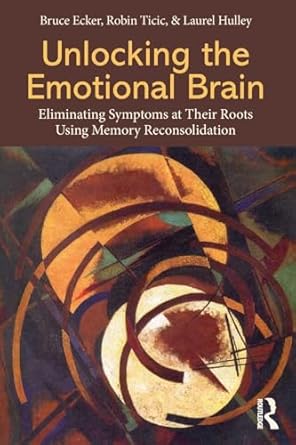
Coherence Therapy is an experiential psychotherapy developed by Bruce Ecker and Laurel Hulley that treats symptoms as the logical output of unconscious emotional learnings. It finds the specific learning that makes a symptom necessary, brings it into awareness, and then pairs it with lived experience that contradicts it, using the brain’s memory reconsolidation process so the old learning loses its hold.
Key takeaways
- Coherence Therapy, developed by Bruce Ecker and Laurel Hulley, treats symptoms as the coherent output of unconscious emotional learnings rather than as malfunctions.
- The method began as depth-oriented brief therapy in a 1996 Jossey-Bass book and was later renamed after its principle of symptom coherence.
- It applies memory reconsolidation: an old emotional learning is reactivated and paired with a vivid contradicting experience so the learning itself is revised.
- Ecker distinguishes transformational change, which revises the learning, from counteractive change, which only builds competing responses that can give way under stress.
- The 2024 edition of Ecker, Ticic and Hulley’s book argues that AEDP, EMDR, IFS, Somatic Experiencing and other therapies change people through the same sequence.
What is Coherence Therapy?
Coherence Therapy began as depth-oriented brief therapy, the name Ecker and Hulley gave it in their 1996 book Depth-Oriented Brief Therapy: How to Be Brief When You Were Trained to Be Deep, and Vice Versa.1 The subtitle states the aim: the focus and speed of brief therapy together with the depth of psychodynamic work. In 2012 Ecker, Robin Ticic and Hulley tied the method to the neuroscience of memory reconsolidation in a book that is now the standard account of the approach, with a second edition in 2024.23
Its central claim is that most symptoms are not malfunctions. Depression, anxiety, compulsive behaviour, procrastination, self-sabotage and many relationship patterns are produced, in this view, by emotional learnings that make sense given what the person lived through. The learning was formed in an emotionally intense or painful experience, usually early, and it now runs outside conscious awareness as a kind of rule about how life works and what must be done to stay safe.
From the emotional brain’s point of view, the symptom is therefore required. A person who stays depressed may be carrying a learning such as “if I come alive and want things, I will be crushed again.” Seen from inside that learning, flatness is protection. Until the learning itself changes, the brain keeps generating the symptom, however costly it has become.
Coherence Therapy works by helping the client find and feel that learning directly, in the session, and then setting up the conditions under which it can be revised. When it works, change does not depend on effort, coping skills or willpower to override the symptom. The symptom stops because the emotional knowledge that called for it is no longer believed at the level where it was learned.
What is emotional implicit memory?
Implicit memory is memory that shapes behaviour and feeling without being recalled as a memory. Emotional implicit memory holds learned expectations, bodily reactions and strategies formed in emotionally charged experience. A child who learned that crying brought contempt may grow into an adult who goes numb whenever grief starts, without remembering the lesson or knowing that a lesson is involved. Much of this is mediated by subcortical systems, including the amygdala circuits studied by Joseph LeDoux, which is why it can feel so automatic and so immune to argument.
Ecker and his colleagues use the term “emotional schema” or “target learning” for a single unit of this knowledge: a model of a problem and the solution the person found for it. In a 2007 paper in the Journal of Constructivist Psychology, Brian Toomey and Ecker set out how these personal constructs are carried in neural circuitry and why they behave like knowledge rather than like broken parts.4 That framing matters clinically, because knowledge can be revised by new knowledge, while a defect has to be managed.
Trauma sharpens the picture. A frightening event can lay down strong implicit learnings while the explicit, narrative memory of it stays fragmented, a split described in more detail in how trauma disrupts memory. Coherence Therapy targets the implicit layer directly.
How does memory reconsolidation work in Coherence Therapy?
For most of the twentieth century, neuroscience held that once a memory was consolidated it was fixed. Therapy could add new learning on top, as in extinction, but could not change the original. In 2000 Karim Nader, Glenn Schafe and Joseph LeDoux showed in rats that a consolidated fear memory, once reactivated, briefly became unstable again and needed new protein synthesis in the amygdala to be stored again. Blocking that synthesis after reactivation removed the conditioned fear.6 This restabilising process is called memory reconsolidation.
Human studies followed. Merel Kindt and colleagues found in 2009 that giving propranolol before reactivating a learned fear erased the startle response to it the next day, and the fear did not come back.7 Daniela Schiller and colleagues showed in 2010 that no drug was needed: extinction training given within the window that opens after a reminder prevented the return of fear, while the same training given hours later did not.8
Ecker’s contribution was to translate this laboratory work into a clinical sequence. Research showed that reactivation alone does not open a memory to revision. What destabilises it is a mismatch: the reactivated learning predicts one thing and the person experiences something that clearly contradicts it.10 In therapy that means two pieces of knowledge must be vividly present together: the old emotional learning, felt as true, and a living experience that shows it to be false. When the two are held side by side, the old learning is revised rather than merely outcompeted.
Ecker and Toomey called the result transformational change and distinguished it from counteractive change. Counteractive change builds new responses that compete with the symptom, such as coping skills or rehearsed rational thoughts, so the old learning stays intact and can return under stress. Transformational change revises the learning itself, so the symptom has nothing left to express.5
In 2015 Richard Lane, Lee Ryan, Lynn Nadel and Leslie Greenberg reached a similar conclusion from a different direction in Behavioral and Brain Sciences. They argued that the common mechanism of change across psychotherapies is the reactivation of old emotional memories, the introduction of new emotional experience in the present, and the reconsolidation of the memory with that new experience built in.9
What happens in a Coherence Therapy session?
Ecker, Ticic and Hulley describe the work as a sequence of discovery, integration and transformation, which they lay out in detailed steps.2 In practice it unfolds in four phases.
Symptom identification and evoking
The therapist first gets clear on exactly what the client wants to stop: when the symptom happens, what it feels like and what it costs. The symptom is then evoked in the room, so that the client is in contact with it rather than only describing it.
Retrieval of the emotional schema
Next comes the search for the learning that requires the symptom. The therapist uses experiential methods to bring that learning into explicit awareness, in the client’s own words and with its emotional charge. The aim is not an interpretation from outside but the client’s direct recognition: “Yes, that is what I know, deep down.”
Integration of contrary knowledge
Once the learning is in awareness, therapist and client look for knowledge that contradicts it. Sometimes it is already present in the client’s life. Sometimes it appears in the session, as when someone who learned that needing anyone leads to rejection feels the therapist’s steady presence while voicing that need. The old learning and the contradicting experience are then held together and the pairing is repeated, which is the step that triggers reconsolidation.
Verification of change
Finally the therapist checks whether the change has actually happened. The test is experiential: the cues that used to trigger the symptom are revisited, and the client notices whether the old emotional reaction still fires. Ecker lists three markers of a revised learning: the emotional reaction no longer reactivates, the symptom stops, and the change persists without effort to maintain it.10
The pace follows the client’s readiness. With an attuned therapist the process does not need to be overwhelming, even with traumatic material, because the client approaches the emotional truth of the symptom in manageable steps and with a sense of collaboration.
Key concepts and techniques in Coherence Therapy
- Symptom coherence. A symptom is produced coherently by the person’s own emotional learnings and is necessary according to them. This is the principle that gave the approach its name.
- Emotional implicit memory. The store of learnings and adaptive responses formed in intense or painful experience that operates largely outside awareness.
- Anti-symptom and pro-symptom positions. The anti-symptom position is the conscious stance: “I hate this, make it stop.” The pro-symptom position is the unconscious stance in which the symptom is urgently needed. Coherence Therapy works by finding and experiencing the pro-symptom position, the emotional truth inside the symptom.1
- Overt statement. A short, first-person, emotionally live sentence that puts the pro-symptom learning into words, spoken aloud to the therapist or to an imagined figure. Saying it plainly often lets the client feel its truth and its cost at the same time.
- Index card task. Between sessions the client may carry a card with the overt statement and read it daily. This keeps the newly found learning in awareness so it can meet contradicting experience in ordinary life.
- Juxtaposition experiences. Deliberately holding the old learning and a disconfirming experience in awareness together, the step that causes reconsolidation.
- Memory reconsolidation. The brain’s own process for revising an existing learning once it is reactivated and met with a mismatch.
Ecker and colleagues report using these methods with depression, anxiety and panic, trauma, low self-worth, perfectionism, compulsive behaviour, procrastination and couples’ problems, in brief and longer-term work with individuals, couples and families.2 A therapist might, for example, ask a perfectionist client to imagine handing in work that is merely adequate and to notice what feels dangerous about that. What emerges is often a sharp emotional fact, such as “if I am ordinary, I disappear,” and that fact becomes the target.
What is the research behind Coherence Therapy?
The research base has two parts. The first is the reconsolidation science on which the method rests. Since 2000, studies in animals and humans have shown that reactivated fear learning can be revised so that the fear does not return, a finding reviewed in detail by Ecker in 2015 and 2018.681011 Lane and colleagues extended the argument to psychotherapy in general.9
The second part is clinical. Coherence Therapy’s own literature consists mainly of detailed published case material: session transcripts and accounts of how the steps unfold, with follow-up showing whether the symptom stayed gone. Ecker and Toomey’s 2008 paper gives a step-by-step account of the method and of the neural operation it proposes.5 These cases are also how therapists are trained in the approach, because they show what the therapist actually says and why.
Ecker’s own position is that the important test is the verification markers in each case: if the emotional reaction is gone, the symptom has stopped and no effort is needed to keep it away, the target learning is no longer in force. That gives clinicians a concrete way to see whether the work has reached its target.
Where did Coherence Therapy come from?
Ecker and Hulley built the approach by studying sessions in which deep change happened quickly and asking what those moments had in common. The result drew on several earlier lineages.
- Constructivism. The idea that people actively build the meanings they live by, associated with George Kelly’s personal construct psychology, first set out in 1955.12 Coherence Therapy treats symptoms as expressions of such constructs, which is why its key papers appeared in the Journal of Constructivist Psychology.4
- Depth psychology. The recognition that unconscious processes and emotional complexes outside awareness drive behaviour, as in psychodynamic and Jungian psychology. The pro-symptom position resembles what Jung called a complex: a feeling-toned cluster of memory and meaning that acts on its own.
- Experiential therapies. Working with emotion in the present moment rather than talking about it, as in the Gestalt therapy of Fritz Perls and the focusing method of Eugene Gendlin, which attends to the bodily felt sense of a problem.
- Systemic therapies. Seeing problems as embedded in relationships and family patterns, the insight of family therapy. Many pro-symptom learnings turn out to protect a bond: staying small so a parent stays comfortable, staying ill so a family stays together.
- Neuroscience. Findings on memory, learning and reconsolidation that give the method a mechanism.
Coherence Therapy combines these strands around one organising idea: find the learning that makes the symptom necessary, and revise it through reconsolidation. It is an experiential, constructivist depth approach whose account of change is spelled out in terms of how memory works.
A timeline of Coherence Therapy
- Early 1990s. Ecker and Hulley study change events across therapeutic approaches to identify what produces rapid, deep change.
- 1996. Jossey-Bass publishes Depth-Oriented Brief Therapy, the first full statement of the method.1
- 2000. Nader, Schafe and LeDoux publish their reconsolidation findings in Nature, which opens a large research field.6
- 2000s. The approach is renamed Coherence Therapy, after its central principle of symptom coherence. Trainings spread, and in 2007 and 2008 Toomey and Ecker publish papers linking it to neuroplasticity and reconsolidation.45
- 2012. Ecker, Ticic and Hulley publish their account of the method as a clinical use of memory reconsolidation.2
- 2015 to 2018. Lane and colleagues propose reconsolidation as the common mechanism of change in psychotherapy, and Ecker publishes long reviews on how to translate reconsolidation research into clinical method.91011
- 2024. The second edition presents the same change sequence as a framework for unifying psychotherapy, with chapters showing it at work in AEDP, emotion-focused therapy, EMDR, Internal Family Systems, interpersonal neurobiology, ISTDP, Somatic Experiencing and ayahuasca-assisted therapy.3
The approach keeps developing through clinical experience and dialogue with other schools. Its later work is less about promoting one brand of therapy than about naming a change process that skilled therapists in many traditions already use.
How does Coherence Therapy relate to other therapies?
A nonpathologising stance
Coherence Therapy grew partly as a reaction against the medical model’s habit of treating symptoms as defects to be suppressed. It honours the coherence and protective purpose of a symptom, in line with humanistic, constructivist and postmodern approaches that work with a client’s own meaning-making. Our writing on going beyond the biomedical model makes a related argument.
Experiential process
Like other experiential therapies, it treats felt, embodied experience in the present as the place where change happens, rather than intellectual insight alone. Insight about a learning does not revise it. Feeling the learning while also feeling its contradiction does.
A shared mechanism across schools
The 2024 edition argues that therapies as different as AEDP, ISTDP, EMDR, Internal Family Systems and Somatic Experiencing produce lasting change when they carry out the same steps: reactivate an emotional learning, bring in a vivid mismatch, and repeat the pairing.3 It also reads Daniel Siegel’s interpersonal neurobiology in these terms. On this account, the differences between schools are mostly differences in how they find the learning and how they supply the contradiction.
Efficiency without manuals
Because it aims at the root learning, Coherence Therapy is often brief, which appeals in a field under pressure to show results quickly. It offers a middle path between the depth of psychodynamic work and the brevity of newer models. At the same time it runs against the trend toward standardised, manualised protocols. Its sequence is precise, but what the therapist says at each step depends on the particular person’s learning, so it depends on the therapist’s attunement and creativity rather than a script. That fits a wider critique of treating manuals as the measure of good therapy, discussed in deconstructing the evidence-based practice paradigm.
The approach is transtheoretical: it offers a way to understand the deep, lasting shifts that good psychotherapy has always produced, while staying in conversation with current memory science.
How do therapists use Coherence Therapy ideas at Taproot?
Coherence Therapy’s main lesson for a therapist is a change of question. Instead of asking how to get rid of a symptom, we ask what the symptom is doing for the person and what they would have to feel if it stopped. That question opens up stuck depression, anxiety that does not respond to reassurance, self-sabotage, shame, perfectionism and relationship patterns that repeat however much insight the person has.
At Taproot we work with this same logic of emotional learning through several methods. In Brainspotting and EMDR, a client holds an activated memory or body state while new present-moment experience enters, which closely matches the reactivation and mismatch steps. In parts work, a protective part is understood as carrying exactly the kind of pro-symptom learning Coherence Therapy describes, and it changes when it experiences that the old danger has passed. Somatic approaches attend to the bodily side of the same learnings, and Jungian work listens for the complex beneath the symptom.
What these share with Coherence Therapy is respect for the symptom as an intelligent response and the conviction that change comes from experience, not lectures. Clients often feel relief when a symptom they have fought for years turns out to make sense.
Coherence Therapy shows that the emotional brain is not irrational: it follows what it learned. If you want to work with the learnings behind a symptom in this way, you can contact Taproot Therapy Collective to talk with one of our therapists.
Frequently asked questions
Who created Coherence Therapy?
Coherence Therapy was created by the psychotherapists Bruce Ecker and Laurel Hulley. They first published it as depth-oriented brief therapy in 1996 and later renamed it Coherence Therapy. In 2012 Ecker, Robin Ticic and Hulley linked the method to memory reconsolidation research in their book on the emotional brain, which appeared in a second edition in 2024.
What is the pro-symptom position in Coherence Therapy?
In Coherence Therapy the pro-symptom position is the unconscious emotional stance in which a symptom is necessary, for example the felt knowledge that staying invisible keeps you safe from humiliation. It contrasts with the anti-symptom position, the conscious wish to be rid of the problem. The therapist helps the client find and feel the pro-symptom position so it can be revised.
How is Coherence Therapy different from CBT?
Coherence Therapy does not try to correct thoughts or build coping skills to override a symptom. It looks for the emotional learning that makes the symptom necessary, brings it into felt awareness, and pairs it with an experience that contradicts it. Ecker calls the result transformational change, as opposed to counteractive change that leaves the original learning in place.
What is memory reconsolidation in therapy?
Memory reconsolidation is the process by which a reactivated memory becomes briefly changeable before being stored again. Laboratory work by Nader, Schafe and LeDoux in 2000 and later human studies showed that reactivated fear learning can be revised. In therapy, Coherence Therapy and other experiential approaches use it by evoking an old emotional learning and pairing it with a vivid mismatch.
What problems can Coherence Therapy help with?
Ecker and colleagues describe using Coherence Therapy with depression, anxiety and panic, trauma, low self-worth, perfectionism, compulsive behaviour, procrastination and couples’ conflicts. It suits problems that persist despite insight and effort, because it targets the unconscious emotional learning that keeps the symptom going rather than the symptom itself.
Related reading
- The Developmental Model of Couples Therapy: Origins, Techniques, and Modern Relevance
- Attachment-Based Family Therapy (ABFT): A Comprehensive Overview
- The Transformative Power of Clean Language and Symbolic Modeling in Psychotherapy
- Rational Emotive Behavior Therapy: Creating Psychotherapy Change Quickly
- Unveiling Systemic Constellations: A Comprehensive Guide to Family Healing Through Generational Insights
- Psychobiological Approach to Couple Therapy (PACT): A Comprehensive Guide to Relationship Healing
References
- Ecker, B., & Hulley, L. (1996). Depth-oriented brief therapy: How to be brief when you were trained to be deep, and vice versa. Jossey-Bass.
- Ecker, B., Ticic, R., & Hulley, L. (2012). Unlocking the emotional brain: Eliminating symptoms at their roots using memory reconsolidation. Routledge. https://doi.org/10.4324/9780203804377
- Ecker, B., Ticic, R., & Hulley, L. (2024). Unlocking the emotional brain: Memory reconsolidation and the psychotherapy of transformational change (2nd ed.). Routledge. https://doi.org/10.4324/9781003231431
- Toomey, B., & Ecker, B. (2007). Of neurons and knowings: Constructivism, coherence psychology, and their neurodynamic substrates. Journal of Constructivist Psychology, 20(3), 201-245. https://doi.org/10.1080/10720530701347860
- Ecker, B., & Toomey, B. (2008). Depotentiation of symptom-producing implicit memory in coherence therapy. Journal of Constructivist Psychology, 21(2), 87-150. https://doi.org/10.1080/10720530701853685
- Nader, K., Schafe, G. E., & LeDoux, J. E. (2000). Fear memories require protein synthesis in the amygdala for reconsolidation after retrieval. Nature, 406(6797), 722-726. https://doi.org/10.1038/35021052
- Kindt, M., Soeter, M., & Vervliet, B. (2009). Beyond extinction: Erasing human fear responses and preventing the return of fear. Nature Neuroscience, 12(3), 256-258. https://doi.org/10.1038/nn.2271
- Schiller, D., Monfils, M.-H., Raio, C. M., Johnson, D. C., LeDoux, J. E., & Phelps, E. A. (2010). Preventing the return of fear in humans using reconsolidation update mechanisms. Nature, 463(7277), 49-53. https://doi.org/10.1038/nature08637
- Lane, R. D., Ryan, L., Nadel, L., & Greenberg, L. (2015). Memory reconsolidation, emotional arousal, and the process of change in psychotherapy: New insights from brain science. Behavioral and Brain Sciences, 38, e1. https://doi.org/10.1017/S0140525X14000041
- Ecker, B. (2015). Memory reconsolidation understood and misunderstood. International Journal of Neuropsychotherapy, 3(1), 2-46. https://doi.org/10.12744/ijnpt.2015.0002-0046
- Ecker, B. (2018). Clinical translation of memory reconsolidation research: Therapeutic methodology for transformational change by erasing implicit emotional learnings driving symptom production. International Journal of Neuropsychotherapy, 6(1), 1-92. https://doi.org/10.12744/ijnpt.2018.0001-0092
- Kelly, G. A. (1955). The psychology of personal constructs. W. W. Norton.













0 Comments