Esther Harding and the Reclamation of the Feminine in Depth Psychology

by | Jul 10, 2024 | 0 comments

Esther Harding Jungian Analyst

The Matriarch of American Jungianism

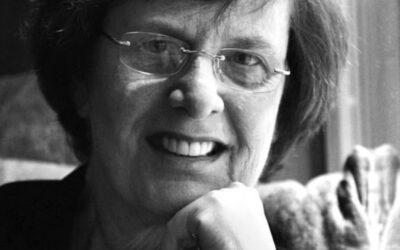
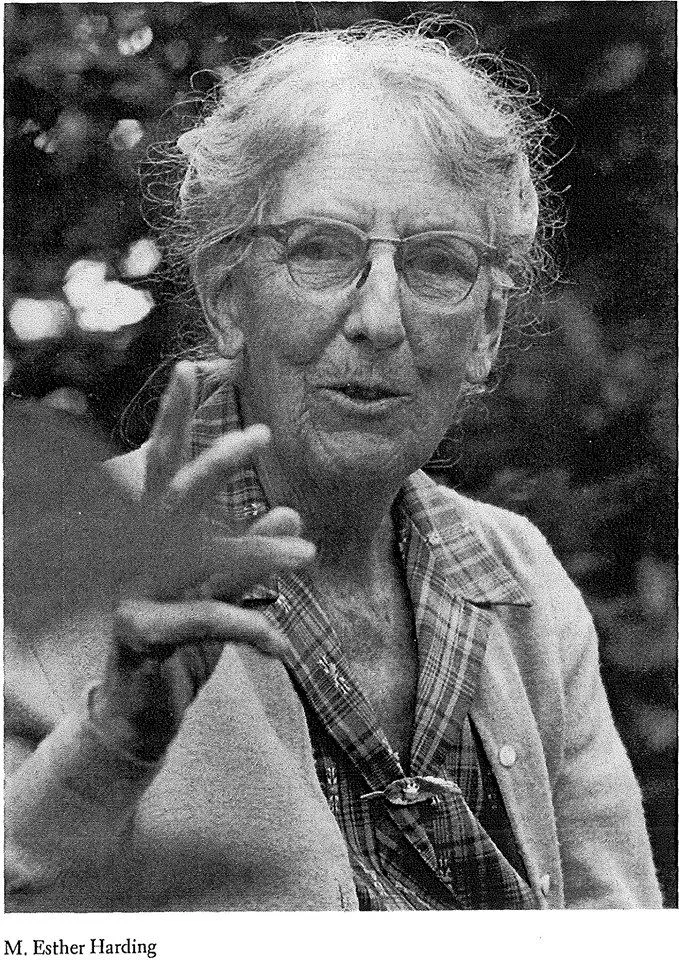
In the 1920s, a British doctor traveled to Zurich to meet Carl Jung. She was seeking a cure for her own depression, but what she found was a vocation. M. Esther Harding (1888–1971) became one of Jung’s most important students and the primary force behind the establishment of Analytical Psychology in the United States.

Harding was a feminist before the term was popular. She realized that Jung’s theories, while brilliant, were often male-centric. She dedicated her life to exploring the feminine principle (Eros) and how modern women could navigate the path of individuation without imitating men. Her book The Way of All Women remains a classic guide to feminine psychology.

Biography & Timeline: Esther Harding

Born in Shropshire, England, Harding trained as a medical doctor, a rare achievement for a woman in the early 20th century. After her analysis with Jung, she moved to New York City, where she became the center of a vibrant Jungian community. She co-founded the C.G. Jung Foundation of New York and the Analytical Psychology Club.

She never married, devoting her life to her work and her deep, lifelong friendship with fellow analyst Eleanor Bertine. Together, they established the first Jungian training program in America. Harding was known for her sharp intellect, her clinical rigor, and her insistence that the “inner work” was not a luxury but a necessity for the survival of civilization.

Key Milestones in the Life of Esther Harding

Year Event / Publication
1888 Born in Shropshire, England.
1922 Travels to Zurich to begin analysis with C.G. Jung.
1924 Moves to New York City and begins analytic practice.
1933 Publishes The Way of All Women, a bestseller translated into many languages.
1935 Publishes Woman’s Mysteries: Ancient and Modern.
1947 Publishes Psychic Energy: Its Source and Its Transformation.
1971 Dies in London while on holiday.

Major Concepts: The Virgin and the Moon

Virginity as Psychological wholeness

Harding redefined the concept of “virginity.” In ancient times, a “virgin” goddess was not a woman who abstained from sex, but a woman who was one-in-herself. She did not belong to a husband or father.

The Insight: For modern women, recovering “psychological virginity” means reclaiming the parts of the soul that have been given away to relationships or social expectations. It is the capacity to be whole regardless of relationship status.

Moon Myths and Feminine Cycles

In Woman’s Mysteries, Harding explored the symbolism of the Moon. Unlike the Sun (which is constant and heroic), the Moon changes. It waxes and wanes. Harding argued that feminine consciousness is cyclical, governed by rhythm rather than linear progress. Understanding this helps women honor their changing moods and energies as natural tides rather than pathology.

The Conceptualization of Trauma: The Loss of Instinct

Harding viewed neurosis as a loss of connection to instinct. In her book Psychic Energy, she explained that trauma dams up the natural flow of libido (life energy). The energy does not disappear; it regresses into the unconscious and activates archaic, infantile patterns.

Transformation of Instinct

Healing involves re-contacting these dammed-up energies. However, we cannot simply “let them out” (which would be chaos). We must transform them through symbols. For example, rage can be transformed into creative power; lust can be transformed into relationship. This is the alchemical work of psychotherapy.

Legacy: The Foundation of Community

Esther Harding did more than write books; she built institutions. She ensured that Jungian psychology in America had a home, a library, and a training program. She was the “introvert” who built an extraverted structure to hold the work.

Her legacy teaches us that individuation is not a selfish act. By becoming whole, we become capable of true relationship and community building. As she wrote, “The creation of a new consciousness is the task of the individual, but the fruit of that task belongs to the world.”


Bibliography

  • Harding, M. E. (1933). The Way of All Women. Longmans, Green and Co.
  • Harding, M. E. (1935). Woman’s Mysteries: Ancient and Modern. Longmans, Green and Co.
  • Harding, M. E. (1947). Psychic Energy: Its Source and Its Transformation. Pantheon Books.
  • Harding, M. E. (1965). The “I” and the “Not-I”: A Study in the Development of Consciousness. Bollingen Series.

Explore More on Feminine Psychology

Explore the Other Articles by Categories on Our Blog 

David Bohm: The Physicist Who Saw Mind in Matter

David Bohm: The Physicist Who Saw Mind in Matter

The Heretic of Copenhagen David Bohm (1917-1992) committed what many physicists considered an unforgivable sin: he took quantum mechanics seriously as a description of reality, not just a calculation tool. While the Copenhagen interpretation (Bohr, Heisenberg)...

The Neuroscience of Disassociation

The Neuroscience of Disassociation

The unitary nature of consciousness is the most persistent intuition of human experience. We feel like a single protagonist in a continuous narrative. Yet, for the trauma survivor, this intuition is often a lie. As therapists, we are often the first to witness the...

Who Is Gerald Edelman?

Who Is Gerald Edelman?

Discover Nobel Laureate Gerald Edelman’s Neural Darwinism, a revolutionary theory applying evolutionary principles to the brain’s development and consciousness.

Bill O’Hanlon: The Therapist Who Asked “How Do People Get Happy?”

Bill O’Hanlon: The Therapist Who Asked “How Do People Get Happy?”

Bill O’Hanlon, MS, LMFT, studied with Milton Erickson as his only work/study student (serving as Erickson’s gardener) before co-founding Solution-Oriented/Possibility Therapy in the 1980s. Author of nearly 40 books including the Oprah-featured “Do One Thing Different” and foundational “In Search of Solutions” with Michele Weiner-Davis, O’Hanlon delivered over 3,700 presentations worldwide teaching his collaborative, non-pathologizing approach asking “How do people get happy?” rather than “What’s wrong?” He retired from clinical practice in 2020 to pursue professional songwriting from Santa Fe, New Mexico.

Diane Poole Heller: From Trauma Survivor to Pioneer of Attachment Healing

Diane Poole Heller: From Trauma Survivor to Pioneer of Attachment Healing

Diane Poole Heller, PhD, transformed her own 1988 traumatic car accident into a pioneering career developing DARe (Dynamic Attachment Re-patterning experience), a somatic approach integrating attachment theory and trauma resolution now taught worldwide. After 25 years as Senior Faculty for Peter Levine’s Somatic Experiencing Institute, she created Trauma Solutions and authored The Power of Attachment, teaching that regardless of childhood history, people can develop Secure Attachment Skills through attuned relationships, body-based interventions, and recognizing we’re all biologically hardwired for connection and healing.

Laurence Heller: The Clinical Psychologist Who Mapped How Developmental Trauma Distorts Identity

Laurence Heller: The Clinical Psychologist Who Mapped How Developmental Trauma Distorts Identity

Laurence Heller, PhD, spent over 40 years in private practice recognizing that developmental trauma creates not just nervous system dysregulation but fundamental identity distortions—pervasive shame, self-judgment, and disconnection from authentic self. He developed the NeuroAffective Relational Model (NARM), now taught worldwide, mapping five adaptive survival styles arising from disrupted developmental needs (Connection, Attunement, Trust, Autonomy, Love-Sexuality) and providing framework for healing through disidentification from survival-based identities while working simultaneously with psychology and physiology within attuned therapeutic relationships.

Bruce Perry: From Branch Davidian Waco to “What Happened to You?” – Three Decades Translating Neuroscience into Healing for Maltreated Children

Bruce Perry: From Branch Davidian Waco to “What Happened to You?” – Three Decades Translating Neuroscience into Healing for Maltreated Children

Bruce Perry developed the Neurosequential Model after treating children who survived the 1993 Branch Davidian siege in Waco. His three decades translating neuroscience into practical trauma treatment culminated in the #1 bestseller What Happened to You? with Oprah Winfrey. Perry’s fundamental insight: childhood behavior reflects developmental adaptation to environment rather than defect requiring correction, revolutionizing how thousands of professionals understand trauma.

Judith Herman: The Psychiatrist Who Named Complex Trauma and Challenged a Field’s Convenient Amnesia

Judith Herman: The Psychiatrist Who Named Complex Trauma and Challenged a Field’s Convenient Amnesia

Judith Herman, Harvard psychiatrist, transformed trauma treatment by distinguishing complex PTSD from single-incident trauma and articulating the three-stage recovery model emphasizing safety, remembrance, and reconnection. Her 1992 Trauma and Recovery challenged psychiatry’s “convenient amnesia” about sexual violence, while 2023’s Truth and Repair reimagines justice as healing rather than punishment, asking what survivors actually need: acknowledgment, validation, and community witness rather than retribution.

Gabor Maté: From Budapest Ghetto to Voice of Compassion in Addiction’s Darkest Corners

Gabor Maté: From Budapest Ghetto to Voice of Compassion in Addiction’s Darkest Corners

Gabor Maté, Holocaust survivor turned physician, spent twelve years treating severe addictions in Vancouver’s poorest neighborhood, asking “why the pain?” rather than “why the addiction?” His revolutionary recognition that addiction serves to escape unbearable emotions rooted in childhood trauma, detailed in bestseller In the Realm of Hungry Ghosts, transformed understanding of substance abuse from moral failing to developmental injury.

David Grand: From EMDR Trainer to Brainspotting Pioneer Through a Champion Skater’s Frozen Gaze

David Grand: From EMDR Trainer to Brainspotting Pioneer Through a Champion Skater’s Frozen Gaze

David Grand discovered brainspotting in 2003 when a figure skater’s eye wobble revealed where trauma was stored in her brain. By maintaining fixed eye position on that “brainspot” rather than using bilateral movement, processing accelerated dramatically. His development of this approach, now used by 13,000+ therapists worldwide, demonstrates how careful clinical observation combined with willingness to deviate from protocol can produce genuine therapeutic innovation for treating trauma, the yips, and performance blocks.

Richard Schwartz: From Failed Bulimia Study to Discovering the Internal Family System

Richard Schwartz: From Failed Bulimia Study to Discovering the Internal Family System

Richard Schwartz discovered Internal Family Systems in 1982 when bulimic clients described distinct “parts” battling inside them, leading him to recognize the mind’s natural multiplicity. His development of IFS therapy, which helps Self lead an internal family of managers protecting against exiled pain and firefighters dousing emotional flames, has revolutionized how millions understand their inner conflicts. From failed outcome study to global therapeutic movement, Schwartz demonstrated that beneath protective parts, everyone possesses undamaged Self capable of healing.

Francine Shapiro: From Cancer Diagnosis to Revolutionary Trauma Treatment Through Eye Movements

Francine Shapiro: From Cancer Diagnosis to Revolutionary Trauma Treatment Through Eye Movements

Francine Shapiro discovered EMDR during a walk in 1987 when she noticed eye movements reduced disturbing thoughts. Her development of Eye Movement Desensitization and Reprocessing revolutionized trauma treatment, creating the first therapy to demonstrate rapid resolution of PTSD through bilateral stimulation activating the brain’s adaptive information processing system. Now recommended by WHO and DOD, EMDR has helped millions worldwide process traumatic memories that talking therapy couldn’t reach.

Janina Fisher: Revolutionizing Trauma Treatment Through Structural Dissociation and Parts Work

Janina Fisher: Revolutionizing Trauma Treatment Through Structural Dissociation and Parts Work

Janina Fisher revolutionized complex trauma treatment by integrating structural dissociation theory with parts work and somatic interventions. Discover her Trauma-Informed Stabilization Treatment (TIST) approach showing how recognizing fragmented selves as protective adaptations rather than pathology transforms healing for clients with treatment-resistant symptoms including self-harm, addiction, and chronic suicidality.

The Architecture of the Soul and the Machine: A Critical History and Future of Psychotherapy

The Architecture of the Soul and the Machine: A Critical History and Future of Psychotherapy

A critical deep dive into the hidden history of psychotherapy, exploring how the personal traumas of founders like Freud and Jung collided with societal forces to shape modern mental health. Drawing on the works of Adam Curtis, James Hillman, and Sonu Shamdasani, this article traces the shift from the “architecture of the soul” to the “technocratization of care,” exposing the impact of profit motives and algorithmic logic while proposing a metamodern path forward for the profession.

Peter Levine: The Biophysicist Who Taught Trauma to Speak Through the Body

Peter Levine: The Biophysicist Who Taught Trauma to Speak Through the Body

Peter Levine revolutionized trauma treatment through Somatic Experiencing, proving trauma lives in the body’s nervous system. Discover how his work on completing frozen defensive responses, titration, and the SIBAM model provides somatic grounding for Jungian depth psychology and transforms PTSD healing.

0 Comments

Submit a Comment

Your email address will not be published. Required fields are marked *