Lionel Corbett: Exploring the Psyche, Spirituality, and the Sacred

by | Jul 9, 2024 | 0 comments

Lionel Corbett Jungian Analyst

The Psychologist of the Sacred

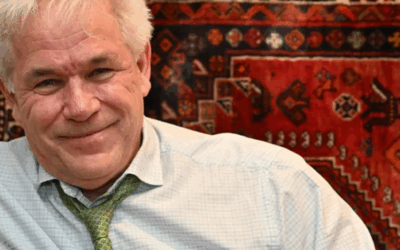
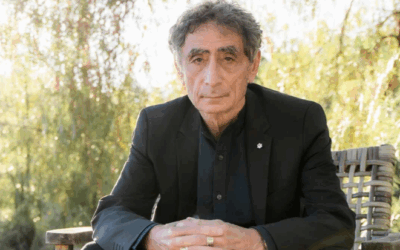
In a secular age, many people feel spiritually homeless. They cannot return to the dogmas of traditional religion, yet they cannot live in the cold emptiness of materialism. Lionel Corbett (b. 1945) is the Jungian analyst who speaks most directly to this condition. He argues that we do not need a priest or a church to experience the divine; the psyche itself is a “religious organ.”

Corbin’s work focuses on the Religious Function of the Psyche. He suggests that the “numinous” (the feeling of awe and sacredness) is a natural psychological event, not a supernatural one. By attending to our dreams, symptoms, and synchronicities, we can have a direct, personal encounter with the sacred—a “spirituality without religion.”

Biography & Timeline: Lionel Corbett

Born in England, Corbett trained as a psychiatrist before becoming a Jungian analyst. He moved to the United States and became a core faculty member at Pacifica Graduate Institute, where he has influenced a generation of depth psychologists. His background in medicine gives his work a grounded, clinical rigor, while his training in Jungian analysis allows him to explore the heights of spiritual experience.

Corbett is a bridge between the clinical and the mystical. He challenges the pathologizing tendency of modern psychiatry, arguing that many “symptoms” (like anxiety or depression) are actually the psyche’s attempt to break through the ego’s defenses and initiate a spiritual awakening.

Key Milestones in the Life of Lionel Corbett

Year Event / Publication
1945 Born in England.
1970s Trains in medicine and psychiatry; becomes a Jungian analyst.
1996 Publishes The Religious Function of the Psyche.
2011 Publishes The Sacred Cauldron: Psychotherapy as a Spiritual Practice.
2016 Publishes The Soul in Anguish: Psychotherapeutic Approaches to Suffering.

Major Concepts: The Numinous and the Personal God-Image

The Religious Function of the Psyche

Corbett argues that the psyche produces religious imagery (mandalas, gods, demons) just as naturally as the body produces blood cells. This is not a “defense mechanism” (as Freud thought) but a primary instinct.

The Insight: We don’t have to “believe” in God; we have to experience the God-image that the psyche presents to us. This shifts spirituality from faith (belief in something external) to gnosis (knowledge of something internal).

The Personal God-Image

Traditional religion offers a collective God-image (e.g., Yahweh, Jesus, Allah). Corbett suggests that in the process of individuation, we develop a personal God-image. This image evolves as we grow. A child’s God-image might be a stern father; an adult’s God-image might be a loving presence or a cosmic void.

The Conceptualization of Trauma: The Soul in Anguish

In The Soul in Anguish, Corbett addresses the problem of suffering. He rejects the idea that suffering is always “meaningful” or “God’s will.” Sometimes, suffering is just suffering. However, the response to suffering can be soulful.

He views trauma not just as a breakdown of the ego, but as an injury to the Self (the divine spark). Healing involves not just symptom reduction, but repairing the connection to the Self. Therapy becomes a “sacred cauldron” where the lead of trauma is transmuted into the gold of consciousness.

Legacy: Spirituality for the Modern Skeptic

Lionel Corbett provides a path for the “spiritual but not religious.” He validates the experiences of those who find the sacred in nature, art, or relationships rather than in church.

His legacy is the democratization of the divine. He teaches that the burning bush is not just in the Bible; it is in your dream from last night. The voice of God is not just in the scripture; it is in your intuition. He invites us to become the priests of our own inner temples.


Bibliography

  • Corbett, L. (1996). The Religious Function of the Psyche. Routledge.
  • Corbett, L. (2011). The Sacred Cauldron: Psychotherapy as a Spiritual Practice. Chiron Publications.
  • Corbett, L. (2015). The Soul in Anguish: Psychotherapeutic Approaches to Suffering. Chiron Publications.
Explore More on Psychology and Religion

Explore the Other Articles by Categories on Our Blog 

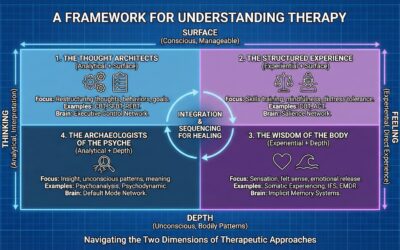
Understanding How the Different Types of Therapy Fit Together

Understanding How the Different Types of Therapy Fit Together

You've tried therapy before. Maybe it helped a little. Maybe you spent months talking about your childhood without anything changing. Maybe you learned coping skills that worked until they didn't. Maybe the therapist was nice but you left each session feeling like...

Somatic Reset Techniques You Can do At Home

Somatic Reset Techniques You Can do At Home

Written by the clinical team at Taproot Therapy Collective, a Birmingham psychotherapy practice specializing in somatic and trauma-focused modalities. Our clinicians are trained in body-based approaches including Brainspotting, EMDR, and somatic trauma resolution....

David Bohm: The Physicist Who Saw Mind in Matter

David Bohm: The Physicist Who Saw Mind in Matter

The Heretic of Copenhagen David Bohm (1917-1992) committed what many physicists considered an unforgivable sin: he took quantum mechanics seriously as a description of reality, not just a calculation tool. While the Copenhagen interpretation (Bohr, Heisenberg)...

Who Is Johnjoe McFadden?

Who Is Johnjoe McFadden?

Explore Johnjoe McFadden’s CEMI field theory, which proposes that consciousness arises from the brain’s electromagnetic field, solving the binding problem and explaining free will.

Bill O’Hanlon: The Therapist Who Asked “How Do People Get Happy?”

Bill O’Hanlon: The Therapist Who Asked “How Do People Get Happy?”

Bill O’Hanlon, MS, LMFT, studied with Milton Erickson as his only work/study student (serving as Erickson’s gardener) before co-founding Solution-Oriented/Possibility Therapy in the 1980s. Author of nearly 40 books including the Oprah-featured “Do One Thing Different” and foundational “In Search of Solutions” with Michele Weiner-Davis, O’Hanlon delivered over 3,700 presentations worldwide teaching his collaborative, non-pathologizing approach asking “How do people get happy?” rather than “What’s wrong?” He retired from clinical practice in 2020 to pursue professional songwriting from Santa Fe, New Mexico.

Diane Poole Heller: From Trauma Survivor to Pioneer of Attachment Healing

Diane Poole Heller: From Trauma Survivor to Pioneer of Attachment Healing

Diane Poole Heller, PhD, transformed her own 1988 traumatic car accident into a pioneering career developing DARe (Dynamic Attachment Re-patterning experience), a somatic approach integrating attachment theory and trauma resolution now taught worldwide. After 25 years as Senior Faculty for Peter Levine’s Somatic Experiencing Institute, she created Trauma Solutions and authored The Power of Attachment, teaching that regardless of childhood history, people can develop Secure Attachment Skills through attuned relationships, body-based interventions, and recognizing we’re all biologically hardwired for connection and healing.

Laurence Heller: The Clinical Psychologist Who Mapped How Developmental Trauma Distorts Identity

Laurence Heller: The Clinical Psychologist Who Mapped How Developmental Trauma Distorts Identity

Laurence Heller, PhD, spent over 40 years in private practice recognizing that developmental trauma creates not just nervous system dysregulation but fundamental identity distortions—pervasive shame, self-judgment, and disconnection from authentic self. He developed the NeuroAffective Relational Model (NARM), now taught worldwide, mapping five adaptive survival styles arising from disrupted developmental needs (Connection, Attunement, Trust, Autonomy, Love-Sexuality) and providing framework for healing through disidentification from survival-based identities while working simultaneously with psychology and physiology within attuned therapeutic relationships.

Bruce Perry: From Branch Davidian Waco to “What Happened to You?” – Three Decades Translating Neuroscience into Healing for Maltreated Children

Bruce Perry: From Branch Davidian Waco to “What Happened to You?” – Three Decades Translating Neuroscience into Healing for Maltreated Children

Bruce Perry developed the Neurosequential Model after treating children who survived the 1993 Branch Davidian siege in Waco. His three decades translating neuroscience into practical trauma treatment culminated in the #1 bestseller What Happened to You? with Oprah Winfrey. Perry’s fundamental insight: childhood behavior reflects developmental adaptation to environment rather than defect requiring correction, revolutionizing how thousands of professionals understand trauma.

Judith Herman: The Psychiatrist Who Named Complex Trauma and Challenged a Field’s Convenient Amnesia

Judith Herman: The Psychiatrist Who Named Complex Trauma and Challenged a Field’s Convenient Amnesia

Judith Herman, Harvard psychiatrist, transformed trauma treatment by distinguishing complex PTSD from single-incident trauma and articulating the three-stage recovery model emphasizing safety, remembrance, and reconnection. Her 1992 Trauma and Recovery challenged psychiatry’s “convenient amnesia” about sexual violence, while 2023’s Truth and Repair reimagines justice as healing rather than punishment, asking what survivors actually need: acknowledgment, validation, and community witness rather than retribution.

Gabor Maté: From Budapest Ghetto to Voice of Compassion in Addiction’s Darkest Corners

Gabor Maté: From Budapest Ghetto to Voice of Compassion in Addiction’s Darkest Corners

Gabor Maté, Holocaust survivor turned physician, spent twelve years treating severe addictions in Vancouver’s poorest neighborhood, asking “why the pain?” rather than “why the addiction?” His revolutionary recognition that addiction serves to escape unbearable emotions rooted in childhood trauma, detailed in bestseller In the Realm of Hungry Ghosts, transformed understanding of substance abuse from moral failing to developmental injury.

David Grand: From EMDR Trainer to Brainspotting Pioneer Through a Champion Skater’s Frozen Gaze

David Grand: From EMDR Trainer to Brainspotting Pioneer Through a Champion Skater’s Frozen Gaze

David Grand discovered brainspotting in 2003 when a figure skater’s eye wobble revealed where trauma was stored in her brain. By maintaining fixed eye position on that “brainspot” rather than using bilateral movement, processing accelerated dramatically. His development of this approach, now used by 13,000+ therapists worldwide, demonstrates how careful clinical observation combined with willingness to deviate from protocol can produce genuine therapeutic innovation for treating trauma, the yips, and performance blocks.

Richard Schwartz: From Failed Bulimia Study to Discovering the Internal Family System

Richard Schwartz: From Failed Bulimia Study to Discovering the Internal Family System

Richard Schwartz discovered Internal Family Systems in 1982 when bulimic clients described distinct “parts” battling inside them, leading him to recognize the mind’s natural multiplicity. His development of IFS therapy, which helps Self lead an internal family of managers protecting against exiled pain and firefighters dousing emotional flames, has revolutionized how millions understand their inner conflicts. From failed outcome study to global therapeutic movement, Schwartz demonstrated that beneath protective parts, everyone possesses undamaged Self capable of healing.

Francine Shapiro: From Cancer Diagnosis to Revolutionary Trauma Treatment Through Eye Movements

Francine Shapiro: From Cancer Diagnosis to Revolutionary Trauma Treatment Through Eye Movements

Francine Shapiro discovered EMDR during a walk in 1987 when she noticed eye movements reduced disturbing thoughts. Her development of Eye Movement Desensitization and Reprocessing revolutionized trauma treatment, creating the first therapy to demonstrate rapid resolution of PTSD through bilateral stimulation activating the brain’s adaptive information processing system. Now recommended by WHO and DOD, EMDR has helped millions worldwide process traumatic memories that talking therapy couldn’t reach.

Janina Fisher: Revolutionizing Trauma Treatment Through Structural Dissociation and Parts Work

Janina Fisher: Revolutionizing Trauma Treatment Through Structural Dissociation and Parts Work

Janina Fisher revolutionized complex trauma treatment by integrating structural dissociation theory with parts work and somatic interventions. Discover her Trauma-Informed Stabilization Treatment (TIST) approach showing how recognizing fragmented selves as protective adaptations rather than pathology transforms healing for clients with treatment-resistant symptoms including self-harm, addiction, and chronic suicidality.

0 Comments

Submit a Comment

Your email address will not be published. Required fields are marked *