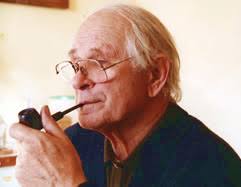
Michael Fordham: Integrating Developmental Psychology with Analytical Psychology

by | Jul 8, 2024 | 0 comments

Michael Fordham Jungian Analyst

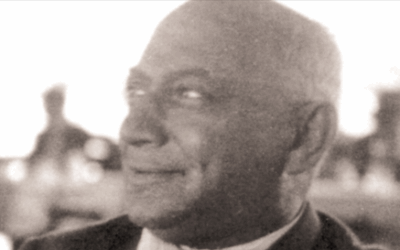
The Architect of the Developmental School

In the world of analytical psychology, Michael Fordham (1905–1995) is the figure who dared to bring Carl Jung down from the mythic clouds and into the nursery. While the classical school in Zurich focused on alchemy, adult individuation, and the collective unconscious, Fordham asked a practical, burning question: How does the Self manifest in an infant?

Fordham is the father of the “Developmental School” of Jungian analysis. He bridged the gap between Jung’s archetypal theories and the object-relations theories of British psychoanalysts like Donald Winnicott and Melanie Klein. His work fundamentally altered how we understand childhood, arguing that the infant is not just a “primitive” state of unconsciousness, but a complete human being with a functioning Self from birth.

Biography & Timeline: Michael Fordham

Born in Kensington, London, Fordham trained as a doctor at Cambridge and St Bartholomew’s Hospital. His early interest was in neurology, but he soon realized that the physical brain could not explain the complexities of the mind. He began analysis with a Jungian in 1933 and met Jung himself shortly after. They developed a close, albeit sometimes contentious, relationship.

Fordham was a driving force in professionalizing Jungian analysis in the UK. He co-founded the Society of Analytical Psychology (SAP) in 1946 and served as the editor of the English edition of Jung’s Collected Works. Unlike many Jungians who treated Jung’s word as gospel, Fordham was an empiricist; if Jung’s theory didn’t match the clinical data (especially with children), Fordham rewrote the theory.

Key Milestones in the Life of Michael Fordham

Year Event / Publication
1905 Born in Kensington, London.
1933 Begins analysis and meets C.G. Jung.
1946 Co-founds the Society of Analytical Psychology (SAP).
1957 Publishes New Developments in Analytical Psychology.
1969 Publishes Children as Individuals, challenging classical Jungian views on childhood.
1976 Publishes The Self and Autism, a groundbreaking study on the defenses of the early self.
1995 Dies in London, leaving behind a thriving developmental school.

Major Concepts: The Primary Self and De-integration

The Primary Self vs. The Uroboros

The classical view, championed by Erich Neumann, held that the infant exists in a state of “Uroboric identity”—a blissful, unconscious fusion with the mother. Fordham rejected this. Based on his observations of infants, he argued for the Primary Self.

He believed that the Self (the archetype of wholeness) is present at birth. The infant is not a blank slate or a fragment of the mother; they are a whole person with their own archetypal potential waiting to unfold.

De-integration and Re-integration

If the Self is whole at birth, how do we interact with the world? Fordham proposed a rhythmic cycle:

  • De-integration: The Self “unpacks” a part of itself to meet the environment. For example, the “hunger” drive de-integrates to seek the breast.
  • Re-integration: After the experience (feeding), the energy returns to the Self, enriching it with memory and structure.

This pulsation is the heartbeat of psychic growth. Trauma occurs when this rhythm is disrupted—when the environment (Mother) fails to meet the de-integrating self, leaving the infant’s energy hanging in a void.

The Conceptualization of Trauma: Defenses of the Self

Fordham’s most profound clinical contribution was his understanding of early trauma and autism. He argued that when the environment is too hostile or chaotic, the infant’s Self cannot de-integrate safely.

The Defenses of the Self

To survive, the psyche creates rigid barriers. In his book The Self and Autism, Fordham described how the Self can turn inward, creating an impenetrable shell to preserve its core. In therapy, this manifests as a patient who is “unreachable” or who treats the therapist as an object rather than a person.

Clinical Implication: Healing requires the therapist to endure this rejection and slowly create a holding environment safe enough for the patient to risk de-integration again. This mirrors the temenos or sacred space required in all depth work.

Syntonic Countertransference

Fordham revolutionized how analysts use their own feelings. He distinguished between “illusory countertransference” (the analyst’s own baggage) and syntonic countertransference.

Definition: The analyst feels in their own body what the patient cannot yet feel. If the patient is dissociated from their rage, the analyst might feel a sudden, inexplicable anger. Fordham taught that this is not a mistake; it is an organ of perception. The analyst “metabolizes” this affect for the patient.

Legacy: The Developmental School

Michael Fordham split the Jungian world, but in doing so, he saved it from irrelevance. By integrating Jung with developmental science, he made Analytical Psychology a viable treatment for severe personality disorders, childhood trauma, and psychosis—conditions that classical analysis often avoided.

His legacy lives on in the “London School” of Jungian analysis, which emphasizes the analysis of the transference, the importance of infancy, and the rigorous study of the clinical interaction. He taught us that individuation does not begin at 40; it begins at the first breath.


Bibliography

  • Fordham, M. (1957). New Developments in Analytical Psychology. Routledge.
  • Fordham, M. (1969). Children as Individuals. Hodder & Stoughton.
  • Fordham, M. (1976). The Self and Autism. Karnac Books.
  • Fordham, M. (1985). Explorations into the Self. Academic Press.
  • Fordham, M. (1993). The Making of an Analyst: A Memoir. Free Association Books.
Explore More on Jungian Analysts

Explore the Other Articles by Categories on Our Blog 

Gabor Maté: From Budapest Ghetto to Voice of Compassion in Addiction’s Darkest Corners

Gabor Maté: From Budapest Ghetto to Voice of Compassion in Addiction’s Darkest Corners

Gabor Maté, Holocaust survivor turned physician, spent twelve years treating severe addictions in Vancouver’s poorest neighborhood, asking “why the pain?” rather than “why the addiction?” His revolutionary recognition that addiction serves to escape unbearable emotions rooted in childhood trauma, detailed in bestseller In the Realm of Hungry Ghosts, transformed understanding of substance abuse from moral failing to developmental injury.

David Grand: From EMDR Trainer to Brainspotting Pioneer Through a Champion Skater’s Frozen Gaze

David Grand: From EMDR Trainer to Brainspotting Pioneer Through a Champion Skater’s Frozen Gaze

David Grand discovered brainspotting in 2003 when a figure skater’s eye wobble revealed where trauma was stored in her brain. By maintaining fixed eye position on that “brainspot” rather than using bilateral movement, processing accelerated dramatically. His development of this approach, now used by 13,000+ therapists worldwide, demonstrates how careful clinical observation combined with willingness to deviate from protocol can produce genuine therapeutic innovation for treating trauma, the yips, and performance blocks.

Richard Schwartz: From Failed Bulimia Study to Discovering the Internal Family System

Richard Schwartz: From Failed Bulimia Study to Discovering the Internal Family System

Richard Schwartz discovered Internal Family Systems in 1982 when bulimic clients described distinct “parts” battling inside them, leading him to recognize the mind’s natural multiplicity. His development of IFS therapy, which helps Self lead an internal family of managers protecting against exiled pain and firefighters dousing emotional flames, has revolutionized how millions understand their inner conflicts. From failed outcome study to global therapeutic movement, Schwartz demonstrated that beneath protective parts, everyone possesses undamaged Self capable of healing.

Francine Shapiro: From Cancer Diagnosis to Revolutionary Trauma Treatment Through Eye Movements

Francine Shapiro: From Cancer Diagnosis to Revolutionary Trauma Treatment Through Eye Movements

Francine Shapiro discovered EMDR during a walk in 1987 when she noticed eye movements reduced disturbing thoughts. Her development of Eye Movement Desensitization and Reprocessing revolutionized trauma treatment, creating the first therapy to demonstrate rapid resolution of PTSD through bilateral stimulation activating the brain’s adaptive information processing system. Now recommended by WHO and DOD, EMDR has helped millions worldwide process traumatic memories that talking therapy couldn’t reach.

Janina Fisher: Revolutionizing Trauma Treatment Through Structural Dissociation and Parts Work

Janina Fisher: Revolutionizing Trauma Treatment Through Structural Dissociation and Parts Work

Janina Fisher revolutionized complex trauma treatment by integrating structural dissociation theory with parts work and somatic interventions. Discover her Trauma-Informed Stabilization Treatment (TIST) approach showing how recognizing fragmented selves as protective adaptations rather than pathology transforms healing for clients with treatment-resistant symptoms including self-harm, addiction, and chronic suicidality.

Peter Levine: The Biophysicist Who Taught Trauma to Speak Through the Body

Peter Levine: The Biophysicist Who Taught Trauma to Speak Through the Body

Peter Levine revolutionized trauma treatment through Somatic Experiencing, proving trauma lives in the body’s nervous system. Discover how his work on completing frozen defensive responses, titration, and the SIBAM model provides somatic grounding for Jungian depth psychology and transforms PTSD healing.

Who Was James Hillman?

Who Was James Hillman?

An in-depth look at James Hillman, the founder of Archetypal Psychology, exploring his “Acorn Theory,” his critique of modern therapy, and his enduring influence on soul-centered practice.

Murray Stein: The Architect of Individuation

Murray Stein: The Architect of Individuation

A comprehensive profile of Murray Stein, the leading modern voice in Jungian psychology. Explore his “Map of the Soul,” his insights on the midlife crisis, and his role in bringing depth psychology to the 21st century.

The Giants of Behavioral Psychology Lives Legacies and Clinical Foundations

The Giants of Behavioral Psychology Lives Legacies and Clinical Foundations

Explore the lives discoveries and lasting influence of the six giants of behavioral psychology including Pavlov Thorndike Watson Skinner Wolpe and Bandura. Learn how their groundbreaking research on classical conditioning operant conditioning systematic desensitization and social learning theory shaped modern evidence-based psychotherapy and continues to inform clinical practice today.

Albert Bandura: The Psychologist Who Revealed the Power of Observation and Belief

Albert Bandura: The Psychologist Who Revealed the Power of Observation and Belief

Explore the life and transformative contributions of Albert Bandura, the Canadian-American psychologist whose Bobo doll experiments and self-efficacy theory revolutionized our understanding of how people learn and change. Discover how his research on observational learning, social cognitive theory, and beliefs about personal capability continues to shape psychotherapy, education, health behavior, and our understanding of human potential.

Joseph Wolpe: The Pioneer Who Taught Us How to Unlearn Fear

Joseph Wolpe: The Pioneer Who Taught Us How to Unlearn Fear

The history of psychotherapy is filled with discoveries that emerged from unusual circumstances, and few are more striking than the origins of systematic desensitization. During World War II, a young South African physician named Joseph Wolpe was assigned to treat...

B.F. Skinner: The Architect of Operant Conditioning and Modern Behavioral Science

B.F. Skinner: The Architect of Operant Conditioning and Modern Behavioral Science

Explore the life and revolutionary contributions of B.F. Skinner, the psychologist who developed operant conditioning and transformed our understanding of how consequences shape behavior. Learn how his research on reinforcement schedules, the Skinner box experiments, and behavioral principles laid the foundation for Applied Behavior Analysis, educational technology, and evidence-based behavioral interventions that continue to help millions of people today.

John B. Watson: The Revolutionary Who Transformed Psychology

John B. Watson: The Revolutionary Who Transformed Psychology

Discover the revolutionary life and controversial legacy of John B. Watson, the American psychologist who founded behaviorism and transformed psychology from a philosophical discipline into an experimental science. Learn about the famous Little Albert experiment, Watson’s radical vision for psychology, and how his work laid the foundations for modern behavior therapy despite profound ethical concerns that continue to shape research standards today.

Edward Thorndike: The Architect of Consequence

Edward Thorndike: The Architect of Consequence

Explore the lives discoveries and lasting influence of the six giants of behavioral psychology including Pavlov Thorndike Watson Skinner Wolpe and Bandura. Learn how their groundbreaking research on classical conditioning operant conditioning systematic desensitization and social learning theory shaped modern evidence-based psychotherapy and continues to inform clinical practice today.

Ivan Pavlov: The Accidental Revolutionary

Ivan Pavlov: The Accidental Revolutionary

It is one of the great ironies of scientific history that the father of behavioral psychology never considered himself a psychologist at all. Ivan Petrovich Pavlov was a physiologist consumed by the mechanical workings of the digestive system. He viewed the body as an...

0 Comments

Submit a Comment

Your email address will not be published. Required fields are marked *