Michael Meade: Mythopoetic Wisdom for a Troubled World

by | Jul 10, 2024 | 0 comments

Michael Meade Mythopoetic Wisdom

The Mythologist of the Broken World

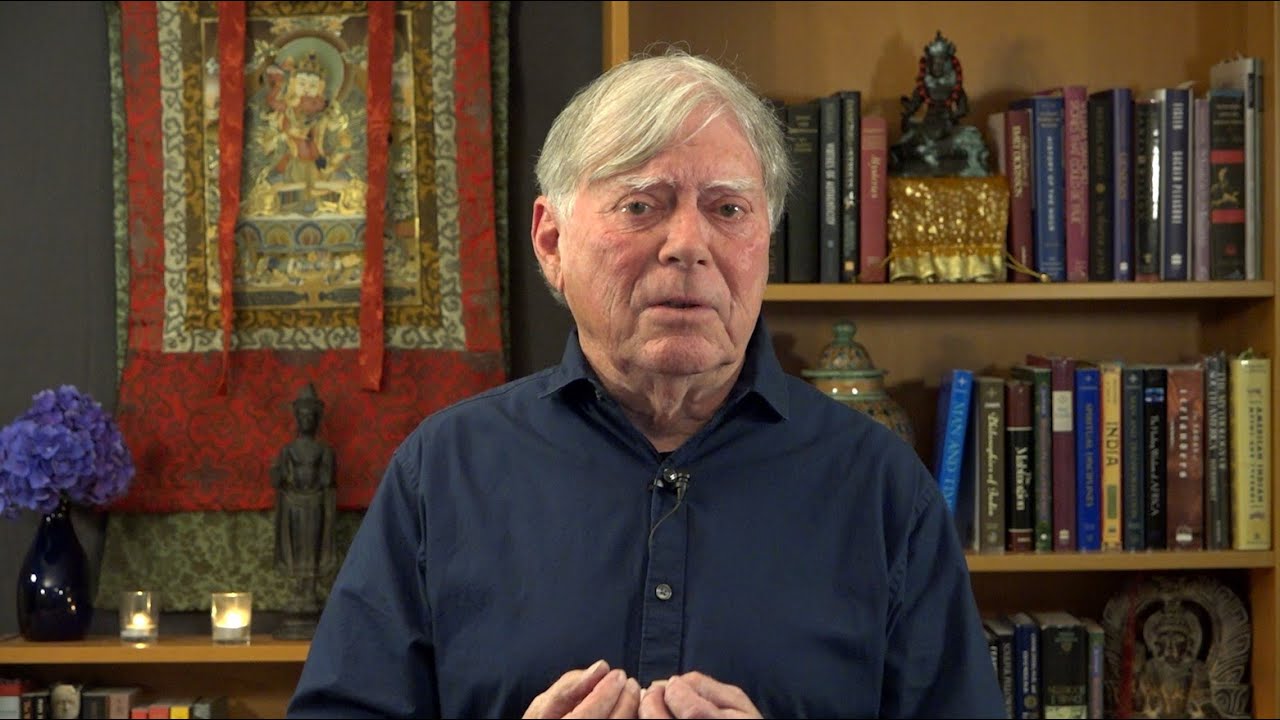
In a culture obsessed with facts and data, Michael Meade (b. 1944) reminds us that we are creatures of story. A renowned storyteller, mythologist, and author, Meade argues that when a society loses its myths, it loses its soul. Without a “mythic imagination,” we become trapped in literalism, unable to see the hidden meaning in our personal and collective crises.

Meade was a central figure in the Men’s Movement of the 1990s alongside Robert Bly and James Hillman. However, his work extends far beyond gender. He works with at-risk youth, veterans, and communities in crisis, using the ancient technology of myth to turn trauma into “medicine.” He teaches that every person is born with a “genius”—a unique spirit that must be awakened through initiation.

Biography & Timeline: Michael Meade

Born in New York City to an Irish-American family, Meade grew up in the streets. His early life was a collision between the tough reality of gang culture and the poetic heritage of his ancestors. A pivotal moment came during the Vietnam War era. Drafted into the army, he refused to fight, engaging in a hunger strike that led to his discharge. This experience of standing alone against a massive system catalyzed his understanding of the individual’s “fate.”

He spent years studying mythology, anthropology, and psychology, eventually founding the Mosaic Multicultural Foundation. This non-profit brings mentors and storytellers to incarcerated youth and veterans, proving that the oldest stories are often the most relevant to modern pain.

Key Milestones in the Life of Michael Meade

Year Event / Publication
1944 Born in New York City.
1960s Conscientious objector to the Vietnam War; begins study of mythology.
1993 Publishes Men and the Water of Life, a seminal text on male initiation.
1996 Founds the Mosaic Multicultural Foundation.
2010 Publishes Fate and Destiny: The Two Agreements of the Soul.
2016 Publishes The Genius Myth.

Major Concepts: Genius and the Water of Life

The Genius Myth

Meade challenges the modern idea that “genius” is reserved for the ultra-intelligent (like Einstein). Drawing on Roman mythology, he explains that everyone has a genius—a tutelary spirit or inner daimon that accompanies them into life.

The Core Idea: We are not blank slates. We are “seeded” with a unique pattern. Depression and anxiety often stem from this inner genius being ignored or suppressed. Healing is the process of uncovering this original seed.

Fate vs. Destiny

In Fate and Destiny, Meade distinguishes between two forces:

  • Fate: The circumstances you are given (your family, your body, your trauma). You cannot choose your fate.
  • Destiny: What you do with your fate. Destiny is the “destination” your soul wants to reach.

Trauma recovery involves accepting one’s fate so that it can be transmuted into destiny. As Meade says, “The wound is the place where the light enters you.”

The Conceptualization of Trauma: The Rough Initiation

Meade views trauma not as a medical disorder, but as a Rough Initiation. In indigenous cultures, initiation rites were designed to “cook” the soul, breaking the ego’s attachment to childhood comfort. In modern society, we have eliminated these rituals.

Therefore, the psyche seeks initiation through unconscious means: addiction, violence, accidents, or sudden loss. Trauma is a failed or unsupervised initiation. The goal of therapy (or “mentoring”) is to complete the initiation—to help the person harvest the wisdom from the darkness they survived.

Legacy: Weaving the World Back Together

Michael Meade’s legacy is the restoration of community through story. He teaches that when we share our “wounds” in a ritualized setting, they become “gifts” to the village.

He reminds us that we are living in a time of “unraveling.” Institutions are failing, and the climate is shifting. But in mythology, the end of a world is always the beginning of a new one. The job of the awakened person is to find the “thread” of their own genius and help weave the world back together.


Bibliography

  • Meade, M. (1993). Men and the Water of Life: Initiation and the Tempering of Men. HarperSanFrancisco.
  • Meade, M. (2010). Fate and Destiny: The Two Agreements of the Soul. Greenfire Press.
  • Meade, M. (2016). The Genius Myth. Greenfire Press.
  • Meade, M. (2019). Awakening the Soul: A Deep Response to a Troubled World. Greenfire Press.

Explore More on Myth and Initiation

Explore the Other Articles by Categories on Our Blog 

David Grand: From EMDR Trainer to Brainspotting Pioneer Through a Champion Skater’s Frozen Gaze

David Grand: From EMDR Trainer to Brainspotting Pioneer Through a Champion Skater’s Frozen Gaze

David Grand discovered brainspotting in 2003 when a figure skater’s eye wobble revealed where trauma was stored in her brain. By maintaining fixed eye position on that “brainspot” rather than using bilateral movement, processing accelerated dramatically. His development of this approach, now used by 13,000+ therapists worldwide, demonstrates how careful clinical observation combined with willingness to deviate from protocol can produce genuine therapeutic innovation for treating trauma, the yips, and performance blocks.

Richard Schwartz: From Failed Bulimia Study to Discovering the Internal Family System

Richard Schwartz: From Failed Bulimia Study to Discovering the Internal Family System

Richard Schwartz discovered Internal Family Systems in 1982 when bulimic clients described distinct “parts” battling inside them, leading him to recognize the mind’s natural multiplicity. His development of IFS therapy, which helps Self lead an internal family of managers protecting against exiled pain and firefighters dousing emotional flames, has revolutionized how millions understand their inner conflicts. From failed outcome study to global therapeutic movement, Schwartz demonstrated that beneath protective parts, everyone possesses undamaged Self capable of healing.

Francine Shapiro: From Cancer Diagnosis to Revolutionary Trauma Treatment Through Eye Movements

Francine Shapiro: From Cancer Diagnosis to Revolutionary Trauma Treatment Through Eye Movements

Francine Shapiro discovered EMDR during a walk in 1987 when she noticed eye movements reduced disturbing thoughts. Her development of Eye Movement Desensitization and Reprocessing revolutionized trauma treatment, creating the first therapy to demonstrate rapid resolution of PTSD through bilateral stimulation activating the brain’s adaptive information processing system. Now recommended by WHO and DOD, EMDR has helped millions worldwide process traumatic memories that talking therapy couldn’t reach.

Janina Fisher: Revolutionizing Trauma Treatment Through Structural Dissociation and Parts Work

Janina Fisher: Revolutionizing Trauma Treatment Through Structural Dissociation and Parts Work

Janina Fisher revolutionized complex trauma treatment by integrating structural dissociation theory with parts work and somatic interventions. Discover her Trauma-Informed Stabilization Treatment (TIST) approach showing how recognizing fragmented selves as protective adaptations rather than pathology transforms healing for clients with treatment-resistant symptoms including self-harm, addiction, and chronic suicidality.

Peter Levine: The Biophysicist Who Taught Trauma to Speak Through the Body

Peter Levine: The Biophysicist Who Taught Trauma to Speak Through the Body

Peter Levine revolutionized trauma treatment through Somatic Experiencing, proving trauma lives in the body’s nervous system. Discover how his work on completing frozen defensive responses, titration, and the SIBAM model provides somatic grounding for Jungian depth psychology and transforms PTSD healing.

Who Was James Hillman?

Who Was James Hillman?

An in-depth look at James Hillman, the founder of Archetypal Psychology, exploring his “Acorn Theory,” his critique of modern therapy, and his enduring influence on soul-centered practice.

Murray Stein: The Architect of Individuation

Murray Stein: The Architect of Individuation

A comprehensive profile of Murray Stein, the leading modern voice in Jungian psychology. Explore his “Map of the Soul,” his insights on the midlife crisis, and his role in bringing depth psychology to the 21st century.

Manly P. Hall and the Psychological Resurrection of Ancient Wisdom

Manly P. Hall and the Psychological Resurrection of Ancient Wisdom

Explore the life and legacy of Manly P. Hall, author of The Secret Teachings of All Ages, examining his prescient influence on depth psychology, Jungian analysis, Gnostic trauma frameworks, and contemporary therapeutic approaches to psychological transformation and archetypal symbolism.

The Giants of Behavioral Psychology Lives Legacies and Clinical Foundations

The Giants of Behavioral Psychology Lives Legacies and Clinical Foundations

Explore the lives discoveries and lasting influence of the six giants of behavioral psychology including Pavlov Thorndike Watson Skinner Wolpe and Bandura. Learn how their groundbreaking research on classical conditioning operant conditioning systematic desensitization and social learning theory shaped modern evidence-based psychotherapy and continues to inform clinical practice today.

Albert Bandura: The Psychologist Who Revealed the Power of Observation and Belief

Albert Bandura: The Psychologist Who Revealed the Power of Observation and Belief

Explore the life and transformative contributions of Albert Bandura, the Canadian-American psychologist whose Bobo doll experiments and self-efficacy theory revolutionized our understanding of how people learn and change. Discover how his research on observational learning, social cognitive theory, and beliefs about personal capability continues to shape psychotherapy, education, health behavior, and our understanding of human potential.

Joseph Wolpe: The Pioneer Who Taught Us How to Unlearn Fear

Joseph Wolpe: The Pioneer Who Taught Us How to Unlearn Fear

The history of psychotherapy is filled with discoveries that emerged from unusual circumstances, and few are more striking than the origins of systematic desensitization. During World War II, a young South African physician named Joseph Wolpe was assigned to treat...

B.F. Skinner: The Architect of Operant Conditioning and Modern Behavioral Science

B.F. Skinner: The Architect of Operant Conditioning and Modern Behavioral Science

Explore the life and revolutionary contributions of B.F. Skinner, the psychologist who developed operant conditioning and transformed our understanding of how consequences shape behavior. Learn how his research on reinforcement schedules, the Skinner box experiments, and behavioral principles laid the foundation for Applied Behavior Analysis, educational technology, and evidence-based behavioral interventions that continue to help millions of people today.

John B. Watson: The Revolutionary Who Transformed Psychology

John B. Watson: The Revolutionary Who Transformed Psychology

Discover the revolutionary life and controversial legacy of John B. Watson, the American psychologist who founded behaviorism and transformed psychology from a philosophical discipline into an experimental science. Learn about the famous Little Albert experiment, Watson’s radical vision for psychology, and how his work laid the foundations for modern behavior therapy despite profound ethical concerns that continue to shape research standards today.

Edward Thorndike: The Architect of Consequence

Edward Thorndike: The Architect of Consequence

Explore the lives discoveries and lasting influence of the six giants of behavioral psychology including Pavlov Thorndike Watson Skinner Wolpe and Bandura. Learn how their groundbreaking research on classical conditioning operant conditioning systematic desensitization and social learning theory shaped modern evidence-based psychotherapy and continues to inform clinical practice today.

Ivan Pavlov: The Accidental Revolutionary

Ivan Pavlov: The Accidental Revolutionary

It is one of the great ironies of scientific history that the father of behavioral psychology never considered himself a psychologist at all. Ivan Petrovich Pavlov was a physiologist consumed by the mechanical workings of the digestive system. He viewed the body as an...

Paul Tillich and the Soul’s Depth: The Enduring Relevance of an Existentialist Theologian for Depth Psychology and Psychotherapy

Paul Tillich and the Soul’s Depth: The Enduring Relevance of an Existentialist Theologian for Depth Psychology and Psychotherapy

Paul Tillich’s profound influence on depth psychology and psychotherapy through his concepts of ultimate concern, existential anxiety, and the courage to be. This comprehensive guide examines how this existentialist theologian’s work on meaning, faith, and human existence continues to shape therapeutic practice, pastoral counseling, comparative religion, and philosophy. Includes timeline and analysis of psychotherapists influenced by Tillich including Rollo May, Carl Rogers, and Irvin Yalom.

0 Comments

Submit a Comment

Your email address will not be published. Required fields are marked *