
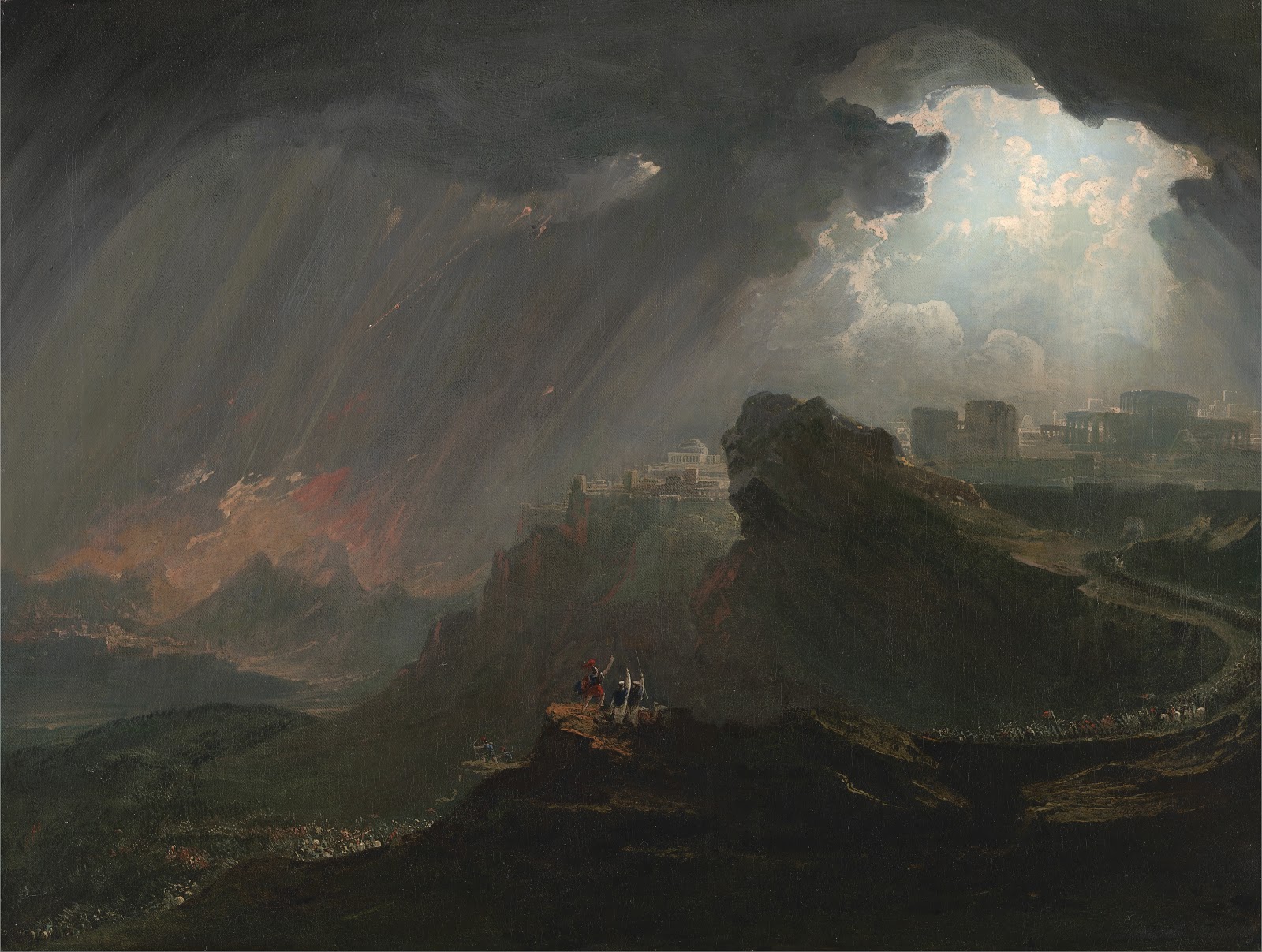
Friedrich Nietzsche shaped Carl Jung more than almost any other modern thinker, and Jung never read him calmly. Jung saw his own inner life in Thus Spoke Zarathustra, feared he might share Nietzsche’s fate, and then spent five years of seminars explaining where Nietzsche went wrong. That mix of debt, identification and defensive distance is what a therapist would call countertransference.
Key takeaways
- Jung read Thus Spoke Zarathustra as a student in Basel and saw his own inner second personality in Nietzsche’s Zarathustra, which frightened him.
- Jung traced a passage in Zarathustra to a ship’s log in Justinus Kerner’s Blätter aus Prevorst, which Nietzsche had read as a boy, and used it to illustrate cryptomnesia.
- Nietzsche anticipated Jung’s shadow, the self as a union of opposites and enantiodromia, especially through the Apollonian and Dionysian of The Birth of Tragedy.
- Jung read the will to power through Alfred Adler’s power psychology, missing the self-overcoming and sublimation that Walter Kaufmann placed at its centre.
- Jung’s defensive reading of Nietzsche works like countertransference, and the same dynamic helps therapists understand the figures that unsettle their clients.
The two men never met. Nietzsche taught classical philology at the University of Basel from 1869 to 1879, collapsed in Turin in January 1889 and died in 1900. Jung, born in 1875, studied medicine at the same university in the late 1890s, among professors who had known Nietzsche and passed on gossip about him. Jung’s whole account of the psyche grew up in the shadow of a man he could only meet on the page, which is exactly why his reading of Nietzsche reveals so much about Jung himself.
What did Jung find hidden in Zarathustra?
The best known episode in Jung’s dealings with Nietzsche began with a ship’s log. In his 1902 medical dissertation, On the Psychology and Pathology of So-called Occult Phenomena, Jung noticed that the chapter “On Great Events” in Zarathustra (1883) reproduced, almost word for word, a story from Justinus Kerner’s Blätter aus Prevorst, a collection of uncanny tales published between 1831 and 1839.3 Kerner’s extract, taken from a ship’s log of 1686, told how four captains and a merchant went ashore on Stromboli “to shoot rabbits”, then saw two men they knew from London fly past them through the air and drop into the crater of the volcano. In Nietzsche’s version the crew of a ship goes ashore “to shoot rabbits” and sees Zarathustra fly past toward the smoking mountain, and the old helmsman says that Zarathustra goes down to hell.4
There was no pirate book and no Christmas present. Jung wrote to Nietzsche’s sister, Elisabeth Förster-Nietzsche, and she replied that her brother had taken a lively interest in Kerner while staying with their grandfather, Pastor Oehler, at Pobles, between the ages of 12 and 15. Jung returned to the case in his 1905 paper “Cryptomnesia” and again, near the end of his life, in “Approaching the Unconscious”, where he recalled the sister saying they had read the book together when Nietzsche was 11.34
Jung used the episode to illustrate cryptomnesia, a term he took from the Geneva psychologist Théodore Flournoy: a forgotten memory that returns without being recognised as memory, so that the person experiences it as an original idea. The giveaway, Jung argued, was the pointless detail. Nobody who meant to copy a sea yarn would keep the rabbits. The image of a descent into hell had drawn an old impression up from the depths, and it arrived with its trivial furniture intact.3
Thirty years later Jung went further. In the seminar on Zarathustra that he gave at the Psychological Club in Zurich from May 1934 to February 1939, he argued that Zarathustra was no mere literary device. He cited Nietzsche’s own report that the figure had come to him in a dream as a boy, and he read Zarathustra as an experience of the archetype of the wise old man: a presence that felt thousands of years old and simply emerged from the background of Nietzsche’s mind.2 The Kerner case showed personal memory working below awareness. The seminar made the larger claim, that something collective and ancient had been speaking through Nietzsche all along.
Why was Jung afraid to read Nietzsche?
In Memories, Dreams, Reflections, the late autobiography recorded and edited by Aniela Jaffé, Jung describes putting off Nietzsche during his medical studies at Basel. The local verdict was hostile. Jacob Burckhardt, Nietzsche’s former colleague and the town’s intellectual authority, was quoted against him, and people who had known Nietzsche mocked his airs and his piano playing. That gossip only made Jung curious. What held him back was something else: “a secret fear that I might perhaps be like him, at least in regard to the ‘secret’ which had isolated him from his environment.”1
Jung guessed that Nietzsche had had inner experiences he tried to talk about and that nobody understood. He feared, in his words, that “I too was another such strange bird.” The parallels were not abstract. Both were sons of Protestant clergymen, both had lived since youth with a sense of a second, older personality inside them, and both were drawn toward what the culture around them treated as irrational.1 Jung was reading Kant on Sundays and Eduard von Hartmann’s philosophy of the unconscious at the time, and Nietzsche was the one author on his list he approached with dread.
When he finally began, with Thoughts Out of Season and then Zarathustra, the effect was overwhelming. He compared the book to Goethe‘s Faust and wrote that “Zarathustra was Nietzsche’s Faust, his No. 2, and my No. 2 now corresponded to Zarathustra.” Personality No. 1 was Jung’s name for the ordinary schoolboy and student; No. 2 was the timeless, older self he had sensed since childhood. Having decided that Zarathustra was morbid, Jung asked, “Was my No. 2 also morbid?” The thought, he said, came back at inopportune moments and threw him into a cold sweat.1
How did Jung read Nietzsche in the Zarathustra seminar?
The seminar notes fill two large volumes in James L. Jarrett’s edition, and they show Jung at his most generous and his most guarded. He treats Zarathustra as a sequence of visions, to be analysed the way he analysed a patient’s fantasies, and he credits Nietzsche with direct contact with the unconscious. He also diagnoses him. Nietzsche, he says repeatedly, identified with Zarathustra instead of standing in relation to him, and that identification was an inflation: the ego swollen by an archetype it cannot see as separate from itself.2 Paul Bishop’s study of Jung’s reception of Nietzsche traces how this picture of Nietzsche as the man who failed to hold his opposites runs through Jung’s work from his student years onward.8
Read beside the autobiography, the diagnosis sounds like a self-diagnosis held at arm’s length. The very things Jung found pathological in Nietzsche, the possession by an inner figure, the prophetic tone, the isolation, were the dangers he describes facing in himself.
The clearest moment of recognition and retreat comes in the chapter “On the Despisers of the Body”. Zarathustra says that behind thoughts and feelings “there is a mighty lord, an unknown sage” and goes on: “it is called Self; it dwelleth in thy body, it is thy body.” Jung pauses over this. It is almost his own concept of the Self, the centre and totality of the psyche to which the ego is subject. Then he says that here Nietzsche “falls down”, because by identifying the Self with the body he produces “an inflation of the body”.2 Lucy Huskinson argues that passages like this, where Nietzsche comes closest to Jung, are where Jung works hardest to mark the difference.7
Which Jungian ideas did Nietzsche anticipate?
Huskinson’s Nietzsche and Jung: The Whole Self in the Union of Opposites (2004) makes the case that Nietzsche anticipated much of Jung’s model of the psyche. Several of the parallels are hard to miss.7
- The shadow. Nietzsche’s relentless unmasking of the motives behind morality, the resentment beneath piety and the cruelty beneath justice, is a description of what Jung called the shadow: everything in us that the conscious personality disowns.
- A deeper layer of mind. Nietzsche treated the conscious intellect as a late, thin surface over older drives and inherited patterns. Jung gave that older layer a name, the collective unconscious, and a structure, the archetypes.
- The self as a union of opposites. For both, a whole person is not one who has eliminated conflict but one who can contain opposed forces without being torn apart.
The deepest root is The Birth of Tragedy (1872). Nietzsche argued that Greek tragedy arose from two forces: the Apollonian, the principle of form, measure and the individual, dream-like image, and the Dionysian, the intoxicated dissolution of the individual into the flow of life.6 Neither alone produced tragedy; the art lived in their tension. Jung gave the pair a full chapter in Psychological Types (1921), reading them as psychological attitudes, and the same work defines enantiodromia, Heraclitus’s term for the way anything pushed to an extreme turns into its opposite.5 Nietzsche’s picture of an Apollonian culture that represses Dionysus only to be overrun by him is enantiodromia in mythic form. The archetypal reading of Greek tragedy that later Jungians developed starts from this ground.
How do Jung and Nietzsche differ on uniting opposites?
Jung’s answer to inner conflict is the transcendent function, a process he described in an essay written in 1916 and not published until the late 1950s. When two opposed attitudes are held in consciousness without either being suppressed, the unconscious eventually produces a symbol, an image in a dream, a fantasy or a piece of active imagination, that carries something of both and moves the person to a new attitude. Jung insisted that this third thing cannot be manufactured by the will. It arrives, and the ego’s work is to hold the tension long enough for it to arrive.10
Nietzsche places the uniting force inside the striving of life itself, in the will to power. The person does not wait for a reconciling symbol; he takes up his conflicting drives and shapes them, the way an artist shapes resistant material. In “On Self-Overcoming”, Life tells Zarathustra, “I am that which must ever surpass itself”, a line Jung read aloud in the seminar.2
Huskinson argues that Jung’s insistence on a reconciling symbol that stands above the opposites narrows what Nietzsche offers. Nietzsche’s Übermensch, the overman, is defined by the strength to affirm the chaos and suffering of existence as it is, not to impose a ready-made order on it. Read that way, the Dionysian side of Nietzsche gives a place to struggle, destruction and creative chaos in growth that Jung’s more ordered picture can underplay.7
Where did Jung misread Nietzsche?
Spirit and the body
Jung tended to present Nietzsche as a man who denied any reality beyond instinct and the body. Yet the “Despisers of the Body” chapter itself describes a Self that rules the ego and is wiser than conscious thought, which is close to Jung’s own position. What Jung rejected was Nietzsche’s refusal to separate that Self from the living body.27 For a clinician who works with somatic therapy, Nietzsche’s version may be the more useful one.
Creativity
Jung also cast Nietzsche as a champion of conscious willing, in contrast to his own view that creative work rises from the unconscious. But the same chapter calls the body “a great reason”, a wisdom larger than the “little reason” of the intellect, and Nietzsche’s own account of writing Zarathustra in Ecce Homo describes inspiration that came over him like a revelation, as if he were the mouthpiece of an almighty power. Jung himself quoted that passage in his dissertation.3 Huskinson reads these passages as evidence that Nietzsche located creativity well below conscious intention.7
The will to power and Adler
The largest distortion concerns the will to power. Jung read it largely through Alfred Adler, Freud’s first major defector, whose individual psychology built on the striving for superiority. In the seminar Jung says Nietzsche “produced the psychological power theory first, anticipating, thus, Adlerian psychology”.2 In his memoir he recasts the break between Freud and Jung’s camp in the same terms: the conflict had to be rephrased “not as ‘Freud versus Adler’ but ‘Freud versus Nietzsche.'”1
Walter Kaufmann’s study, first published in 1950, argued that this reading misses Nietzsche’s meaning. The will to power is not chiefly a wish to dominate others. It is the drive of life to overcome itself, and in its highest forms it becomes sublimation: raw passion organised and turned toward creation and self-mastery.9 By filtering the will to power through Adler, Jung set aside the part of Nietzsche that comes closest to his own idea of individuation, the lifelong work of becoming the whole of who one is.
What does countertransference have to do with it?
Countertransference is the analyst’s emotional response to a patient, including the parts of the analyst’s own history that the patient stirs. Freud first treated it as interference. Jung, who held that the analyst is as much in the treatment as the patient, saw it as unavoidable and, when understood, as information.
Jung’s reading of Nietzsche fits the pattern closely. Nietzsche functioned for him like a patient who resembles the therapist too much. Jung saw his own No. 2 in Nietzsche’s Zarathustra, felt the pull, and protected himself by diagnosis: inflation, morbidity, loss of contact with reality. The traits he rejected most firmly, the prophet’s voice and the willingness to let an inner figure speak, were the ones he was most at risk of sharing. Seeing that does not cancel Jung’s insights about Nietzsche. It shows how even a gifted reader of the psyche reads through his own complexes, which is the point of the idea.
How did Nietzsche shape Jung’s confrontation with the unconscious?
After his break with Freud in 1913, Jung entered the period he called his confrontation with the unconscious, recording visions and dialogues that later became The Red Book. Nietzsche was the example he measured himself against. “Others have been shattered by them,” he wrote of the inner storms of those years, “Nietzsche, and Hölderlin, and many others.”1 The poet Friedrich Hölderlin, like Nietzsche, lost his reason after giving voice to the gods.
What kept Jung upright, he said, was ordinary life: his family, his patients, his medical diploma, his house at 228 Seestrasse in Küsnacht. These facts proved “that I was not a blank page whirling about in the winds of the spirit, like Nietzsche.” Nietzsche, in Jung’s view, had “lost the ground under his feet because he possessed nothing more than the inner world of his thoughts.”1 Much of analytical psychology can be read as an answer to that danger: active imagination with an ego that stays present, dreams brought back into daily life, symbols related to rather than identified with. Nietzsche showed Jung where the descent could end, and Jung built a method for coming back. The wider story is told in our overview of the development of Jung’s psychology and in the material cut from Memories, Dreams, Reflections.
An uneasy kinship
Jung’s relationship to Nietzsche was ambivalent recognition: a sense of kinship pulling against the need to stand apart. He could not embrace Nietzsche fully because Nietzsche had named too much of what moved Jung himself.
Jung also placed Nietzsche in his own lineage. Writing of Goethe’s Faust, he called it a link in the Aurea Catena, the golden chain “which has existed from the beginnings of philosophical alchemy and Gnosticism down to Nietzsche’s Zarathustra.”1 He saw himself as the next link: the one who would carry forward what Nietzsche had glimpsed while avoiding his fall. That is how Jung could honour Nietzsche as a forerunner and criticise his morbidity in the same breath. For readers following the thread further, Nietzsche’s impact on psychology and trauma and the philosophy behind Jung trace the wider web.
Nietzsche, Jung and the work of therapy
The Jung and Nietzsche story is a lesson in reading the people who unsettle us. Clients often describe a parent, a partner or a public figure they cannot stop arguing with. In depth work we treat that charge as a clue: the figure carries a projection, often of a part of the client’s own shadow or of an unlived potential. The task is not to agree with the figure but to find what in oneself it is pointing at.
It is also a lesson about inner figures. Jung’s distinction between relating to an archetype and identifying with it is practical. A person flooded by a grandiose or prophetic inner voice, or by a harsh inner judge, is helped by learning to give that figure a name and a place without letting it run the whole personality. Parts-based therapy works on the same principle, helping the client relate to protective and wounded parts from a steadier centre.
Finally, it is a lesson about the body. Nietzsche’s “great reason” of the body and Jung’s insistence on staying grounded in daily life meet in the trauma work we do at Taproot. Approaches such as Brainspotting work with what the body holds below words, so that material from the depths can be processed while the client stays anchored in the present.
Nietzsche and Jung both treated the descent into the unconscious as necessary and dangerous. At Taproot we take that seriously. Our Jungian therapy gives the inner world room to speak while keeping the ground under the client’s feet.
Frequently asked questions
Did Carl Jung ever meet Friedrich Nietzsche?
No. Nietzsche left his professorship at Basel in 1879 and collapsed in 1889, while Jung, born in 1875, only began studying medicine at the University of Basel in 1895. Jung knew Nietzsche through his books and through the stories of Basel professors who had known him, and he read Thoughts Out of Season and Thus Spoke Zarathustra as a student.
What is the Kerner story Nietzsche borrowed in Zarathustra?
In the chapter On Great Events, a ship’s crew lands on a volcanic island to shoot rabbits and sees Zarathustra fly toward the crater. Jung found almost the same story, from a ship’s log of 1686, in Justinus Kerner’s Blätter aus Prevorst. Elisabeth Förster-Nietzsche told Jung her brother read Kerner between ages 12 and 15, and Jung called the borrowing cryptomnesia.
What is cryptomnesia in Jung’s psychology?
Cryptomnesia means hidden memory: something read or heard long ago returns without being recognised as a memory, so it feels like an original idea. Jung took the term from Théodore Flournoy and used Nietzsche’s unconscious reuse of Kerner’s ship’s log, rabbits included, as his main example in his 1902 dissertation and his 1905 paper on the subject.
Did Nietzsche influence Jung’s idea of the shadow?
Yes, in substance. Nietzsche’s unmasking of resentment and cruelty hidden behind moral ideals describes what Jung called the shadow, the part of the personality the conscious self disowns. Jung also drew on Nietzsche’s Apollonian and Dionysian pairing from The Birth of Tragedy when he wrote about opposites in Psychological Types.
How did Jung interpret Nietzsche’s will to power?
Jung tended to equate Nietzsche’s will to power with Alfred Adler’s psychology of the striving for superiority, and in his Zarathustra seminar he said Nietzsche had anticipated Adlerian psychology. Scholars such as Walter Kaufmann and Lucy Huskinson read the will to power instead as self-overcoming: the drive to master and transform one’s own passions in creative work.
Related reading
- Emanuel Swedenborg’s Mystical Visions and Their Influence on Carl Jung’s Psychology
- What is a “Purple Hat Therapy”?
- Carl Jung’s Secret Work with the OSS: Profiling Hitler and Understanding the Fascist Mind
- The Existential Psychology of Viktor Frankl:
- The Profound Influence of Schelling’s Conceptualization of Trauma on Psychology and Psychotherapy
- Carl Jung’s Major Influences and Philosophy
References
- Jung, C. G. (1989). Memories, dreams, reflections (A. Jaffé, Ed.; R. Winston & C. Winston, Trans.). Vintage Books. (Original work published 1962)
- Jung, C. G. (1988). Nietzsche’s Zarathustra: Notes of the seminar given in 1934–1939 (J. L. Jarrett, Ed.; Vols. 1–2). Princeton University Press.
- Jung, C. G. (1957). Psychiatric studies (R. F. C. Hull, Trans.; The Collected Works of C. G. Jung, Vol. 1). Pantheon Books.
- Jung, C. G. (1964). Approaching the unconscious. In C. G. Jung & M.-L. von Franz (Eds.), Man and his symbols. Doubleday.
- Jung, C. G. (1971). Psychological types (H. G. Baynes, Trans., rev. R. F. C. Hull; The Collected Works of C. G. Jung, Vol. 6). Princeton University Press. (Original work published 1921)
- Nietzsche, F. (1999). The birth of tragedy and other writings (R. Geuss & R. Speirs, Eds.; R. Speirs, Trans.). Cambridge University Press. (Original work published 1872)
- Huskinson, L. (2004). Nietzsche and Jung: The whole self in the union of opposites. Brunner-Routledge. https://doi.org/10.4324/9780203508299
- Bishop, P. (1995). The Dionysian self: C. G. Jung’s reception of Friedrich Nietzsche. Walter de Gruyter. https://doi.org/10.1515/9783110811704
- Kaufmann, W. (1974). Nietzsche: Philosopher, psychologist, antichrist (4th ed.). Princeton University Press. (Original work published 1950)
- Jung, C. G. (1969). The structure and dynamics of the psyche (2nd ed., R. F. C. Hull, Trans.; The Collected Works of C. G. Jung, Vol. 8). Princeton University Press.














0 Comments