
What was the Jonestown Cult?
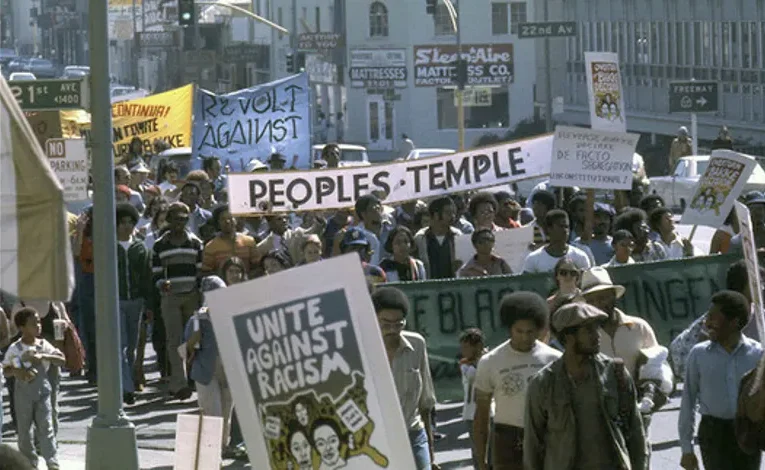
The Peoples Temple, led by Jim Jones, was a notorious cult that ended in the tragic mass murder-suicide of over 900 of its members in Jonestown, Guyana in 1978. While its shocking end makes it stand out, many of the manipulative tactics and situational factors that allowed Jones to exert such control were not unique. As the saying goes, in most cults, little of what is good is original, and little of what is original is good. By examining the Peoples Temple and Jonestown, we can gain insight into the dangers of high-control groups and how to resist their influence.
Elements Reappropriated From Other Sources
Like many cults, the Peoples Temple liberally borrowed practices and beliefs from other religious, psychological and political movements to create an appealing patchwork ideology. Some key elements included:
Pentecostal Christianity:
Jones started as a Pentecostal preacher and incorporated faith healing, speaking in tongues, and emotional worship styles.
Communism:
Jones preached a quasi-communist social gospel, calling for racial and economic equality. He adopted communist symbols and language.
Therapeutic Self-Help:
Jones presented himself as a psychic surgeon and incorporated popular self-help and pop psychology concepts into his sermons.
Utopianism:
The promise of an ideal, egalitarian community was central to the Temple’s appeal, reflecting 1960s-70s utopian movements.
While each of these elements had positive connotations for his target audience, Jones’ synthesis was less focused on theological or philosophical coherence than on exerting control…
Biography of Jim Jones
Jones’ ability to manipulate others was rooted in his own troubled past. Raised in a dysfunctional family in Indiana, Jones early life was marked by insecurity and alienation…
(Continues with a biographical sketch covering Jones’ childhood poverty and abuse, his obsession with religion and power from a young age, his failed attempts to build a career before founding the Temple, his skillful oration and manipulative abilities, and his descent into paranoia and drug abuse.)
Control Tactics
Jones relied on numerous control tactics that are common among cults, while pioneering some unique ones:
Common Tactics:
Love Bombing:
Showering recruits with affection to draw them in
Isolation:
Separating members from family and outside influences
Fear Induction:
Sowing paranoia about “enemies” and defectors
Information Control:
Restricting access to outside information
Confession and Self-Incrimination:
Eliciting confessions to instill shame and keep members obedient
Unique Tactics:
Staged Healings:
Jones faked cancer cures and other miracles to build his mystique
Suicide Drills:
Members rehearsed mass suicide, making them more acquiescent to the real thing
Exploiting Racial Guilt:
Jones cynically leveraged white members’ guilt to cement loyalty
Political Maneuvering:
The Temple ingratiated itself with leftist leaders in the US for protection
Timeline
Key events in the roughly 25-year arc of the Peoples Temple include:
- 1955: Jones founds “Wings of Deliverance” church in Indianapolis, soon renamed “Peoples Temple”
- 1965: Temple relocates to northern California, establishes care homes and other charity fronts
- 1970s: Membership swells; Temple becomes active in San Francisco politics; Jones is appointed Housing Commissioner
- 1974: Jones miraculous survives apparent assassination attempt, likely staged
- 1977: Increasing media scrutiny and defections; Jones and inner circle move to Guyana and begin building “Jonestown” agricultural commune
- 1978: Jonestown reaches population of nearly 1000 amid worsening conditions and Jones’ mental state; Visit by Congressman Leo Ryan results in attacks on his delegation and mass murder-suicide of 918 members
Zeitgeist and Remedy for Cultural Anxieties
The Peoples Temple arose amidst the social, political and cultural ferment of the 1960s-70s when many were losing faith in establishment institutions. Jones tapped into the drive for racial justice after the Civil Rights Movement, economic fears during the recession, and the longing for communal experiences among alienated youth. The Temple provided a seemingly activist, egalitarian community that promised to address those concerns.
At a psychological level, Jones exploited both white guilt and black fears of oppression. He offered to erase members social sins and gave them a sense of purpose. The Temple’s communal living provided relief from feelings of isolation and anomie that marked that turbulent period.
Similar Cults and Control Tactics
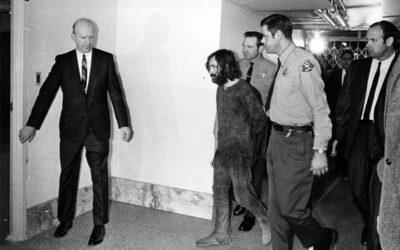
The Peoples Temple shared much in common with other 1970s cults like the Children of God, the Unification Church (“Moonies”) and the Manson Family. All had charismatic, authoritarian leaders, isolated members, instilled paranoia, and required extreme levels of personal commitment.
Common manipulation tactics across cults include:
- Authoritarianism: Establishing leader as sole authority
- Isolation: Cutting members off from outside world and families
- “Us vs Them”: Promoting a besieged “elect” mentality
- Fear and Paranoia: Exaggerating outside threats and persecuting leavers
- Love Bombing: Giving lavish affection to new recruits
- Shame and Guilt: Using members’ revealed secrets to control them
- Denunciation: Having members inform on and denounce each other for perceived disloyalty
- Impossible Standards: Setting unattainable goals for perfection, induce dependency
Defection and Deprogramming
Most people who left the Peoples Temple did so of their own volition, often at great personal cost. A few were “deprogrammed” through interventions designed to break Jones’ hold on their thinking. Common elements of deprogrammings included:
- Physically separating follower from group
- Demonstrating leader’s failed prophecies and inconsistencies
- Revealing deception behind supposed miracles
- Exposing leader’s hypocrisies and abuses of power
- Reestablishing critical thinking skills
- Reconnecting with family and life before cult
Deprogrammings were controversial, with some characterizing them as coercive kidnappings. But they did successfully extract some members from Jones’ control. Most former members, with professional help and personal resolve, were eventually able to reintegrate with society.
Relevance to Everyday Manipulation
The control tactics used by the Peoples Temple were not unique to cults. They can be found, in milder forms, in everyday situations like political campaigns, high-pressure sales, abusive relationships and some religious groups. Common signs of undue influence include:
- Encouraging isolation from family and friends
- Demanding unquestioning obedience to a leader
- Black-and-white, “us vs them” thinking
- Instilling fear and paranoia about outsiders
- Invasive demands for personal information
- Extreme pressure to commit money and time
Awareness and critical thinking are key to resisting undue influence in any context. Maintaining connections outside the group, questioning inconsistencies, and being wary of demands for unquestioning obedience are all important protective steps.
Bibliography
Abbott, E. (1990). The Snake and the Dove: The Challenge of the Peoples Temple. SCP Journal, 14(2), 3-9.
Abbott, E. (2019). Terror in the Jungle: Jim Jones, the Peoples Temple, and Jonestown. DeGruyter.
Bellefountaine, M. (2011). A Lavender Look at the Temple: A Gay Perspective of the Peoples Temple. iUniverse.
Chidester, D. (1988). Salvation and Suicide: An Interpretation of Jim Jones, the Peoples Temple, and Jonestown. Indiana University Press.
Daly, C. D., & Harper, S. (2000). “To Lay Down My Life For the Cause”: Representations of Martyrdom in the Peoples Temple. Martyrdom and Noble Death: Selected Texts from Graeco-Roman, Jewish and Christian Antiquity, 188-205.
Guinn, J. (2017). The Road to Jonestown: Jim Jones and Peoples Temple. Simon and Schuster.
Hall, J. R. (1987). Gone from the Promised Land: Jonestown in American Cultural History. Transaction Publishers.
Layton, D. (1998). Seductive Poison. Anchor.
Maaga, M. M. (1998). Hearing the Voices of Jonestown. Syracuse University Press.
Matheny, T. (2017). Peoples Temple and Black Religion in America. Nova Religion: The Journal of Alternative and Emergent Religions, 20(3), 131-133.
Mills, J. (1979). Six Years with God: Life Inside Reverend Jim Jones’s Peoples Temple. A&W Publishers.
Moore, R. (2000). Is the Canon on Jonestown Closed?. Nova Religio, 4(1), 7-27.
Moore, R. (1985). A Sympathetic History of Jonestown: the Moore Family Involvement in Peoples Temple. Edwin Mellen.
Nesci, D. A. (2019). Revisiting Jonestown: An Interdisciplinary Study of Cults. Lexington Books.
Noblitt, J. R.& Perskin, P. S. (2000). Cult and Ritual Abuse: Its History, Anthropology, and Recent Discovery in Contemporary America. Greenwood Publishing Group.
Oswalt, J. (2010). Jonestown in the 21st Century. Group, 34(4), 315-324.
Pitti, D. V. A. (2004). Peoples Temple and Housing Politics in San Francisco. Harvard University.
Reiterman, T. (1982). Raven: The Untold Story of the Rev. Jim Jones and His People. Dutton.
Richardson, J. T. (1980). Peoples Temple and Jonestown: A Corrective Comparison and Critique. Journal for the Scientific Study of Religion, 256-272.
Scheeres, J. (2011). A Thousand Lives: The Untold Story of Jonestown. Simon and Schuster.
Singer, M. T. (1979). Coming Out of the Cults. Psychology today, 12(8), 72-82.
Smith, A. (1987). Insanity and the Law. Indianapolis Division of Mental Health and Indiana University School of Medicine.
Taylor, E. (1981). Therapy Cults and Religions of Feeling. Bulletin of the Menninger Clinic, 45(3), 263.
Ulman, R. B., & Abse, D. W. (1983). The Group Psychology of Mass Madness: Jonestown. Political Psychology, 637-661.
Weightman, J. M. (1983). Making Sense of the Jonestown Suicides: A Sociological History of Peoples Temple. Edwin Mellen Pr.
Wessinger, C. (2000). How the Millennium Comes Violently: From Jonestown to Heaven’s Gate. Seven Bridges Press.
Williams, L. F. (2018). Dimensions of a Disaster: The Rise and Fall of the Peoples Temple. In Communal Societies and Utopian Studies.
Wooden, K. (1981). The Children of Jonestown. McGraw-Hill Companies.
Yee, Min S., Layton, T. N. (1981). In My Father’s House. Holt, Rinehart, and Winston.
Young, S. P. (2021). Deconstructing Jonestown. Critical Inquiry, 47(2), 236-254.
Zablocki, B. (1998). Exit Cost Analysis: A New Approach to the Scientific Study of Brainwashing. Nova Religio, 1(2), 216-249.
Zimbardo, P. (1997). What Messages Are Behind Today’s Cults?. Monitor on Psychology. American Psychological Association.
Other Cults and Conspiracy Theories
















0 Comments