The Ecology of Enchantment: David Abram’s Earth-Centered Philosophy

by | Jul 10, 2024 | 0 comments

David Abram Ecopsychology

The Philosopher of the Animate Earth

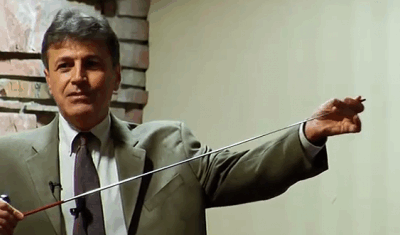
For most of human history, the world was alive. Rivers spoke, mountains listened, and the wind carried messages. But in the modern West, we have silenced the world. We view nature as a collection of inert objects—resources to be used, not subjects to be met. David Abram (b. 1957) is the philosopher who is teaching us to listen again.

A cultural ecologist and geophilosopher, Abram is the author of the seminal book The Spell of the Sensuous. He merges the phenomenology of Maurice Merleau-Ponty with indigenous wisdom and sleight-of-hand magic. His work is essential for depth psychology because it relocates the “unconscious” from inside the human skull to the living landscape around us. He argues that we are not separate minds looking at the world, but bodies breathing with it.

Biography & Timeline: David Abram

Born in the suburbs of Long Island, Abram began his career as a professional sleight-of-hand magician. This trade took him to Indonesia, Nepal, and Sri Lanka, where he sought out indigenous shamans to trade magic tricks. What he found was that traditional magic was not about fooling people; it was about managing the relationship between the human village and the more-than-human world.

He returned to the U.S. to earn his Ph.D. in Philosophy at Stony Brook University. In 1996, he published The Spell of the Sensuous, which won the Lannan Literary Award and became a foundational text for the emerging field of Ecopsychology. He is the founder of the Alliance for Wild Ethics (AWE).

Key Milestones in the Life of David Abram

Year Event / Publication
1957 Born in Long Island, New York.
1980s Travels as an itinerant magician through Asia and the Americas.
1993 Receives Ph.D. from Stony Brook University.
1996 Publishes The Spell of the Sensuous: Perception and Language in a More-Than-Human World.
2010 Publishes Becoming Animal: An Earthly Cosmology.
Present Directs the Alliance for Wild Ethics.

Major Concepts: The Spell of Literacy

The More-Than-Human World

Abram coined the term “more-than-human world” to replace the word “nature” (which implies something separate from us). He argues that every aspect of the sensory world—birds, stones, weather—is expressive and animate. Perception is not a one-way street; when you touch a tree, the tree is also touching you.

The Alphabet and Disconnection

Why did we lose this animistic connection? Abram traces it to the invention of the phonetic alphabet. In oral cultures, language is tied to the breath and the land (e.g., a story about a mountain is told at the mountain). The alphabet severed language from the place. We began to speak to texts rather than to the terrain.

The Result: We became trapped in our own heads, viewing the world as a mute backdrop. Healing involves “re-animating” our language and senses.

The Conceptualization of Trauma: Ecological Grief

Abram’s work suggests that much of our modern anxiety and depression is actually ecological grief. We are animals who evolved to be in constant sensory reciprocity with a living environment. Living in concrete boxes, staring at screens, and breathing processed air is a form of sensory trauma.

Grounding as Therapy

Trauma disconnects us from the body and the present moment. Nature reconnects us.

Clinical Application: Therapy isn’t just about analyzing childhood; it’s about re-establishing a relationship with the ground. Practices like “forest bathing,” tracking, or simply sitting in silence with a landscape can bypass the cognitive defenses and soothe the nervous system. The earth is the ultimate “container” for our pain.

Legacy: The Ecology of Magic

David Abram is a bridge-builder. He connects the high philosophy of phenomenology with the dirt-under-the-fingernails reality of ecology. He reminds us that “psyche” originally meant “breath”—the air we share with the hawk and the oak tree.

His legacy is a call to a “wild ethics”—an ethics not based on abstract rules, but on a felt sense of kinship with the animate earth. As he writes, “We are only human in contact, and conviviality, with what is not human.”


Bibliography

  • Abram, D. (1996). The Spell of the Sensuous: Perception and Language in a More-Than-Human World. Pantheon Books.
  • Abram, D. (2010). Becoming Animal: An Earthly Cosmology. Pantheon Books.
Explore More on Ecopsychology

Explore the Other Articles by Categories on Our Blog 

Gabor Maté: From Budapest Ghetto to Voice of Compassion in Addiction’s Darkest Corners

Gabor Maté: From Budapest Ghetto to Voice of Compassion in Addiction’s Darkest Corners

Gabor Maté, Holocaust survivor turned physician, spent twelve years treating severe addictions in Vancouver’s poorest neighborhood, asking “why the pain?” rather than “why the addiction?” His revolutionary recognition that addiction serves to escape unbearable emotions rooted in childhood trauma, detailed in bestseller In the Realm of Hungry Ghosts, transformed understanding of substance abuse from moral failing to developmental injury.

David Grand: From EMDR Trainer to Brainspotting Pioneer Through a Champion Skater’s Frozen Gaze

David Grand: From EMDR Trainer to Brainspotting Pioneer Through a Champion Skater’s Frozen Gaze

David Grand discovered brainspotting in 2003 when a figure skater’s eye wobble revealed where trauma was stored in her brain. By maintaining fixed eye position on that “brainspot” rather than using bilateral movement, processing accelerated dramatically. His development of this approach, now used by 13,000+ therapists worldwide, demonstrates how careful clinical observation combined with willingness to deviate from protocol can produce genuine therapeutic innovation for treating trauma, the yips, and performance blocks.

Richard Schwartz: From Failed Bulimia Study to Discovering the Internal Family System

Richard Schwartz: From Failed Bulimia Study to Discovering the Internal Family System

Richard Schwartz discovered Internal Family Systems in 1982 when bulimic clients described distinct “parts” battling inside them, leading him to recognize the mind’s natural multiplicity. His development of IFS therapy, which helps Self lead an internal family of managers protecting against exiled pain and firefighters dousing emotional flames, has revolutionized how millions understand their inner conflicts. From failed outcome study to global therapeutic movement, Schwartz demonstrated that beneath protective parts, everyone possesses undamaged Self capable of healing.

Francine Shapiro: From Cancer Diagnosis to Revolutionary Trauma Treatment Through Eye Movements

Francine Shapiro: From Cancer Diagnosis to Revolutionary Trauma Treatment Through Eye Movements

Francine Shapiro discovered EMDR during a walk in 1987 when she noticed eye movements reduced disturbing thoughts. Her development of Eye Movement Desensitization and Reprocessing revolutionized trauma treatment, creating the first therapy to demonstrate rapid resolution of PTSD through bilateral stimulation activating the brain’s adaptive information processing system. Now recommended by WHO and DOD, EMDR has helped millions worldwide process traumatic memories that talking therapy couldn’t reach.

Janina Fisher: Revolutionizing Trauma Treatment Through Structural Dissociation and Parts Work

Janina Fisher: Revolutionizing Trauma Treatment Through Structural Dissociation and Parts Work

Janina Fisher revolutionized complex trauma treatment by integrating structural dissociation theory with parts work and somatic interventions. Discover her Trauma-Informed Stabilization Treatment (TIST) approach showing how recognizing fragmented selves as protective adaptations rather than pathology transforms healing for clients with treatment-resistant symptoms including self-harm, addiction, and chronic suicidality.

Peter Levine: The Biophysicist Who Taught Trauma to Speak Through the Body

Peter Levine: The Biophysicist Who Taught Trauma to Speak Through the Body

Peter Levine revolutionized trauma treatment through Somatic Experiencing, proving trauma lives in the body’s nervous system. Discover how his work on completing frozen defensive responses, titration, and the SIBAM model provides somatic grounding for Jungian depth psychology and transforms PTSD healing.

Who Was James Hillman?

Who Was James Hillman?

An in-depth look at James Hillman, the founder of Archetypal Psychology, exploring his “Acorn Theory,” his critique of modern therapy, and his enduring influence on soul-centered practice.

Murray Stein: The Architect of Individuation

Murray Stein: The Architect of Individuation

A comprehensive profile of Murray Stein, the leading modern voice in Jungian psychology. Explore his “Map of the Soul,” his insights on the midlife crisis, and his role in bringing depth psychology to the 21st century.

The Giants of Behavioral Psychology Lives Legacies and Clinical Foundations

The Giants of Behavioral Psychology Lives Legacies and Clinical Foundations

Explore the lives discoveries and lasting influence of the six giants of behavioral psychology including Pavlov Thorndike Watson Skinner Wolpe and Bandura. Learn how their groundbreaking research on classical conditioning operant conditioning systematic desensitization and social learning theory shaped modern evidence-based psychotherapy and continues to inform clinical practice today.

Albert Bandura: The Psychologist Who Revealed the Power of Observation and Belief

Albert Bandura: The Psychologist Who Revealed the Power of Observation and Belief

Explore the life and transformative contributions of Albert Bandura, the Canadian-American psychologist whose Bobo doll experiments and self-efficacy theory revolutionized our understanding of how people learn and change. Discover how his research on observational learning, social cognitive theory, and beliefs about personal capability continues to shape psychotherapy, education, health behavior, and our understanding of human potential.

Joseph Wolpe: The Pioneer Who Taught Us How to Unlearn Fear

Joseph Wolpe: The Pioneer Who Taught Us How to Unlearn Fear

The history of psychotherapy is filled with discoveries that emerged from unusual circumstances, and few are more striking than the origins of systematic desensitization. During World War II, a young South African physician named Joseph Wolpe was assigned to treat...

B.F. Skinner: The Architect of Operant Conditioning and Modern Behavioral Science

B.F. Skinner: The Architect of Operant Conditioning and Modern Behavioral Science

Explore the life and revolutionary contributions of B.F. Skinner, the psychologist who developed operant conditioning and transformed our understanding of how consequences shape behavior. Learn how his research on reinforcement schedules, the Skinner box experiments, and behavioral principles laid the foundation for Applied Behavior Analysis, educational technology, and evidence-based behavioral interventions that continue to help millions of people today.

John B. Watson: The Revolutionary Who Transformed Psychology

John B. Watson: The Revolutionary Who Transformed Psychology

Discover the revolutionary life and controversial legacy of John B. Watson, the American psychologist who founded behaviorism and transformed psychology from a philosophical discipline into an experimental science. Learn about the famous Little Albert experiment, Watson’s radical vision for psychology, and how his work laid the foundations for modern behavior therapy despite profound ethical concerns that continue to shape research standards today.

Edward Thorndike: The Architect of Consequence

Edward Thorndike: The Architect of Consequence

Explore the lives discoveries and lasting influence of the six giants of behavioral psychology including Pavlov Thorndike Watson Skinner Wolpe and Bandura. Learn how their groundbreaking research on classical conditioning operant conditioning systematic desensitization and social learning theory shaped modern evidence-based psychotherapy and continues to inform clinical practice today.

Ivan Pavlov: The Accidental Revolutionary

Ivan Pavlov: The Accidental Revolutionary

It is one of the great ironies of scientific history that the father of behavioral psychology never considered himself a psychologist at all. Ivan Petrovich Pavlov was a physiologist consumed by the mechanical workings of the digestive system. He viewed the body as an...

0 Comments

Submit a Comment

Your email address will not be published. Required fields are marked *