
Key Takeaways: The Suppliants & Jungian Psychology
- The Refugee Soul: The Danaids represent the Anima (Feeling Function) fleeing from the predatory Animus (The Egyptians), seeking sanctuary in the conscious mind (Argos).
- The Democratic Ego (Pelasgus): King Pelasgus represents a mature Ego that does not rule by tyranny but consults the “City” (the various parts of the psyche) before integrating a new, dangerous element.
- Xenia (Hospitality) as Integration: The play argues that the Ego has a moral duty to offer “asylum” to the traumatized parts of the self, even if doing so brings conflict (war with Egypt).
- The Return of the Repressed: The arrival of the “Foreign” women symbolizes the eruption of the unconscious into the conscious order, demanding recognition.
What Happens in Aeschylus’ The Suppliants? A Jungian Analysis of the Refugee Soul
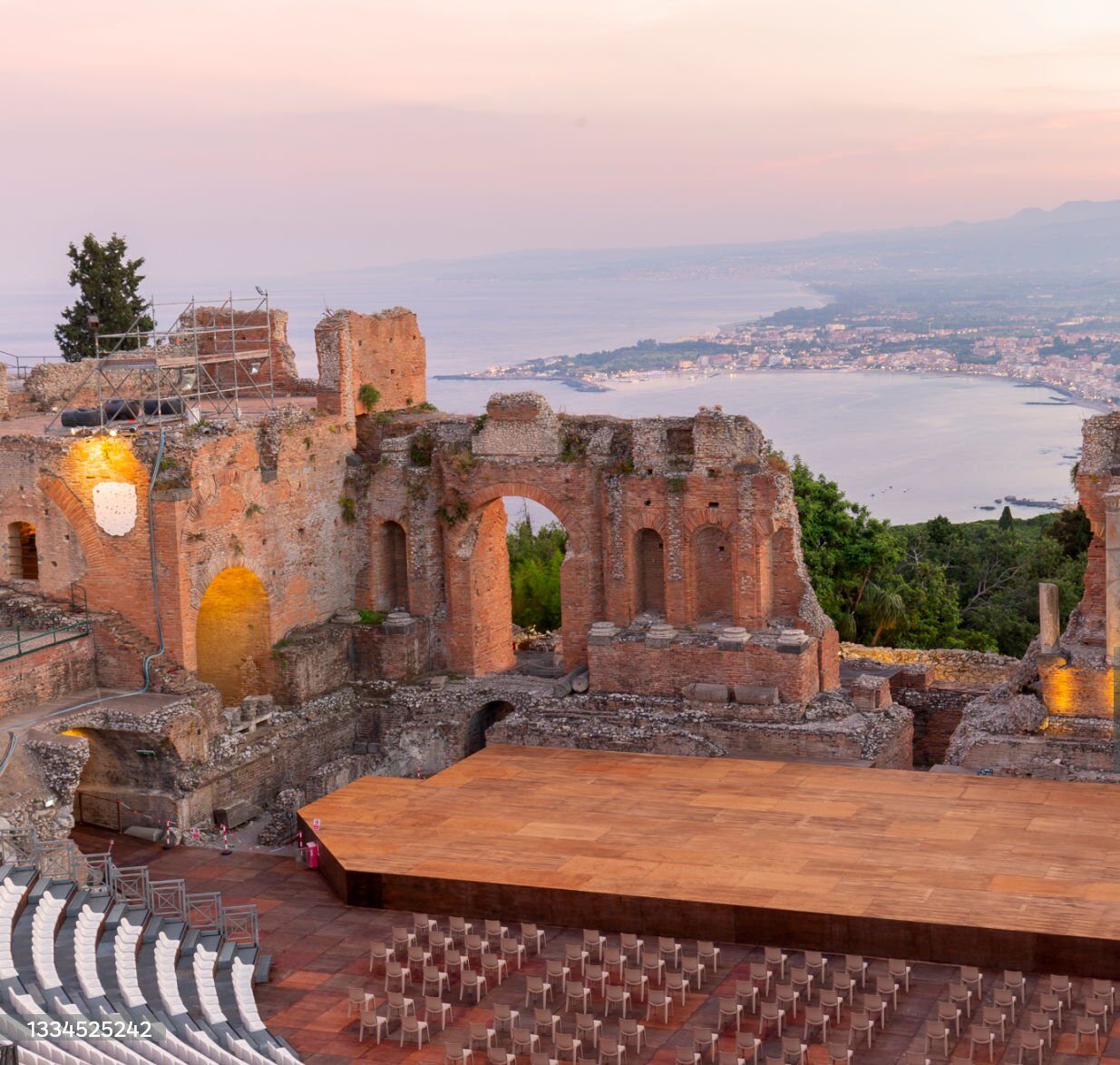
Aeschylus’ The Suppliants (c. 463 BC) is the oldest surviving play in the Western canon that deals explicitly with the issue of refugees, asylum, and the rights of women. It tells the story of fifty sisters (the Danaids) who flee Egypt to escape forced marriage to their fifty cousins.
From the perspective of Depth Psychology, this is not just a political drama; it is a map of the psyche in crisis. It explores what happens when a traumatized part of the soul (the Danaids) knocks on the door of the conscious mind (Argos) demanding entry. The King’s dilemma—to accept them and risk war, or reject them and risk the wrath of the gods—mirrors the dilemma of every person facing their own Shadow.
Summary: The Flight from Egypt
The narrative is simple but primal.
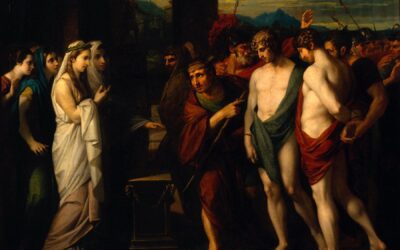
- The Arrival: The play opens on the shores of Argos. Fifty women, the daughters of Danaus, arrive from Egypt holding olive branches wrapped in wool (the symbol of the suppliant). They claim descent from Io, a priestess of Argos who was turned into a cow by Zeus and wandered to Egypt generations ago.
- The Threat: They are fleeing their cousins, the sons of Aegyptus, who wish to force them into marriage. They view this not as union, but as slavery and rape.
- The King’s Dilemma: Pelasgus, King of Argos, confronts them. He is torn. If he protects them, the Egyptian army will attack Argos. If he turns them away, he violates Xenia (Guest-Friendship) and Zeus, protector of suppliants, will destroy his city.
- The Vote: Unlike other mythical kings who rule by fiat (like Oedipus or Creon), Pelasgus says, “I cannot do this without the people.” He brings the matter to the Argive assembly. The democracy votes to protect the women.
- The Confrontation: The Egyptian herald arrives to drag the women away by their hair. Pelasgus intervenes, drawing a line in the sand. The play ends with the immediate threat averted, but the drumbeat of war approaching.
Archetypal Figures: The Cast of the Inner Conflict
The Danaids: The Anima in Distress
The Danaids represent the collective Anima—the feminine principle of feeling, eros, and relatedness. In this play, the Anima is under attack.
They are fleeing a “Negative Marriage” to the sons of Aegyptus. Psychologically, this represents the feminine principle fleeing from a Possessive Animus—masculine energy that seeks to dominate, control, and consume rather than relate.
Their flight to Argos is a “Return to the Source.” They claim descent from Io, meaning they are returning to their ancestral home. This symbolizes the psyche’s attempt to return to its roots to heal trauma.
Pelasgus: The Democratic Ego
Pelasgus is a unique figure in Greek tragedy. He is not a tyrant; he is a democrat. He represents the Mature Ego.
A tyrant ego (like Creon in Antigone) would simply make a decision based on rigid law. Pelasgus realizes that the situation is complex. He consults “The City” (the collective psyche).
Clinical Insight: In therapy, we try to build a “Democratic Ego.” We teach clients not to repress their inner voices (the suppliants) or fight them, but to hold a “council” where all parts of the self can vote on the best course of action.
The Egyptians: The Shadow Animus
The sons of Aegyptus are faceless, nameless, and predatory. They represent the Shadow Animus—the aspect of the male psyche (or the masculine within the female psyche) that is aggressive, entitled, and violent.
They do not want relationship; they want possession. When the Animus becomes “Egyptian” (foreign/barbaric in the Greek mind), it creates a state of neurosis where the person feels constantly pursued by demanding, critical thoughts.
Deep Psychological Themes
1. Xenia: The Ethics of Integration
The central moral axis of the play is Xenia—the sacred duty to protect the stranger.
Psychologically, the “Stranger” is the Unconscious Content that arrives at the shore of the Ego. It might appear as a terrifying dream, a symptom, or an intrusive emotion.
The Ego (Pelasgus) is afraid. “If I let this in, it will cause a war (panic attack/crisis).” However, the play argues that rejecting the stranger is worse. To reject the unconscious leads to spiritual pollution (pollution of the city). The healthy Ego must offer “Asylum” to its own trauma, even if it is risky.
2. The Foreign and the Familiar
The Danaids are “Other.” They are dark-skinned, dressed in foreign clothes, and speak differently. Yet, they claim to be Argive by blood (through Io).
This is the paradox of the Repressed Self. When we recover a repressed part of ourselves (e.g., our anger or our creativity), it feels “Foreign” at first. It feels like it doesn’t belong. Yet, deep down, it is our own blood. The process of analysis is recognizing that the “Egyptian stranger” is actually our “Argive kin.”
3. The Terror of the Feminine
Why are the Egyptians so obsessed with forcing marriage? And why are the Danaids so terrified of it?
This reflects the archetypal struggle between Eros (Love/Connection) and Power. The Egyptians try to turn Eros into Power. The Danaids, in their terror, reject marriage altogether (they later become famous for murdering their husbands on their wedding night).
This play shows the trauma response: when the Anima is threatened, it turns into the “Negative Anima”—the vengeful woman who rejects all union. Healing requires safety (Argos) before union can even be considered.
Conclusion: The Courage to Shelter the Soul
The Suppliants ends with a victory for humanity. The city votes to protect the vulnerable. Pelasgus accepts the risk of war to do what is right.
For the modern individual, the play is a call to courage. It asks us to open the gates of our heart to the parts of ourselves we have exiled. It asks us to stand up to the internal “Egyptians” (the critical voices) and say, “These vulnerable feelings are under my protection.” This is the beginning of psychological wholeness.
Read About Other Classical Greek Plays and Their Influence on Depth Psychology
Taproot Therapy Collective Podcast
The Feminine & The Shadow
Antigone: The Woman Who Said No
Iphigenia in Tauris: The Priestess of the Shadow
Alcestis: The Wife Who Died for her Husband
The Aeschylean Cycle
The Oresteia: The Evolution of Justice
Prometheus Bound: The Psychology of Rebellion
Seven Against Thebes: The Fratricidal Shadow
Bibliography
- Aeschylus. The Suppliants. (Various Translations).
- Jung, C. G. (1954). The Psychology of the Transference. Princeton University Press.
- Zeitlin, F. I. (1996). Playing the Other: Gender and Society in Classical Greek Literature. University of Chicago Press.
- Neumann, E. (1954). The Origins and History of Consciousness. Princeton University Press.




0 Comments