
I. Introduction: The Bishop Who Calculated the Light
In the modern world, we operate under a convenient fiction: that science and spirituality are non-overlapping magisteria. We are told that one deals with facts, the other with meaning, and never the twain shall meet. Yet, the entire edifice of the modern scientific method rests on the shoulders of a man who saw no such division: Robert Grosseteste (c. 1175–1253). Grosseteste was not just a theologian; he was the Bishop of Lincoln and the first Chancellor of Oxford University. But more importantly, he was a physicist who believed that the universe was written in the language of light. Centuries before the Big Bang theory, Grosseteste proposed a cosmogony of expanding light. Centuries before the Enlightenment, he formulated the principles of the controlled experiment. This article explores how Grosseteste’s work serves as the medieval root of the modern dialogue between intuition and science, challenging us to reconsider the relationship between the laboratory and the altar.
II. Biography & Timeline: Robert Grosseteste (c. 1175–1253)
Born into a humble family in Suffolk, England, Robert Grosseteste rose to become one of the most intellectually formidable figures of the Middle Ages. His life was a testament to the integration of faith and reason. He did not see his scientific inquiries as separate from his duties as a bishop; rather, he viewed the study of optics and geometry as a form of prayer—a way to understand the mind of God through the laws of nature. Grosseteste was a pivotal figure in the transmission of Greek and Arabic science into the Latin West. He learned Greek (a rarity for his time) to read Aristotle and the Neoplatonists in their original language, synthesizing their logic with Christian theology.
Key Milestones in Grosseteste’s Life
| Year | Event / Publication |
| c. 1175 | Born in Suffolk, England, to a family of modest means. |
| c. 1225 | Authored De Luce (On Light), proposing the first mathematical model of the universe’s expansion. |
| 1229 | Appointed the first Chancellor of the University of Oxford, establishing its tradition of scientific inquiry. |
| 1235 | Consecrated as the Bishop of Lincoln, a powerful ecclesiastical position he held until his death. |
| 1253 | Died in Buckden, leaving a legacy that would directly influence his student, Roger Bacon. |
III. Major Concepts: Light as the First Form
A. The Metaphysics of Light (Lux)
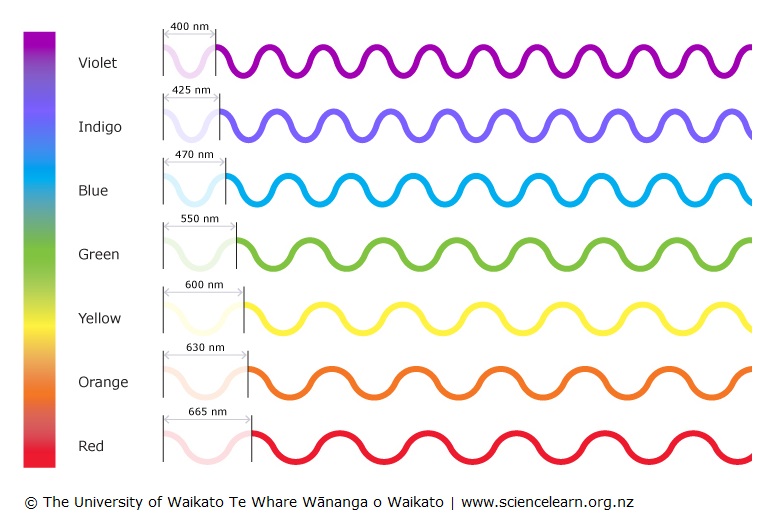
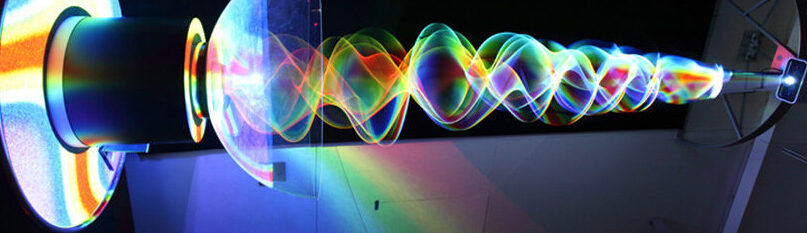
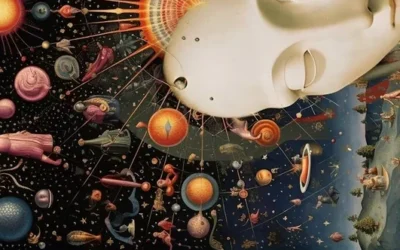
For Grosseteste, light was not merely a physical phenomenon; it was the corporeity of the universe—the first form from which all matter is derived. In his treatise De Luce, he argued that light naturally multiplies itself and expands spherically.
- The Concept: God created a single point of light (lux).
- The Mechanism: This light auto-expanded, pulling matter with it, creating the dimensions of space and the celestial spheres.
- Modern Parallel: This is a startling anticipation of inflationary cosmology and the Big Bang theory. Grosseteste used mathematics to describe this expansion, effectively creating the first attempt at mathematical physics.
B. The Scientific Method: Resolution and Composition
Grosseteste is often credited with formulating the dual method of scientific inquiry:
- Resolution (Inductive Reasoning): Observing specific phenomena (e.g., a rainbow) to derive general principles.
- Composition (Deductive Reasoning): Using those principles to predict other phenomena.
He also introduced the concept of falsification—the idea that a theory is only valid if it can survive attempts to disprove it. This methodology would be refined by his student Roger Bacon and later Galileo, laying the groundwork for the scientific revolution.
IV. The Conceptualization of Trauma: The Fracture of Light
While Grosseteste did not write about “trauma” in the modern clinical sense, his metaphysical framework offers a unique way to conceptualize psychological suffering. If the soul is analogous to light, then trauma can be viewed as the obscuration or fracture of that light.
1. The Loss of Luminosity
In Grosseteste’s cosmology, the further light travels from its source, the more “rarefied” and weaker it becomes. This mirrors the Neoplatonic view of evil not as a presence, but as an absence (privation) of good. Trauma is often experienced as a dimming of the self. The patient feels “cut off” from their inner source of vitality. Therapy, in this model, is the work of “cleaning the lens” of the psyche so that the internal light can shine clearly again.
2. Integration of the “Two Books”
Grosseteste believed God wrote two books: the Bible and the Book of Nature. To ignore one was to be half-blind. Modern trauma therapy suffers when it ignores the “Book of the Soul” (intuition/spirituality) in favor of only the “Book of the Body” (neurobiology). Grosseteste’s legacy reminds us that healing requires integrating the empirical (evidence-based practice) with the intuitive (the felt sense of meaning).
V. Lasting Influence: The Intuitive Scientist
Grosseteste challenges the sterile materialism of the 21st century. He proves that the rigor of the scientific method was born from a spiritual worldview, not in opposition to it.
The Role of Intuition in Discovery
Grosseteste’s work foreshadows the insights of modern researchers like Friedrich Kekulé (who discovered the benzene ring in a dream) and Albert Einstein (who visualized relativity). These figures demonstrate that scientific discovery often begins with intuition—a direct, non-linear grasp of reality—which is then verified by empirical testing. In psychotherapy, this validates the clinician’s use of intuition. The therapist must be a “scientist of the soul,” using empirical tools to test the intuitive hunches that arise in the sacred space of the session. By reclaiming Grosseteste, we reclaim the dignity of the subjective mind in an objective world.
Further Reading & Resources
- Ordered Universe Project: An interdisciplinary project dedicated to the scientific works of Robert Grosseteste.
- Stanford Encyclopedia of Philosophy: Robert Grosseteste.
- Google Books: The Scientific Works of Robert Grosseteste.
Explore More on Science & Spirituality
- The Myth of Science and the Science of Myth
- Friedrich August Kekulé and the Role of Intuition
- Pseudo-Dionysius and the Mystical




0 Comments