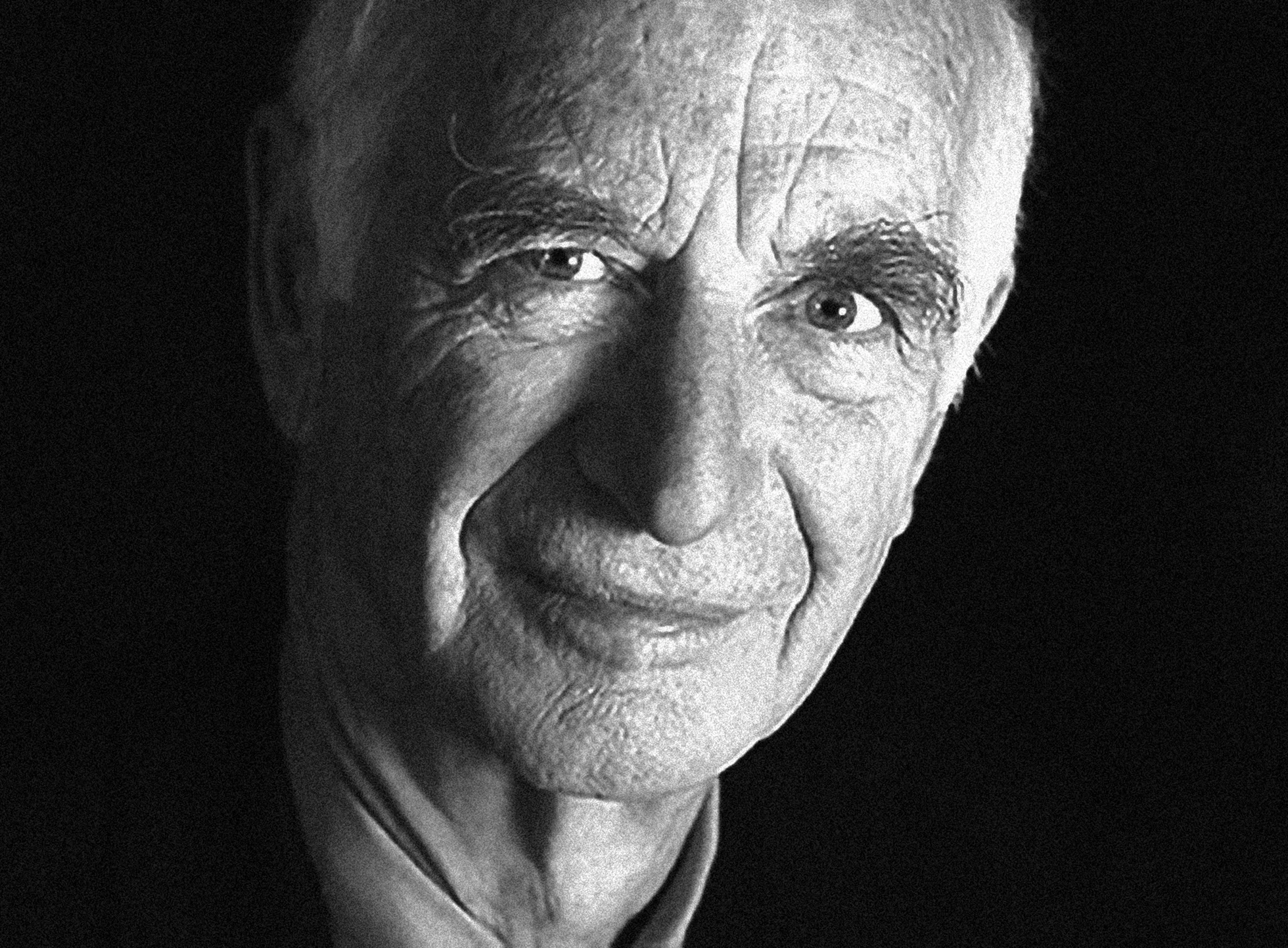
Who Was James Hillman?

by | Dec 26, 2025 | 0 comments

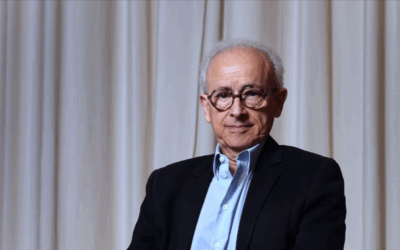
If Carl Jung opened the door to the collective unconscious then James Hillman kicked it off its hinges and demanded we look at what was actually inside without trying to tidy it up. Hillman was the founder of Archetypal Psychology and arguably the most original American psychologist of the twentieth century. He was a thinker who refused to coddle the ego or promise easy happiness. Instead he argued for a psychology of “soul-making” a process that honors the messy painful and often beautiful complexity of human life. Unlike the clinical sterility of modern psychiatry which seeks to medicate away symptoms Hillman argued that our symptoms are often the soul’s way of crying out for attention. He challenged the very foundation of how we view therapy suggesting that the goal is not to fix the patient but to deepen their character. His work pushes us to look beyond the narrow confines of our personal history and see our lives against a backdrop of myth and destiny.

James Hillman was born in 1926 in Atlantic City New Jersey into a world far removed from the European intellectual tradition he would later master. After serving in the US Navy Hospital Corps during World War II he embarked on a journey of education that took him to the Sorbonne in Paris and Trinity College Dublin. However it was his arrival in Zurich that sealed his fate. He studied at the C.G. Jung Institute and eventually became its Director of Studies the first American to hold the post. Yet Hillman was never a blind disciple. While he revered Jung he felt that Analytical Psychology had become too focused on the “self” and “growth” turning into a naive project of self-improvement. Hillman wanted to return to the roots of the psyche. He drew heavily from the Renaissance Neoplatonists like Marsilio Ficino and the Romantic poets like Keats emphasizing the “poetic basis of mind.” He argued that we live primarily in our imagination and that our psychological health depends on the richness of our images. This led to his seminal work Re-Visioning Psychology which was nominated for a Pulitzer Prize and laid the groundwork for a psychology that prioritized the soul (psyche) over the scientific mind.

The core of Hillman’s theory is the “Acorn Theory” famously articulated in his bestseller The Soul’s Code. He proposed that each life is formed by a unique image an innate character that calls us to a destiny just as the oak tree is contained within the acorn. He argued against the dominant “parental fallacy” of psychology which insists that we are solely the product of our upbringing and childhood trauma. Hillman suggested that while our parents and environment shape us they do not define us. Instead we are driven by a daimon or a calling that pushes us toward a specific fate. This perspective is radically liberating for clinical practice. It shifts the question from “What went wrong in my childhood?” to “What does my soul want of me?” It reframes struggles like depression or anxiety not as pathologies to be eliminated but as necessary descents that deepen the soul and force us to slow down. Hillman was a fierce critic of the “fantasy of growth” the American obsession with constantly getting better. He preferred the idea of “deepening” suggesting that true maturity involves accepting our flaws and oddities as essential parts of our character.

Hillman’s influence extends far beyond the therapy room. He was a “psychologist of the world” who applied his insights to architecture, city planning, and politics. He believed that the sickness of the soul was mirrored in the sickness of the world a concept he explored in City and Soul. He argued that ugly environments produce ugly souls and that our obsession with efficiency has stripped the world of its beauty and depth. He called for a return to an aesthetic appreciation of life where we value things for their inherent qualities rather than their utility. In the clinical realm Hillman’s legacy is preserved in the field of Archetypal Psychology which continues to thrive at institutions like the Pacifica Graduate Institute. His approach encourages therapists to listen to the precise images a client uses rather than rushing to interpret them through a theoretical lens. If a client dreams of a black dog Hillman would stay with the image of the dog exploring its texture and mood rather than abstractly labeling it as a symbol of depression.

For the modern seeker James Hillman offers a tough but vital wisdom. He warns against the literalism that pervades our culture where we mistake the image for the thing itself. He teaches us to view our lives mythically to see our struggles as chapters in a grander story. He challenges the “victim mentality” by suggesting that even our worst traumas may be necessary components of our destiny. To read Hillman is to be shaken out of complacency. It is an invitation to stop trying to “fix” yourself and start trying to know yourself. It is a call to recognize that the soul has its own agenda one that often conflicts with the ego’s desire for comfort and safety. By honoring the autonomous reality of the imagination Hillman restores dignity to the human experience reminding us that we are not just biological accidents but carriers of a profound and ancient mystery.

Timeline of Major Works and Life Events

1926 Born on April 12 in Atlantic City New Jersey. 1944 Serves in the US Navy Hospital Corps treating blind veterans. 1950 Graduates from Trinity College Dublin with a degree in Mental and Moral Science. 1959 Receives his PhD from the University of Zurich and his analyst’s diploma from the C.G. Jung Institute. 1960 Becomes Director of Studies at the C.G. Jung Institute in Zurich. 1970 Becomes editor of Spring Publications turning it into the primary vehicle for Archetypal Psychology. 1975 Publishes Re-Visioning Psychology which is nominated for the Pulitzer Prize. 1978 Returns to the United States and helps found the Dallas Institute of Humanities and Culture. 1983 Publishes Healing Fiction exploring the narrative basis of therapy. 1992 Publishes We’ve Had a Hundred Years of Psychotherapy and the World’s Getting Worse with Michael Ventura. 1996 Publishes The Soul’s Code In Search of Character and Calling which tops the New York Times Bestseller list. 2004 Publishes A Terrible Love of War examining the psychological attraction to conflict. 2011 Dies on October 27 at his home in Thompson Connecticut leaving his papers to the Opus Archives.

Select Bibliography

Hillman J. (1975). Re-Visioning Psychology. HarperPerennial. Hillman J. (1996). The Soul’s Code: In Search of Character and Calling. Random House. Hillman J. (1979). The Dream and the Underworld. Harper & Row. https://www.harpercollins.com/products/the-dream-and-the-underworld-james-hillman Hillman J. (1983). Healing Fiction. Spring Publications. Hillman J. (1999). The Force of Character: And the Lasting Life. Random House. Hillman J. (2004). A Terrible Love of War. Penguin Books. Moore T. (Ed.). (1989). A Blue Fire: Selected Writings by James Hillman. HarperPerennial. Paris G. (2007). Wisdom of the Psyche: Depth Psychology after Neuroscience. Routledge. Slater G. (Ed.). (2011). Senex and Puer (Uniform Edition Vol. 3). Spring Publications. https://springpublications.com/



Explore the Other Articles by Categories on Our Blog 

Bill O’Hanlon: The Therapist Who Asked “How Do People Get Happy?”

Bill O’Hanlon: The Therapist Who Asked “How Do People Get Happy?”

Bill O’Hanlon, MS, LMFT, studied with Milton Erickson as his only work/study student (serving as Erickson’s gardener) before co-founding Solution-Oriented/Possibility Therapy in the 1980s. Author of nearly 40 books including the Oprah-featured “Do One Thing Different” and foundational “In Search of Solutions” with Michele Weiner-Davis, O’Hanlon delivered over 3,700 presentations worldwide teaching his collaborative, non-pathologizing approach asking “How do people get happy?” rather than “What’s wrong?” He retired from clinical practice in 2020 to pursue professional songwriting from Santa Fe, New Mexico.

Diane Poole Heller: From Trauma Survivor to Pioneer of Attachment Healing

Diane Poole Heller: From Trauma Survivor to Pioneer of Attachment Healing

Diane Poole Heller, PhD, transformed her own 1988 traumatic car accident into a pioneering career developing DARe (Dynamic Attachment Re-patterning experience), a somatic approach integrating attachment theory and trauma resolution now taught worldwide. After 25 years as Senior Faculty for Peter Levine’s Somatic Experiencing Institute, she created Trauma Solutions and authored The Power of Attachment, teaching that regardless of childhood history, people can develop Secure Attachment Skills through attuned relationships, body-based interventions, and recognizing we’re all biologically hardwired for connection and healing.

Laurence Heller: The Clinical Psychologist Who Mapped How Developmental Trauma Distorts Identity

Laurence Heller: The Clinical Psychologist Who Mapped How Developmental Trauma Distorts Identity

Laurence Heller, PhD, spent over 40 years in private practice recognizing that developmental trauma creates not just nervous system dysregulation but fundamental identity distortions—pervasive shame, self-judgment, and disconnection from authentic self. He developed the NeuroAffective Relational Model (NARM), now taught worldwide, mapping five adaptive survival styles arising from disrupted developmental needs (Connection, Attunement, Trust, Autonomy, Love-Sexuality) and providing framework for healing through disidentification from survival-based identities while working simultaneously with psychology and physiology within attuned therapeutic relationships.

Bruce Perry: From Branch Davidian Waco to “What Happened to You?” – Three Decades Translating Neuroscience into Healing for Maltreated Children

Bruce Perry: From Branch Davidian Waco to “What Happened to You?” – Three Decades Translating Neuroscience into Healing for Maltreated Children

Bruce Perry developed the Neurosequential Model after treating children who survived the 1993 Branch Davidian siege in Waco. His three decades translating neuroscience into practical trauma treatment culminated in the #1 bestseller What Happened to You? with Oprah Winfrey. Perry’s fundamental insight: childhood behavior reflects developmental adaptation to environment rather than defect requiring correction, revolutionizing how thousands of professionals understand trauma.

Judith Herman: The Psychiatrist Who Named Complex Trauma and Challenged a Field’s Convenient Amnesia

Judith Herman: The Psychiatrist Who Named Complex Trauma and Challenged a Field’s Convenient Amnesia

Judith Herman, Harvard psychiatrist, transformed trauma treatment by distinguishing complex PTSD from single-incident trauma and articulating the three-stage recovery model emphasizing safety, remembrance, and reconnection. Her 1992 Trauma and Recovery challenged psychiatry’s “convenient amnesia” about sexual violence, while 2023’s Truth and Repair reimagines justice as healing rather than punishment, asking what survivors actually need: acknowledgment, validation, and community witness rather than retribution.

Gabor Maté: From Budapest Ghetto to Voice of Compassion in Addiction’s Darkest Corners

Gabor Maté: From Budapest Ghetto to Voice of Compassion in Addiction’s Darkest Corners

Gabor Maté, Holocaust survivor turned physician, spent twelve years treating severe addictions in Vancouver’s poorest neighborhood, asking “why the pain?” rather than “why the addiction?” His revolutionary recognition that addiction serves to escape unbearable emotions rooted in childhood trauma, detailed in bestseller In the Realm of Hungry Ghosts, transformed understanding of substance abuse from moral failing to developmental injury.

David Grand: From EMDR Trainer to Brainspotting Pioneer Through a Champion Skater’s Frozen Gaze

David Grand: From EMDR Trainer to Brainspotting Pioneer Through a Champion Skater’s Frozen Gaze

David Grand discovered brainspotting in 2003 when a figure skater’s eye wobble revealed where trauma was stored in her brain. By maintaining fixed eye position on that “brainspot” rather than using bilateral movement, processing accelerated dramatically. His development of this approach, now used by 13,000+ therapists worldwide, demonstrates how careful clinical observation combined with willingness to deviate from protocol can produce genuine therapeutic innovation for treating trauma, the yips, and performance blocks.

Richard Schwartz: From Failed Bulimia Study to Discovering the Internal Family System

Richard Schwartz: From Failed Bulimia Study to Discovering the Internal Family System

Richard Schwartz discovered Internal Family Systems in 1982 when bulimic clients described distinct “parts” battling inside them, leading him to recognize the mind’s natural multiplicity. His development of IFS therapy, which helps Self lead an internal family of managers protecting against exiled pain and firefighters dousing emotional flames, has revolutionized how millions understand their inner conflicts. From failed outcome study to global therapeutic movement, Schwartz demonstrated that beneath protective parts, everyone possesses undamaged Self capable of healing.

Francine Shapiro: From Cancer Diagnosis to Revolutionary Trauma Treatment Through Eye Movements

Francine Shapiro: From Cancer Diagnosis to Revolutionary Trauma Treatment Through Eye Movements

Francine Shapiro discovered EMDR during a walk in 1987 when she noticed eye movements reduced disturbing thoughts. Her development of Eye Movement Desensitization and Reprocessing revolutionized trauma treatment, creating the first therapy to demonstrate rapid resolution of PTSD through bilateral stimulation activating the brain’s adaptive information processing system. Now recommended by WHO and DOD, EMDR has helped millions worldwide process traumatic memories that talking therapy couldn’t reach.

Janina Fisher: Revolutionizing Trauma Treatment Through Structural Dissociation and Parts Work

Janina Fisher: Revolutionizing Trauma Treatment Through Structural Dissociation and Parts Work

Janina Fisher revolutionized complex trauma treatment by integrating structural dissociation theory with parts work and somatic interventions. Discover her Trauma-Informed Stabilization Treatment (TIST) approach showing how recognizing fragmented selves as protective adaptations rather than pathology transforms healing for clients with treatment-resistant symptoms including self-harm, addiction, and chronic suicidality.

The Architecture of the Soul and the Machine: A Critical History and Future of Psychotherapy

The Architecture of the Soul and the Machine: A Critical History and Future of Psychotherapy

A critical deep dive into the hidden history of psychotherapy, exploring how the personal traumas of founders like Freud and Jung collided with societal forces to shape modern mental health. Drawing on the works of Adam Curtis, James Hillman, and Sonu Shamdasani, this article traces the shift from the “architecture of the soul” to the “technocratization of care,” exposing the impact of profit motives and algorithmic logic while proposing a metamodern path forward for the profession.

Peter Levine: The Biophysicist Who Taught Trauma to Speak Through the Body

Peter Levine: The Biophysicist Who Taught Trauma to Speak Through the Body

Peter Levine revolutionized trauma treatment through Somatic Experiencing, proving trauma lives in the body’s nervous system. Discover how his work on completing frozen defensive responses, titration, and the SIBAM model provides somatic grounding for Jungian depth psychology and transforms PTSD healing.

Marion Woodman: The Body as the Shadow

Marion Woodman: The Body as the Shadow

Marion Woodman revolutionized the treatment of addiction and eating disorders by connecting Jungian psychology to the body. Explore her concepts of ‘Addiction to Perfection’ and Conscious Femininity.

0 Comments

Submit a Comment

Your email address will not be published. Required fields are marked *