
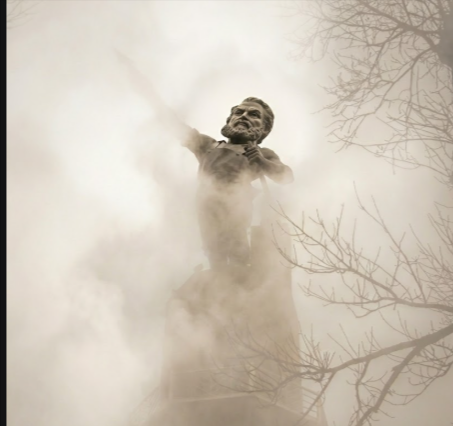
Birmingham, Alabama exists because of a geological coincidence so improbable it approaches the mythological: it is the only place on Earth where coal, iron ore, and limestone, the three essential ingredients for making iron, occur naturally within a ten-mile radius. This geological predestination created not just a city but a collective psychological complex that would manifest most dramatically in the form of a 56-foot-tall, 120,000-pound cast-iron god standing atop Red Mountain. The Vulcan statue, the largest cast-iron sculpture in the world and the tallest statue ever constructed in the United States by an American artist for a domestic exposition, serves as both symptom and cure for Birmingham’s century-long struggle with industrial identity, cultural legitimacy, and authentic self-expression.
The Psychological Archaeology of Industrial Birmingham
Chart: Technical Specifications
| Technical Element | Measurement/Specification | |
|---|---|---|
| Total Height | 56 feet (17.1 m) | |
| Weight (Figure) | 100,000 lbs (45,359 kg) | |
| Weight (Complete) | 120,000 lbs (54,431 kg) | |
| Chest Circumference | 22 feet 6 inches | |
| Head Height | ~8 feet | |
| Material | Grey Iron (Sloss No. 2) | |
| Original Molds | 150 drawbacks for head alone | |
| Pedestal Height | 124 feet | |
| Wind Resistance | 140 mph | |
| Restoration Cost | $14.5 million |
Founded in 1871 in the immediate chaos following the Civil War, Birmingham was an artificially created industrial entity, a city with no organic history, no river for transport, no strategic hill for defense. It emerged from pure geological opportunity, earning the nickname “Magic City” not for any supernatural quality but for the velocity of its growth from nothing to something. This origin story created what we might call Birmingham’s “foundational trauma”: the city was born not from community or culture but from extraction and exploitation, viewed by the established capitals of the South as a gritty, unrefined labor camp, a workshop town rather than a center of culture.
By 1903, when the Commercial Club of Birmingham convened to discuss representation at the Louisiana Purchase Exposition, the city faced an existential crisis. The state of Alabama had failed to organize a coherent exhibit due to legislative apathy, leaving Birmingham to represent itself or remain invisible on the world stage. James MacKnight, secretary of the Commercial Club, understood intuitively what psychologists now recognize as the power of symbolic representation. He argued that standard displays of mineral samples would be ignored, that Birmingham needed a “monumental figure” made entirely of Birmingham iron, standing sixty feet tall. His vision was driven by what we might call the American obsession with superlatives, the psychological need to be “the largest in the world” to achieve what he called “wide attention.”
Giuseppe Moretti and the Psychology of Creation
The selection of Giuseppe Moretti, a 44-year-old Florentine sculptor living in New York, represents a fascinating psychological choice. Moretti was flamboyant, known for his Beaux-Arts realism and his ability to work with extraordinary speed. He accepted the commission in November 1903 for $6,000, seeing it as what he called a “bravura feat” that would secure his legacy. His motivation transcended the financial; this was about artistic immortality through industrial materiality.
Moretti’s interpretation of Vulcan reveals profound psychological insight. Rather than choosing Apollo or Mercury, gods of light and communication, Birmingham embraced Vulcan (Hephaestus in Greek), the only Olympian god who worked for a living. Vulcan was often depicted as lame, sooty, and bearded, a laborer cast from Olympus for his deformity. By choosing this wounded craftsman deity, Birmingham was unconsciously selecting its shadow archetype: the rejected one who transforms exile into mastery, the ugly god who creates beauty, the damaged creator who forges strength from weakness.
The winter of 1903-1904 found Moretti working in St. Stephen’s Roman Catholic Magyar Church in Passaic, New Jersey, an unfinished building with cathedral-like proportions but no heating. The environmental conditions would prove psychologically and materially significant. Moretti and his assistants built a wooden armature, applied tons of clay to sculpt the figure’s surface, and created plaster molds from the clay master. The brutal cold caused the wet plaster casts to freeze before they could cure properly, making them exceptionally brittle. This environmental trauma at the moment of creation would cascade through the statue’s entire history.
Moretti designed Vulcan to be aesthetically “ugly” in the classical sense: rugged, powerful, lacking the effete beauty of an Apollo. The god was shown standing at his anvil, left hand resting on a sledgehammer, right hand held high examining a newly forged spear point. This pose, the maker contemplating his creation, would become psychologically central to Birmingham’s self-conception, though the city would take a century to understand its significance.
The Metallurgical Birth and Technical Mastery
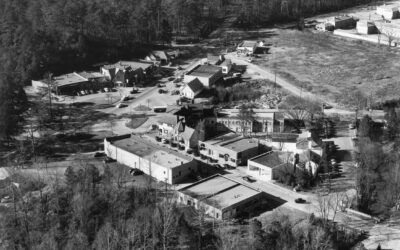
The Birmingham Steel and Iron Company, led by J.R. McWane, faced what was essentially a technological moonshot. McWane repurposed the former Hood Foundry site and assembled fourteen expert foundrymen led by superintendent Charles Ledbetter and foreman Barney Conlan. The statue would be cast using “Sloss No. 2 Soft” pig iron donated by the Sloss-Sheffield Steel and Iron Company, a specific grade of grey iron known for its high fluidity that could flow into intricate mold details without freezing prematurely.
The technical specifications reveal the ambition’s scope: 100,000 pounds of iron for the figure alone, 120,000 pounds fully assembled with anvil, hammer, and spear, standing 56 feet tall with a chest circumference of 22 feet 6 inches and a waist of 18 feet 3 inches. The head alone stood approximately 8 feet tall.
The foundry employed “pit casting,” an archaic but effective method involving excavating large pits in the foundry floor. The complexity was staggering: the head alone required 150 separate “drawbacks” (moveable mold sections) to capture the curls of the beard and facial structure. When the plaster cast of the head arrived from New Jersey shattered into “a hundred pieces” due to the freezing damage, Moretti was forced to re-sculpt the entire head from scratch within the foundry itself, using the fragments as guides.
Despite working 60-hour weeks under impossible deadlines, the Birmingham workforce achieved something remarkable: every single casting was successful on the first pour, a zero-defect record that stands as testament to the skill of Birmingham’s industrial laborers. This perfect execution under pressure reveals what psychologists might recognize as “flow state” achievement, where extreme challenge meets exceptional skill to produce transcendent results.
The World’s Fair Triumph and the Forgotten Christ
The transportation of the 60-ton colossus to St. Louis required seven flatcars, with sections too large for boxcars lashed directly to the platforms. When the World’s Fair opened on April 30, 1904, Vulcan stood headless and armless in the Palace of Mines and Metallurgy, a surreal industrial stump that must have created considerable psychological anxiety for Birmingham’s representatives.
The formal dedication on June 7, 1904, included a ritual of profound symbolic significance: the statue was christened not with champagne but with water from the Cahaba River, literally binding the industrial god to the Alabama watershed. The inscription on the anvil read “Iron is King, Its Home Birmingham, Ala.” The exhibit won the Grand Prize in the Department of Mines and Metallurgy, with Moretti receiving a personal medal.
Yet the most psychologically revealing element of the 1904 exhibit often goes unmentioned: Moretti’s “Head of Christ” carved from white Sylacauga marble, which he discovered during his Alabama visits and compared favorably to Carrara marble. This bust, displayed alongside Vulcan, created a deliberate dialectical tension between pagan industry and Christian spirituality, between black iron and white marble, between material force and transcendent love. Moretti considered the Head of Christ his masterpiece, refusing to sell it and carrying it with him for the rest of his life before it was donated to the Alabama Department of Archives and History in 1941.
This pairing of Vulcan and Christ represents what Jung would call a attempt at psychological wholeness through the union of opposites. Yet Birmingham would prove unable to hold this tension, splitting the material from the spiritual in ways that would haunt the city’s psychological development for decades.
The Abandonment Complex and Commercial Degradation
Following the fair’s triumph, the Commercial Club faced the reality of owning a 60-ton god with nowhere to put him. Despite offers from St. Louis and San Francisco to purchase the statue, civic pride prevented a sale. When Vulcan arrived back in Birmingham in February 1905 with an unpaid freight bill, the railroad followed standard procedure for abandoned cargo: they dumped the statue’s pieces into the weeds along the Birmingham Mineral Railroad tracks near Red Mountain.
For eighteen months, the Grand Prize winner lay dismembered in the grass. During this period of neglect, the statue suffered its most significant injuries: the loss of the spear point and severe damage to the fingers of the left hand. This abandonment represents what psychoanalysts would recognize as a repetition compulsion, Birmingham unconsciously recreating its own foundational trauma of being dismissed as unworthy by established Southern society.
When the Alabama State Fairgrounds finally rescued the statue in 1906, the reassembly became a comedy of errors revealing deep psychological confusion. Without Moretti present to supervise, workmen attached the right arm incorrectly, rotating the hand to face upward with palm open in what looked like a beg or salute. This error transformed Vulcan from deity to billboard, with the Fairgrounds exploiting the open hand for advertising revenue over the next thirty years.
The commercial indignities reached their nadir with a parade of objects placed in Vulcan’s hand: ice cream cones from local dairies, Coca-Cola bottles (Birmingham being a major bottling hub), and most infamously, a giant papier-mâché pickle jar from Heinz 57. The Liberty Overall company went further, painting blue denim overalls directly onto the iron legs and torso with a sign declaring “Vulcan wears Liberty Overalls.”
Moretti, seeing photos of his creation holding a pickle and wearing painted pants, famously declared: “I almost wish I had never made him.” This period, which historians call the “Huckster Era,” represents Birmingham’s manic defense against depression and shame, the city turning its highest achievement into a joke rather than face the vulnerability of genuine aspiration.
The WPA Resurrection and Psychological Elevation
By the mid-1930s, the Great Depression had devastated Birmingham harder than almost any other American city. In this climate of despair, the Kiwanis Club of Birmingham, led by Tom Joy and Mercer Barnett, launched a crusade to move Vulcan to a dignified location. They selected the top of Red Mountain, the geological source of the city’s wealth, with the Tennessee Coal, Iron and Railroad Company donating five acres for a park.
The Works Progress Administration contributed $38,874 of the $44,062 budget, integrating Vulcan into the national landscape of New Deal public art alongside the Hoover Dam statues and post office murals. The architectural firm of Warren, Knight & Davis designed a 124-foot tower of local variegated sandstone in restrained Art Moderne style. The rusticated stone connected the tower to the mountain while streamlined buttresses pointed skyward, literally elevating the iron figure into transcendence.
The 1936 reassembly included a decision that would prove catastrophic: engineers filled the statue’s legs and lower torso with solid concrete for stability. They failed to account for the different thermal expansion rates of cast iron and concrete, creating what would eventually become “concrete cancer” as the materials fought against each other with every temperature change. This technical error serves as a perfect metaphor for Birmingham’s psychological splitting: attempting to stabilize identity by forcing incompatible elements together rather than allowing organic integration.
Vulcan was dedicated on Red Mountain in May 1939, stripped of his painted overalls, given a new spear point, and painted shimmering aluminum silver. The elevation to the mountain served multiple psychological functions: creating necessary distance for idealization, positioning Vulcan as guardian rather than object, and most importantly, acknowledging Red Mountain itself as the source of Birmingham’s existence.
The Neon Torch Era and Collective Mortality Awareness
In 1946, the Birmingham Junior Chamber of Commerce transformed Vulcan into a traffic safety advocate by replacing his spear with a glass and neon torch linked to the Birmingham Police Department. The light glowed green for days without traffic fatalities and turned red when someone had died on the city’s roads in the previous 24 hours.
For 53 years, this “Vulcan Light” created a unique collective psychological phenomenon. Every child in Birmingham grew up checking the mountain to see if the light was red, creating communal awareness of death that shaped generational consciousness. Unlike other cities where traffic deaths remained abstract statistics, Birmingham literally illuminated its casualties, institutionalizing a daily memento mori visible from nearly every road in the valley.
The modification required cutting holes in the iron for electrical conduits, and the lack of a cap meant rainwater poured into the interior, pooling around the concrete core. The 1971 centennial “modernization” made things worse, covering the WPA sandstone with white marble cladding and adding an enclosed observation deck that obscured the statue’s proportions. By the 1990s, engineering studies declared the structure unstable, with chunks of iron falling as the statue literally burst at its seams from internal pressure.
The Geographic Psychology of “Mooning Homewood”
Throughout these transformations, Vulcan’s orientation created a permanent sociological joke. Facing north toward downtown and the blast furnaces that created him, his bare muscular buttocks faced directly toward Homewood, the affluent over-the-mountain suburb to the south. The phrase “Vulcan is mooning Homewood” became a cultural shibboleth representing the tension between the industrial city and the wealthy flight-suburbs, between those who stayed and those who fled, between labor and capital.
This anatomical accident encoded class consciousness into the very landscape, making social stratification literally visible in the positioning of the god’s naked posterior toward suburban prosperity. The joke served as both pressure release and subtle rebellion, the working class claiming psychological victory through their god’s eternal insult to suburban propriety.
The Great Restoration as Therapeutic Return
The 1999-2004 restoration, managed by Robinson Iron of Alexander City, Alabama, represents what psychotherapists would recognize as a “therapeutic return to origins.” The $14.5 million project aimed to return the statue to its 1904 appearance and the tower to its 1938 design, requiring complete disassembly and addressing fundamental structural problems.
Robinson Iron faced enormous technical challenges. They used hydrodemolition and mechanical chipping to carefully remove the concrete without damaging the fragile iron skin, then inserted a new stainless steel armature consisting of one-inch thick plates in a truss-like skeleton that “floats” inside the iron, carrying the load while allowing thermal expansion and contraction. This new system can withstand wind loads up to 140 miles per hour.
All paint layers were removed and a new high-performance coating called “Vulcan Gray” was applied to mimic the original 1904 raw iron appearance. The neon torch was permanently retired to the museum, and a new spear point was cast based on Moretti’s original drawings. The tower was stripped of its 1971 marble cladding to reveal the original WPA sandstone, and the observation deck was replaced with a cantilevered open-air platform respecting Warren, Knight & Davis’s original profile.
Vulcan was re-erected in June 2003 and the park reopened in 2004, exactly one hundred years after the St. Louis World’s Fair. The statue now stands as Moretti intended: a worker-god examining his creation, contemplating what has been forged.
Cultural Integration and the Lonesome God
Vulcan has entered American folklore in ways that reveal his deeper psychological significance. Songwriter John Prine, in “The Lonesome Friends of Science,” personified the statue as a lonely, displaced giant: “The Vulcan lives in Birmingham / Sometimes he lives with me / He plays fetch with the yellow dog / That stands by the Tennessee.” Prine captures the inherent melancholy of a pagan god stranded in the Bible Belt, an industrial relic in a digital age.
The tension between Vulcan’s pagan identity and Birmingham’s deep religiosity has persisted throughout his history. Early twentieth-century ministers decried the erection of a “pagan idol,” tension partly alleviated by the presence of Moretti’s Head of Christ at the 1904 fair providing Christian counterweight to the Roman deity. Today the statue is largely secularized, viewed as historical symbol rather than religious statement, yet the underlying tension between material achievement and spiritual aspiration remains unresolved in Birmingham’s collective psyche.
The Contemporary Psychological Function
In our current era of deindustrialization and service economy dominance, Vulcan takes on new psychological significance as monument to a vanishing mode of existence: the industrial craftsman who transforms raw materials through physical labor. For a city whose economy now runs on healthcare and banking, Vulcan serves as psychological anchor to a time when the relationship between work and product was direct, tangible, and visible.
This creates what we might call “complex industrial nostalgia,” not simple longing for the past but for the clarity of purpose and identity that industrial production provided. Vulcan reminds Birmingham of when the city knew exactly what it was: the place where earth became iron, where iron became steel, where raw geological fortune became the skeleton of American progress.
Climate change discussions make his celebration of industrial production newly problematic. Racial reconciliation efforts complicate the narrative of industrial progress that largely excluded Black workers from prosperity despite their essential labor. Vulcan must now hold new projections: environmental guilt, racial reckoning, economic anxiety about automation and artificial intelligence replacing human labor.
The Material Psychology of Restoration
The technical details of the restoration reveal profound psychological truths about identity and integration. The original concrete filling that nearly destroyed the statue from within serves as a perfect metaphor for defensive structures that initially provide stability but eventually become destructive. The new stainless steel armature that “floats” inside the iron skin, allowing expansion and contraction while providing support, models healthy psychological structure: strong enough to provide stability, flexible enough to allow natural movement and change.
The decision to restore the spear rather than maintain the nostalgic neon torch represents what psychoanalysts call “working through” rather than “acting out.” Birmingham chose to honor original intention rather than familiar adaptation, accepting loss of the comforting traffic light to recover authentic meaning. The careful preservation of the retired torch in the museum allows for honoring the past without being imprisoned by it.
Vulcan as Ongoing Psychological Process
The statue’s journey from conception through humiliation to restoration offers Birmingham and its observers a profound teaching about identity formation. Like individual psychological development, civic identity evolves through cycles of grandiosity and humility, fragmentation and integration, authentic expression and defensive adaptation.
The complete history reveals a pattern of what psychologists call “approach-avoidance conflict” with genuine achievement. Each time Birmingham achieved something remarkable (winning the World’s Fair Grand Prize, elevating Vulcan to the mountain, creating the safety light system), the city almost immediately undermined or abandoned the achievement, suggesting deep ambivalence about deserving recognition or sustaining excellence.
The Therapeutic Wisdom of Iron and Time
Today’s Vulcan Park functions as what environmental psychologists call a “restorative environment” with added dimensions of historical consciousness and collective memory. The museum displaying the retired neon torch, the preserved WPA stonework, and the historically accurate spear create what we might call a “memory palace” of Birmingham’s psychological development, allowing visitors to witness the complete journey rather than just the current state.
The viewing platform’s 360-degree panorama creates a “prospect-refuge” experience, combining safety of elevation with comprehensive environmental awareness. Visitors literally see Birmingham from Vulcan’s perspective while simultaneously observing Vulcan himself, facilitating a complex identification process where observer, observed, and observing merge into unified experience.
For contemporary Birmingham residents, particularly those working in psychotherapy and mental health fields, Vulcan offers an inexhaustible metaphor for therapeutic process. His journey from dismemberment to integration, from concrete cancer to flexible support, from commercial exploitation to authentic restoration, parallels the trauma recovery narratives encountered daily in clinical practice.
The Eternal Forge of Identity
Vulcan stands today not as a fixed symbol but as an ongoing psychological process, a 120,000-pound invitation to consider what it means to create, endure, destroy, and restore. His presence reminds us that identity, whether individual or collective, is never final but always being forged in the fires of contemporary challenge while maintaining connection to essential origins.
The restoration of his spear suggests Birmingham has entered what we might call “mature industrial identity,” able to honor its manufacturing past without being imprisoned by it, able to acknowledge both the dignity and damage of industrial labor, both the achievement and the cost of transforming earth into civilization.
Standing atop Red Mountain, examining his spear point with the concentration of a craftsman checking his work, Vulcan embodies the psychological stance Birmingham needs for its future: careful attention to what has been created, honest assessment of quality and damage, and the courage to keep forging ahead despite uncertainty. He stands as proof that even gods can be abandoned, degraded, filled with concrete cancer, and still be restored to dignity through patient work and community commitment.
In the end, Vulcan teaches Birmingham and all who observe him that resurrection is possible, that what seems permanently damaged can be restored, that identity can evolve without losing essential nature. He is simultaneously Birmingham’s symptom and cure, its shadow and its light, its history and its future, forever examining the spear point of its own becoming.
| Period | Object/State | Sponsorship/Authority | Psychological Function | Birmingham’s Development Stage |
|---|---|---|---|---|
| 1903-1904 | Spear Point + Hammer | Commercial Club | Industrial Pride/Aspiration | Adolescent Grandiosity |
| 1904 | Head of Christ Display | Moretti’s Vision | Spiritual/Material Integration | Attempted Wholeness |
| 1905-1906 | Dismembered in Weeds | Railroad/Abandonment | Abandonment Trauma | Depression/Neglect |
| 1906-1936 | Pickle/Coca-Cola/Overalls | Fairgrounds/Advertisers | Manic Defense/Commercialization | False Self/Shame |
| 1939-1946 | Restored Spear | WPA/Kiwanis | Recovery/Dignity | Mature Pride |
| 1946-1999 | Neon Safety Torch | Jaycees/Police | Superego Control/Mortality Awareness | Vigilant Anxiety |
| 1971 | Marble Cladding | Centennial Commission | Modernist Denial | Identity Confusion |
| 1999-2003 | Disassembled | Restoration Team | Therapeutic Deconstruction | Working Through |
| 2004-Present | Original Spear | Historic Preservation | Authentic Integration | Mature Acceptance |








0 Comments