

When Your Patient’s PTSD Treatment Becomes a Felony: What Alabama Therapists Need to Know About HB445
I don’t normally write about drug policy. It’s not my area of expertise, and frankly, the politics around cannabis have never been something I’ve felt compelled to wade into. I have colleagues who are passionate advocates for legalization and others who remain skeptical. I’ve stayed in my lane, focused on what happens in the therapy room.
But I’m writing this because something is happening in Alabama that directly affects our patients, and most of them don’t know it’s coming.
A significant percentage of my trauma and PTSD patients use hemp-derived products to manage their symptoms. Delta-8 gummies to sleep. CBD tinctures for hyperarousal. THCA flower for the kind of chronic pain that often accompanies complex trauma. Since the 2018 Farm Bill made these products federally legal, their use has become remarkably common. Patients mention it casually during intake because they don’t consider it “drug use” in any meaningful sense. It’s sold at gas stations. It’s advertised on Instagram. Their doctors know about it.
As of July 1, 2025, ordering these products online in Alabama is a crime. And the way the law is being enforced means that psychologically vulnerable patients are walking into a trap that could destroy their lives.
What HB445 Actually Does
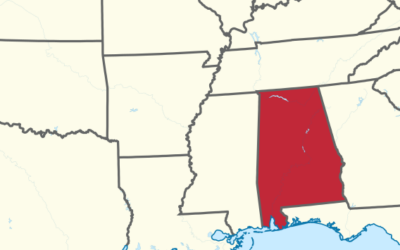
Alabama House Bill 445, signed by Governor Kay Ivey in May 2025, fundamentally restructured the legality of consumable hemp products in Alabama. The Alabama ABC Board now regulates these products with the same authority it uses for alcohol.
The law does several things that matter for our purposes:
It bans all direct-to-consumer shipping of hemp products. If a patient orders Delta-8 gummies from a website based in Colorado or Oregon, that package is now contraband the moment it crosses into Alabama. The vendor is operating legally in their state. The product is federally legal under the 2018 Farm Bill. But in Alabama, the act of receiving it is a crime.
It bans all smokable hemp products. Hemp flower, pre-rolls, and vape cartridges are all prohibited, regardless of THC content. This eliminates the most common delivery method for patients managing acute anxiety or panic symptoms.
It imposes severe THC limits on remaining products. Edibles are capped at 10mg per serving with a 40mg maximum per package. Many therapeutic products exceed these thresholds.
It transforms possession violations into serious criminal charges. Possessing a banned hemp product (a single Delta-8 vape pen, a package of gummies that exceeds the concentration limit) subjects the individual to the same criminal liability as possession of Schedule I narcotics like heroin or methamphetamine.
The full text of HB445 is available for those who want the statutory details. But for clinical purposes, what matters is this: a patient who orders a product they reasonably believe to be legal, from a vendor who explicitly tells them it’s legal to ship anywhere, can face felony charges upon receipt.
The Legal Trap: How Patients Are Being Caught
The mechanism of enforcement is what makes this particularly devastating for trauma patients.
Out-of-state hemp vendors continue to advertise aggressively on social media platforms. Their marketing explicitly claims that products are “100% federally legal” and “available for shipping to all 50 states.” These claims are not lies. They are technically accurate under federal agricultural law. But they obscure the fact that Alabama has criminalized what the federal government permits.
It’s critical to understand the incentive structure here. These companies are operating legally in Colorado, Oregon, California, or wherever they’re based. Alabama law enforcement cannot easily prosecute a hemp farm in another state. The vendor faces essentially zero legal risk from shipping to Alabama, and all of that risk transfers silently to the patient who receives the package. Their entire profit model depends on nationwide distribution, so they have every financial incentive to minimize or ignore state-level restrictions in their marketing.
Scroll through Instagram or Facebook for five minutes while logged into an account that’s ever searched for CBD, anxiety relief, or sleep aids, and you’ll see what I mean. The algorithms serve these ads relentlessly. “Ships to all 50 states.” “No prescription needed.” “100% legal.” Free shipping offers. First-time buyer discounts. Influencer partnerships. Professional photography. Lab test certificates. Everything designed to communicate legitimacy and safety.
And here’s the thing: most people operate on a reasonable assumption. If a legitimate-looking business in another state is openly selling a product online, processing credit card payments through normal banking channels, advertising on mainstream social media platforms, and explicitly stating they can ship it to your address, why would anyone assume receiving that package is a felony? That’s not how legal products work. That’s not how the internet works. That’s not how commerce has worked for the entire adult lifetime of anyone under 40.
The assumption that “if I can buy it online from a real company and have it shipped to my house, it’s legal here” is not unreasonable. It’s how virtually everything else works. Amazon ships to Alabama. So does every other retailer. The mental model that online commerce is borderless (which is accurate for almost every other product category) becomes a trap when applied to hemp products that one state has decided to criminalize while the federal government and 48 other states permit them.
A patient managing complex PTSD who sees these advertisements cannot reasonably be expected to understand the jurisdictional conflict between the Commerce Clause, federal agricultural policy, and state-level prohibition. They see a polished website, professional packaging, explicit assurances of legality, and a discount code for 20% off their first order. They place an order.
The package enters the mail stream.
The United States Postal Inspection Service, working with Alabama law enforcement, monitors packages originating from known cannabis distribution hubs. When a package is flagged, it’s subjected to screening by drug-detection canines.
Here’s the problem: K-9 units cannot distinguish between legal hemp and illegal marijuana. The dogs are trained to detect the volatile organic compounds present in all cannabis plants, including terpenes like pinene and myrcene. They alert to the presence of cannabinoids, not to THC concentration. A package containing 0.1% THC hemp is chemically indistinguishable from a package containing 25% THC marijuana.
Courts have addressed this issue. In State v. Green, the Tennessee Supreme Court ruled that despite hemp legalization, a positive canine alert remains valid for establishing probable cause when considered with the “totality of circumstances.” Similar rulings in federal circuits have upheld package detention based on K-9 alerts alone.
This means when a dog alerts to a patient’s package of federally legal Delta-8 gummies, officers have legal authority to secure a search warrant.
What happens next is called a “controlled delivery.”
An undercover officer, often dressed as a postal worker or delivery driver, brings the package directly to the patient’s home. The moment the patient accepts the package and brings it inside, they’ve established constructive possession of a controlled substance under Alabama law. Law enforcement converges on the residence. The patient is arrested.
For someone managing severe anxiety or PTSD, this experience is catastrophic.
The Economic Devastation
If the psychological impact weren’t sufficient, the financial consequences are designed to be inescapable.
Alabama’s criminal justice system is systematically reliant on extracting fines and fees from defendants. A comprehensive study by the Alabama Appleseed Center for Law and Justice documented that 82.9% of Alabamians with court debt report foregoing basic necessities (rent, groceries, medical care) to make court payments and avoid reincarceration.
A patient arrested for receiving a banned hemp product faces:
Bail. A typical bond for a Class C felony in Alabama is approximately $15,000. The non-refundable premium to a bondsman is usually 10%, which means $1,500 the patient will never recover, regardless of case outcome.
Court costs. Alabama assesses over 63 separate mandatory fees upon conviction, distributed across various state funds. These include the Fair Trial Tax, DNA Database Processing Fee, Forensic Sciences Testing Fee, Crime Victims’ Compensation Assessment, and dozens of others. The Alabama State Bar’s analysis of these costs documents the staggering cumulative burden.
Legal representation. Competent felony defense typically costs $2,500-$10,000.
Professional license revocation. This is where it becomes permanently devastating. Alabama Board of Nursing regulations explicitly define drug offenses as crimes of “moral turpitude” warranting license revocation. Similar provisions govern social workers, counselors, teachers, and healthcare workers. A patient who happens to be a nurse, social worker, or therapist will almost certainly lose their professional credentials permanently. Their career ends. Their identity as a professional is erased. Their access to employer-sponsored healthcare disappears.
Loss of public benefits. Alabama remains one of the few states that enforces lifetime or partial bans on SNAP and TANF for drug felonies. Federal HUD policies allow public housing authorities to evict or deny applicants with drug-related records. For a low-income patient, this means potential loss of food assistance, cash assistance, and housing.
Loss of civic rights. Felony conviction in Alabama results in loss of voting rights, which cannot be restored until all fines and fees are paid in full. This provision functions as a modern poll tax for indigent defendants.
The Alabama Appleseed study found that 50% of respondents had been jailed at least once for failing to make a payment, and 38% admitted to committing subsequent crimes solely to generate money for court payments. The system creates what it claims to punish.
The Legal Uncertainty
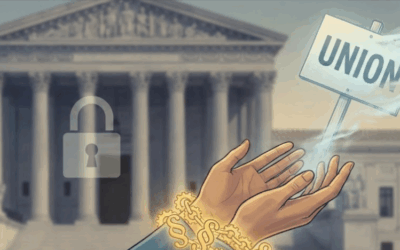
Multiple hemp companies have filed federal lawsuits challenging HB445, arguing it violates the Commerce Clause and is preempted by federal agricultural law. The legal challenges are ongoing.
These arguments may ultimately succeed. But federal appellate litigation takes years. In the interim, patients are being arrested and prosecuted. Even if HB445 is eventually struck down, the convictions already obtained won’t automatically reverse. The licenses already revoked won’t automatically restore. The jobs already lost won’t return. The trauma already inflicted on dysregulated nervous systems won’t heal.
A future court ruling declaring the law unconstitutional offers cold comfort to someone arrested today.
What This Means for Clinicians
To reiterate: I am not an attorney, and nothing here should be construed as legal advice. The following observations reflect my perspective as a clinician, not legal guidance. Patients facing potential legal issues should consult with a qualified criminal defense attorney immediately.
That said, as clinicians working with trauma populations in Alabama, there are things we need to consider.
Ask about hemp use during intake and ongoing treatment. Many patients don’t mention it because they don’t consider it relevant. They’re not “using drugs” in their minds. They’re taking a supplement they bought at a store or ordered online. The casual, destigmatized framing that made these products accessible also makes patients unaware of their legal risk.
Understand that patients may not know the law has changed. HB445 received relatively limited media coverage. Out-of-state vendors continue advertising as if nothing has changed. Patients who ordered products legally six months ago may not realize the same order is now a crime.
Be prepared to provide documentation if a patient is prosecuted. While diminished capacity defenses rarely succeed in Alabama drug cases, psychiatric conditions can sometimes be introduced as mitigating factors during sentencing. Clear documentation of the patient’s treatment history, their therapeutic intent in using these products, and the clinical context may be relevant to their legal defense.
Recognize the signs of legal system trauma. Patients who’ve experienced arrest, incarceration, or prosecution may present with acute exacerbation of PTSD symptoms, new-onset panic, severe depression, or suicidal ideation. The experience of being criminalized for seeking symptom relief produces its own psychological injuries that require direct therapeutic attention.
Consider the ethical dimensions. We work with patients who are managing genuinely disabling conditions. Many have found that hemp products provide relief that pharmaceutical alternatives don’t match. We cannot advise them to break the law. But we can ensure they understand what the law actually is, so their decisions are informed.
The Broader Pattern
What’s happening with HB445 reflects a broader dynamic I’ve written about elsewhere: the way systems designed to control costs or behavior often produce cascading harm that exceeds whatever problem they claimed to solve.
The stated purpose of HB445 is consumer safety and regulatory oversight. Those are legitimate concerns. But the enforcement mechanism produces outcomes grotesquely disproportionate to any public health goal. Criminalizing receipt of federally legal products, using K-9 units that cannot distinguish legal from illegal substances, and executing controlled deliveries against individuals seeking psychiatric symptom relief creates a system designed to punish rather than protect.
A patient managing nightmares and hypervigilance orders a product they believe is legal. They’re arrested, incarcerated, traumatized, bankrupted, stripped of their professional license, and permanently marked as a felon. Their therapeutic progress is destroyed. Their economic stability is destroyed. Their faith in institutions that claim to protect them is destroyed.
This is not a proportionate response to regulatory non-compliance. It’s a system designed to extract maximum punishment from people who pose no meaningful threat to public safety.
Moving Forward
I don’t have a political agenda here. I’m not advocating for or against cannabis legalization. I’m simply observing that a law is being enforced in a way that will predictably harm the most vulnerable patients in our care.
Some of those patients are sitting in our offices right now, unaware that the gummies in their medicine cabinet or the package they ordered last week could result in a felony conviction. They deserve to know.
Some of those patients will be arrested despite our best efforts to inform them. They’ll need clinicians who understand what happened to them and can help them process it.
And all of us need to recognize that the criminalization of psychiatric symptom management, whatever form it takes, is not a neutral policy choice. It has psychological consequences. Those consequences will show up in our therapy rooms. We should be prepared.
Joel Blackstock, LICSW-S, is the Clinical Director of Taproot Therapy Collective in Birmingham, Alabama. He specializes in complex trauma treatment using qEEG brain mapping, Brainspotting, and somatic approaches.



















0 Comments