
The Royal Road to the Unconscious
In the world of depth psychology, dreams are not random neurological firings; they are letters from the Self. Carl Jung famously broke from Freud’s view that dreams were merely disguised wish-fulfillments. Instead, Jung argued that dreams serve a compensatory function—they balance the one-sidedness of the conscious ego. If you think you are a saint, your dreams will show you as a devil; if you feel small, your dreams may crown you a king.
This article provides an introduction to Jungian dream interpretation, followed by a dictionary of 50 common symbols of the Shadow—the repressed, rejected, or unknown parts of the personality. At Taproot Therapy Collective, we use dreamwork as a vital tool for trauma recovery, helping clients integrate the fragmented pieces of their soul.
Core Concepts: How Jungians Approach Dreams
1. The Compensatory Function
The psyche is a self-regulating system. When the conscious attitude becomes too extreme (e.g., too rational, too moral, too fearful), the unconscious sends a corrective dream to restore balance. This is why “good” people often have “bad” dreams.
2. Subjective vs. Objective Level
- Objective Level: The dream is about the actual people in your life (e.g., dreaming of your mother relates to your relationship with her).
- Subjective Level: The dream is about parts of you (e.g., dreaming of your mother represents your own “mothering” capacity or your Mother Complex). Jungians prioritize the subjective level for inner work.
3. Amplification
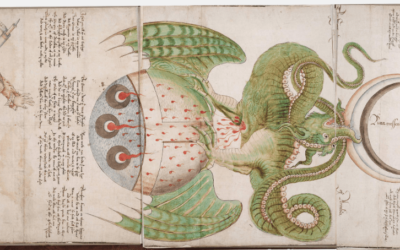
Unlike Freud’s “free association,” which leads away from the image, Jung used Amplification to go deeper into it. If you dream of a snake, you don’t just ask “What does a snake remind me of?” You explore the snake in mythology (Ouroboros, Eden, Kundalini) to understand its archetypal significance.
Techniques for Dream Work
Active Imagination
This is Jung’s most powerful technique. Instead of passively analyzing the dream, you re-enter it while awake. You close your eyes, visualize the dream figure, and engage in a dialogue. “Why are you chasing me? What do you want?” This turns the dream into a living relationship.
Dream Journaling
Dreams are volatile; they evaporate upon waking. Keeping a journal by the bed signals to the unconscious that you are listening. Over time, you will notice recurring motifs (e.g., always losing your car, always being back in high school). These patterns point to a stuck complex.
50 Common Symbols of the Shadow in Dreams
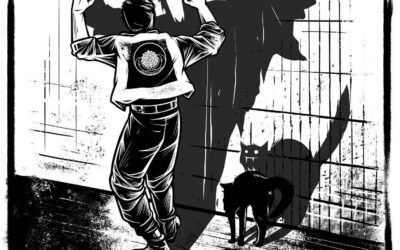
The Shadow is the “dark brother” who follows us. It contains everything we have repressed—our aggression, greed, and shame, but also our unlived creativity and power.
Nature and Animals
- 1. The Dark Forest: The unconscious itself. A place of danger but also initiation. To enter the forest is to begin the work.
- 2. The Wolf: Instinctual hunger and aggression. If it attacks, you are repressing your own drive. If it guides, you are integrating your “wild” nature.
- 3. The Snake: Transformation and healing. The shedding of skin. Often appears when the ego needs to die and be reborn.
- 4. The Spider: The negative Mother Complex. Feeling trapped in a web of emotional obligation or manipulation.
- 5. The Bear: The overwhelming power of the instincts. Hibernation (withdrawal) and resurrection (spring).
- 6. The Black Dog: Depression or loyalty to the underworld. A guide to the land of the dead (depression).
- 7. The Hyena: The trickster shadow. Mockery, scavenging, and the fear of being laughed at.
- 8. The Crow/Raven: A messenger from the unconscious. Often signifies a death (of an old attitude) is coming.
- 9. The Storm: Emotional turbulence. The ego is being battered by affects (rage, grief) it cannot control.
- 10. The Dark River: The flow of life energy (libido) that has turned dangerous. Crossing it signifies a major transition.
Figures and People
- 11. The Shadow Self: A figure of the same sex who is dark, deformed, or hostile. This is YOU—the parts you hate.
- 12. The Stalker/Killer: A part of you that wants to “kill” your current ego identity. It is scary, but it usually means you need to change.
- 13. The Enigmatic Stranger: The Trickster or the Guide. Someone who offers a riddle or a key.
- 14. The Police/Authority: The Super-Ego. The internal judge that punishes you for breaking the rules.
- 15. The Zombie: Dead parts of the self that are still walking around. Habits or relationships that have no life but won’t die.
- 16. The Faceless Man: A complex that has not yet become conscious enough to have a face. An undefined threat.
- 17. The Beggar: The neglected self. The part of you that is starving for attention and love.
- 18. The Alien: A part of the psyche that feels completely foreign to the ego. Often represents a new potential that is “not human” yet.
- 19. The Witch/Sorcerer: The magical power of the shadow. Can be destructive (cursing) or transformative (brewing potions).
- 20. The Child: The inner child, often wounded or abandoned. Also the potential for new growth (the Divine Child).
Places and Objects
- 21. The Haunted House: The psyche. The ghosts are unresolved traumas or ancestral patterns.
- 22. The Basement: The personal unconscious. Where we store the things we don’t want to see. Going down is “descending” into the shadow.
- 23. The Attic: The intellectual shadow. Ideas or spiritual beliefs that have become dusty and lifeless.
- 24. The Labyrinth: The journey of individuation. It is confusing, but it has a center.
- 25. The Mirror: Self-reflection. Seeing a monster in the mirror means seeing the shadow.
- 26. The Mask: The Persona. Taking it off or having it stuck to your face represents the struggle with social identity.
- 27. The Locked Door: A repression barrier. What is behind it is ready to come out, but the ego is blocking it.
- 28. The Abyss: The fear of losing control. The void of the unconscious that threatens to swallow the ego.
- 29. The Desert: Spiritual dryness. A loss of connection to the unconscious (water). A time of testing.
- 30. The Ocean: The Collective Unconscious. The mother of all life. To drown is to be overwhelmed by psychosis; to swim is to relate to the depths.
Actions and Events
- 31. Being Chased: The most common shadow dream. You are running from a part of yourself that wants to be integrated.
- 32. Falling: A deflation of the ego. You were too high (arrogant), and the dream is bringing you down to earth.
- 33. Flying: Inflation (feeling god-like) or spiritual transcendence. Context matters.
- 34. Losing Teeth: Loss of power or persona. A transition phase (like a child losing baby teeth).
- 35. Naked in Public: Vulnerability. The Persona has failed, and the true self is exposed.
- 36. Failing an Exam: Unpreparedness for a life task. Often occurs to high achievers who feel like imposters.
- 37. Being Paralyzed: The conflict between two equal forces in the psyche. You cannot move because you are pulled in two directions.
- 38. Driving a Car (Out of Control): The ego is not in charge. An autonomous complex has taken the wheel.
- 39. Searching for Something: The quest for the Self. Looking for a lost value or soul-part.
- 40. Dying: A transformation symbol. The old self must die for the new self to be born.
Abstract and Cosmic
- 41. The Eclipse: The shadow obscuring the light of consciousness. A time of darkness and incubation.
- 42. The Mandala: A symbol of wholeness. Often appears when the psyche is trying to heal a split.
- 43. The Clock/Time: The realization of mortality. The pressure to individuate before it is too late.
- 44. The Fire: Purification or destruction. Burning away the dross of the personality.
- 45. The Earthquake: A fundamental shift in the structure of the personality. The foundations are shaking.
- 46. The Alien Invasion: An influx of content from the collective unconscious that threatens to overwhelm the ego’s worldview.
- 47. The Apocalypse: The end of the world as you know it. A major ego-death and restructuring.
- 48. The Sacred Marriage: The union of opposites (masculine/feminine). The goal of the work.
- 49. The Stone: The Self. Indestructible, eternal, and solid.
- 50. The Light: Consciousness, insight, or the numinous power of the divine.
Further Reading & Resources
- Robert A. Johnson: Inner Work: Using Dreams and Active Imagination for Personal Growth.
- C.G. Jung: Dreams (Collected Works).
- Taproot Therapy Collective: How the Shadow Shows Up in Dreams.









0 Comments