
Free Resources for Therapy Patients
Taproot Therapy is in Birmingham Alabama, but we want you to get better no matter where you are.
These are self help resources for working with PTSD, panic, dissociation, shadow work, trauma, or anxiety.
Please be advised that self help is no substitute for a skilled therapist. These materials are not meant to treat any psychiatric condition.
The Jungian Approach to Mythology
Mythological Dictionaries for Depth Psychology
Explore our comprehensive dictionaries of mythological systems through the lens of depth psychology:
Greek Mythology
The humanized gods with complex personalities and conflicts; emphasis on fate vs. free will.
Egyptian Mythology
Cyclical view of existence; complex afterlife journey; integration of opposing forces.
Norse Mythology
Stark worldview with emphasis on courage despite fate; confronting limitations with integrity.
Proto-Myths & Prehistoric Religion
Emergence of consciousness; relationship with nature; primal fears and animistic worldview.
Jungian Dream Dictionary
Explore the symbolic language of dreams through archetypes, animals, architecture, colors, and more
Explore the DictionaryThis is a body-scan meditation that I use in therapy. Enough of my patients asked to record it on their phones that I decided to record it myself.
Gestalt emotion recognition and regulation training.
These are some questions for personality development, personal growth, and life reflection.
Interventions for panic, dissociation, and denationalization.
Information for understanding the parts of your personality and their development.
These work sheets are free for individual, personal and nonprofit use. For groups and programs please inquire for rates.
A career and life planning worksheet.
Recent Articles
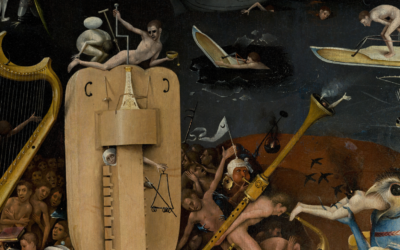
The Map Is Not the Medicine: What a Century of Psychotherapy Research Actually Found, and Why the Field Cannot Hear It
In 1936 a psychologist at Worcester State Hospital sat down to explain something embarrassing. Every school of therapy claimed a different theory of the mind, a different mechanism of cure, a different account of why people suffer. The theories contradicted each...
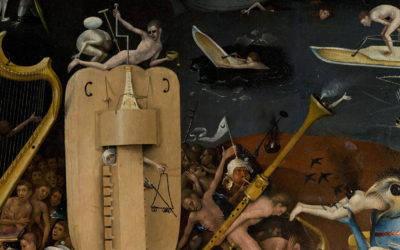
Why Should I Go To Therapy? : Good Question!
Psychology’s models are only metaphors for consciousness. Learn how character forms, what the shadow is, and how growth, grief, dreams, and empathy shape who we become.
The Two-Million-Year-Old Patient: What the Evolution of Language Reveals About Jung, Trauma, and the Origins of Therapy
Jung told an interviewer in 1936 that in analysis he and the patient turn together toward the two-million-year-old man that lives in all of us. He meant it almost literally. The psyche is not a blank slate scribbled on by childhood; it is an ancient, evolved organ...
The Map Is Not the Medicine: What a Century of Psychotherapy Research Actually Found, and Why the Field Cannot Hear It
In 1936 a psychologist at Worcester State Hospital sat down to explain something embarrassing. Every school of therapy claimed a different theory of the mind, a different mechanism of cure, a different account of why people suffer. The theories contradicted each...
Why Should I Go To Therapy? : Good Question!
Psychology’s models are only metaphors for consciousness. Learn how character forms, what the shadow is, and how growth, grief, dreams, and empathy shape who we become.
The Two-Million-Year-Old Patient: What the Evolution of Language Reveals About Jung, Trauma, and the Origins of Therapy
Jung told an interviewer in 1936 that in analysis he and the patient turn together toward the two-million-year-old man that lives in all of us. He meant it almost literally. The psyche is not a blank slate scribbled on by childhood; it is an ancient, evolved organ...

Transcranial Photobiomodulation: What the Research Actually Says About Near-Infrared Light Therapy
Does Red Light Therapy Really Work? Every so often a treatment modality arrives that sounds too strange to be real. Shining infrared light through the skull to treat depression has that quality. It sounds like something sold out of the back of a wellness magazine, and...