Mystics, Gurus and Spiritual Philosophers: Ancient Wisdom for Modern Therapeutic Practice
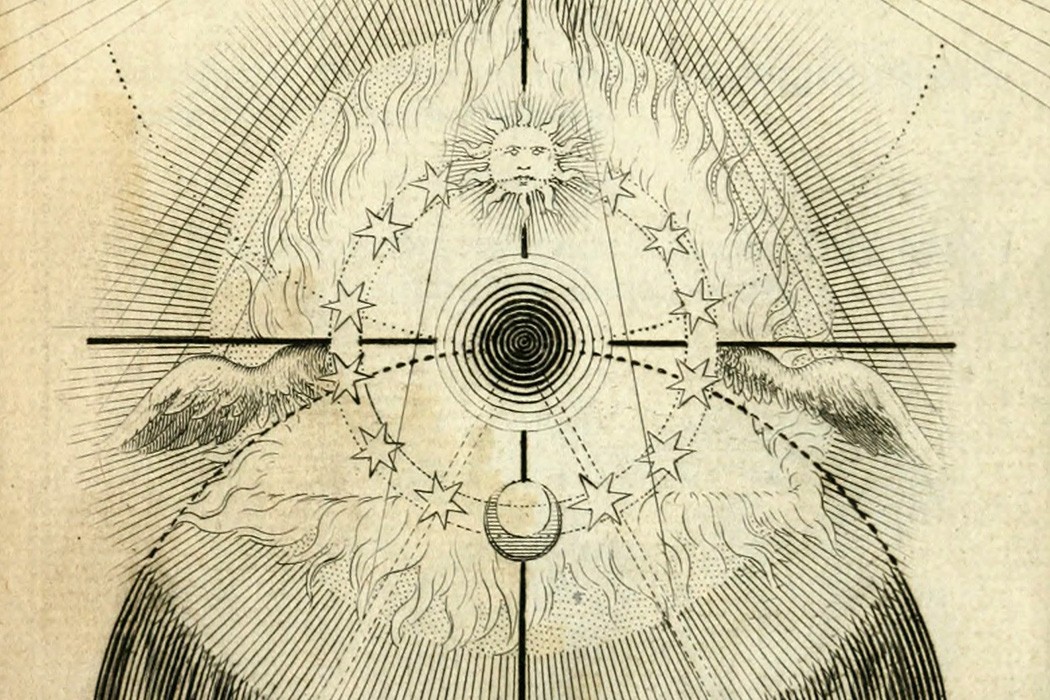
Alchemy and Therapy

Integrating Perennial Philosophy with Contemporary Mental Health Care in Birmingham

Welcome to Taproot Therapy Collective’s exploration of how mystical traditions, spiritual teachers, and philosophical wisdom inform contemporary therapeutic practice and psychological understanding. As Birmingham’s leading integrative therapy practice, we recognize that the profound insights of history’s great spiritual teachers offer timeless perspectives on human suffering, consciousness, and transformation that enhance modern mental health approaches.

Understanding Mystical Wisdom in Therapeutic Context

Our Mystics, Gurus and Spiritual Philosophers blog category examines how the experiential knowledge and philosophical insights of spiritual teachers from diverse traditions contribute to therapeutic understanding and healing practices. These figures offer profound perspectives on consciousness, suffering, and human potential that complement evidence-based psychological interventions while honoring the transcendent dimensions of human experience.

This approach builds on the comprehensive treatment philosophy outlined on our main services page, where we emphasize that therapy involves more than symptom reduction and seeks to reconnect individuals with their authentic life path and deeper purpose. The wisdom of mystics and spiritual philosophers provides frameworks for understanding psychological suffering within broader contexts of meaning, purpose, and spiritual development.

Eastern Wisdom Traditions and Psychological Insights

Buddhist Masters and Mindfulness Psychology offer sophisticated understanding of mental suffering through figures like the Buddha, Nagarjuna, and contemporary teachers like Thich Nhat Hanh and the Dalai Lama. Buddhist psychology’s insights into attachment, impermanence, and the nature of self provide practical frameworks for working with anxiety, depression, and existential concerns that inform mindfulness-based therapeutic interventions.

Hindu Sages and Consciousness Studies contribute profound insights into human consciousness and spiritual development through teachers like Ramana Maharshi, Paramahansa Yogananda, and Sri Aurobindo. Their understanding of consciousness, meditation, and self-realization offers perspectives on identity, purpose, and psychological integration that enhance depth psychological work and support individuals seeking meaning beyond conventional therapeutic goals.

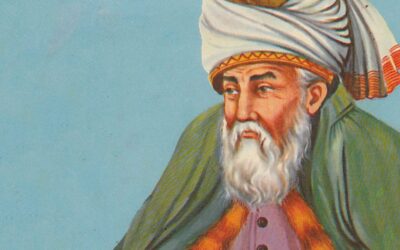
Sufi Masters and Heart-Centered Healing provide wisdom about love, surrender, and spiritual transformation through figures like Rumi, Hafez, and Ibn Arabi. Sufi understanding of the heart as center of spiritual intelligence and emotional healing offers valuable perspectives on relationship dynamics, grief work, and the integration of spiritual and psychological development.

Taoist Philosophers and Natural Harmony offer insights into balance, flow, and natural rhythm through teachers like Lao Tzu and Zhuangzi. Taoist concepts of wu wei (effortless action), yin-yang balance, and alignment with natural processes provide frameworks for understanding psychological health, stress reduction, and sustainable approaches to personal growth and healing.

Western Mystical and Philosophical Traditions

Christian Mystics and Contemplative Psychology contribute rich understanding of spiritual development and psychological transformation through figures like Meister Eckhart, Teresa of Avila, John of the Cross, and contemporary teachers like Thomas Merton and Richard Rohr. Their insights into spiritual dryness, dark nights of the soul, and contemplative practices offer valuable resources for understanding depression, spiritual crisis, and the integration of faith and psychological healing.

Jewish Mystical Wisdom and Kabbalah provide profound insights into consciousness, healing, and spiritual development through teachings of figures like Isaac Luria, the Baal Shem Tov, and contemporary teachers like Rabbi David Cooper. Kabbalistic understanding of the soul’s journey, tikkun (repair), and mystical psychology offers frameworks for trauma recovery, spiritual integration, and understanding psychological symptoms as spiritual communications.

Western Philosophical Traditions contribute understanding of human nature, consciousness, and meaning through figures like Plotinus, Spinoza, Kierkegaard, and contemporary philosophers like Ken Wilber and Stanislav Grof. Their insights into consciousness studies, transpersonal psychology, and integral approaches to human development inform contemporary therapeutic practice and support individuals seeking philosophical frameworks for psychological growth.

Indigenous Wisdom Keepers from various traditions offer earth-based perspectives on healing, community, and spiritual connection through teachers and tradition holders who emphasize the importance of relationship with nature, ancestral wisdom, and community healing practices that complement individual therapeutic work.

Contemporary Spiritual Teachers and Psychological Integration

Modern spiritual teachers like Eckhart Tolle, Byron Katie, Gangaji, and Adyashanti offer accessible approaches to spiritual awakening and psychological freedom that translate ancient wisdom into contemporary language and practical applications. Their teachings on presence, inquiry, and self-realization provide tools for working with anxiety, depression, and existential concerns that complement traditional therapeutic approaches.

These contemporary voices help bridge ancient wisdom and modern psychological understanding, offering practical applications of mystical insights that support therapeutic goals while honoring both spiritual and psychological dimensions of human experience. Their work demonstrates how spiritual realization and psychological health support each other in comprehensive approaches to wellbeing and personal growth.

Research from institutions like California Institute of Integral Studies, Institute of Transpersonal Psychology, and Esalen Institute explores how mystical experiences and spiritual practices support psychological healing and personal development while maintaining scientific rigor and therapeutic effectiveness.

Birmingham Applications of Mystical Wisdom

Living in Birmingham, Alabama, creates unique opportunities for integrating mystical wisdom with local cultural and spiritual traditions. The city’s rich religious heritage provides foundation for exploring how different mystical traditions offer resources for understanding historical trauma, social justice, and community healing that complement individual therapeutic work.

Birmingham’s African American spiritual traditions, particularly evident in gospel music and church practices, connect with mystical themes of suffering, redemption, and spiritual transformation that inform therapeutic approaches to trauma recovery and resilience building. The city’s civil rights history resonates with mystical teachings about social justice, prophetic witness, and spiritual resistance that provide frameworks for understanding collective healing and social change.

The city’s growing spiritual diversity including Buddhist meditation centers, yoga communities, and interfaith organizations creates opportunities for exploring how different mystical traditions offer complementary perspectives on psychological healing and spiritual development that enhance therapeutic effectiveness and cultural competency.

Practical Applications in Therapeutic Work

Contemplative Practices and Meditation draw from mystical traditions to offer practical tools for emotional regulation, stress reduction, and spiritual development that complement evidence-based therapeutic interventions. Understanding how different mystical traditions approach meditation and contemplative practice provides therapists with diverse options for supporting client goals and honoring cultural preferences.

Philosophy and Meaning-Making explores how philosophical insights from spiritual teachers help individuals develop frameworks for understanding suffering, purpose, and personal growth that support therapeutic goals while addressing existential concerns and spiritual questions. This work proves particularly valuable for individuals facing life transitions, grief, or questions about meaning and purpose.

Wisdom Literature and Therapeutic Stories examines how the teachings, parables, and stories from mystical traditions provide metaphorical resources for understanding psychological dynamics and supporting personal transformation, similar to the archetypal approaches detailed in our exploration of psychological storytelling.

Spiritual Direction and Psychological Integration recognizes how mystical wisdom informs approaches to spiritual direction, retreat work, and contemplative counseling that complement traditional therapy while addressing spiritual dimensions of psychological healing and personal development.

Integration with Evidence-Based Practice

Mystical wisdom integrates effectively with contemporary therapeutic modalities detailed in our psychology and research section. Mindfulness-based interventions draw directly from Buddhist and other contemplative traditions while being adapted for secular therapeutic contexts, demonstrating how ancient spiritual practices inform contemporary evidence-based treatments.

Transpersonal psychology and integral therapy approaches incorporate insights from mystical traditions while maintaining therapeutic effectiveness and scientific rigor. These approaches recognize that psychological healing often involves spiritual dimensions that require integration of both psychological and spiritual understanding for comprehensive treatment and lasting transformation.

Trauma therapy benefits from mystical perspectives on suffering, resilience, and post-traumatic growth that provide frameworks for understanding how difficult experiences can catalyze spiritual development and psychological integration. Understanding how different mystical traditions approach suffering and transformation enhances therapeutic effectiveness while honoring spiritual dimensions of healing.

Research-Based Insights from Leading Institutions

Contemporary research from Harvard Divinity School, Stanford University’s Center for Compassion and Altruism, and University of Pennsylvania’s Positive Psychology Center explores how mystical practices and spiritual experiences support psychological wellbeing, social connection, and personal resilience.

Studies on meditation, contemplative practices, and spiritual experiences demonstrate measurable benefits for mental health including reduced anxiety and depression, increased emotional regulation, enhanced social connection, and greater life satisfaction. This research provides scientific validation for therapeutic integration of mystical wisdom while maintaining evidence-based practice standards.

Neuroscience research on mystical experiences and contemplative states reveals how spiritual practices activate neural networks associated with wellbeing, compassion, and cognitive flexibility, providing biological understanding of how ancient wisdom practices support contemporary therapeutic goals.

Connect with Our Mystical Wisdom Community

For deeper exploration of how mystical and philosophical wisdom informs therapeutic practice, check out more on the Discover + Heal + Grow Taproot Therapy Collective blog and podcast where we regularly feature conversations with spiritual teachers, contemplative practitioners, and therapists integrating ancient wisdom with contemporary mental health approaches.

Subscribe to our YouTube channel for discussions on spirituality, philosophy, and psychological integration, listen to our podcast for interviews with wisdom teachers and contemplative practitioners, follow us on Instagram for daily wisdom quotes and spiritual insights, connect on LinkedIn for professional resources on spirituality and mental health, find us on Google Maps for spiritually integrated therapy and contemplative counseling services, and join our Reddit community for respectful discussions on mystical wisdom, spiritual development, and psychological healing.

Featured Article Categories

Our Mystics, Gurus and Spiritual Philosophers blog includes Eastern Wisdom Traditions exploring Buddhist, Hindu, Sufi, and Taoist insights for psychological healing, Western Mystical Heritage examining Christian, Jewish, and philosophical contributions to therapeutic understanding, Contemporary Spiritual Teachers investigating modern applications of ancient wisdom, Contemplative Practices providing practical tools for spiritual and psychological development, Philosophy and Meaning-Making addressing existential concerns through wisdom traditions, Mystical Experiences and Psychology exploring spiritual states and their therapeutic implications, Integration and Synthesis examining how ancient wisdom enhances contemporary therapeutic practice, and Research and Science covering studies on mystical practices and mental health outcomes.

Specialized Programs and Contemplative Offerings

We offer quarterly Wisdom and Healing Retreats combining therapeutic work with contemplative practices, monthly Contemplative Practice Groups exploring meditation and spiritual development, specialized Spiritual Integration Therapy for individuals seeking to combine psychological healing with spiritual growth, and Philosophy and Psychology Seminars examining how ancient wisdom informs contemporary therapeutic understanding.

Start Your Wisdom-Informed Healing Journey Today

The profound insights of history’s great spiritual teachers offer timeless perspectives on human nature, suffering, and transformation that enhance contemporary therapeutic practice and personal growth. Our Birmingham-based team at Taproot Therapy Collective honors diverse wisdom traditions while providing evidence-based mental health care that integrates spiritual insights with psychological understanding.

Contact Taproot Therapy Collective: 📍 2025 Shady Crest Dr. Suite 203, Hoover, AL 35216
📞 (205) 598-6471
🌐 www.GetTherapyBirmingham.com
🎧 Podcast: gettherapybirmingham.podbean.com

We provide therapy that honors both ancient wisdom and contemporary science, integrating mystical insights with evidence-based practice for comprehensive healing that addresses psychological, spiritual, and existential dimensions of human experience.


Discover + Heal + Grow with Taproot Therapy Collective – Birmingham’s bridge between timeless wisdom and contemporary therapeutic practice.


The Intellectual Foundations of Ken Wilber’s Integral Theory: A Deep Dive into His Sources

The Intellectual Foundations of Ken Wilber’s Integral Theory: A Deep Dive into His Sources

Ken Wilber's Integral Theory: Architecture, Ambition, and the Anatomy of Its Decline Ken Wilber's Integral Theory stands as one of the most ambitious intellectual projects of the late twentieth century, attempting nothing less than a comprehensive synthesis of human knowledge across all domains of inquiry. From its emergence in the 1970s through its peak influence in the early 2000s to its current marginal status in academic and clinical circles, the trajectory of Integral Theory offers profound lessons about the...

Manly P. Hall and the Psychological Resurrection of Ancient Wisdom

Manly P. Hall and the Psychological Resurrection of Ancient Wisdom

Explore the life and legacy of Manly P. Hall, author of The Secret Teachings of All Ages, examining his prescient influence on depth psychology, Jungian analysis, Gnostic trauma frameworks, and contemporary therapeutic approaches to psychological transformation and archetypal symbolism.

Paul Tillich and the Soul’s Depth: The Enduring Relevance of an Existentialist Theologian for Depth Psychology and Psychotherapy

Paul Tillich and the Soul’s Depth: The Enduring Relevance of an Existentialist Theologian for Depth Psychology and Psychotherapy

Paul Tillich’s profound influence on depth psychology and psychotherapy through his concepts of ultimate concern, existential anxiety, and the courage to be. This comprehensive guide examines how this existentialist theologian’s work on meaning, faith, and human existence continues to shape therapeutic practice, pastoral counseling, comparative religion, and philosophy. Includes timeline and analysis of psychotherapists influenced by Tillich including Rollo May, Carl Rogers, and Irvin Yalom.

St. Augustine and the Foundations of Depth Psychology: How a Fourth-Century Bishop Became a Forefather of Modern Psychotherapy

St. Augustine and the Foundations of Depth Psychology: How a Fourth-Century Bishop Became a Forefather of Modern Psychotherapy

Explore how St. Augustine’s Confessions shaped depth psychology and modern psychotherapy. Discover why Irvin Yalom values this fourth-century thinker and how Augustine’s insights on the divided will, unconscious motivation, and therapeutic confession remain vital for clinicians today.

Holy Wood: The Intersection of Forestry and Mythology

Holy Wood: The Intersection of Forestry and Mythology

The Sacred Species and Their Archetypal Meanings In the depths of the human psyche, trees stand as primordial witnesses to our spiritual evolution. They are the axis mundi, the world pillars that connect heaven, earth, and the underworld in virtually every mythological tradition. From a Jungian perspective, trees represent the Self—rooted in the unconscious depths while reaching toward conscious enlightenment. This essay explores ten sacred tree species, examining why specific trees were chosen for particular...

Gnosticism as a Metaphor for Consciousness: Meaning, Evolution, and Healing

Gnosticism as a Metaphor for Consciousness: Meaning, Evolution, and Healing

Gnosticism as a Metaphor for Consciousness: Meaning, Evolution, and Healing Gnosticism is an ancient spiritual and philosophical worldview that offers a profound metaphor for the nature and dilemmas of human consciousness. While Gnosticism should not be taken as a literal philosophy or religion to adopt wholesale, it provides a powerful lens for exploring the ways we as conscious beings make meaning, how we evolved psychologically over time, and potential pathways for healing trauma by reconnecting with deeper...

Who was Richard Maurice Bucke?

Who was Richard Maurice Bucke?

Richard Maurice Bucke and Cosmic Consciousness Richard Maurice Bucke (1837-1902) was a Canadian psychiatrist, philosopher, and mystic whose groundbreaking work explored the evolution of human consciousness and the nature of mystical experience. His most famous book, Cosmic Consciousness: A Study in the Evolution of the Human Mind, published in 1901, has become a seminal text in the study of transpersonal psychology and spirituality. In it, Bucke argued that humanity is undergoing a profound transformation,...

The Mystical Roots and Therapeutic Fruits of Initiation Rites

The Mystical Roots and Therapeutic Fruits of Initiation Rites

Is Psychotherapy a Type of Initiation Have you ever been part of a fraternity, sorority, or similar organization? If so, you may have experienced rituals or ceremonies that felt both challenging and transformative. Even if you haven't, you've likely encountered such rites of passage in religious services, coming-of-age celebrations, or weddings. These experiences tap into a deep human need for initiation—a symbolic death and rebirth that ushers us into a new stage of life. We see this theme in modern day rituals...

The Perennial Philosophy and Depth Psychology: Uncovering Universal Patterns of Wisdom and Healing

The Perennial Philosophy and Depth Psychology: Uncovering Universal Patterns of Wisdom and Healing

Throughout history, mystics, philosophers, and wisdom traditions from around the world have independently arrived at strikingly similar insights into the nature of the human psyche, the path to healing and wholeness, and the fundamental structure of reality. These recurring patterns and themes, often referred to as the perennial philosophy, point to a universal substratum of human experience that transcends cultural and historical boundaries. In the 20th century, the pioneering work of depth psychologists such as...

Carl Jung’s Shadow: Holding the Tension of Opposites in Depth Psychology

Carl Jung’s Shadow: Holding the Tension of Opposites in Depth Psychology

Carl Jung's Tension of Opposites: Mapping the Psyche's Polarities for Healing and Wholeness One of Carl Jung's most profound yet often misunderstood ideas is the concept of the tension of opposites within the psyche. Far from a simple binary or a problem to be solved, this dynamic interplay of contrary forces is in fact crucial to the process of growth and individuation. As Jung wrote, "The self is made manifest in the opposites and in the conflict between them; it is a coincidentia oppositorum [coincidence of...

The Hero’s Journey from Gilgamesh to Greek Tragedy:

The Hero’s Journey from Gilgamesh to Greek Tragedy:

Evolving Mythologies and Depth Psychology The hero's journey is one of the most enduring archetypes in world mythology, a narrative pattern that has shaped stories across cultures and centuries. At its core, the hero's journey is a psychological one—a symbolic representation of the process of individuation, the development of the self through the integration of conscious and unconscious elements. By tracing this archetype through the evolution of ancient mythology, particularly in the Greek tradition, we can gain...

The Blindspot: What We Cannot See in Ourselves and Society

The Blindspot: What We Cannot See in Ourselves and Society

What are our psychological blindspots in mass and individual psychology? "Maybe the only thing each of us can see is our own shadow. We are all like the blind man in the dark room looking for the black cat that isn't there." - The Great Dictator, Charlie Chaplin The Lacuna There is a small region devoid of photoreceptors called the physiological blindspot or lacuna. Located where the optic nerve passes through the retina, this area literally cannot detect light. And yet, we don't perceive a black void in our...

Plato’s Atlantis: Misinformation or Metaphor?

Plato’s Atlantis: Misinformation or Metaphor?

What did Plato say about Atlantis: In Plato's Republic, Socrates and his interlocutors set out to answer a profound question: What is justice? In the course of this inquiry, they imagine an ideal city-state, a utopia ruled by philosopher kings. On the surface, the Republic reads as a work of political philosophy, a blueprint for a perfect society. But a closer look reveals that Plato's utopia is more than a socio-political thought experiment. It is also a map of the human psyche, an allegory of the inner world....

Helena Blavatsky and the Theosophical Legacy: Charlatanry, Wisdom, and the Unconscious Mind

Helena Blavatsky and the Theosophical Legacy: Charlatanry, Wisdom, and the Unconscious Mind

Who was Helena Blavatsy? Helena Petrovna Blavatsky, the enigmatic and controversial founder of the Theosophical Society, left an indelible mark on the spiritual and intellectual landscape of the late 19th and early 20th centuries. Her life and work have been the subject of fascination, admiration, and criticism, making her one of the most polarizing figures in the history of Western esotericism. This essay explores Blavatsky's legacy, the key ideas of Theosophy, its similarities to other esoteric and...

Modernist Painting was Invented by a Woman: The Theosophical Diagrams of Hilma Af Klint

Modernist Painting was Invented by a Woman: The Theosophical Diagrams of Hilma Af Klint

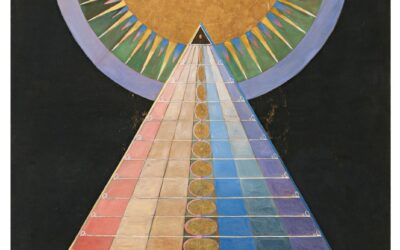
Hilma af Klint: A Visionary Artist Who Pioneered Abstract Art Hilma af Klint (1862-1944) was a Swedish artist and mystic whose pioneering abstract paintings predated the work of Vasily Kandinsky and other modernist artists by several years. Born in Stockholm, af Klint studied at the Royal Academy of Fine Arts, where she developed her skills in traditional painting and portraiture. However, her true artistic breakthrough came after she embraced spirituality and began exploring the unseen realms of existence...

Charles Eames: Pioneering Designer of the Modern Era

Charles Eames: Pioneering Designer of the Modern Era

Who were Charles and Ray Eames? Charles Eames (1907-1978) was a pioneering American designer whose groundbreaking work in furniture, architecture, and film helped define the aesthetic of postwar modernism. In partnership with his wife and creative collaborator Ray Eames, Charles developed a design philosophy centered on the belief that good design should be accessible to all. From their iconic molded plywood chairs to their experimental Case Study Houses, the Eameses' work embodied the optimism and innovation of...

Ludwig Mies van der Rohe: Architect of the Modern Age

Ludwig Mies van der Rohe: Architect of the Modern Age

Who was Ludwig Mies van der Rohe? Ludwig Mies van der Rohe (1886-1969) was a towering figure in the history of modern architecture, whose influence continues to shape the built environment well into the 21st century. Over a career spanning more than half a century, Mies developed a distinctive vision of structural clarity and spatial poetry that redefined the very language of building. From his early experiments in European modernism to his iconic American skyscrapers, Mies pursued an architecture of essential...

Niels O. Möller: Master of Danish Modern Chair Design

Niels O. Möller: Master of Danish Modern Chair Design

Who was Niels Moller? Early Life and Training Niels Otto Möller was born in 1920 in Aarhus, Denmark. The son of a shoe manufacturer, Möller developed an appreciation for craftsmanship and materials from an early age. As a young man, he trained as a cabinetmaker before studying at the prestigious Danish School of Arts and Crafts in Copenhagen. After completing his education in 1944, Möller returned to Aarhus and opened his own workshop and design studio. There he began experimenting with chair designs, honing the...

Antonio Damasio: Reuniting Mind, Body, and Emotion

Antonio Damasio: Reuniting Mind, Body, and Emotion

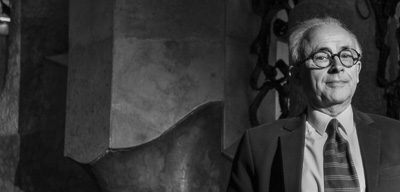
Who is Antonio Damasio? Antonio Damasio is a pioneering neuroscientist, best-selling author, and professor of psychology, philosophy, and neurology at the University of Southern California, where he directs the Brain and Creativity Institute. His groundbreaking work challenges centuries of dualistic thinking about mind and body in Western culture, illuminating the deep connections between reason, emotion, and biological regulation. Damasio's books, including the seminal "Descartes' Error," have had a profound...

The Quantum and Metaphysics of Carl Jung

The Quantum and Metaphysics of Carl Jung

How was Carl Jung Influenced by Math an Physics While Carl Jung was not deeply familiar with the technical details of physics and mathematics, these fields nonetheless had a significant influence on his thinking about psychology and the nature of the psyche. Jung lived in early 20th century Zurich, a time and place where groundbreaking discoveries in physics were very much "in the air." This zeitgeist, along with personal friendships and correspondence with eminent physicists and mathematicians like Wolfgang...

When Therapy Becomes Metaphysics:

When Therapy Becomes Metaphysics:

 Examining the Philosophical Implications of Psychotherapy Models Psychotherapy, at its core, aims to alleviate mental distress, facilitate personal growth, and enhance well-being. Various therapeutic models, from psychoanalysis to cognitive-behavioral therapy, offer frameworks for understanding the human psyche and fostering positive change. However, when these models are extended beyond their clinical applications and taken to extremes, they can morph into all-encompassing metaphysical and ethical systems. The...

The Hero’s Final Journey: A Depth Psychological Analysis of Sophocles’ Oedipus at Colonus

The Hero’s Final Journey: A Depth Psychological Analysis of Sophocles’ Oedipus at Colonus

Executive Summary: Oedipus at Colonus & The Psychology of Redemption The Core Premise: This play is the final chapter of the Oedipus cycle, written by Sophocles at the age of 90. It details the transformation of Oedipus from an exiled "monster" into a "DAIMON"—a protective spirit. Jungian Analysis: The Pharmakos to Mana-Personality: Oedipus illustrates how the "Scapegoat" (the rejected part of the psyche) can become the "Medicine" if integrated properly. The Sacred Grove: The setting represents the Temenos—the...

The Holistic Theology and Alchemy of Arnaldus de Villanova

The Holistic Theology and Alchemy of Arnaldus de Villanova

1. Who was Arnaldus de Villanova? Arnaldus de Villanova (c.1240-1311) was a renowned Catalan physician, theologian, diplomat and alchemist who made significant contributions to the development of medicine and spirituality in medieval Europe. An influential figure in the courts of kings and popes, Arnaldus pioneered a holistic approach to health and healing that synthesized insights from Hippocratic-Galenic medicine, Christian theology, Kabbalah, hermeticism and alchemy. At the heart of his thought was a...

Dissecting the Symbolism in Carl Jung’s Bollingen Stone

Dissecting the Symbolism in Carl Jung’s Bollingen Stone

In the garden of his Bollingen Tower retreat, on the shore of Lake Zurich, stands a peculiar monument - a stone cube, some twenty inches thick, carved on three sides with cryptic inscriptions. This is the Bollingen Stone, erected by Carl Jung in 1950 to commemorate his 75th birthday. Far from a mere ornamental marker, however, the Stone represents a profound expression of Jung's psychological and philosophical worldview. Through its amalgam of symbols, quotations, and structural motifs, it encapsulates the core...

Friedrich August Kekulé and the Role of Intuition in the Discovery of the Benzene Ring

Friedrich August Kekulé and the Role of Intuition in the Discovery of the Benzene Ring

Who was Kekulé? Friedrich August Kekulé (1829-1896) was a German organic chemist who made several groundbreaking discoveries, most famously the cyclic structure of benzene. Kekulé's insight into the benzene ring was a pivotal moment in the history of chemistry that revolutionized the field. Interestingly, Kekulé attributed this discovery to a moment of intuition and visual inspiration that came to him in a dream. Kekulé's Dream and the Benzene Ring Structure The story of Kekulé's benzene ring discovery has become...

Ibn ‘Arabi and the Perennial Philosophy: Insights for Depth Psychology

Ibn ‘Arabi and the Perennial Philosophy: Insights for Depth Psychology

1. Who was Ibn 'Arabi? Ibn 'Arabi (1165-1240), the great Andalusian Sufi mystic and philosopher, is widely regarded as one of the most profound and influential figures in Islamic spirituality. Considered by some to be the greatest of all Muslim philosophers, his vast corpus of writings offers an unparalleled exploration of the nature of reality, the human soul, and the path to spiritual realization. At the heart of Ibn 'Arabi's thought is a vision of the unity and interdependence of all existence, a perspective...

Suhrawardi and the Illuminationist Philosophy: Insights for Depth Psychology

Suhrawardi and the Illuminationist Philosophy: Insights for Depth Psychology

Who was Suhrawardi? Shahab al-Din Yahya ibn Habash Suhrawardi (1154-1191), known as Shaikh al-Ishraq or the "Master of Illumination," was a Persian philosopher, mystic, and founder of the illuminationist school of Islamic philosophy. His works, such as Hikmat al-Ishraq (The Philosophy of Illumination) and Hayakil al-Nur (The Temples of Light), offer a unique synthesis of Zoroastrian, Platonic, and Islamic ideas, and present a vision of reality as a hierarchy of lights emanating from the divine source....

Pierre Teilhard de Chardin: Reconciling Matter and Spirit

Pierre Teilhard de Chardin: Reconciling Matter and Spirit

Who was Pierre Teilhard de Chardin? Pierre Teilhard de Chardin (1881-1955), the French Jesuit priest, paleontologist, and philosopher, devoted his life to reconciling the realms of matter and spirit, science and religion. His unique vision sought to bridge the apparent chasm between the tangible world of atoms and molecules and the intangible world of consciousness and divinity. Teilhard's thought, as expressed in his seminal work The Heart of Matter, resonates with the ancient wisdom of Gnosticism, which...

Friedrich Hölderlin: This Influence on Jung and Modern Mysticism

Friedrich Hölderlin: This Influence on Jung and Modern Mysticism

Who was Friedrich Hölderlin? The Course of Life (Lebenslauf) You too wanted more, but love Forces all of us under. Pain’s necessary curve Returns us to our beginnings. Whether up or down, in the holiness of night, Speechless nature determines all the days to come; Yet in the labyrinths of death You can find a straight path. I know this—not once, like mortal instructors Did you heavenly, all-knowing gods Have the foresight to lead me Along a level path. Everything’s a test, say the gods. Having found his strength,...

D.T. Suzuki: Zen Scholar and Cultural Ambassador

D.T. Suzuki: Zen Scholar and Cultural Ambassador

Who was D.T. Suzuki Daisetsu Teitaro Suzuki (1870-1966), better known as D.T. Suzuki, was a pivotal figure in the introduction of Zen Buddhism to the West. A prolific writer, lecturer, and translator, Suzuki played a key role in shaping the Western understanding of Zen and its influence on Japanese culture. His work bridged Eastern and Western thought, sparking a fascination with Zen that continues to this day. This essay provides an in-depth exploration of Suzuki's life, key ideas, and enduring impact on the...

The Kabbalistic Concept of Ein Sof

The Kabbalistic Concept of Ein Sof

The Depth Psychology o Kabbalistic Concept of Ein Sof What is Kabbalah? Kabbalah is a mystical tradition within Judaism that seeks to understand the nature of divinity, the structure of the universe, and the purpose of human existence. The term "Kabbalah" comes from the Hebrew root "k-b-l," which means "to receive" or "to accept," referring to the reception of divine wisdom and the acceptance of spiritual practices. Kabbalah emerged in 12th century Provence and Spain, drawing on earlier forms of Jewish mysticism...

J.B. Rhine and Eugene Osty: Pioneers of Parapsychology

J.B. Rhine and Eugene Osty: Pioneers of Parapsychology

Who were J.B. Rhine and Eugene Osty? The field of parapsychology, which investigates psychic or psi phenomena such as telepathy, clairvoyance, and psychokinesis, has long been a subject of fascination and controversy. Two pioneering researchers who made significant contributions to the scientific study of these phenomena in the early 20th century were J.B. Rhine and Eugene Osty. Through their innovative experiments and tireless efforts to bring scientific rigor to this unconventional area of inquiry, Rhine and...

The Philosophy Behind and Around Carl Jung

The Philosophy Behind and Around Carl Jung

What were Carl Jung's Major Influences? Carl Jung was profoundly influenced by a wide range of philosophers, thinkers and mystics in developing his groundbreaking theories of analytical psychology. He drew upon ideas from existentialism, phenomenology, German idealism, Neoplatonism, Hermeticism, Gnosticism, and Christian mysticism to formulate his conceptions of the collective unconscious, archetypes, individuation, and the Self. Let's examine in-depth how some of these key figures shaped Jung's thought. Philemon...

Edmund Husserl and the Phenomenological Foundations of Psychology

Edmund Husserl and the Phenomenological Foundations of Psychology

Edmund Husserl: The Mathematician of the Soul and the Father of Phenomenology In the fragmented landscape of modern psychology, where practitioners often pledge loyalty to specific schools—CBT, Psychoanalysis, Somatic—there is one figure who provides the bedrock for them all, yet remains largely unknown to the average clinician: Edmund Husserl (1859–1938). While Sigmund Freud was descending into the murky depths of the unconscious, Husserl was climbing the mountain of the conscious mind, seeking a view of...

Donald Kalsched: Archetypal Defenses and the Healing of Trauma

Donald Kalsched: Archetypal Defenses and the Healing of Trauma

Donald Kalsched: The Archetypal Self-Care System and the Inner World of Trauma Donald Kalsched is a prominent Jungian analyst and clinical psychologist whose groundbreaking work has revolutionized our understanding of early childhood trauma, dissociation, and the inner world of the psyche. In the landscape of depth psychology, Kalsched stands as a bridge-builder, weaving together the mystical insights of Carl Jung with the developmental rigor of Object Relations and Attachment Theory. His theories provide a...

The Labyrinth in Jungian Psychology: Traversing the Winding Path of Individuation

The Labyrinth in Jungian Psychology: Traversing the Winding Path of Individuation

What is a Labyrinth? "The labyrinth is an ancient symbol that relates to wholeness. It combines the imagery of the circle and the spiral into a meandering but purposeful path." - Dr. Sandra Wasko-Flood Read This Article as a Pdf: What is a Labyrinth Labyrinth Locator Find a Labyrinth Anywhere in the World Near You  Main Points and Key Ideas: The labyrinth as an archetypal symbol in human culture and psychologyJungian interpretations of the labyrinth as a representation of the individuation processThe labyrinth's...

The Influence of Christian Mystics on Jungian Thought:

The Influence of Christian Mystics on Jungian Thought:

What is Christian Mysticism? A Jungian Perspective on the Divine Encounter Mysticism is a spiritual discipline and a way of life that seeks direct experience and union with the divine or ultimate reality. It is a phenomenon that has manifested across various religious traditions, including Christianity, Islam, Judaism, Buddhism, and Hinduism. Mystics believe that it is possible to have a profound, transformative encounter with the sacred that transcends intellectual understanding and rational thought. At the core...

Philosophy with Implications for Post-Jungian Thought: Carl Jung’s Relevance and Similarity to Other Thinkers

Philosophy with Implications for Post-Jungian Thought: Carl Jung’s Relevance and Similarity to Other Thinkers

What Philosophers, Mystics and Anthropologists are Similar to Carl Jung? Read More on Jung here: Carl Jung's Major Influences Jungian Analysis Archetypes Jung’s Method Jungian Thought There is an overview of Carl Jung's life and work here as well as a list of the philosophy and anthropology that made up his major influences here. This article is neither a biography or list of influences. Instead it is a list of philosophy that is similar to Jung but not directly inspired by him or used by him as influences in his...

Martin Heidegger and the Quest for Being: Implications for Psychotherapy and Depth Psychology

Martin Heidegger and the Quest for Being: Implications for Psychotherapy and Depth Psychology

Martin Heidegger and the Quest for Being: The Philosopher who Wrecked and Rebuilt Western Thought Martin Heidegger (1889–1976) is the "Dark Giant" of 20th-century philosophy. He is perhaps the most influential philosopher since Hegel, and certainly the most controversial. His magnum opus, Being and Time (1927), did not just modify philosophy; it attempted to destroy the entire history of Western metaphysics and rebuild it from the ground up. For the psychotherapist, Heidegger is the gateway to understanding what...

St. John of the Cross: Mystical Wisdom for Modern Psychology

St. John of the Cross: Mystical Wisdom for Modern Psychology

St. John of the Cross: The Psychologist of Divine Darkness "In the evening of life, we will be judged on love alone." — St. John of the Cross In the crucible of 16th-century Catholic reform, one man's profound mystical insights illuminated the path of spiritual transformation in a way that continues to resonate with seekers across traditions and modern psychologists alike. St. John of the Cross (1542–1591), the renowned Spanish mystic, Carmelite friar, and Doctor of the Church, gifted humanity with a corpus of...

Gilbert Durand: Exploring the Anthropology of the Imaginary

Gilbert Durand: Exploring the Anthropology of the Imaginary

Gilbert Durand: The Cartographer of the Human Imagination In the landscape of 20th-century French thought, dominated by structuralists and existentialists who often viewed the imagination as "unreal" or "escapist," Gilbert Durand (1921–2012) stood as a revolutionary defender of the dream. A philosopher, anthropologist, and sociologist, Durand argued that the Imaginary (l'imaginaire) is not a byproduct of reality, but the very foundation of it. Durand’s work is the missing link between the psychology of Carl Jung,...

Jean Gebser: Integration through the Integral

Jean Gebser: Integration through the Integral

Jean Gebser: The Cartographer of Consciousness and the Cure for "Time-Sickness" Why does the modern world feel like it is accelerating toward a cliff? Why do anxiety and fragmentation seem to be the defining characteristics of the 21st century? Jean Gebser (1905–1973), a Swiss phenomenologist and poet, offered an answer that is as terrifying as it is hopeful: we are living through a Mutation of consciousness. Gebser is the "unknown giant" of 20th-century thought. While his contemporary Carl Jung mapped the...

Gaston Bachelard: Psychology Through Poetics

Gaston Bachelard: Psychology Through Poetics

Gaston Bachelard: The Philosopher of Elements and Dreams Gaston Bachelard (1884–1962) was a French philosopher and literary critic who stands as a unique bridge between the rigid world of science and the fluid world of poetry. He began his career as a philosopher of science, analyzing the history of physics and chemistry, but later underwent a profound intellectual transformation, dedicating his life to the study of the poetic imagination. Bachelard’s work explores how the human psyche engages with the material...

Paul Ricoeur: A Philosopher of Language, Narrative Identity and Hermeneutics

Paul Ricoeur: A Philosopher of Language, Narrative Identity and Hermeneutics

Paul Ricœur: The Philosopher of Narrative Identity and the Capable Self Paul Ricœur (1913–2005) stands as a colossus in 20th-century French philosophy, a thinker who built bridges between disciplines that often refused to speak to one another. He united the rigorous textual analysis of hermeneutics with the lived experience of phenomenology, and the structural study of language with the ethical demands of political life. For psychotherapists and students of depth psychology, Ricœur is indispensable. He is the...

Maurice Merleau-Ponty: Embodied Perception and Existential Phenomenology

Maurice Merleau-Ponty: Embodied Perception and Existential Phenomenology

Maurice Merleau-Ponty: The Philosopher of the Body and the Flesh of the World Maurice Merleau-Ponty (1908-1961) stands as a pivotal figure in 20th-century thought, a French phenomenologist who dared to challenge the ancient dualism separating the mind from the body. While his contemporary Jean-Paul Sartre focused on radical freedom and consciousness, Merleau-Ponty focused on the Body—not as a biological machine, but as the very ground of our existence. His work bridges the gap between the abstract world of...

Hans-Georg Gadamer: Psychology Through Hermeneutics

Hans-Georg Gadamer: Psychology Through Hermeneutics

Hans-Georg Gadamer: The Philosopher of Dialogue and Understanding Hans-Georg Gadamer (1900–2002) was a German philosopher whose life spanned the entire 20th century, witnessing its wars, its technological explosions, and its cultural upheavals. He is the father of Philosophical Hermeneutics—the study of interpretation. His magnum opus, Truth and Method (1960), challenged the modern obsession with scientific "method" as the only path to truth. For Gadamer, understanding is not a technique we use on an object; it...

Ernst Cassirer: Philosopher of Symbolic Forms and Cultural Theory

Ernst Cassirer: Philosopher of Symbolic Forms and Cultural Theory

Who was Ernst Cassirer? Ernst Cassirer (1874-1945) was a German-Jewish philosopher who made significant contributions to the fields of epistemology, philosophy of science, intellectual history, and cultural theory. His work on symbolic forms and his neo-Kantian approach to understanding human culture and cognition have had a lasting impact on various disciplines, including philosophy, anthropology, linguistics, and cognitive science. Cassirer's theories have influenced subsequent thinkers and continue to be...

Herbert Silberer: Exploring the Frontiers of Psychoanalysis and Alchemy

Herbert Silberer: Exploring the Frontiers of Psychoanalysis and Alchemy

Who was Herbert Silberer? Herbert Silberer (1882-1923) was an Austrian psychoanalyst, author, and researcher who made significant contributions to the fields of psychoanalysis, dream interpretation, and the psychology of alchemy during the early 20th century. Despite his relatively short life, Silberer left an indelible mark on the history of psychology, offering groundbreaking insights into the nature of the unconscious mind, the meaning of dreams, and the relationship between psychology and esotericism. His...

Eugen Bleuler (1857-1939): Pioneering Insights into the Understanding and Treatment of Schizophrenia

Eugen Bleuler (1857-1939): Pioneering Insights into the Understanding and Treatment of Schizophrenia

Who is Eugen Bleuler? 1.1. The Significance of Eugen Bleuler's Contributions to Psychiatry Eugen Bleuler, the renowned Swiss psychiatrist, made groundbreaking contributions to the understanding and treatment of schizophrenia, a severe mental disorder that affects millions of people worldwide. His work revolutionized the conceptualization of the illness, moving away from the prevailing notion of "dementia praecox" as a progressive deterioration of mental functions, and towards a more nuanced and holistic...

Theodore Flournoy: Pioneer of Empirical Psychology and Psychical Research

Theodore Flournoy: Pioneer of Empirical Psychology and Psychical Research

Who was Theodore Flournoy? Theodore Flournoy (1854-1920), a Swiss psychologist and philosopher, made significant contributions to the fields of empirical psychology and psychical research at the turn of the 20th century. His work bridged the gap between scientific psychology and the study of paranormal phenomena, influencing the development of both fields. Flournoy's innovative approaches to the study of consciousness, mediumship, and religious experiences have left a lasting impact on psychology, parapsychology,...

Zosimos of Panopolis: The Alchemical Philosopher and His Legacy

Zosimos of Panopolis: The Alchemical Philosopher and His Legacy

Who was Zosimos of Panopolis? Zosimos of Panopolis, a Greek-Egyptian alchemist and Gnostic mystic who lived around the end of the 3rd and beginning of the 4th century AD, stands as one of the most influential figures in the history of alchemy and early chemistry. His works, though fragmented and often cryptic, provide invaluable insights into the philosophical and practical aspects of early alchemical thought. This essay aims to explore Zosimos' life, his major contributions to alchemy, and the lasting impact of...

Gerhard Dorn: Alchemist, Philosopher, Visionary

Gerhard Dorn: Alchemist, Philosopher, Visionary

1. Who Was Gerhard Dorn? 1.1. The Life and Times of Gerhard Dorn Gerhard Dorn (c. 1530-1584) was a prominent figure in the 16th century world of alchemy, philosophy, and medicine. Living during the height of the Renaissance and the dawn of the Scientific Revolution, Dorn made significant contributions to the development of alchemical thought and practice. His ideas influenced many later alchemists and had a lasting impact on Western esoteric traditions. Little is known about Dorn's early life and education. He...
Friedrich Creuzer: Mythographer whose influence helped found psychology

Friedrich Creuzer: Mythographer whose influence helped found psychology

Who was Friedrich Creuzer? Friedrich Creuzer (1771-1858) was a groundbreaking German philologist and archaeologist whose pioneering research into ancient mythology and symbolism had a significant impact on the fields of comparative religion, anthropology, and psychology in the 19th century. Creuzer's magnum opus "Symbolik und Mythologie der alten Völker, besonders der Griechen" ("Symbolism and Mythology of the Ancient Peoples, Especially the Greeks"), first published in 1810-1812, offered a sweeping...

Murray Stein: Bridging Jungian Psychology and Contemporary Thought

Murray Stein: Bridging Jungian Psychology and Contemporary Thought

Who is Murray Stein?  1.1 Murray Stein's multifaceted contributions Murray Stein, an American Jungian analyst, author, and scholar, has made significant contributions to the field of analytical psychology, bridging the gap between traditional Jungian thought and contemporary perspectives. His work spans a wide range of topics, including the process of individuation, the role of spirituality in psychological development, and the cultural implications of Jungian ideas. Stein's ability to articulate complex concepts...

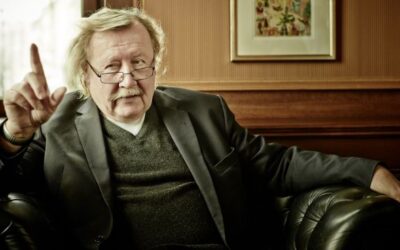
Peter Sloterdijk: The Pioneering Metamodern Philosopher

Peter Sloterdijk: The Pioneering Metamodern Philosopher

Who is Peter Sloterdijk? 1.1 Peter Sloterdijk's multidisciplinary approach Peter Sloterdijk, a German philosopher, cultural theorist, and essayist, has emerged as one of the most influential and thought-provoking thinkers of the 21st century. His work spans a wide range of disciplines, including philosophy, psychology, anthropology, and political theory, making him a truly multidisciplinary thinker. Sloterdijk's unique approach to philosophy has earned him a reputation as a provocative and original thinker,...

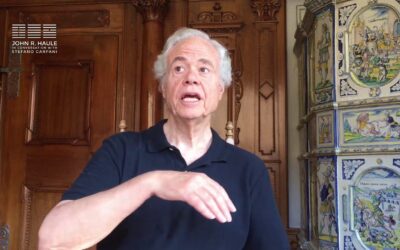
John Ryan Haule: Explorer of the Psyche’s Depths and Potentials

John Ryan Haule: Explorer of the Psyche’s Depths and Potentials

Who is John Ryan Haule? 1.1. Early Life and Education John Ryan Haule was born in 1944 in Pennsylvania. From an early age, he was drawn to questions of meaning, spirituality, and the mysteries of the human mind. This led him to study psychology at Princeton University, where he earned his bachelor's degree in 1966. Seeking to deepen his understanding, Haule went on to pursue a PhD in clinical psychology at the University of Michigan. It was during his graduate studies that he first encountered the works of Carl...

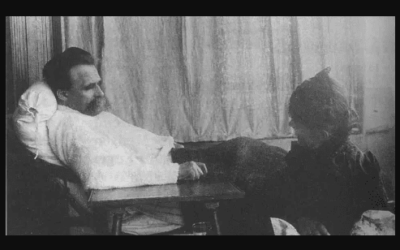
Friedrich Nietzsche’s Profound Impact on Psychology, Psychotherapy, and the Conceptualization of Trauma

Friedrich Nietzsche’s Profound Impact on Psychology, Psychotherapy, and the Conceptualization of Trauma

Who was Nietzsche? Friedrich Nietzsche (1844-1900), the groundbreaking German philosopher, has left an indelible mark on the landscape of modern psychology and psychotherapy. His revolutionary ideas about the nature of the self, the role of unconscious drives, the importance of embracing life's challenges, and the potential for personal transformation have profoundly influenced various schools of psychological thought, particularly depth psychology and existential therapy. Nietzsche's philosophy has also provided...

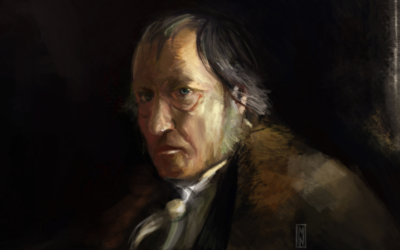
The Far-Reaching Influence of Hegel’s Dialectical Philosophy on Psychology and Psychotherapy

The Far-Reaching Influence of Hegel’s Dialectical Philosophy on Psychology and Psychotherapy

Who was Hegel? Georg Wilhelm Friedrich Hegel (1770-1831), the German philosopher renowned for his dialectical method and comprehensive philosophical system, has had a lasting impact on the development of psychology and psychotherapy. His ideas about the nature of the self, the process of mental development, and the interplay between individual and society continue to shape our understanding of the human psyche and inform therapeutic approaches. In this essay, we will explore Hegel's key philosophical...

The Enduring Impact of Kant’s Philosophy on Psychology and Psychotherapy

The Enduring Impact of Kant’s Philosophy on Psychology and Psychotherapy

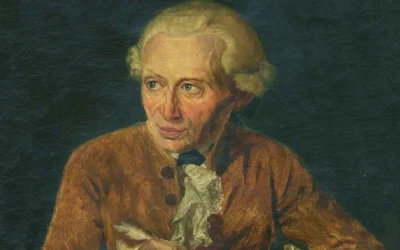
Who was Kant? Immanuel Kant (1724-1804), the renowned German philosopher, left an indelible mark on the development of psychology and psychotherapy. His groundbreaking ideas about the nature of the mind, morality, and the structure of human experience continue to shape our understanding of mental health and inform therapeutic approaches to this day. In this essay, we will delve into Kant's key philosophical contributions, explore their influence on the work of Carl Jung and other psychological pioneers, and...

Steven Richards: Integrating Jung with Spiritual Traditions for Transformation

Steven Richards: Integrating Jung with Spiritual Traditions for Transformation

Who is Steven Richards? Introduction: Steven Richards' Integral Approach Steven Richards is an influential contemporary Jungian analyst and author who has made significant contributions to the integration of Jungian psychology with Eastern and Western spiritual traditions. His work builds upon the foundations laid by Carl Jung, expanding the scope and applications of analytical psychology for personal and collective transformation. Richards' integral approach seeks to bridge the insights of depth psychology with...

Carl Jung’s Major Influences and Philosophy

Carl Jung’s Major Influences and Philosophy

Who were the Major Influences on Carl Jung? Read More on Jung here: Carl Jung's Major Influences Jungian Analysis Archetypes Jung’s Method Jungian Thought 1. Jung's Lifelong Journey into the Psychology of Religion Read this article as a pdf. 1.1 Index of Influences Mentioned in the Paper Gnosticism influenced Jung through its emphasis on direct, experiential knowledge (gnosis) of the divine and the concept of the fallen, fragmented God-image. This led Jung to develop his understanding of the individuation process...

Carl Jung: Explorer of the Soul A Comprehensive Examination of His Life, Work, and Legacy

Carl Jung: Explorer of the Soul A Comprehensive Examination of His Life, Work, and Legacy

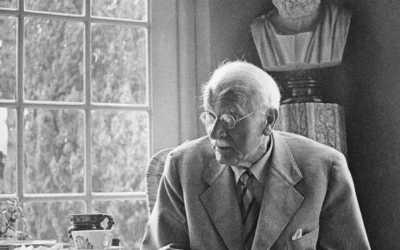
Read More on Jung here: Jungian Analysis Archetypes Jung’s Method Jungian Thought 1 Who was Carl Jung? 1.1. The Significance of Jung in Psychology and Beyond Carl Gustav Jung (1875-1961) stands as one of the most influential and controversial figures in the history of psychology. As a pioneer of depth psychology and the founder of analytical psychology, Jung's ideas have had a profound impact not only within the field of psychology but also across various domains of human thought and creativity, including...

How to Understand the Origins of Prehistoric Religion?

How to Understand the Origins of Prehistoric Religion?

What Can the Origins of Religion Teach Us? The origins and evolution of human religious like thought have long fascinated scholars, but they may also hold the keys to therapy and religion. . By examining the archaeological record, mythological narratives, and the insights of depth psychology, anthropology, evolutionary biology, and philosophy, we can begin to piece together a clearer picture of how prehistoric religions and pagan belief systems emerged and shaped the course of human culture. The specialized and...

Henry Corbin: Visionary of the Imaginal Realm

Henry Corbin: Visionary of the Imaginal Realm

The Philosopher of the Angel In the modern West, we tend to divide the world into two: the "real" (matter, science, atoms) and the "imaginary" (fantasy, dreams, nothing). Henry Corbin (1903–1978) shattered this binary. A French philosopher and Islamicist, Corbin argued that between the sensory world and the intellectual world lies a third realm: the Mundus Imaginalis (Imaginal World). This is not a world of "make-believe." It is a world of ontological reality—the place where the soul encounters the sacred....

The Psychology of Selves: The Pioneering Work of Hal and Sidra Stone

The Psychology of Selves: The Pioneering Work of Hal and Sidra Stone

The Pioneers of the Multi-Faceted Self In the traditional view of psychology, the "Self" is a singular, coherent entity. You are "you." But anyone who has ever felt torn between a desire for adventure and a need for security, or between a harsh inner critic and a vulnerable inner child, knows that this is not the whole truth. Hal and Sidra Stone, a husband-and-wife team of psychologists, revolutionized this understanding with their development of Voice Dialogue and the Psychology of Selves. Originally trained as...

Arnold Mindell and Process-Oriented Psychology: Pioneering a Path Beyond Jungian Analysis

Arnold Mindell and Process-Oriented Psychology: Pioneering a Path Beyond Jungian Analysis

The Physicist Who Followed the Dream into the Body If Carl Jung mapped the geography of the collective unconscious, Arnold Mindell (b. 1940) taught us how to move through it. A physicist turned Jungian analyst, Mindell realized that the unconscious does not just speak in dreams; it speaks in backaches, relationship conflicts, and social riots. He founded Process-Oriented Psychology (or Process Work), a radical expansion of depth psychology that integrates Taoism, quantum physics, and shamanism. Mindell’s central...

Robert Bly: Psychology Through Poertry

Robert Bly: Psychology Through Poertry

Who was Robert Bly? "If a culture does not deal with the warrior energy—take it consciously, discipline it, honor it—it will turn up outside in the form of street gangs, wife beating, drug violence, brutality to children, and aimless murder." Robert Bly (1926-2021) was an influential American poet, author, activist, and leader of the mythopoetic men's movement. Over his long career, Bly published numerous collections of poetry, translations, and prose works that explored masculinity, spirituality, and the human...

Esther Harding and the Reclamation of the Feminine in Depth Psychology

Esther Harding and the Reclamation of the Feminine in Depth Psychology

The Matriarch of American Jungianism In the 1920s, a British doctor traveled to Zurich to meet Carl Jung. She was seeking a cure for her own depression, but what she found was a vocation. M. Esther Harding (1888–1971) became one of Jung's most important students and the primary force behind the establishment of Analytical Psychology in the United States. Harding was a feminist before the term was popular. She realized that Jung's theories, while brilliant, were often male-centric. She dedicated her life to...

Bridging the Two Cultures: Edward O. Wilson’s Legacy in Science and the Humanities

Bridging the Two Cultures: Edward O. Wilson’s Legacy in Science and the Humanities

The Father of Sociobiology In the late 20th century, a soft-spoken biologist from Alabama ignited a scientific firestorm. Edward O. Wilson (1929–2021) dared to suggest that human behavior—our wars, our loves, our religions—was not just a product of culture, but of biology. He founded the field of Sociobiology (later Evolutionary Psychology), arguing that the mind is shaped by the same evolutionary forces that shape the body. Wilson was a true polymath. He was the world’s leading expert on ants (myrmecology), a...

Robert A Johnson: Healing Through Mythopoetics

Robert A Johnson: Healing Through Mythopoetics

The Storyteller of the Soul For many people, the entry point into Jungian psychology is not Jung himself, but Robert A. Johnson (1921–2018). While Jung wrote for the academic elite, Johnson wrote for the common seeker. He took the complex concepts of analytical psychology—archetypes, shadow, active imagination—and wove them into simple, profound retellings of ancient myths. Johnson was a master of "mythopoetic" psychology. He believed that myths are not just old stories; they are maps of the human psyche. His...

Ken Wilber: Mapping the Integral Vision

Ken Wilber: Mapping the Integral Vision

The Einstein of Consciousness In a fragmented world where science battles religion and psychology ignores spirituality, Ken Wilber (b. 1949) stands as a grand synthesizer. Often called the "Einstein of consciousness," he is the creator of Integral Theory—a "theory of everything" that attempts to map human potential across all cultures and disciplines. His work integrates the wisdom of the East (meditation, non-dualism) with the knowledge of the West (psychology, evolution, systems theory). Wilber is not just a...

Michael Meade: Mythopoetic Wisdom for a Troubled World

Michael Meade: Mythopoetic Wisdom for a Troubled World

The Mythologist of the Broken World In a culture obsessed with facts and data, Michael Meade (b. 1944) reminds us that we are creatures of story. A renowned storyteller, mythologist, and author, Meade argues that when a society loses its myths, it loses its soul. Without a "mythic imagination," we become trapped in literalism, unable to see the hidden meaning in our personal and collective crises. Meade was a central figure in the Men's Movement of the 1990s alongside Robert Bly and James Hillman. However, his...

Richard Tarnas: Cultural History Through Astrology

Richard Tarnas: Cultural History Through Astrology

The Historian of the Western Soul In 1991, Richard Tarnas published a book that became standard reading in universities worldwide: The Passion of the Western Mind. It was a brilliant, sweeping history of Western thought from Plato to Hegel to Jung. But in 2006, he dropped a bombshell. He published Cosmos and Psyche, arguing that the history of Western civilization correlates with the movements of the planets. Tarnas is not a "pop astrologer." He is a rigorous cultural historian and philosopher who argues for an...

Marion Woodman: Pioneering the Conscious Feminine and the Embodied Soul

Marion Woodman: Pioneering the Conscious Feminine and the Embodied Soul

The Teacher of the Conscious Feminine Most psychologists analyze the mind. Marion Woodman (1928–2018) analyzed the body. A Canadian Jungian analyst, she revolutionized the treatment of addiction and eating disorders by recognizing them not as medical failures, but as spiritual crises. She argued that the modern soul is starving because it has been cut off from the Feminine Principle—the wisdom of the body, the earth, and the cycles of life. Woodman did not just theorize; she lived it. Having recovered from...

Stanislav Grof and the Exploration of the Human Psyche: A Visionary Journey into Holotropic States and Transpersonal Realms

Stanislav Grof and the Exploration of the Human Psyche: A Visionary Journey into Holotropic States and Transpersonal Realms

The Cartographer of the Deep Psyche In the mid-20th century, psychiatry was dominated by two rigid maps: the psychoanalytic map, which traced all neurosis back to childhood, and the behaviorist map, which reduced human experience to stimulus and response. Stanislav Grof (b. 1931) shattered these boundaries. He discovered that the human psyche does not end at the skin, nor does it begin at birth. Grof is the principal architect of Transpersonal Psychology. Through decades of clinical research with LSD and later...

Heinrich Zimmer: East Meets West

Heinrich Zimmer: East Meets West

The Man Who Brought the Gods to the West Before Joseph Campbell taught us to "Follow Your Bliss," there was Heinrich Zimmer. A German Indologist and linguistic genius, Zimmer was the intellectual father figure who introduced both Campbell and Carl Jung to the vibrant, terrifying, and ecstatic world of Indian mythology. Zimmer (1890–1943) was not a dry academic. He believed that myths were not dead artifacts but living energies. He argued that the West had become trapped in a sterile rationalism and needed the...

The Archetypal Psychology of June Singer: Exploring the Creative Unconscious

The Archetypal Psychology of June Singer: Exploring the Creative Unconscious

The Midwife of the Symbolic Life In the 1970s, as the West was convulsing with cultural revolutions, June Singer (1920–2004) emerged as one of the most vital voices in Jungian psychology. She was not content to keep analysis in the ivory tower. Singer believed that the "Symbolic Life"—the ability to see meaning in the chaos of existence—was a necessity for everyone, not just the elite. Singer is perhaps best known for her work on Androgyny, challenging the rigid gender binaries of her time long before it was...

50 Common Symbols of the Shadow in Dreams

50 Common Symbols of the Shadow in Dreams

The Royal Road to the Shadow In Jungian psychology, a dream is not a random firing of neurons; it is a letter from the Self. Carl Jung argued that the psyche is a self-regulating system, and dreams are its primary mechanism for restoring balance. When we ignore our shadow—the rejected, shameful, or undeveloped parts of ourselves—the unconscious amplifies its message, often through nightmares or recurring symbols. At Taproot Therapy Collective, we use dreamwork as a vital tool for trauma recovery. Trauma often...
Introduction to Jungian Dream Interpretation

Introduction to Jungian Dream Interpretation

The Royal Road to the Unconscious In the world of depth psychology, dreams are not random neurological firings; they are letters from the Self. Carl Jung famously broke from Freud’s view that dreams were merely disguised wish-fulfillments. Instead, Jung argued that dreams serve a compensatory function—they balance the one-sidedness of the conscious ego. If you think you are a saint, your dreams will show you as a devil; if you feel small, your dreams may crown you a king. This article provides an introduction to...

Thomas Moore: A Compelling Vision for the Soul

Thomas Moore: A Compelling Vision for the Soul

The Monk Who Returned Soul to the World In 1992, a quiet book by a former Catholic monk exploded onto the bestseller lists, staying there for 46 weeks. That book was Care of the Soul, and the author was Thomas Moore (b. 1940). In a culture obsessed with "fixing" the self, Moore offered a radical alternative: we do not need to be fixed; we need to be tended. Moore’s work is a bridge between the ancient wisdom of Renaissance philosophy, the depth psychology of Carl Jung and James Hillman, and the spiritual hunger...

Gerhard Adler: A Pioneer in Jungian Analytical Psychology

Gerhard Adler: A Pioneer in Jungian Analytical Psychology

The Bridge Between the Sacred and the Clinical In the history of analytical psychology, Gerhard Adler (1904–1988) occupies a vital but often overlooked position. While figures like Marie-Louise von Franz focused on the archaic depths of fairy tales and alchemy, Adler dedicated his life to demonstrating the practical, clinical reality of Carl Jung’s ideas. He was not just a theoretician; he was a clinician who meticulously documented how the individuation process manifests in the consulting room. Adler was a...

Using Jungian Psychology and Other Therapies to Stop Drinking

Using Jungian Psychology and Other Therapies to Stop Drinking

The Demon in the Bottle: A Jungian Approach to Recovery In the depths of addiction, the drinker or user often feels possessed. It is not merely a "bad habit" or a "chemical dependency"; it feels like a distinct personality has taken the wheel. In Jungian psychology, this is not a metaphor—it is a structural reality of the psyche. We call this the Autonomous Complex. The following worksheet is designed to help you engage with your addiction not as a moral failure, but as a "Demon" (or Daimon) that has hijacked...
Jan van Ruusbroec: Flemish Mystic and His Resonance with Depth Psychology

Jan van Ruusbroec: Flemish Mystic and His Resonance with Depth Psychology

The Mystic of the Sonian Forest In the quiet solitude of the Sonian Forest near Brussels, a 14th-century mystic named Jan van Ruusbroec (1293–1381) mapped the landscape of the human soul with a precision that rivals modern psychoanalysis. Known as the "Admirable Doctor," Ruusbroec was not an academic theologian but a contemplative who wrote in the vernacular Middle Dutch, making the deepest truths of the spirit accessible to the common person. Ruusbroec’s work is a vital bridge between medieval mysticism and...

Johannes Tauler’s Mystical Theology

Johannes Tauler’s Mystical Theology

The Doctor Illuminatus of the Rhineland In the 14th century, a spiritual plague swept through Europe alongside the physical Black Death. Amidst this chaos, a German Dominican friar named Johannes Tauler (c. 1300–1361) emerged as a voice of profound psychological clarity. A disciple of Meister Eckhart, Tauler stripped away the complex metaphysics of his teacher to focus on the practical, lived experience of the soul. Tauler is often called the "Doctor Illuminatus." For the modern depth psychologist, his work is a...

The Visionary Thought of Nicholas of Cusa:

The Visionary Thought of Nicholas of Cusa:

The Cardinal of Paradox: Bridging the Medieval and the Modern In the transition from the rigid structures of the Middle Ages to the fluid creativity of the Renaissance, one mind stands as the supreme architect of the bridge: Nicholas of Cusa (1401–1464). A German cardinal, mathematician, and mystic, Cusanus (as he is known) dared to propose that the human mind could not know God through logic alone, but only through a "Learned Ignorance." His philosophy centers on the Coincidentia Oppositorum—the Coincidence of...

The Mystical Philosophy of John Scottus Eriugena:

The Mystical Philosophy of John Scottus Eriugena:

The Irish Mystic Who Synthesized East and West In the dark intellectual winter of the 9th century, a singular voice emerged from Ireland to illuminate the Carolingian court of Charles the Bald. John Scottus Eriugena (c. 815–877) was not merely a theologian; he was a bridge between the mystical theology of the Greek East and the rational Latin West. At a time when few scholars could read Greek, Eriugena translated the works of Pseudo-Dionysius the Areopagite, injecting the potent serum of Neoplatonism into the...

Amalric of Bena and His Insights in Depth Psychology

Amalric of Bena and His Insights in Depth Psychology

The Radical Pantheism of Amalric of Bena In the constellation of medieval mystics, few stars burned as brightly—or were extinguished as violently—as Amalric of Bena (died c. 1205). A theologian at the University of Paris, Amalric proposed a vision of God so radical that it led to the exhumation and burning of his bones five years after his death. His crime was Pantheism: the belief that "God is All." For the modern depth psychologist, Amalric is not a heretic but a pioneer. He anticipated the Jungian realization...

Angelus Silesius and the Path of Self-Transcendence

Angelus Silesius and the Path of Self-Transcendence

The Mystic of Paradox: Johannes Scheffler's Transformation In the history of Christian mysticism, few figures are as polarizing and profound as Angelus Silesius. Born Johannes Scheffler in 1624, amidst the chaos of the Thirty Years' War, he began his life as a Lutheran physician and ended it as a Catholic priest and poet whose couplets would challenge the boundaries of theology for centuries. His work, particularly The Cherubic Pilgrim, is not merely poetry; it is a psychological map of the soul's ability to...

Pseudo-Dionysius the Areopagite and the Mystical

Pseudo-Dionysius the Areopagite and the Mystical

The Mysterious Monk of Divine Darkness In the history of Western thought, few figures are as enigmatic or as influential as Pseudo-Dionysius the Areopagite. Writing under the pseudonym of a convert of St. Paul mentioned in Acts 17:34, this mysterious 5th or 6th-century Syrian monk created a synthesis of Neoplatonic philosophy and Christian theology that would shape the mystical tradition for a millennium. His writings are not merely historical artifacts; they are profound psychological maps of the soul's journey...

The Role of Intuition Faith and Science in the Life of Bishop Robert Grosseteste

The Role of Intuition Faith and Science in the Life of Bishop Robert Grosseteste

I. Introduction: The Bishop Who Calculated the Light In the modern world, we operate under a convenient fiction: that science and spirituality are non-overlapping magisteria. We are told that one deals with facts, the other with meaning, and never the twain shall meet. Yet, the entire edifice of the modern scientific method rests on the shoulders of a man who saw no such division: Robert Grosseteste (c. 1175–1253). Grosseteste was not just a theologian; he was the Bishop of Lincoln and the first Chancellor of...

The Dreamtime as a Cosmological Metaphor for the Human Psyche

The Dreamtime as a Cosmological Metaphor for the Human Psyche

The Everywhen and the Architecture of the Psyche In the Western psychological tradition, there is an obsession with linearity. Lives are viewed as straight lines moving irrevocably from birth to death, cause to effect, trauma to symptom. However, the oldest continuous living culture on Earth, the Aboriginal peoples of Australia, possess a cosmological framework that challenges this entire structure: The Dreamtime (or Alcheringa in the Arrernte language). The Dreamtime is not a "long time ago"; it is an...

Insights into the Origins of Architecture and Psyche

Insights into the Origins of Architecture and Psyche

I. Introduction: The Invention of the Interior Standing before the Dolmen de Menga in Antequera, Spain, one is not merely looking at a tomb; one is witnessing the birth of the human psyche as a spatial construct. When Neolithic humans moved 180-ton stones to create an enclosed chamber, they did not just invent architecture; they invented the concept of the "Interior." Before this moment, the human experience was an uninterrupted immersion in nature. By creating a wall, a roof, and a threshold, our ancestors split...

The Divided Mind and the Quest for Meaning Part 2

The Divided Mind and the Quest for Meaning Part 2

The Neurobiology of Original Sin The human psyche is not a single, unified commander. It is a committee of rivals, often screaming over one another for control of the steering wheel. This internal fracture is not merely a poetic metaphor for the human condition; it is a biological reality rooted in millions of years of evolutionary layering. As the Jungian analyst Edward F. Edinger articulated in his 1972 magnum opus Ego and Archetype, the central tragedy of human experience is the inevitable conflict between the...

The Religious Impulse: How Trauma and Misappropriated Intuition Fuel Conspiracy Theories

The Religious Impulse: How Trauma and Misappropriated Intuition Fuel Conspiracy Theories

The Divided Mind and the Quest for Meaning     Part 1    > Part 2 <     Part 3 The Divided Mind and the Quest for Meaning: Integrating Ego, Archetype, and Reality I. Introduction The human psyche is not a singular, unified entity; it is a layered landscape shaped by millions of years of evolutionary pressure. As the American Jungian analyst Edward F. Edinger articulated in his seminal 1972 work, Ego and Archetype, the central tragedy and opportunity of the human condition lie in the conflict between the...

The Divided Mind and the Quest for Meaning

The Divided Mind and the Quest for Meaning

The Divided Mind and the Quest for Meaning Series Part 1: The Meta-Modern Condition | Part 2: The Clinical Reality The Meta-Modern Mind: Navigating Truth in the Age of "Foam" We are living through a crisis of meaning. It is not merely a political divide or a technological disruption; it is a fundamental fracturing of how we perceive reality. As we transition from the irony of Postmodernism into the sincerity-oscillating era of Metamodernism, the human mind struggles to reconcile the biological need for tribal...

The Illusion of Progress: How Psychotherapy Lost Its Way

The Illusion of Progress: How Psychotherapy Lost Its Way

Key Points: Psychotherapy is facing an identity and purpose crisis in the era of market-driven healthcare, as depth, nuance, and the therapeutic relationship are being displaced by cost containment, standardization, and mass-reproducibility. This crisis stems from a shift in notions of the self and therapy's aims, shaped by the rise of neoliberal capitalism and consumerism. The "empty self" plagued by inner lack pursues fulfillment through goods, experiences, and attainments. Mainstream psychotherapy largely...

The Relevance of Saul Kripke’s Philosophy for Psychotherapy

The Relevance of Saul Kripke’s Philosophy for Psychotherapy

Who was Saul Kripke Saul Kripke, a philosopher whose influence has reverberated through the intellectual landscape of the 20th century, is a name often associated with groundbreaking work in the philosophy of language, logic, and metaphysics. His ideas, though rooted in the technical intricacies of modal logic and semantics, have a profound reach that extends far beyond the confines of academic philosophy. In this extensive blog post, we will embark on an exploration of how some of Kripke's pivotal concepts, such...

The Anima of the Great Gatsby and the Animus of History

The Anima of the Great Gatsby and the Animus of History

  The Expansive Decadent Ego of the Animus and the Introspective Bust and Decline of the Anima as Parts of Empire Cultures wax and wane. Empires that seem like part of the cosmos itself fall like gunshot victims into a pool or lines on a bar chart. It is the rare work that can speak to both the sparkle of spectacle and the timeless inevitable real it distracts us from. The Great Gatsby was an immediate success and then forgotten and then rediscovered. It was forgotten because the Jazz age was a, beautiful...

Games, Language, Religion and the Unconscious Mind: Can Games Explain Conciousness?

Games, Language, Religion and the Unconscious Mind: Can Games Explain Conciousness?

  Humans split their own consciousness into the self and the other, enabling objective recognition. -Mamoru Oshii, Director of the Ghost and the Shell. Abstract and Key Points: Games, language, religion, and quantification abilities seem intrinsically linked to core human cognitive structures that likely co-evolved. Chomsky's theories of innate universal grammar parallel the archetypal patterns and symbolic frameworks described by thinkers like Jung, Frazer, and Eliade. Games can be viewed as modes of "play"...

Exploring Peter Sloterdijk’s  Anthropotechnics and Its Relevance for Psychology

Exploring Peter Sloterdijk’s Anthropotechnics and Its Relevance for Psychology

 Who is Peter Sloterdijk? Peter Sloterdijk (born 1947) is a prominent German philosopher, cultural theorist, and public intellectual known for his innovative and provocative ideas on a wide range of topics, from globalization and religion to art and technology. His work, which encompasses numerous books, essays, and media appearances, has had a significant impact on contemporary philosophical discourse, particularly in Europe. Sloterdijk's thought is characterized by its interdisciplinary scope, its engagement...

Healing the Modern Soul Part 3

Healing the Modern Soul Part 3

Healing the Modern Soul Part 3: Suffering Without Screaming Healing the Modern Soul Series: Part 1 Part 2 Part 3 Part 4 Appendix The Scream by Edvard Munch In the first part of this series, we explored the concept of the modern world as a simulacrum—a copy without an original—and how this phenomenon relates to the increasing emphasis on hyper-rationality and objectivity in our culture. We also discussed how the work of philosophers and psychologists, as Friedrich Nietzsche observed, can reveal their own fears and...

The Theology and Psychology of Martin Buber

The Theology and Psychology of Martin Buber

Who was Martin Buber Martin Buber (1878-1965) was an Austrian-born Israeli philosopher, theologian, and writer whose ideas have had a significant impact on various fields, including psychotherapy. Buber's philosophy, particularly his concept of dialogue and the I-Thou relationship, has been influential in shaping the humanistic and existential approaches to psychotherapy. Buber's Concept of Dialogue and the I-Thou Relationship At the core of Buber's philosophy is the idea of dialogue, which he saw as the...

Applying Robert Moore’s Theories to Marriage and Relationship Counseling

Applying Robert Moore’s Theories to Marriage and Relationship Counseling

Archetypal Psychology and Couples Therapy: Applying Robert Moore's Ideas to Relationship Counseling Archetypal Psychology and Couples Therapy: Applying Robert Moore's Ideas to Relationship Counseling Robert Moore, Ph.D. was a pioneering psychoanalyst, theologian, and scholar who left an indelible impact on the fields of analytical psychology and psychotherapy before his untimely passing in 2016. As a leading thinker in Jungian psychology, spirituality, and archetypal studies, Dr. Moore's prolific career shed...

Healing the Modern Soul: Finding Meaning in a World of Broken Images

Healing the Modern Soul: Finding Meaning in a World of Broken Images

  Navigating Uncertainty, and Finding Meaning in a Fractured World Our era is characterized by the dominance of hyper-rationality and the relentless pursuit of objective truth, production, accomplishment and consumption.  The human psyche finds itself adrift in a sea of fragmented images and disconnected meanings as the previous myths that used to give us purpose are exposed as hollow or erroneous. I see patients everyday that describe this phenomenon but not in these words. It is as if they are saying that...

How to Understand Carl Jung Part 4: The History and Future of Jungian Thought

How to Understand Carl Jung Part 4: The History and Future of Jungian Thought

How has Jungian philosophy changed overtime? Read Part 1, Part 2, Part 3 and Part 4 Read More on Jung here: Carl Jung's Major Influences Jungian Analysis Archetypes Jung’s Method Jungian Thought The origins of Jungian thought In the early 20th century, Swiss psychiatrist Carl Gustav Jung embarked on a pioneering exploration of the human psyche that would revolutionize our understanding of the mind, spirituality, and the quest for meaning. Drawing upon his clinical work, personal experiences, and wide-ranging...

How to Understand Jung Part 2:  Applying Jungian Archetypes

How to Understand Jung Part 2: Applying Jungian Archetypes

Read Part 1, Part 2, Part 3 and Part 4 Harnessing the Power of Jungian Archetypes in Psychotherapy: A Practical Guide for Patients and Therapists Read More on Jung here: Carl Jung's Major Influences Jungian Analysis Archetypes Jung’s Method Jungian Thought Main Ideas and Key Points: Jungian archetypes are universal patterns from the collective unconscious that shape human experience. Archetypes can be used in psychotherapy to enhance self-awareness, reframe challenges, and facilitate dialogue with the...
How to Understand Carl Jungian Phenomenology:  Empiricism, Mysticism, or Literalism

How to Understand Carl Jungian Phenomenology: Empiricism, Mysticism, or Literalism

Read Part 1, Part 2, Part 3 and Part 4 Read More on Jung here: Carl Jung's Major Influences Jungian Analysis Archetypes Jung’s Method Jungian Thought Part 1: What was Jung's Method to Discover Reality? Jung's Empirical Phenomenology: Uniting Subjective Spirituality and Objective Science At the heart of Carl Jung's approach to psychology was a unique synthesis of empiricism and phenomenology, which sought to bridge the seemingly disparate realms of subjective spirituality and objective science. This approach...
Gnosticism: Modern Lessons in The Ancient Pursuit of Divine

Gnosticism: Modern Lessons in The Ancient Pursuit of Divine

What is Gnosticism? Gnosticism, a multifaceted religious and philosophical movement that flourished in the early centuries of the Common Era, has captivated the minds of spiritual seekers and scholars alike. Originating in the Mediterranean region, Gnosticism derived its name from the Greek word "gnosis," signifying an intimate, experiential knowledge of the divine. This ancient wisdom tradition sought to address the fundamental questions of human existence, the nature of the divine, and the path to spiritual...

Mysticism, Spirituality, and Therapy: Part 2

Mysticism, Spirituality, and Therapy: Part 2

Read Part 1 Here: https://gettherapybirmingham.com/post-therapy-spirituality-and-mysticism/ Throughout history, mystics have emerged from diverse religious backgrounds, including Christianity, Islam, Judaism, Hinduism, and Buddhism. These individuals have often challenged the established doctrines and hierarchies of their respective traditions, emphasizing the importance of personal experience over dogma and ritual. This has led to a complex and sometimes contentious relationship between mysticism and organized...

Wolfgang von Goethe: A Visionary Poet and Thinker

Wolfgang von Goethe: A Visionary Poet and Thinker

Who was Wolfgang von Goethe? Johann  (1749-1832) was a German writer, philosopher, scientist, and statesman whose works and ideas had a profound impact on the development of Western literature, thought, and culture. Born in the Age of Enlightenment and living through the tumultuous years of the French Revolution and the Napoleonic Wars, Goethe was a key figure in the transition from the classical to the romantic era in European literature and thought. Goethe's life and work were characterized by a deep commitment...

Rudolf Steiner and the Anthroposophical Vision

Rudolf Steiner and the Anthroposophical Vision

"The highest knowledge is to know that we are surrounded by mystery. Neither knowledge nor hope for the future can be the pivot of our life or determine its direction. It is intended to be solely determined by our allowing ourselves to be gripped by the ethical God, who reveals Himself in us, and by our yielding our will to His." - Rudolf Steiner Who was Rudolf Steiner? Rudolf Steiner (1861-1925) was an Austrian philosopher, educator, and spiritual thinker whose ideas and teachings laid the foundation for the...

William Blake and the Visionary Imagination

William Blake and the Visionary Imagination

"To see a World in a Grain of Sand And a Heaven in a Wild Flower, Hold Infinity in the palm of your hand And Eternity in an hour." - William Blake, Auguries of Innocence Who was William Blake? William Blake (1757-1827) was an English poet, painter, and printmaker, whose unique vision and creative genius left an indelible mark on the history of art and literature. Born in London during the Age of Enlightenment, Blake was a quintessential Romantic who rejected the rationalism and materialism of his time in favor of...

George Fox and the Quaker Path to Integration and Wholeness

George Fox and the Quaker Path to Integration and Wholeness

  Who was George Fox?   George Fox (1624-1691), the founder of the Religious Society of Friends (Quakers), developed a form of Christian spirituality that continues to offer valuable insights for contemporary psychology and spiritual practices. This article explores Fox's key teachings and their relevance to modern well-being and personal growth. Key Concepts in Fox's Teachings 1. The Inner Light Central to Fox's philosophy Belief in direct, unmediated experience of God within every individual Challenges...

The “Interior Castle” and Ascent of St. Teresa of Avila

The “Interior Castle” and Ascent of St. Teresa of Avila

Who was Teresa of Avila? "Christ has no body now but yours, no hands but yours..." - St. Teresa of Avila Introduction: In the heated crucible of the 16th century Catholic Reformation, one woman's spiritual genius illuminated the path of mystical devotion in a way that revolutionized the soul's inward journey to divine union. St. Teresa of Avila (1515-1582), the celebrated Spanish mystic, monastic reformer, and founder of the Discalced Carmelites, bequeathed to humanity a series of timeless writings detailing her...

The Life and Psychology of the Weaver Sage: Kabir

The Life and Psychology of the Weaver Sage: Kabir

"If God be within the mosque, then to whom shall I call the adhan? If Rahman be not apart, whom shall I then go to name?" - Kabir Who was Kabir? Kabir (1440-1518 CE) was a legendary mystic poet of India whose writings have deeply influenced the Bhakti movement and various spiritual traditions of the East. A religious reformer who transcended orthodox boundaries, Kabir wove verses of sublime wisdom using the metaphors of everyday life. His poems celebrated a sacred unity beyond outer identities and organized...

The Timeless Wisdom of Mani and the Manichees

The Timeless Wisdom of Mani and the Manichees

Who Was Mani? "The Soul that wandereth from body to body strayeth from light to darkness until she hath traveled the Seven Worlds." - Mani What is Manicheism: Manichaeism was a major gnostic religion that arose in Persia in the 3rd century CE, founded by the prophet Mani. It synthesized elements from various religious traditions, particularly Zoroastrianism, Christianity, and Buddhism. The roots of Manichaeism can be traced to these different philosophical and religious currents that influenced its central...

Rumi’s Mystical Poetry and Its Resonance with Jungian Psychology

Rumi’s Mystical Poetry and Its Resonance with Jungian Psychology

Who was Rumi? “Your task is not to seek for love, but merely to seek and find all the barriers within yourself that you have built against it.” ― Rumi Jalal ad-Din Muhammad Rumi, more popularly known as Rumi, was a 13th-century Persian poet, Sufi mystic, and Islamic scholar whose profound spiritual teachings and evocative poetry have transcended time and cultural boundaries. His works, which explore themes of love, unity, and the search for the divine, have not only influenced Islamic thought but have also found...

Meister Eckhart, the Unconscious, and the Ego: A Metaphor for the Church’s Relationship with Mysticism

Meister Eckhart, the Unconscious, and the Ego: A Metaphor for the Church’s Relationship with Mysticism

“If I had a friend and loved him because of the benefits which this brought me and because of getting my own way, then it would not be my friend that I loved but myself. I should love my friend on account of his own goodness and virtues and account of all that he is in himself. Only if I love my friend in this way do I love him properly.” ― Meister Eckhart, Selected Writings The relationship between the medieval mystic Meister Eckhart and the Catholic Church can be seen as a powerful metaphor for the relationship...

The Neoplatonic Philosophy of Plotinus: Insights for Jungian Psychology and the Individuation Process

The Neoplatonic Philosophy of Plotinus: Insights for Jungian Psychology and the Individuation Process

What was Neoplatonism: Plato, the renowned ancient Greek philosopher, can be considered one of the first depth psychologists due to his pioneering concept of the tripartite soul. In Plato's view, the human soul is composed of three distinct parts: the rational (logos), the spirited (thumos), and the appetitive (epithumia). This early model of the psyche laid the groundwork for future theories of personality and psychological development, including Freud's structural theory of the mind and Jung's theory of the...

The Mystical Philosophy of Pythagoras: Insights for Jungian Psychology and the Individuation Process

The Mystical Philosophy of Pythagoras: Insights for Jungian Psychology and the Individuation Process

Who was Pythagoras “No one is free who has not obtained the empire of himself. No man is free who cannot command himself.” ― Pythagoras Pythagoras, a renowned ancient Greek philosopher and mathematician, developed a unique and influential philosophical system that combined elements of mysticism, mathematics, and spirituality. His teachings, known as Pythagoreanism, had a profound impact on Western thought and continue to resonate with contemporary ideas in psychology and personal growth. This blog post will...

Mircea Eliade’s Insights into the Sacred

Mircea Eliade’s Insights into the Sacred

Mircea Eliade's Insights into the Sacred “A religious symbol conveys its message even if it is no longer consciously understood in every part. For a symbol speaks to the whole human being and not only to the intelligence.” ― Mircea Eliade, The Sacred and the Profane: The Nature of Religion Mircea Eliade, a Romanian historian of religion who lived from 1907 to 1986, made significant contributions to the study of comparative religion and the understanding of the role of myth, symbol, and the sacred in human...

The Mystical Theology and Cosmology of Jakob Boehme: Insights for Jungian Psychology and the Individuation Process

The Mystical Theology and Cosmology of Jakob Boehme: Insights for Jungian Psychology and the Individuation Process

Jakob Boehme's Mystical Theology and Its Resonance with Jungian Psychology “For according to the outward man, we are in this world, and according to the inward man, we are in the inward world.... Since then we are generated out of both worlds, we speak in two languages, and we must be understood also by two languages.” ― Jacob Boehme Jacob Boehme, a 17th-century German mystic and philosopher, developed a profound and influential system of mystical theology and cosmology that has had a significant impact on...

Emanuel Swedenborg’s Mystical Visions and Their Influence on Carl Jung’s Psychology

Emanuel Swedenborg’s Mystical Visions and Their Influence on Carl Jung’s Psychology

Who was Emanuel Swedenborg? Emanuel Swedenborg, a Swedish philosopher, scientist, and mystic who lived from 1688 to 1772, had a profound impact on the development of Western spirituality and psychology. His visionary experiences and ideas about the nature of the spiritual world and its relationship to the material realm influenced many thinkers, including the renowned Swiss psychiatrist Carl Jung. “Kindness is an inner desire that makes us want to do good things even if we do not get anything in return. It is the...

Henri Bergson: The Philosopher of Time, Intuition, and Creative Evolution

Henri Bergson: The Philosopher of Time, Intuition, and Creative Evolution

Who was Henri Bergson?   “The pure present is an ungraspable advance of the past devouring the future. In truth, all sensation is already memory.” ― Henri Bergson, Matter and Memory Henri Bergson (1859-1941) was a seminal French philosopher who revolutionized our understanding of time, consciousness, and evolution. His innovative ideas challenged the dominant mechanistic paradigm of his era and paved the way for the emergence of process philosophy, phenomenology, and vitalism. Bergson's thought continues to...

Simone Weil: Mysticism, Suffering, and the Search for Meaning

Simone Weil: Mysticism, Suffering, and the Search for Meaning

  Simone Weil: The Psychology of Affliction, Decreation, and the Healing Power of Attention By The Clinical Team at GetTherapyBirmingham.com In the landscape of 20th-century thought, few figures cast a shadow as long—or as stark—as Simone Weil. Albert Camus described her as "the only great spirit of our times." T.S. Eliot likened her brilliance to that of the saints. Yet, for the modern clinician and the seeker of psychological wholeness, Weil is more than a philosopher; she is a cartographer of the soul’s...

Cults, Conspiracies, Psychedelics and Yoga; a discussion with Julian Walker

In this compelling episode of the podcast, we delve deep into the intricacies of the Yoga and Wellness communities with seasoned yoga teachers who have critically observed the industry for over 20 to 30 years. Their unique perspectives shed light on the blend of spirituality and pseudoscience prevalent within these circles, highlighting the phenomenon of spiritual bypassing and the depoliticization of core human concerns. The discussion takes a turn towards the alarming spread of conspiratorial content witnessed...

Book Review: Erich Neumann’s The Origins and History of Consciousness

Book Review: Erich Neumann’s The Origins and History of Consciousness

Jungian Thought with a Unique Perspective on Ego Development in Mythology Erich Neumann's "The Origins and History of Consciousness" is a dense and relatively early exploration of Jungian psychology. The book not only delves into the intricate web of myths and archetypes but also introduces a unique concept that sheds light on the evolution of ego consciousness within the human species across time using mythological and religious development. While Neumann's work is ambitious and commendable, it is not perfect. I...

Book Review of of Aztec Philosophy by James Maffie

Book Review of of Aztec Philosophy by James Maffie

The Collision of Ontologies: When Monism Met Dualism The historical collision that occurred when Hernán Cortés arrived in Tenochtitlán in 1519 was not merely a military conquest; it was a catastrophic clash of incompatible metaphysical realities. To the Spanish Catholic mind, the universe was dualistic: God vs. Creation, Good vs. Evil, Spirit vs. Matter. When they encountered the Aztecs, they projected this framework onto them, seeing "idols" and "devils." However, as contemporary philosopher James Maffie argues...

Interview with Martin Gledhill

Interview with Martin Gledhill

Allow us to introduce Mr. Martin Gledhill, an accomplished researcher and writer who is currently in the writing stage of his Ph.D. on Carl Jung's Bollingen Tower—a work that he hopes will soon become a book. Before embarking on this captivating and all-consuming project, Martin held the position of senior lecturer at the Department of Architecture & Civil Engineering, where he focused on exploring the profound symbolism and spiritual essence embedded within architecture. 🏛️💫 This is just an excerpt of the...

Interview with David Tacey on Carl Jung, Mysticism, and the Politics of Religion

Interview with David Tacey on Carl Jung, Mysticism, and the Politics of Religion

Dr. David Tacey is a professor in literature and depth psychology at La Trobe University, Melbourne. He is the author of eight books, including Jung and the New Age (2001), The Spirituality Revolution (2003) and How to Read Jung (2006).He was born in Melbourne and raised in Alice Springs, central Australia. It was here that he was influenced by Aboriginal cultures and their religion and cosmology. After completing a PhD degree at the University of Adelaide, David Tacey was a Harkness Fellow in...

Existentialism vs Mysticism: What is the Ego Self Axis?

Existentialism vs Mysticism: What is the Ego Self Axis?

In the first session when I give patients my initial observations they often have difficulty hearing what I mean regarding their emotional experience. I hear things like: “I’m not angry because I’ve also done bad things to people and everyone makes mistakes.” “I’m not sad because I know it happened for the greater good.” “I’m not afraid because I know that it can’t hurt me.” These statements are not attempts to feel emotion, they are attempts to turn emotion off. These statements are attempts to solve and...

Free Group Therapy Shadow Work Exercise

Free Group Therapy Shadow Work Exercise

    If you liked this read the articles on other Jungian topics: Jungian Innovators James Hillman  - Erich Neumann - David Tacey - Robert Moore - Marie-Louise von Franz - Jolande Jacobi - Anthony Stevens - Thomas Moore - Sonu Shamdasani - James Hollis Topics How to Understand Carl Jung - How to Use Jungian Psychology for Screenwriting and Writing Fiction How the Shadow Shows up in Dreams Using Jungian Thought to Combat Addiction Jungian Shadow Work Meditation The Shadow in Relationships Free Shadow Work...

Therapy, Spirituality, & Mysticism

Therapy, Spirituality, & Mysticism

Executive Summary: The Science of the Soul The Definition: Mysticism is not magic; it is Direct Experience. It is the practice of bypassing the intellectual Ego to access the deeper, non-verbal layers of the psyche. It is the difference between reading a menu and eating the meal. The Neuroscience: Modern scans show that mystical states (induced by meditation, prayer, or deep trauma therapy) correspond to a quieting of the Default Mode Network (DMN)—the brain's "storyteller" and seat of the Ego. The Clinical Link:...

Leon Krier, Carl Jung, and the Architecture of the Archetype

Leon Krier, Carl Jung, and the Architecture of the Archetype

Leon Krier, Carl Jung, and the Architecture of the Archetype "Truth of feature is related to truth of being" - Frank Lloyd Wright How does the space make you feel? What does the building in the dream look like? During dream work and active imagining, I often ask clients these questions. Many times clients lack any formal training in architectural style or the history of design. When I name the specific architectural styles or design traditions present in client's dreams they often draw a blank on the names. When...

Do You Remember Transactional Analysis?

Do You Remember Transactional Analysis?

Executive Summary: The Hidden Script of Your Life The Rise and Fall: Transactional Analysis (TA) exploded in the 1960s with Eric Berne’s Games People Play, offering a user-friendly alternative to psychoanalysis. While it faded from academia due to its pop-culture saturation, its core concepts remain foundational to modern therapy. Key Concepts: The Ego States (PAC): We shift between three modes of being: The Parent (judging/nurturing), The Adult (calculating/rational), and The Child (feeling/reactive). The Drama...

How to Eat Your Shadow, Before Your Shadow Eats You

How to Eat Your Shadow, Before Your Shadow Eats You

Executive Summary: The Acorn Theory of Self-Realization The Core Concept: You are not born as a blank slate. According to Jungian psychology and James Hillman's "Acorn Theory," you possess a unique, innate destiny (the acorn) that knows exactly what kind of oak tree it is meant to become. The Struggle: We lose touch with this inner map due to "socialization trauma"—the necessary but painful process of adopting family rules and societal norms. We trade authenticity for attachment. The Solution: Healing is an...

The Buddha’s Therapist

The Buddha’s Therapist

Executive Summary: The Peril of the un-Psychologized Saint The Core Paradox: How can a spiritual teacher who meditates for 10 hours a day abuse their students? The answer lies in the critical distinction between Transcendence (leaving the ego) and Integration (healing the ego). Key Concepts: Spiritual Bypassing: Coined by John Welwood, this is the use of spiritual practices (meditation, yoga, prayer) to avoid facing unresolved emotional pain or Shadow material. The Guru Complex: The psychological dynamic where...

Check out some of the other categories on our blog: