

Clinician’s Note: The work of Richard Maurice Bucke sits at an unusual intersection: the rigorous empiricism of nineteenth-century psychiatry and the ecstatic vocabulary of mystical literature. I first encountered Bucke’s Cosmic Consciousness not in a philosophy seminar but in a supervision session, when a senior analyst suggested it explained something that DSM diagnostic categories had completely failed to capture in a patient recovering from complex trauma. That experience shaped how I now understand the relationship between consciousness, healing, and the deeper structures of the psyche that Jungian depth psychology tries to address.
\Richard Maurice Bucke: Psychiatrist, Mystic, and Pioneer of Consciousness Studies
Richard Maurice Bucke (1837–1902) was not a philosopher who stumbled into clinical work. He was a working psychiatrist — Superintendent of the London Asylum for the Insane in Ontario, Canada — who encountered the far boundaries of human experience not through books but through patients, through Walt Whitman, and through one shattering night in 1872 that permanently altered the direction of his intellectual life. His book Cosmic Consciousness: A Study in the Evolution of the Human Mind (1901) became one of the most unexpectedly influential texts in the history of psychology, shaping the thinking of William James, Carl Jung, Abraham Maslow, Stanislav Grof, Ken Wilber, and an entire generation of transpersonal and depth psychologists who came after him.
This article places Bucke in his full context: as a clinician, as a thinker whose ideas now have neurobiological correlates that he could not have anticipated, and as a figure whose core insight — that consciousness has evolutionary potential, and that mystical states are not pathological deviations but possible advances — is more relevant to contemporary psychotherapy than it has ever been.
The Psychiatrist Before the Mystic: Bucke’s Clinical Career
Before he became the author of Cosmic Consciousness, Bucke was recognized as one of the most humane and reform-minded asylum superintendents in North America. Taking charge of the London Asylum in 1877, he abolished mechanical restraints at a time when strapping patients to beds was still standard practice. He advocated for occupational therapy, fresh air, and the therapeutic power of work and beauty — ideas so progressive they would not become mainstream psychiatry for another century.
This clinical background matters when reading Bucke’s mystical theories. He was not a credulous visionary immune to the suffering of psychopathology. He had spent years working with patients whose experiences of voices, visions, and altered reality had destroyed their lives. When he argued that certain altered states represented evolutionary advances rather than disease, he did so with full awareness of the clinical disasters that result when such experiences are misidentified or poorly integrated. This is a distinction that contemporary psychotherapy is still learning to navigate in the context of psychedelic-assisted therapy and spiritual emergency.
The 1872 Experience: What Bucke Described
Late one spring evening in 1872, Bucke was riding home in a hansom cab after an evening of reading Whitman and Wordsworth with friends in London, England. What happened next — he described it carefully in the third person, as if maintaining clinical distance — was not a vision or a voice but an overwhelming transformation of his entire experiential field:
“He was in a state of quiet, almost passive enjoyment. All at once, without warning of any kind, he found himself wrapped around as it were by a flame-colored cloud. For an instant he thought of fire, some sudden conflagration in the great city… the next, he knew that the light was within himself. Directly afterward came upon him a sense of exultation, of immense joyousness… followed by an intellectual illumination quite impossible to describe.”
Several features of this description have become central to the scientific study of mystical experience. Bucke reported: a noetic quality (the sense of knowing something fundamentally true), unity experience (boundaries of the self dissolving), positive affect of overwhelming intensity, and a sense of cosmic significance that persisted for months afterward. These features correspond precisely to the categories later established by Walter Pahnke’s “categories of mystical experience” and subsequently refined into the Mystical Experience Questionnaire used in contemporary psychedelic research at Johns Hopkins and NYU.
What makes Bucke’s account distinctive is that this was a spontaneous experience, not chemically induced, not occurring in a religious setting, and not preceded by any deliberate contemplative practice. He was simply reading poetry. This spontaneous quality is significant: it suggests that the capacity for such experience is latent in ordinary human neurology and does not require extraordinary circumstances to activate.
The Three Stages of Consciousness: Bucke’s Evolutionary Framework
Bucke’s central theoretical contribution was an evolutionary model of consciousness structured in three stages. Understanding these stages is essential for grasping what he meant by “cosmic consciousness” — a term he used precisely and which has been muddied by a century of new-age appropriation.
1. Simple Consciousness
The baseline form of awareness shared by most animals: perception of the immediate environment, basic drives, sensory experience. This is consciousness of things, without necessarily any reflective awareness of the self as a distinct entity having experiences. Most of the animal kingdom, Bucke believed, operates primarily at this level.
2. Self-Consciousness
The form of awareness characteristic of modern adult humans: the capacity to be aware of oneself as an “I,” to have an inner life that includes abstract thought, language, and the distinction between self and world. Bucke saw the emergence of self-consciousness as the critical leap in human evolutionary history — one that has both extraordinary gifts (art, science, philosophy) and a distinctive shadow: the existential isolation that comes from experiencing oneself as separate from the rest of existence.
This existential isolation, Bucke argued, is not a fixed feature of consciousness but a developmental stage — important, even necessary, but not the endpoint. It corresponds to what Jungian psychology calls the ego-Self axis: the necessary development of a strong, differentiated ego that must eventually find its relationship to something larger than itself.
3. Cosmic Consciousness
The emergent form of awareness that Bucke documented in a carefully selected group of historical figures: an awareness that transcends the individual ego-self without destroying it, in which the perceiver experiences themselves as fundamentally continuous with the universe rather than separate from it. The key features Bucke identified:
- Intellectual illumination — not mystical nonsense but sudden, wordless understanding of the deepest questions about existence
- Moral elevation — a transformation of character that persists after the experience, typically in the direction of greater compassion, equanimity, and ethical commitment
- A sense of immortality — not in the literal Christian sense but as an experienced sense that the self is not ultimately separate from the eternal ground of being
- Loss of the sense of sin and death as ultimate threats — a reconsolidation of the meaning of mortality
- Rapid integration — the experience is not fragmenting or destabilizing but profoundly organizing
It is this last feature that distinguishes cosmic consciousness from psychosis in Bucke’s clinical framework. He was acutely aware of the phenomenological similarities between mystical experience and the experiences of his patients with severe mental illness. The difference, he argued, was in the trajectory: cosmic consciousness integrates and elevates, whereas psychotic experience fragmentsand perseverates. Contemporary researchers studying the overlap between mystical experience, schizotypy, and psychedelic states are still working out the precise clinical boundaries of this distinction.
Bucke and Walt Whitman: The Living Example
No relationship was more central to Bucke’s intellectual life than his friendship with the American poet Walt Whitman, whom he met in 1877 and who became his primary living example of a person in the cosmic consciousness condition. Bucke spent years corresponding with and visiting Whitman, eventually writing his biography. He was convinced that Leaves of Grass — particularly “Song of Myself” — was the most accurate literary expression of the cosmic consciousness state ever produced, precisely because Whitman was not trying to describe it metaphysically but to evoke it experientially through the poem’s form and rhythm.
This connection between Bucke and Whitman is instructive for psychotherapy for a reason that has nothing to do with either mysticism or poetry. Whitman was not a healthy man when Bucke knew him — he had suffered a severe stroke and was in chronic pain. The cosmic consciousness Bucke observed in him was not contingent on physical health or comfort. It was a particular orientation of the psyche toward experience that remained intact even as the body deteriorated. This suggests that what Bucke was describing had something to do not with optimal functioning in a conventional sense but with a relationship to reality that transcends ordinary conditions.
Edward Carpenter, the Other Living Example
Bucke’s other major contemporary example was Edward Carpenter, the English poet, social reformer, and early LGBTQIA+ rights advocate whose philosophy of the “intermediate sex” and whose mystical writings in Towards Democracy deeply influenced Bucke’s framework. Carpenter represents the connection between expanded consciousness and social transformation that runs through Bucke’s work — the idea that cosmic consciousness is not merely a private spiritual achievement but has implications for how we organize social and political life.
William James and the Varieties of Religious Experience
Bucke corresponded extensively with William James, who read Cosmic Consciousness and cited it directly in The Varieties of Religious Experience (1902). James’s four characteristics of mystical experience — ineffability, noetic quality, transiency, and passivity — overlap substantially with Bucke’s description of cosmic consciousness, though James was more cautious about the evolutionary claims. The relationship between the two figures illustrates how mainstream American psychology at the turn of the twentieth century was far more open to the phenomenology of mystical experience than it would be for the next eighty years.
Jung’s Debt to Bucke: A Connection Often Overlooked
Carl Jung read Bucke, and the influence is visible throughout his work even where he does not explicitly cite him. Jung’s concept of the Self — the organizing principle of the psyche that transcends the ego — maps closely onto Bucke’s cosmic consciousness. The individuation process that Jung describes as the goal of depth psychotherapy is, in certain crucial respects, the same trajectory Bucke was describing: the evolution of consciousness from ego-identified self-consciousness toward something larger and more inclusive.
Jung was more psychologically sophisticated than Bucke — more aware of the shadow, more attentive to the dangers of inflation, more cautious about claims of spiritual achievement — but the underlying vision is recognizably continuous. When Jungian therapy aims at what Jung called the transcendent function, the emergence of a consciousness that holds the tension between the ego’s concerns and the deeper wisdom of the unconscious, it is working toward something structurally similar to what Bucke meant by cosmic consciousness.
The specific connection is clearest in Jung’s late work, particularly Answer to Job and Aion, where he writes about the transformation of God-consciousness and the evolution of human spiritual capacity with the same evolutionary framing that characterizes Bucke’s project. Both men believed that the history of human consciousness was not merely political and technological but deeply spiritual — and that the direction of that history pointed toward something still unrealized.
Transpersonal Psychology and Bucke’s Legacy
The transpersonal psychology movement that emerged in the 1960s and 1970s drew heavily on Bucke’s framework. Stanislav Grof‘s research on non-ordinary states of consciousness — first through LSD research and later through Holotropic Breathwork — documented experiences strikingly similar to what Bucke had described in his historical survey. Grof’s framework of COEX systems (systems of condensed experience) and transpersonal experiences provided a clinical map for navigating states that Bucke had only catalogued descriptively.
Abraham Maslow’s concept of “peak experiences” — moments of intense joy, clarity, and self-transcendence that he found to be characteristic of psychologically healthy people — was explicitly modeled in part on Bucke’s work. Maslow’s B-cognition (being cognition), which characterizes peak states, shares the features of unity, timelessness, and positive affect that Bucke identified in cosmic consciousness. What Bucke had seen as evolutionary advance, Maslow reframed as the expression of psychological health — a subtle but important shift toward the possibility that ordinary healthy people, not just historical geniuses, might access these states.
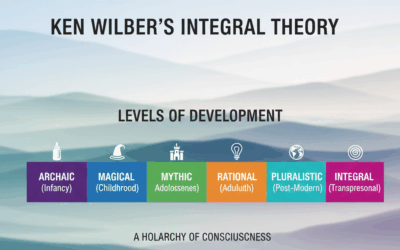
Ken Wilber‘s integral theory represents perhaps the most systematic contemporary development of Bucke’s evolutionary framework. Wilber’s spectrum of consciousness — from matter to body to mind to soul to spirit — maps directly onto Bucke’s three stages, extended into a more detailed and theoretically sophisticated model. Wilber has been explicit about Bucke’s influence on integral theory and has argued that the evolution of consciousness from ego to worldcentric to kosmocentric awareness represents the central psychological challenge of the contemporary era.
The Neuroscience of Mystical Experience: What Modern Research Reveals
Bucke had no way of studying the neuroscience of the experiences he was describing. Contemporary researchers do, and the findings are illuminating. The most significant work has been done at Johns Hopkins University, where Roland Griffiths and his colleagues have published landmark studies on psilocybin-induced mystical experience demonstrating that such experiences can be reliably induced, that they produce lasting changes in personality and psychological well-being, and that the phenomenology closely matches what Bucke described in Cosmic Consciousness.
Griffiths et al. (2006, published in Psychopharmacology) and subsequent studies by the same group found that a single high-dose psilocybin session produced experiences rated by participants as among the five most meaningful of their lives, with lasting positive effects on personality measures of openness, psychological well-being, and prosocial orientation. These effects persisted at 14-month follow-up. The experiences were characterized by the same features Bucke had catalogued: noetic quality, unity, positive affect, and sacredness.
Neuroimaging research using fMRI has identified correlates of these experiences in the default mode network (DMN) — the brain network that, when active, generates our ordinary sense of being a separate self with a continuous narrative. Mystical experiences correlate with a characteristic pattern of DMN disruption accompanied by increased global connectivity between brain regions that are ordinarily segregated. This is consistent with the experience of unity: the brain temporarily suspends the normal processes that generate the sense of a separate self, and consciousness opens into a more interconnected mode of perception.
What makes these findings relevant to depth psychology is the suggestion that what Bucke called “cosmic consciousness” may correspond not to a mystical state beyond the reach of scientific investigation but to a neurologically distinct mode of consciousness that the human brain is capable of producing under the right conditions — and that this mode is characterized by greater integration rather than less. The brain in mystical experience is not malfunctioning; it is operating in a mode of extraordinarily high integration.
This connects to Karl Friston’s free energy principle and predictive processing frameworks, which suggest that the brain’s default operation involves constant generation and revision of a model of the self and world. Mystical experiences may represent a temporary suspension of the predictive model — a “resetting” of the self-model that, when well-integrated, can produce lasting changes in how the brain models the relationship between self and world.
The Pineal Gland, DMT, and Bucke’s Legacy in Neuroscience
The question of whether the brain produces endogenous compounds that could induce mystical-type experiences has become more scientifically tractable in recent years. Research on the pineal gland and endogenous DMT remains contested but is no longer dismissed as purely speculative. Rick Strassman’s research at the University of New Mexico on intravenous DMT documented experiences that subjects described in strikingly similar terms to Bucke’s cosmic consciousness cases — and suggested that the brain may have the biochemical machinery to produce such states endogenously under certain conditions.
This does not reduce mystical experience to mere chemistry, any more than identifying the neurochemistry of love reduces love to mere dopamine. It suggests instead that the brain has built-in capacities for consciousness modes that modern civilization’s default operating conditions rarely activate — and that psychotherapy, meditation, and other practices that aim at the expansion of consciousness may be working by activating these latent capacities.
Bucke, the Perennial Philosophy, and Cross-Cultural Psychology
Aldous Huxley’s The Perennial Philosophy (1945) extended Bucke’s cross-cultural survey, arguing that the mystical traditions of all the world’s major religions converge on the same core insight: that the individual self is not ultimately separate from the ground of being, variously called God, Brahman, Tao, or the Void. Huxley explicitly acknowledged Bucke’s influence and saw Cosmic Consciousness as an important early document in what he called “the highest common factor of all theologies.”
This perennialist perspective has been both influential and controversial in depth psychology. The critics argue, with some force, that the similarities between mystical traditions are less universal than Bucke and Huxley claimed, and that careful attention to context reveals important differences in what different traditions mean by unity experience, transcendence, and the nature of the ultimate. The defenders respond that the functional convergence — across traditions separated by millennia and oceans, the practices that produce expanded consciousness tend to produce similar phenomenological results — is itself significant, even if the metaphysical interpretations differ.
For clinical practice, what matters is not resolving the metaphysical debate but recognizing that many patients arrive in the consulting room carrying experiences — whether spontaneous, meditation-induced, or psychedelically catalyzed — that do not fit the categories of DSM pathology and that cannot be adequately addressed by conventional clinical frameworks. Bucke’s work provides one of the earliest and most systematic attempts to take such experiences seriously on their own terms.
Clinical Applications: What Bucke Teaches the Practicing Therapist
The relevance of Bucke’s work to contemporary psychotherapy practice is not primarily historical. Several specific implications follow from his framework:
1. Distinguishing Mystical Experience from Psychopathology
The phenomenological overlap between mystical experience and psychotic experience is real and clinically significant. Bucke’s framework provides one of the earliest systematic attempts to articulate the difference: integration versus fragmentation, clarity versus confusion, increased social functioning versus social withdrawal, persistent positive transformation versus symptom escalation. Contemporary clinicians working with clients navigating spiritual emergence need this kind of discrimination, which the DSM’s Religious or Spiritual Problem V-code (V62.89) gestures toward but does not substantively address.
2. Treating Spiritual Experience as Data
Bucke treated his own mystical experience as data — worth investigating, worth systematizing, worth taking seriously as evidence about the nature of consciousness rather than as a symptom of neurological disorder or as grounds for uncritical belief in its content. This empirical but non-reductive attitude is a model for how therapists can engage with clients’ spiritual experiences: not pathologizing them, not credulously affirming their metaphysical contents, but taking them seriously as significant events in the life of the psyche that deserve careful attention.
3. Consciousness Expansion as a Goal of Therapy
If Bucke is right that consciousness has evolutionary potential — that the self-consciousness of everyday adult life is not a fixed ceiling but a developmental stage that can be transcended without being destroyed — then psychotherapy’s ambitions might legitimately extend beyond symptom reduction and even beyond optimal functioning in conventional terms, toward what Maslow called self-actualization or what Jungian therapy calls individuation: the fullest possible realization of who and what one is as a conscious being.
This is not a recommendation for therapists to become spiritual directors. It is a recognition that many of the experiences patients bring to therapy — including experiences of grief, near-death, trauma, and profound love — can catalyze the kind of consciousness expansion that Bucke was describing, and that a therapeutic framework capable of honoring that dimension will be more helpful than one that treats it as irrelevant.
4. The Integration Question
Perhaps Bucke’s most practically important clinical contribution is his attention to integration — the question of what happens after a profound experience of expanded consciousness. Many of his historical subjects showed clear evidence of lasting positive transformation. But contemporary clinical experience with spontaneous mystical experiences, near-death experiences, and psychedelic therapy has made clear that integration is not automatic. It requires time, support, and — very often — psychotherapy that can hold the experience with appropriate care. The emerging field of psychedelic integration therapy is, in this sense, working on exactly the problem that Bucke identified but did not have the tools to solve.
Critical Perspectives on Bucke’s Work
Intellectual fairness requires acknowledging the significant critiques of Bucke’s framework. His selection of cases was not random — he chose individuals who fit his thesis and excluded counter-examples. His assumption that cosmic consciousness necessarily produces moral elevation has been challenged by the history of teachers and leaders who claimed elevated consciousness while engaging in harmful behavior. His evolutionary framework reflects the progressive assumptions of his Victorian era in ways that can seem naive from a contemporary vantage point.
The most sophisticated psychological critique of Bucke’s framework has come from within the depth psychology tradition itself. Jung was deeply wary of what he called “inflation” — the identification of the ego with the Self or with divine experience — which he saw as a characteristic hazard of mystical development. The person who has had a genuine experience of cosmic consciousness and then mistakes it for proof of personal spiritual superiority has undergone a particular kind of psychological disaster that Bucke’s framework is not well-equipped to diagnose or prevent.
These critiques do not invalidate Bucke’s core contribution but they complicate it in productive ways. The study of mystical experience requires the same rigor, humility, and attention to counter-evidence that characterizes good clinical research in any domain.
Conclusion: Bucke’s Enduring Relevance
Richard Maurice Bucke died in 1902, killed by a fall on an icy path outside his home — at the age of 65, at the height of his intellectual productivity. He left behind a body of work that has remained permanently relevant not because it provided definitive answers about the nature of consciousness but because it asked the right questions with unusual clarity and empirical care.
The question at the center of his work — whether the consciousness that characterizes ordinary adult human life is the highest form available, or whether there are modes of awareness that transcend it without losing its achievements — is more pressing now than it was in 1901. The planetary crises that now confront human civilization arguably require precisely the kind of consciousness expansion that Bucke was trying to describe: an awareness that experiences itself as continuous with the larger whole rather than as a separate ego pursuing its own survival at the expense of everything else.
Whether or not one accepts Bucke’s evolutionary metaphysics, the practical and clinical question he poses is unavoidable: how do we cultivate the conditions in which the most expansive human consciousness is most likely to emerge? That is a question that contemplative practice, depth psychotherapy, and the emerging science of consciousness are beginning to answer together — and it is the question that Bucke first posed with sufficient rigor to deserve scientific attention.
Explore Related Articles on Consciousness and Depth Psychology
- Consciousness, Emotion and the Self
- The Quantum and Metaphysics of Carl Jung
- Sri Aurobindo and Carl Jung: Pioneers of Consciousness
- Existentialism vs. Mysticism: The Ego-Self Axis
- The Perennial Philosophy and Depth Psychology
- Stanislav Grof and Holotropic Consciousness
- The Evolutionary Origins of Religion
- Ten Scientific Theories of Consciousness
- What Is the Pineal Gland?
- Gnosticism and the Pursuit of Divine Knowledge
Bibliography and Cited Sources
Assagioli, R. (1975). Psychosynthesis: A Manual of Principles and Techniques. Crucible.
Bucke, R. M. (1901/2010). Cosmic Consciousness: A Study in the Evolution of the Human Mind. Dover Publications.
Griffiths, R. R., Richards, W. A., McCann, U., & Jesse, R. (2006). Psilocybin can occasion mystical-type experiences having substantial and sustained personal meaning and spiritual significance. Psychopharmacology, 187(3), 268–283. https://doi.org/10.1007/s00221-006-0457-5
Griffiths, R. R., Johnson, M. W., Carducci, M. A., Umbricht, A., Richards, W. A., Richards, B. D., Cosimano, M. P., & Klinedinst, M. A. (2016). Psilocybin produces substantial and sustained decreases in depression and anxiety in patients with life-threatening cancer. Journal of Psychopharmacology, 30(12), 1181–1197. https://doi.org/10.1177/0269881116675513
Grof, S. (2009). LSD: Doorway to the Numinous. Park Street Press.
Hood, R. W. Jr., Spilka, B., Hunsberger, B., & Gorsuch, R. (1996). The Psychology of Religion: An Empirical Approach (2nd ed.). Guilford Press.
Huxley, A. (1945/2009). The Perennial Philosophy. Harper Perennial Modern Classics.
James, W. (1902/1985). The Varieties of Religious Experience. Penguin Classics.
Jung, C. G. (1958). Answer to Job. Routledge (Collected Works, Vol. 11).
Maslow, A. H. (1970). Religions, Values, and Peak Experiences. Viking Press.
Maslow, A. H. (1993). The Farther Reaches of Human Nature. Arkana.
Pollan, M. (2018). How to Change Your Mind: What the New Science of Psychedelics Teaches Us About Consciousness, Dying, Addiction, Depression, and Transcendence. Penguin Books.
Richards, W. A. (2015). Sacred Knowledge: Psychedelics and Religious Experiences. Columbia University Press.
Strassman, R. (2001). DMT: The Spirit Molecule. Park Street Press.
Wilber, K. (2000). Integral Psychology: Consciousness, Spirit, Psychology, Therapy. Shambhala.
Wilber, K. (2006). Integral Spirituality. Integral Books.
This article is educational in nature and is not a substitute for professional mental health evaluation or treatment. If you are experiencing spiritual emergence or intense altered states, please consult a qualified mental health professional. Contact Taproot Therapy Collective for a consultation.














0 Comments