
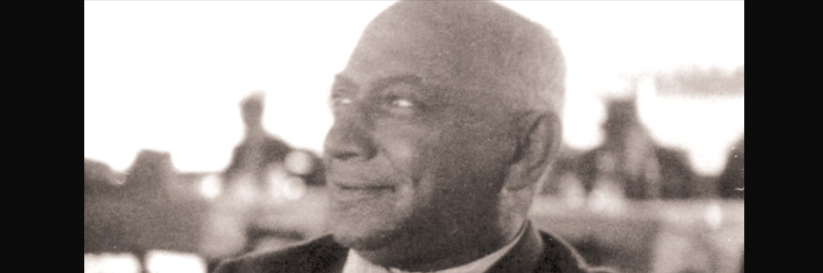
Sándor Ferenczi: The Mother of Psychoanalysis and the Architect of Trauma Therapy
While Sigmund Freud is the undisputed father of psychoanalysis, there is a quieter and more tender voice that was silenced for decades but has recently emerged as the true architect of modern trauma therapy. Sándor Ferenczi was a Hungarian psychoanalyst who served as Freud’s closest friend and disciple before becoming his most significant theoretical rival. He is often called the mother of psychoanalysis because he introduced the qualities of empathy, tenderness, and mutual vulnerability into the therapeutic relationship. At a time when analysts were taught to be blank screens and cold observers, Ferenczi argued that it was the love and honesty of the therapist that healed the patient. His work on the confusion of tongues and the wise baby archetype laid the foundation for almost every modern somatic and relational therapy we use today.
The life of Sándor Ferenczi began in Miskolc, Hungary in 1873 where he was born into a large Polish-Jewish family. He was the eighth of eleven children and grew up in a lively intellectual environment that was centered around his father’s bookstore. This early immersion in literature and culture gave him a poetic sensitivity that would later distinguish his writing from the dry and mechanistic style of his contemporaries. He studied medicine in Vienna and spent his early career as a neurologist and neuropathologist working with the poor and marginalized in Budapest. It was here that he began to see that physical symptoms often had roots in emotional suffering and social deprivation.
He met Freud in 1908 and the two men formed an immediate and intense bond that would shape the history of psychology. Ferenczi became Freud’s constant travel companion and his most trusted confident. They vacationed together and analyzed each other’s dreams and wrote hundreds of letters that document the birth of psychoanalytic theory. For twenty years Ferenczi was the Grand Vizier of the psychoanalytic movement and he established the International Psychoanalytical Association and tirelessly promoted Freud’s ideas.
However, a rift began to grow between them as Ferenczi delved deeper into the treatment of severe trauma. Freud had famously abandoned his seduction theory which stated that neurosis was caused by actual childhood sexual abuse. Freud instead decided that these memories were merely fantasies or wish fulfillments of the child. Ferenczi could not accept this. His clinical work with patients who had suffered severe abuse convinced him that the trauma was real and that the damage was caused not just by the event itself but by the silence and denial of the adults involved.
This divergence led Ferenczi to experiment with what he called the active technique. He realized that the passive silence of the classical analyst often retraumatized patients who had been neglected as children. He believed that the patient needed a corrective emotional experience rather than just intellectual insight. He began to offer his patients warmth and reassurance and sometimes even physical affection like holding a hand to communicate safety. He argued that the analyst must not remain a detached authority figure but must be willing to admit their own mistakes and vulnerability. This radical egalitarianism terrified the psychoanalytic establishment.
Ferenczi developed the concept of the confusion of tongues to explain the mechanism of trauma. He observed that children speak a language of tenderness and play while predatory adults speak a language of passion and guilt. When an adult imposes their sexual passion on a child the child is overwhelmed and confused. To survive the terror the child often identifies with the aggressor. They surrender their own reality and adopt the guilt and desires of the abuser to maintain a bond with the person they depend on for survival. This introjection of the aggressor creates a split in the personality where one part of the child remains innocent and tender while another part becomes a watchful guardian or a precocious caretaker.
This split creates what Ferenczi called the wise baby. This is a child who has been forced to grow up too fast and has developed a hyper-acute sensitivity to the moods and needs of adults. The wise baby becomes the family psychiatrist who takes care of the emotionally immature parents at the expense of their own childhood. This concept is a direct precursor to the modern understanding of the parentified child and the internal family systems model of parts work.
The tragedy of Ferenczi’s career is that he was marginalized and pathologized by the very community he helped build. When he presented his paper on the confusion of tongues at a congress in 1932 Freud refused to shake his hand. The psychoanalytic community turned its back on him and rumors were spread that he was mentally ill. He died the following year in 1933 from pernicious anemia but his ideas did not die with him. They went underground and influenced a generation of independent thinkers like Michael Balint and Donald Winnicott and John Bowlby who would later build the foundations of attachment theory and relational psychoanalysis.
The Clinical Legacy of Sándor Ferenczi
The implications of Ferenczi’s work for clinical practice are profound and are only now being fully realized. He was the first to suggest that the countertransference—the therapist’s emotional reaction to the patient—was not a hindrance but a vital tool for understanding the patient’s inner world. He taught that the therapist must be elastic and adapt their technique to the needs of the individual patient rather than forcing the patient to fit the theory.
His concept of the confusion of tongues is essential for working with survivors of abuse. It reminds clinicians that the patient who identifies with their abuser or blames themselves is not being resistant but is displaying a survival strategy that saved their psychic life. The goal of therapy is to help the patient separate their own language of tenderness from the alien language of passion and guilt that was forced into them. This requires a therapist who is willing to be real and human and to provide the safe holding environment that was missing in childhood.
For those navigating their own healing journey the life of Sándor Ferenczi offers a permission slip to trust your own reality. Many trauma survivors struggle with a deep sense of invalidation because their reality was denied by the adults around them. Ferenczi championed the truth of the victim’s experience against the establishment’s preference for fantasy. His concept of the wise baby validates the experience of those who felt they had to be small adults to survive their chaotic families. It helps us understand that our high sensitivity and ability to read the room are not just personality quirks but are expensive adaptations we developed to stay safe.
We can apply his insights by recognizing where we have identified with our aggressors. We often treat ourselves with the same harshness and criticism that we received from toxic caregivers. We internalize their voice and mistake it for our own conscience. Healing involves uncoupling this identification and recovering the innocent child part of ourselves that speaks the language of tenderness. It means allowing ourselves to be imperfect and vulnerable without the fear of annihilation.
The wise baby within us allowed us to survive but it also kept us from truly living. It cut us off from our own needs in order to service the needs of others. To heal we must thank the wise baby for its service and let it retire so that the playful and spontaneous child can emerge. We must learn to distinguish between relationships that demand our submission and those that invite our authentic participation. Ferenczi teaches us that love is not about possession or domination but about mutual recognition and the freedom to be oneself in the presence of another.
Influences and Legacy
The intellectual lineage of Sándor Ferenczi is a web that connects the biological to the mystical. He was deeply influenced by the evolutionary theories of Lamarck and Haeckel which led him to write his most speculative work Thalassa: A Theory of Genitality. In this book he argued that the physical act of sexuality was a symbolic return to the ocean which is the phylogenetic womb of all life. While the biology is outdated the psychological metaphor of the ocean as the source of life and the unconscious remains a powerful image in depth psychology.
He was also influenced by the Hungarian poetic tradition and the liberal Jewish intellectualism of Budapest which valued humanism and social progress. His legacy is most visible today in the relational school of psychoanalysis which prioritizes the real relationship between therapist and patient. His ideas on the “holding environment” directly influenced Donald Winnicott and the British Independent Group. His focus on the interpersonal nature of the self influenced Harry Stack Sullivan and the American interpersonalists.
Most significantly Ferenczi is the grandfather of modern trauma theory. His recognition that trauma is stored in the body and involves a fragmentation of the self anticipated the work of Bessel van der Kolk and the development of somatic therapies. When we talk about “the body keeps the score” or “parts work” or “complex PTSD” we are speaking the language that Sándor Ferenczi invented a century ago. He was a man who dared to feel too much in a profession that valued thinking over feeling. He paid a high price for his courage but his legacy is a more humane and effective therapy for us all.
Timeline of Sándor Ferenczi
1873 July 7 Born in Miskolc Hungary as the eighth of eleven children to Baruch Fraenkel and Rosa Eibenschütz
1894 Graduated with a medical degree from the University of Vienna where he was influenced by Krafft-Ebing
1900 Opened a private medical practice in Budapest specializing in neurology and neuropathology
1908 February 2 Met Sigmund Freud for the first time at the urging of Carl Jung initiating a close friendship
1909 Accompanied Freud and Jung on their famous trip to Clark University in the United States
1910 Proposed the founding of the International Psychoanalytical Association at the Nuremberg Congress
1913 Founded the Hungarian Psychoanalytic Society in Budapest
1916 Served as a military doctor during World War I studying war neuroses and shell shock
1918 Elected president of the International Psychoanalytical Association at the Budapest Congress
1919 Appointed the first university professor of psychoanalysis in the world at the University of Budapest
1924 Published Thalassa: A Theory of Genitality linking biology and psychology
1924 Published The Development of Psychoanalysis with Otto Rank advocating for active therapy
1928 Began experimenting deeply with the “active technique” and “elasticity” in therapy
1932 Wrote his Clinical Diary documenting his experiments in mutual analysis and trauma
1932 September 4 Delivered his controversial paper Confusion of Tongues at the Wiesbaden Congress
1933 May 22 Died in Budapest from pernicious anemia at the age of 59
Bibliography
Ferenczi S (1916) Contributions to Psycho-Analysis Boston: Richard G Badger
Ferenczi S (1926) Further Contributions to the Theory and Technique of Psycho-Analysis London: Hogarth Press
Ferenczi S (1938) Thalassa: A Theory of Genitality The Psychoanalytic Quarterly
Ferenczi S (1955) Final Contributions to the Problems and Methods of Psycho-Analysis London: Hogarth Press
Ferenczi S (1988) The Clinical Diary of Sándor Ferenczi Edited by Judith Dupont Cambridge MA: Harvard University Press
Ferenczi S & Rank O (1925) The Development of Psychoanalysis New York: Nervous and Mental Disease Publishing












0 Comments