

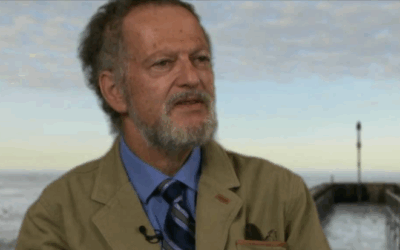
For over forty years in private practice, Laurence Heller, PhD, observed a pattern that traditional trauma therapy failed to address. Clients who had experienced early childhood trauma—neglect, abuse, emotional unavailability, or chaotic caregiving—didn’t just struggle with traumatic memories or autonomic dysregulation. They struggled with something more fundamental: a pervasive sense that something was profoundly wrong with them. They experienced shame, chronic self-judgment, difficulty setting boundaries, confusion about their own needs and desires, and a persistent feeling of not belonging anywhere. Traditional trauma therapies targeting specific traumatic events or teaching emotion regulation skills helped somewhat but left this deeper distortion of identity largely untouched.
Heller recognized that these clients weren’t suffering primarily from shock trauma—single overwhelming events like accidents, assaults, or natural disasters that Peter Levine’s Somatic Experiencing addressed so effectively. They were suffering from developmental trauma—chronic adverse experiences during critical periods of brain and identity development that fundamentally shaped how they experienced themselves, their bodies, and their capacity for relationship. The trauma wasn’t just stored in their nervous systems as incomplete fight-flight responses; it was woven into the very fabric of their identity, creating what Heller calls “identity distortions” that persist long after external circumstances improve.
From decades of clinical observation, theoretical integration, and collaboration with co-author Aline LaPierre, PsyD, Heller developed the NeuroAffective Relational Model (NARM), a comprehensive psychotherapeutic approach specifically designed for addressing attachment, relational, and developmental trauma—collectively referred to as “Complex Trauma” or Complex PTSD (C-PTSD). NARM integrates top-down psychotherapy with bottom-up somatic approaches within a relational context, creating a unified framework for understanding and treating the long-term consequences of childhood adversity that traditional single-incident trauma therapies weren’t designed to address.
Heller holds a doctorate in clinical psychology and spent over forty years in private practice before focusing primarily on teaching NARM through the NARM Training Institute, which he founded and directs. He currently serves as a Senior Fellow at The Meadows behavioral healthcare organization, where his expertise in developmental trauma informs treatment approaches for adolescents and adults struggling with trauma histories, addiction, and mental health challenges. He speaks several languages fluently and has conducted NARM seminars throughout the United States and Europe for over thirty years, training thousands of therapists in this approach.
The theoretical foundation of NARM emerged from Heller’s synthesis of multiple psychotherapeutic traditions. From psychodynamic psychotherapy, particularly object relations theory and self psychology, NARM draws understanding of how early relational experiences create internal working models and how disruptions in these foundational relationships affect identity formation, self-esteem, and capacity for intimacy. From attachment theory developed by John Bowlby and Mary Ainsworth, NARM incorporates understanding of how early caregiver relationships shape lifelong patterns of relating, regulating emotions, and experiencing safety or threat in relationships.
From Gestalt therapy, NARM brings emphasis on present-moment awareness, contact and withdrawal cycles, experiments rather than interpretations, and the therapeutic relationship as primary vehicle for change. Fritz Perls’ focus on organismic self-regulation—the idea that given awareness and support, people naturally move toward health and integration—profoundly influenced NARM’s non-pathologizing stance and trust in clients’ inherent capacity for healing.
From diverse somatic psychotherapy approaches including Somatic Experiencing, Sensorimotor Psychotherapy, Integrative Body Psychotherapy, and Continuum Movement, NARM incorporates understanding that trauma lives in the body and nervous system, not just in cognition and emotion, and that healing requires engaging the body directly rather than relying solely on verbal processing. Heller co-founded the Gestalt Institute of Denver and served as senior faculty member for Peter Levine’s Somatic Experiencing Training Institute, bringing deep expertise in both relational and somatic approaches to trauma treatment.
NARM also integrates insights from affective neuroscience, particularly research on how early experiences shape brain development, how the nervous system encodes relational experiences, and how neuroplasticity allows adult brains to reorganize through new experiences. The model draws from research on the Adverse Childhood Experiences (ACE) Study, which demonstrated powerful correlations between childhood adversity and adult physical and mental health outcomes, while going beyond ACE’s descriptive epidemiology to provide clinical framework for healing.
Non-Western perspectives, particularly Buddhist psychology’s understanding of suffering arising from identification with thoughts and the possibility of disidentification, also influenced NARM’s approach to working with identity distortions. The model’s emphasis on recognizing and disidentifying from survival-based identities while reconnecting with authentic self parallels Buddhist practices of recognizing and releasing attachment to false selves.
The NARM model rests on several foundational principles. First and most crucial: it distinguishes between shock trauma and developmental trauma. Shock trauma results from discrete overwhelming events—car accidents, assaults, natural disasters, combat experiences—that occur too fast, too soon, or too intensely for the nervous system to process. These experiences create incomplete survival responses (fight, flight, freeze) that remain activated in the nervous system, causing symptoms like hypervigilance, flashbacks, nightmares, and startle responses. Somatic approaches like Somatic Experiencing excel at resolving shock trauma by helping complete these interrupted survival responses.
Developmental trauma, by contrast, results from chronic adverse experiences during critical periods of development—particularly the first few years of life when brain architecture, nervous system regulation, and core identity are forming. This includes neglect, emotional unavailability, inconsistent caregiving, abuse, witnessing domestic violence, parental addiction or mental illness, poverty, discrimination, or other chronic adverse conditions. Unlike shock trauma’s discrete onset, developmental trauma occurs over extended periods during which children’s brains and identities are actively forming and adapting to their environments.
The critical distinction: while shock trauma affects a relatively well-formed identity and nervous system, developmental trauma fundamentally shapes identity formation itself. A thirty-year-old experiencing a car accident has decades of relatively healthy development providing resilience and resources for recovery. An infant experiencing chronic neglect has no such foundation—the neglect becomes the foundation upon which everything else builds. The adaptation to early adverse environments literally organizes brain structure, nervous system regulation, attachment patterns, and sense of self.
This creates what Heller identifies as the two core organizing themes of developmental trauma: **identity distortion** and **physiological dysregulation**. These aren’t separate problems but deeply interconnected—identity distortions drive physiological dysregulation, and physiological dysregulation reinforces identity distortions in self-perpetuating cycles that persist long after external circumstances improve.
Identity distortions manifest in countless ways but share common themes. Children experiencing environmental failure—neglect, abuse, emotional unavailability—cannot understand or tolerate that their caregivers are failing them. The attachment bond is so biologically crucial for survival that children protect this bond at all costs, even to their own detriment. If parents cannot see, attune to, or meet the child’s needs, the child doesn’t conclude “my parents are failing” but rather “something is wrong with me.” Environmental failure becomes experienced as self-failure, creating profound shame and self-judgment.
This creates what NARM calls “survival identities”—identities organized around not being enough, being too much, being fundamentally unlovable, defective, or wrong. These aren’t just negative thoughts but core organizing principles shaping perception, emotion, behavior, and physiology. Someone with a survival identity of “I’m not enough” doesn’t just occasionally think this thought—they filter all experience through this lens, dismissing accomplishments, amplifying failures, anticipating rejection, and unconsciously arranging circumstances to confirm this identity.
The Five Adaptive Survival Styles that NARM identifies represent different patterns of identity distortion arising from disruptions to five core developmental needs: Connection, Attunement, Trust, Autonomy, and Love-Sexuality. Each adaptive survival style reflects how children creatively adapted to particular environmental failures, what needs went unmet, what capacities failed to develop, and what survival strategies emerged to preserve whatever connection remained possible.
The **Connection Survival Style** develops when the earliest need for connection—the fundamental biological need to exist and be welcomed into the world—goes unmet. This typically reflects severe early neglect, prenatal stress, birth trauma, premature birth, or profound parental unavailability during the first months of life. The infant’s nascent sense of “I exist and I belong here” never fully forms. Instead, a deep existential anxiety develops—”I don’t have a right to exist,” “There’s no place for me,” “I’m a burden.” Adults with connection disruptions often feel existentially isolated, struggle to fully inhabit their bodies, may dissociate frequently, and have difficulty believing they matter or have impact on the world.
The **Attunement Survival Style** emerges when caregivers fail to accurately see, mirror, and respond to the child’s actual emotional states and needs. Parents may project their own needs onto the child, expect the child to regulate the parent’s emotions, or simply misread the child’s signals. Children learn their actual feelings and needs don’t matter or are wrong, so they disconnect from internal experience and focus on reading and managing others’ emotional states. Adults with attunement disruptions struggle to identify their own feelings and needs, often taking care of others while neglecting themselves, and may feel empty, confused about identity, or like they’re living someone else’s life.
The **Trust Survival Style** develops when caregivers are inconsistent, unpredictable, or alternately nurturing and rejecting. Children in these environments can never relax into trusting relationships because safety is never stable. They develop hypervigilance to others’ moods and states, chronic anxiety about rejection or abandonment, and difficulty trusting their own perceptions. The core identity becomes “I can’t trust” or “Something bad is going to happen.” Adults with trust disruptions often experience chronic anxiety, ambivalence about closeness, difficulty making decisions, and terror of being controlled or engulfed.
The **Autonomy Survival Style** arises when children’s natural movement toward independence, self-direction, and age-appropriate autonomy meets enmeshment, overcontrol, or use as narcissistic extension of parents’ needs. Children learn that being separate threatens the attachment bond, so they suppress healthy autonomy to preserve connection. The identity becomes organized around “I can only exist in relation to others” or “My needs don’t matter.” Adults with autonomy disruptions struggle with boundaries, difficulty saying no, confusion about their own wants and needs separate from others, and often feel trapped or suffocated in relationships while simultaneously fearing aloneness.
The **Love-Sexuality Survival Style** develops when sexual energy and age-appropriate sexual development meet shaming, rejection, exploitation, or sexualization. This may involve overt sexual abuse but also includes parental seductiveness, shaming of normal sexual development, use of child to meet parent’s intimacy needs, or family environments where sexuality and intimacy are completely denied or made shameful. Children learn that their sexuality and their heart cannot exist together, creating splits between sex and intimacy. Adults with love-sexuality disruptions often compartmentalize sex and love, struggle with either intimacy or sexuality (or both), and may have difficulty integrating vulnerability with desire.
Critically, these aren’t diagnostic categories or personality types. Most people show elements of multiple survival styles, often with one or two dominant patterns. The styles represent maps of how development can be disrupted and what patterns of adaptation emerge, providing clinicians with framework for recognizing patterns and understanding what developmental work might support healing.
Physiological dysregulation—NARM’s second core organizing theme—manifests as chronic activation of the sympathetic nervous system (fight-flight), chronic dorsal vagal shutdown (freeze, collapse), or rapid oscillation between states. Children growing up in chronically stressful environments develop nervous systems organized for threat detection and survival rather than calm social engagement. The hypothalamic-pituitary-adrenal (HPA) axis becomes dysregulated, cortisol patterns become abnormal, and the capacity for self-regulation fails to develop normally.
This creates what NARM calls “agency distortions”—disruptions in the capacity for self-regulation, self-activation, and healthy aggression. Agency in NARM’s usage doesn’t mean willpower or self-control but rather the fundamental capacity to mobilize energy, set boundaries, say no, protect oneself, pursue what one wants, and move toward or away from experiences based on internal guidance rather than compliance or rebellion.
The crucial NARM insight: identity distortions and physiological dysregulation are not separate problems requiring separate interventions. They are two sides of the same coin—two aspects of how developmental trauma organizes experience. Survival identities create physiological patterns (shame creates collapse, fear of abandonment creates hypervigilance), and physiological states reinforce identities (chronic shutdown reinforces “I don’t matter,” chronic hyperarousal reinforces “I’m not safe”). Healing requires working with both simultaneously within the context of an attuned therapeutic relationship.
This leads to NARM’s clinical approach, organized around what Heller calls the “Four Pillars of NARM”: (1) Clarifying what the client most wants for themselves (not what they think they should want or what would please others), (2) Exploring rather than interpreting through curious, open-ended questions rather than expert interpretations, (3) Disidentifying from survival-based identities and reconnecting with authentic organizing principles, and (4) Working simultaneously with the psychology and physiology of developmental trauma.
Unlike many trauma therapies, NARM is explicitly **non-regressive, non-cathartic, and non-pathologizing**. Non-regressive means therapy focuses primarily on present-moment experience and adult resources rather than extensive exploration of childhood memories. While the past informs understanding, healing happens through reorganizing present experience. This contrasts with therapies requiring detailed reconstruction of traumatic history or regression to earlier developmental stages.
Non-cathartic means NARM doesn’t emphasize emotional release, discharge, or abreaction as primary healing mechanisms. While emotions certainly arise and are welcomed, the goal isn’t to facilitate intense emotional expression but rather to help clients develop capacity to tolerate, regulate, and learn from emotional experience. Research on prolonged exposure and emotional processing therapies shows mixed results, with some clients improving but others becoming retraumatized through repeated activation of overwhelming emotional states without adequate resources for integration.
Non-pathologizing means NARM views symptoms, defenses, and survival strategies not as disorders requiring correction but as creative adaptations that once served crucial protective functions. The therapeutic stance is curiosity and respect rather than diagnosis and correction. A client who dissociates isn’t “resisting” or “avoiding” but demonstrating an elegant nervous system strategy that likely prevented complete psychological collapse during overwhelming childhood experiences.
The clinical process typically begins with what NARM calls “clarifying the heart’s desire”—helping clients articulate what they most want for themselves in terms of deepening capacities for connection, aliveness, authenticity, and self-expression. This isn’t goal-setting or symptom-reduction planning but rather connecting with deeper longing for qualities of experience rather than specific outcomes. Someone might recognize they want capacity for genuine intimacy rather than specific relationship outcome, or desire to feel alive in their body rather than symptom elimination.
This orientation toward what’s wanted shifts attention from fixing what’s wrong to supporting what’s trying to emerge. It activates what Gestalt therapy calls the “organismic self-regulation”—the inherent movement toward health and wholeness that Heller believes exists in everyone regardless of trauma history. The role of therapy becomes supporting and removing obstacles to this natural movement rather than imposing external healing agenda.
Exploration through inquiry rather than interpretation forms NARM’s second pillar. Rather than expert interpretations telling clients what their experience means, NARM therapists ask open-ended, reflective questions inviting clients to explore how they’re organizing internal experience: “What are you noticing right now?” “What happens inside when you say that?” “How do you know that?” These questions direct attention to present-moment process rather than content, helping clients develop capacity for self-awareness and self-inquiry rather than reliance on therapist’s interpretations.
The third pillar—disidentification from survival identities—represents perhaps NARM’s most distinctive contribution. Heller observed that clients can develop extensive insight into their childhood experiences, understand intellectually how their patterns formed, and even develop some emotional regulation capacity, yet remain trapped in survival identities that organize all experience. The therapeutic task becomes recognizing these identities as historical adaptations rather than fundamental truth, then supporting connection with more authentic organizing principles.
This process requires delicate, skillful work. Simply telling someone “that’s not really who you are” invalidates their lived experience and usually creates resistance. Instead, NARM uses precise tracking of when survival identities activate and gentle inquiry helping clients notice: “There it is again—that belief that you’re not enough. What happens when you believe that thought? What’s it like to consider that maybe this belief, while understandable given your childhood, might not be true?” Over time, repeated recognition creates distance—disidentification—from the survival identity, opening space for more authentic self to emerge.
Simultaneously, NARM works with physiology and nervous system regulation. This involves helping clients develop capacity to notice internal states without immediately reacting or dissociating, titrating intensity to stay within window of tolerance, and supporting movement between states rather than getting trapped in chronic activation or shutdown. Polyvagal theory provides neurobiological framework for this work, helping therapists recognize autonomic states and support movement toward ventral vagal social engagement.
The therapeutic relationship itself serves as crucial healing agent. Through consistent, attuned, boundaried presence, the therapist provides perhaps the client’s first experience of relationship where their actual feelings, needs, and experience matter and are welcome. This lived relational experience creates new neural pathways and internal working models more powerfully than intellectual understanding alone. NARM training emphasizes therapists’ own healing work—unhealed developmental trauma in therapists creates blind spots and countertransference reactions that undermine therapeutic effectiveness.
Heller’s first major book presenting NARM, Healing Developmental Trauma: How Early Trauma Affects Self-Regulation, Self-Image, and the Capacity for Relationship, was co-authored with Aline LaPierre, PsyD, and published by North Atlantic Books in 2012. The book integrates attachment research, neuroscience, and somatic psychology to present comprehensive understanding of developmental trauma and the NARM approach to healing.
Peter Levine praised it as “well-organized, valuable” offering “clear guidance for all of us seeking better understanding of fundamental conflicts between oneness and separateness, dependence and autonomy.” Midwest Book Review noted it “blends bottom-up and top-down approaches to regulating the nervous system and provides the NeuroAffective Relational Model which focuses on maximizing client strengths and resiliency.”
The book has been translated into fifteen languages including German, Spanish, French, Italian, Portuguese, Dutch, Russian, Polish, Czech, Japanese, Korean, Chinese, Hebrew, and Turkish, making NARM accessible to clinicians and trauma survivors worldwide. It continues to be widely used in trauma treatment training programs and graduate psychology programs.
In 2022, Heller published The Practical Guide for Healing Developmental Trauma: Using the NeuroAffective Relational Model to Address Adverse Childhood Experiences and Resolve Complex Trauma with co-author Brad Kammer, LMFT, LPCC. Published by North Atlantic Books/Penguin Random House, this follow-up companion provides step-by-step clinical guidance for therapists wishing to apply NARM principles.
Gabor Maté praised it: “This book, from two experienced and insightful practitioners, offers a thorough and clear guide to a modality of therapy far deeper than the prevailing cognitive and behavioral treatments. It is highly promising because it goes beyond the surface manifestations to the root causes and dynamics of human distress.” Lissa Rankin, MD, noted: “NARM offers a much-needed tool in the integrative trauma therapist’s medicine bag.”
Christina Bethell, PhD, professor at Johns Hopkins Bloomberg School of Public Health, wrote: “Heller and Kammer’s essential guide expertly translates our best science into the therapeutic skills-building roadmap we need to heal the complex developmental trauma so prevalent among our children, families, communities, and world today.”
The book presents clinical approaches differentiating NARM from other therapeutic modalities, organizing principles for integrating NARM into clinical practice, and detailed guidance on working with each of the Five Adaptive Survival Styles. It includes case examples, clinical transcripts, and practical exercises making the model accessible to practicing clinicians.
Heller also co-authored Crash Course: A Self-Healing Guide to Auto Accident Trauma and Recovery with Diane Poole Heller (no relation), applying trauma resolution principles specifically to automobile accident trauma. The book has been used worldwide as a resource for healing various overwhelming life events beyond auto accidents.
The NARM Training Institute offers comprehensive professional training for mental health professionals, coaches, and helping professionals working with developmental and complex trauma. Training formats include professional certification programs, continuing education workshops, online courses, and consultation groups. The Institute has trained thousands of practitioners across over thirty countries.
Training emphasizes experiential learning—participants don’t just study NARM intellectually but engage in exercises and demonstrations helping them experience the work personally. This embodied learning is considered essential; therapists cannot effectively guide clients through processes they haven’t explored themselves. The training also emphasizes importance of therapists’ ongoing personal healing work and supervision.
NARM faculty include senior trainers who have studied extensively with Heller and demonstrated advanced clinical competence with the model. Training is offered throughout North America and Europe in both English and other languages. Online learning formats have expanded access globally while maintaining experiential emphasis through live video demonstrations and breakout sessions.
Heller’s academic publications include seminal articles establishing NARM’s theoretical foundations. His work appears in professional journals focused on trauma, attachment, and somatic psychology, though he has maintained stronger focus on clinical application and training than on traditional academic publishing.
In collaboration with Christina Bethell, PhD, professor at Johns Hopkins Bloomberg School of Public Health, Heller contributed to bringing trauma-informed understanding to pediatricians and general practitioners. Their article “Social and Relational Health Risks and Common Mental Health Problems Among US Children” published in 2021 in Child and Adolescent Psychiatric Clinics of North America addresses how healthcare providers can better recognize and address developmental trauma in pediatric populations.
NARM integrates naturally with other major trauma treatment approaches. Bessel van der Kolk’s research demonstrating how the body keeps the score validates NARM’s emphasis on physiological dysregulation as core organizing principle of developmental trauma. Van der Kolk’s work showing trauma fundamentally affects embodiment aligns with NARM’s integration of somatic interventions with identity work.
Stephen Porges’ Polyvagal Theory provides neurobiological framework explaining how autonomic state determines capacity for connection and self-regulation. Polyvagal theory’s hierarchy of ventral vagal social engagement, sympathetic mobilization, and dorsal vagal shutdown maps directly onto NARM’s understanding of physiological dysregulation and the necessity of nervous system regulation for identity work.
Internal Family Systems (IFS) therapy developed by Richard Schwartz offers complementary framework for understanding survival identities as protective parts. NARM and IFS share non-pathologizing stance, trust in inherent movement toward healing, and emphasis on disidentification from protective adaptations to access authentic self.
Pat Ogden’s Sensorimotor Psychotherapy provides detailed methodology for tracking and intervening with somatic manifestations of developmental trauma. Ogden’s focus on mindful awareness of sensation, breath, and movement complements NARM’s simultaneous attention to psychology and physiology.
Janina Fisher’s work on structural dissociation illuminates how developmental trauma creates fragmented self-states. Her emphasis on working with parts rather than against them aligns with NARM’s non-pathologizing stance and recognition that survival strategies served crucial protective functions.
For practitioners, NARM provides comprehensive framework for understanding how childhood adversity manifests in adult presentation and how to address root causes rather than just surface symptoms. Someone presenting with depression might be experiencing dorsal vagal shutdown and connection disruption. Someone with anxiety might show sympathetic hyperarousal and trust disruption. Someone with relationship difficulties might demonstrate autonomy or love-sexuality disruptions. NARM helps clinicians recognize underlying patterns and intervene developmentally rather than symptomatically.
The model also helps clinicians avoid common therapeutic errors. Many therapies inadvertently reinforce survival identities by focusing exclusively on deficits, problems, and pathology. Others push for emotional expression or catharsis that overwhelms clients’ regulatory capacity. Still others prioritize cognitive insight without addressing physiological dysregulation or relational context. NARM’s integrative framework helps clinicians work at multiple levels simultaneously while maintaining developmental sensitivity.
NARM training emphasizes recognizing and working skillfully with therapeutic alliance ruptures. Clients with developmental trauma have exquisitely sensitive radar for relational misattunement because they survived childhood by hypervigilantly tracking caregivers’ emotional states. Minor therapeutic errors—running late, misunderstanding, subtle judgment—can activate profound shame, fear, or rage. NARM teaches therapists to welcome and repair these ruptures rather than defend against or minimize them. Successful repair of alliance ruptures provides powerful corrective relational experience.
The model acknowledges that healing developmental trauma requires time, patience, and realistic expectations. Unlike shock trauma, which can sometimes resolve relatively quickly through appropriate somatic interventions, developmental trauma involves reorganizing identity, nervous system regulation, and relational patterns formed over years during critical developmental periods. Healing is measured in years rather than weeks or months. Therapists must maintain realistic hope while avoiding both false promises of quick fixes and therapeutic nihilism suggesting profound trauma is untreatable.
Heller emphasizes that NARM is a model, not a technique. It’s not a manualized protocol specifying exactly what to do session by session. It’s a framework for understanding developmental trauma and organizing therapeutic thinking. Different NARM practitioners might look quite different in their specific interventions while sharing common theoretical understanding and therapeutic stance. This flexibility allows integration with practitioners’ existing modalities and styles rather than requiring abandonment of previous training.
As statistician George Box noted, “Essentially all models are wrong, but some are useful.” NARM acknowledges its own limitations as model while demonstrating remarkable clinical utility. No single framework can capture human complexity, yet having organized way of understanding patterns helps clinicians navigate complexity more skillfully than operating without theoretical map.
Whether NARM represents enduring paradigm or transitional framework, Heller’s contribution to understanding and treating developmental trauma has already transformed how thousands of clinicians work with complex trauma. From recognizing identity distortion as core organizing principle to integrating physiological and psychological interventions within relational context, NARM provides comprehensive approach addressing aspects of developmental trauma that other models leave untouched.
Heller continues teaching NARM through advanced trainings across the United States and Europe, leads clinical consultations, and remains sought-after speaker at trauma-focused conferences worldwide. His legacy extends beyond specific techniques or interventions to a fundamentally different way of understanding how early relational trauma shapes human development and how healing occurs through disidentification from survival-based identities while reconnecting with authentic organizing principles that support genuine aliveness, connection, and fulfillment.
Timeline of Laurence Heller’s Career and Major Contributions
1970s-1980s: Completed PhD in clinical psychology
1980s: Co-founded Gestalt Institute of Denver
1980s-2020s: Maintained private practice for over 40 years
1990s: Became senior faculty member for Somatic Experiencing Training Institute
2000s: Developed NeuroAffective Relational Model (NARM) over course of 45-year clinical career
2000s: Founded NARM Training Institute
2001: Published Crash Course: A Self-Healing Guide to Auto Accident Trauma and Recovery (with Diane Poole Heller)
2012: Published Healing Developmental Trauma: How Early Trauma Affects Self-Regulation, Self-Image, and the Capacity for Relationship (with Aline LaPierre) – translated into 15+ languages
2021: Co-authored “Social and Relational Health Risks and Common Mental Health Problems Among US Children” in Child and Adolescent Psychiatric Clinics of North America (with Christina Bethell and colleagues)
2022: Published The Practical Guide for Healing Developmental Trauma: Using the NeuroAffective Relational Model to Address Adverse Childhood Experiences and Resolve Complex Trauma (with Brad Kammer)
Present: Founder and Director, NARM Training Institute
Present: Senior Fellow, The Meadows
Present: International trainer teaching NARM throughout US and Europe
Complete Bibliography of Major Works by Laurence Heller
Heller, L., & Kammer, B. (2022). The Practical Guide for Healing Developmental Trauma: Using the NeuroAffective Relational Model to Address Adverse Childhood Experiences and Resolve Complex Trauma. Berkeley, CA: North Atlantic Books.
Heller, L., & LaPierre, A. (2012). Healing Developmental Trauma: How Early Trauma Affects Self-Regulation, Self-Image, and the Capacity for Relationship. Berkeley, CA: North Atlantic Books.
Heller, D. P., & Heller, L. (2001). Crash Course: A Self-Healing Guide to Auto Accident Trauma and Recovery. Berkeley, CA: North Atlantic Books.




















0 Comments