Somatic Experiencing in Alabama: Body-Based Trauma Healing

Trauma is not just a story we tell; it is a physiological state. Somatic Experiencing (SE) works directly with the nervous system to discharge trapped survival energy and restore the body’s natural capacity for self-regulation.

Neurobiology of Somatic Experiencing and Trauma

Clinically Reviewed & Edited By:

Joel Blackstock, LICSW-S, MSW, PIP | Clinical Director, Taproot Therapy Collective

The Biology of the “Freeze” Response

Developed by Dr. Peter Levine, Somatic Experiencing is based on a simple observation: wild animals regularly face life-threatening threats but rarely suffer from PTSD. They “shake off” the intense energy of a survival encounter once the danger has passed. Humans, however, often override these natural discharge mechanisms with our cognitive “thinking” brain, leaving the nervous system stuck in a state of hyper-arousal or shutdown.

[Image of the Autonomic Nervous System fight flight freeze response]

By utilizing Polyvagal Theory, our clinicians help you track internal “felt senses” to gently complete these thwarted survival responses, allowing your system to return to a state of safety and social engagement.

Clinical Applications & Alabama Context

The Somatic Process

Working with the wisdom of the body.

  • Titration: Processing trauma in small, manageable “bites” to avoid overwhelm.
  • Pendulation: Shifting between states of activation and states of resource/calm.
  • Discharge: Releasing trapped energy through subtle movements, heat, or breath.

Who We Serve

Specialized care for high-stress roles.

  • First Responders: Healing the cumulative stress of emergency service.
  • Veterans: Addressing the physiological weight of combat trauma.
  • Medical Professionals: Recovering from secondary trauma and burnout.

Alabama Regional Context

Nature, weather, and community healing.

  • Weather Trauma: Processing the somatic shock of tornadoes and severe Alabama weather.
  • Agricultural Connection: Leveraging the Southern tie to the land for grounding work.
  • Historical Resilience: Addressing generational patterns of community stress.

An Integrated Approach to Body-Based Healing

At Taproot Therapy Collective, we don’t use Somatic Experiencing in a vacuum. We integrate it with EMDR and Brainspotting to provide a multi-layered approach to trauma recovery. While EMDR targets cognitive processing, SE ensures the nervous system itself is regulated and capable of sustaining deep healing.

Our clinicians specialize in “Bottom-Up” processing—starting with the body’s signals to clear the path for the mind’s clarity.

Somatic Therapy in Alabama: FAQ

What is the difference between Somatic Experiencing and traditional talk therapy?

Talk therapy focuses on the “top-down” narrative—your thoughts and stories. Somatic Experiencing is “bottom-up”—it focuses on physical sensations (tension, temperature, breath) to resolve trauma where it is actually stored in the subcortical brain.

Where can I find a certified Somatic therapist in Birmingham, AL?

Taproot Therapy Collective in Hoover, AL, is a regional hub for somatic and brain-based therapies. Our team integrates SE principles into comprehensive trauma care for the Greater Birmingham community.

Can Somatic Experiencing help with chronic pain?

Yes. Many chronic pain conditions are exacerbated by a nervous system stuck in “high alert.” SE helps regulate the autonomic nervous system, which can significantly reduce the physiological intensity of chronic pain patterns.

Birmingham’s Center for Body-Based Healing

If your body still feels like it’s in a state of emergency long after the crisis has passed, our team is ready to help you find your baseline. If you are seeking an expert somatic therapist in Hoover, AL, our clinic is accepting new patients.

📍 Taproot Therapy Collective: 2025 Shady Crest Dr, Suite 203, Hoover, AL 35216

Start Your Healing Journey

The Anthropology of Feeling Dirty: Mary Douglas, OCD, and the Purification of the Self

The Anthropology of Feeling Dirty: Mary Douglas, OCD, and the Purification of the Self

Why trauma survivors feel "stained" even when nothing physical happened—and how ritual can restore the symbolic order of the self. The Sensation That Won't Wash Away She scrubs her hands until they're raw. She's been doing it for months now, ever since the assault. The soap, the hot water, the endless repetition—none of it helps. She knows, intellectually, that she's not dirty. Nothing visible stains her skin. Yet the sensation persists: a feeling of contamination that no amount of washing can remove. This is one...

Anxiety Therapist Near Me: Beyond Basic Breathing Exercises”

Anxiety Therapist Near Me: Beyond Basic Breathing Exercises”

Your heart is racing at 3 AM again. You've tried the breathing exercises – in for four, hold for four, out for four. You've downloaded the meditation apps. You've done the yoga, cut the caffeine, exercised regularly. Hell, you could probably teach a masterclass on "coping skills" at this point. Yet here you are, wide awake, body vibrating with that familiar electric dread, Googling "anxiety therapist near me" and wondering why nothing fucking works. Here's what the self-help industrial complex won't tell you:...

Joseph LeDoux and the Revolution in Trauma Therapy:

Joseph LeDoux and the Revolution in Trauma Therapy:

 Understanding Memory Reconsolidation and the Neuroscience Behind Experiential Healing  A Paradigm Shift in Understanding Emotional Memory For decades, the field of psychology operated under the assumption that emotional memories, particularly traumatic ones, were indelible marks on the psyche—permanent scars that could perhaps be managed but never truly erased. Joseph LeDoux, a pioneering neuroscientist at New York University, has fundamentally challenged this view through his groundbreaking research on the...

Beyond PTSD: Rethinking Trauma Diagnosis Through Memory Systems and Targeted Treatment

Beyond PTSD: Rethinking Trauma Diagnosis Through Memory Systems and Targeted Treatment

The Limitations of Current Trauma Diagnosis   Leading trauma experts Gabor Maté and Bessel van der Kolk have long argued that the DSM-5's approach to trauma diagnosis fails to capture the complexity of how trauma manifests in different memory systems and psychological processes. As van der Kolk notes in "The Body Keeps the Score," trauma isn't a singular experience but rather a constellation of disruptions across multiple domains of functioning. Similarly, Maté emphasizes in his work on trauma and addiction...

The Weird History of Psychotherapy Part 3: Wilhelm Reich

The Weird History of Psychotherapy Part 3: Wilhelm Reich

From Reich's Orgone to CBT's Reductionism: How America Lost the Soul of Psychotherapy The Radical Pioneer Who Found Trauma in the Body In 1954, a wild-haired man stood in a field aiming a strange contraption of hollow metal tubes at the sky. This was Wilhelm Reich and his "cloudbuster"—an array of metal tubes he claimed could harness the power of cosmic orgone energy. To understand how we arrived at this bizarre scene, we must trace the extraordinary journey of one of psychology's most brilliant and troubled...

Lifespan Integration Therapy: A Comprehensive Guide to Timeline-Based Healing

Lifespan Integration Therapy: A Comprehensive Guide to Timeline-Based Healing An in-depth exploration of Lifespan Integration therapy, its principles, protocols, and effectiveness for trauma healing. What is Lifespan Integration Therapy? Lifespan Integration (LI) is an innovative therapeutic approach that has emerged as a powerful modality for healing trauma and promoting neural integration. Developed by Peggy Pace in the early 2000s, LI has evolved significantly through collaborative refinement into a...

Wilhelm Reich’s Analysis of Fascism: Enduring Wisdom and Controversial Reception

Wilhelm Reich’s Analysis of Fascism: Enduring Wisdom and Controversial Reception

Who Was Wilhelm Reich? Wilhelm Reich, a prominent psychoanalyst and philosopher, made significant contributions to the understanding of fascism through his groundbreaking work, "The Mass Psychology of Fascism." Despite the enduring wisdom of his analysis, Reich's ideas faced numerous challenges and controversies during his lifetime. In this article, we will explore Reich's perspective on fascism, the problems with his adoption by both psychoanalysts and communists, and the lasting impact of his work on political...

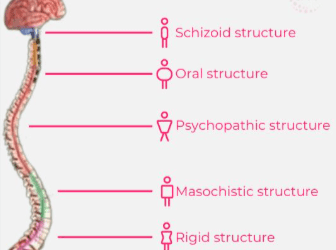
What are Wilhelm Reich’s Character Styles?

What are Wilhelm Reich’s Character Styles?

Exploring the Intersection of Wilhelm Reich's Character Styles, Somatic Blocks, and Modern Psychotherapy Wilhelm Reich, a prominent 20th-century psychoanalyst, developed a unique perspective on character styles and their relationship to somatic blocks, or what he termed "psychic armoring." His groundbreaking work laid the foundation for contemporary somatic psychotherapies, such as Somatic Experiencing and Internal Family Systems (IFS). In this article, we will delve into Reich's character styles, examine their...

The Power of Archetype Meditation: Unlocking Inner Healing Through Jungian Archetypes

The Power of Archetype Meditation: Unlocking Inner Healing Through Jungian Archetypes

In a fast-paced world filled with stress and disconnection, finding a path to inner peace and self-discovery is more important than ever. Archetype meditation, a transformative practice rooted in Jungian psychology and Internal Family Systems (IFS) therapy, offers a profound way to reconnect with the multiplicity of your psyche. This blog post dives deep into the ideas, influences, techniques, and purpose of archetype meditation, spotlighting a powerful guided meditation by Joel from the Taproot Therapy...

Mapping Your Shadow: A Somatic Approach to Jungian Shadow Work

Mapping Your Shadow: A Somatic Approach to Jungian Shadow Work

In the journey of self-discovery and psychological healing, few paths go as deep as shadow work. Today, I want to share insights from our recent meditation session that explores the intersection of Jungian shadow work, somatic experiencing, and other post-Jungian therapeutic approaches. This meditation represents an evolution of how I integrate various therapeutic modalities to help people connect with and transform their relationship to the shadow aspects of their psyche. The Theoretical Foundation This...

Transforming Fear: A Guided Meditation for Phobias and Trauma

Transforming Fear: A Guided Meditation for Phobias and Trauma

Do you struggle with a specific phobia, traumatic memory, or overwhelming emotion that feels impossible to face? This guided meditation will help you build the capacity to gradually transform your relationship to this challenging inner experience through the power of visualization and embodied awareness. Mapping the Fear in the Body We begin by bringing the feared thought, memory or sensation to mind and noticing how the body responds. Where do you feel the fear most intensely - perhaps as a knot in the stomach,...

Holographic Memory Theory: Implications for Trauma Healing and Consciousness

Holographic Memory Theory: Implications for Trauma Healing and Consciousness

What is Holographic Memory Theory? The holographic memory theory represents one of the most fascinating paradigm shifts in our understanding of the brain, memory, and consciousness. First proposed through the collaborative insights of neuroscientist Karl Pribram and quantum physicist David Bohm, this theory suggests that memory storage and retrieval operate according to principles similar to those found in holography. Unlike traditional models that locate specific memories in discrete neural regions, holographic...

Why You Should Tell Patients to Wear Cowboy Boots

Why You Should Tell Patients to Wear Cowboy Boots

Integrating Posture Analysis Into Psychotherapy for Trauma As therapists, we are always looking for new ways to help our patients heal from complex trauma. In my own journey as a practitioner, I've found that incorporating somatic and energetic practices alongside talk therapy can be incredibly powerful in accessing and transforming deep-rooted issues. I have a strong identification with the Magician archetype. When I discovered Brainspotting, a brain-based therapy that uses a pointer (which I jokingly call my...

On Intuition and Trauma: Neurobiological Intersections and Mistaken Identities

On Intuition and Trauma: Neurobiological Intersections and Mistaken Identities

This article explores the neurobiological overlap between intuition and trauma, showing how the residue of unhealed psychological wounds can masquerade as intuitive “gut feelings.” Drawing on research in neuroscience, depth psychology, and political science, it argues that distinguishing true intuition from traumatic conditioning is a crucial part of personal and collective healing. The article offers insights into how practices like mindfulness, depth psychotherapy, and shadow work can help recalibrate intuition and free it from the distortions of the past.

The Comprehensive Approach to Supporting College Students: Integrating Mind, Body, and Brain

The Comprehensive Approach to Supporting College Students: Integrating Mind, Body, and Brain

Understanding Today's College Student Challenges Today's college students face unprecedented challenges that extend beyond academic demands. From navigating complex social environments to managing their mental health, students need multifaceted support systems that address their holistic wellbeing. The gut-brain connection plays a crucial role in cognitive functioning and mental health, offering innovative pathways for supporting student success beyond traditional interventions. The Neurobiological Foundation of...

Why IFS Works: Philosophy, Biology, and Neuroexperience

Why IFS Works: Philosophy, Biology, and Neuroexperience

Why Internal Family Systems (IFS) Therapy Works: Exploring the Philosophical, Biological, and Neuroexperiential Foundations The Internal Family Systems (IFS) model, developed by Richard Schwartz, has gained significant recognition as an effective therapeutic approach for treating a wide range of mental health issues. This essay explores the philosophical, biological, and neuroexperiential underpinnings of IFS, shedding light on why this approach works. We will delve into the concept of multiple consciousness, the...

Meta-Cognition: Observing Conciousness Itself to Heal Trauma

Meta-Cognition: Observing Conciousness Itself to Heal Trauma

"Pain - has an Element of Blank - It cannot recollect When it begun - or if there were A time when it was not - It has no Future - but itself - Its Infinite realms contain Its Past - enlightened to perceive New Periods - of Pain." -Emily Dickinson, Pain - has an Element of Blank (1890) In this haunting stanza, Emily Dickinson captures the timeless, all-consuming nature of deep emotional pain. When we are in the throes of anxiety, depression, or trauma, it can feel as though this state has no beginning and no end....

PTSD and Intuition: Did Our Reptile Ancestors have a Literal Third Eye?

PTSD and Intuition: Did Our Reptile Ancestors have a Literal Third Eye?

The Subcortical Brain and the Roots of the Unconscious The human mind is a vast and complex landscape, with conscious awareness representing only the tip of the iceberg. Beneath the surface lies a realm of unconscious processes, instincts, and archetypal patterns that profoundly shape our perceptions, emotions, and behaviors. In recent years, advances in neuroscience and depth psychology have begun to shed light on the evolutionary roots of the unconscious mind and its intimate connection to the subcortical brain...

Intuition or Magic? The Brainstem-Intuition Connection

Intuition or Magic? The Brainstem-Intuition Connection

 Unlocking the Power of Unconscious Processing and Pattern Recognition in the Context of Trauma What does the Subcorticle Brain Have to do with Intuition? The brainstem, often overshadowed by the more prominent prefrontal cortex, plays a crucial role in rapid, unconscious information processing. This processing forms the foundation for intuition and deep pattern recognition, abilities that can feel almost supernatural or spiritual in their accuracy and insight. Recent research has begun to uncover the complex...

Recognizing the Unconscious Ways Childhood Trauma Still Shapes Your Life

"There are wounds that never show on the body that are deeper and more hurtful than anything that bleeds." Laurell K. Hamilton, Mistral's Kiss Childhood trauma casts a long shadow. Even if we can't remember the specifics of what happened to us, or even if we think we've "gotten over it," the impact of early trauma has a way of sneaking into our adult lives in subtle but profound ways. This is because trauma, especially when it occurs during the critical developmental years of childhood, doesn't just affect us...

The Window of Tolerance: The Healing Gateway in Somatic Therapy

The Window of Tolerance: The Healing Gateway in Somatic Therapy

What is the Window of Tolerance in Psychology? In the realm of psychology and personal growth, the concept of the "window of tolerance" has emerged as a powerful framework for understanding the dynamics of stress, emotional regulation, and resilience. First coined by psychiatrist Dr. Dan Siegel, the term refers to the optimal zone of arousal where a person is able to function most effectively - neither too overwhelmed nor too disengaged. Interestingly, while the specific language of the "window of tolerance" is a...

Yoga Therapy and Trauma-Informed Yoga: Healing Mind and Body Through Mindful Practice

Yoga Therapy and Trauma-Informed Yoga: Healing Mind and Body Through Mindful Practice

  What is Yoga Therapy and Trauma-Informed Yoga? Yoga Therapy is a holistic approach to wellness that applies the principles and practices of yoga to promote health and facilitate healing. It goes beyond the general yoga classes found in studios and gyms, tailoring yoga practices to address specific health conditions and individual needs. Yoga therapists work one-on-one or in small groups to create personalized treatment plans that may include physical postures (asanas), breathing exercises (pranayama),...

Sensorimotor Art Therapy: Integrating Body, Mind, and Creativity for Holistic Trauma Healing

Sensorimotor Art Therapy: Integrating Body, Mind, and Creativity for Holistic Trauma Healing

What is Sensorimotor Art Therapy ? Sensorimotor Art Therapy is an innovative therapeutic approach that combines principles of sensorimotor psychotherapy, art therapy, and somatic experiencing to address trauma and promote healing. This integrative method focuses on the interconnection between bodily sensations, emotional experiences, and artistic expression. By merging these elements, Sensorimotor Art Therapy offers a unique pathway for individuals to process and overcome traumatic experiences. Unlike traditional...

The Somatic and Neurological Experience of Brainspotting Therapy

The Somatic and Neurological Experience of Brainspotting Therapy

The Trauma Healing Power of Brainspotting Brainspotting is a powerful therapeutic approach that engages the body and brain in a unique way to facilitate healing from trauma and emotional distress. Developed by Dr. David Grand, brainspotting evolved out of his work with EMDR (Eye Movement Desensitization and Reprocessing) and taps into the deep connection between the brain's visual system, emotional processing centers, and physiological responses. While the process may vary for each individual, there are some...

Somatic Experiencing: Myths, Misconceptions, and FAQs

Somatic Experiencing: Myths, Misconceptions, and FAQs

Somatic Experiencing and Lifespan Integration Myth: Somatic Experiencing is Just Another Relaxation Technique One common misconception about Somatic Experiencing is that it is simply a relaxation technique, akin to practices like progressive muscle relaxation or guided imagery. While SE can indeed promote a sense of relaxation in the body, it is a much more comprehensive approach to trauma healing and nervous system regulation. Unlike purely relaxation-based techniques, SE works directly with the physiological...

The Brain-Body Connection: How Somatic Experiencing Works

The Brain-Body Connection: How Somatic Experiencing Works

The Impact of Trauma on the Brain and Body Trauma can have a profound impact on both the brain and the body. When an individual experiences a traumatic event, the body's natural stress response is activated, releasing a flood of stress hormones such as cortisol and adrenaline. This response prepares the body for fight, flight, or freeze, enabling the individual to respond to the perceived threat. However, when the traumatic event is overwhelming or prolonged, the stress response can become dysregulated, leading...

Understanding Somatic Experiencing: A Mind-Body Approach to Healing Trauma

Understanding Somatic Experiencing: A Mind-Body Approach to Healing Trauma

What is Somatic Experiencing? Somatic Experiencing (SE) is a body-oriented therapeutic approach developed by Dr. Peter Levine to address the effects of trauma. It is based on the understanding that trauma is not just a psychological phenomenon but also has a significant physiological impact on the body. SE focuses on the biological responses to trauma and aims to release traumatic shock, which is stored in the body, leading to the alleviation of trauma symptoms. The approach is grounded in the observation of...

Jungian Shadow Somatic Meditation

  Meditation to Integrate the Shadow Welcome  today we'll embark on a meditation journey to integrate aspects of our shadow – those extreme emotional reactions, feelings of shame, and overwhelming sensations that we often repress and run away from in life. Our journey begins in childhood, where we first learned to feel emotions and respond to the world. These early experiences, along with traumas or overwhelming events in life, contribute to the formation of our shadow. This meditation is designed to guide...

How Is Experiential and Somatic Therapy Different from Cognitive and Behavioral Therapy

How Is Experiential and Somatic Therapy Different from Cognitive and Behavioral Therapy

What is Somatic and Experiential Therapy? Experiential therapy modalities, such as Internal Family Systems (IFS), Lifespan Integration (LI), Hakomi, AEDP, Psychodrama, and Gestalt therapy, are often considered "non-manualizable" approaches to therapy. This means that they do not follow a specific set of predetermined steps or techniques that can be applied to all clients in the same way. Instead, these modalities require the clinician to rely on their intuition and creativity to adapt the therapy to the...

Check out some of the other categories on our blog: