
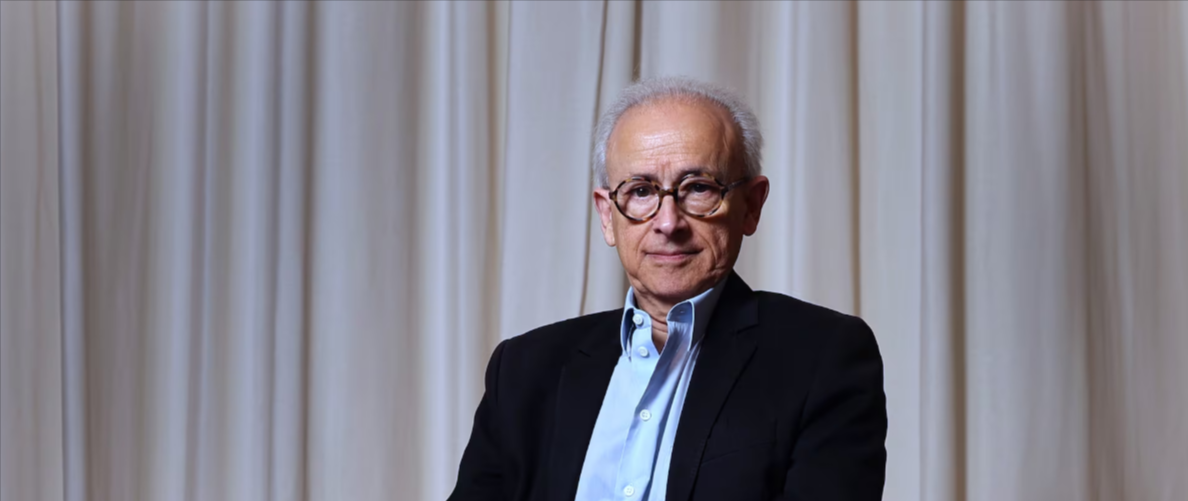
The body knows things the mind has not yet learned. This insight, articulated by Carl Jung nearly a century ago through his concepts of the psychoid unconscious and somatic intuition, found its empirical validation in the laboratories of a Portuguese neuroscientist who never set out to confirm Jungian theory. Antonio Damasio has spent five decades demonstrating what depth psychologists have long sensed: that feelings, emotions, and even our sense of self arise not from abstract cognition but from the body’s continuous conversation with the brain. His somatic marker hypothesis revolutionized neuroscience by showing that emotions guide rational decision-making through bodily signals we rarely notice consciously. In doing so, Damasio constructed a neurobiological foundation for what Jung called the wisdom of the body, the way our organism knows before our conscious mind catches up.
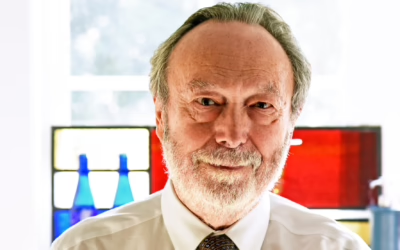
Born in Lisbon, Portugal on February 25, 1944, António Damásio grew up in a nation still under the authoritarian rule of António de Oliveira Salazar, where intellectual life required navigating between Catholic orthodoxy and emerging scientific materialism. This tension between meaning and mechanism would later define his career. He studied medicine at the University of Lisbon Medical School throughout the 1960s, completing both his medical degree and neurological residency there, earning his doctorate in 1974. His early training emphasized behavioral neurology under the mentorship of Norman Geschwind at Boston’s Aphasia Research Center, where he learned to study how brain lesions reveal the architecture of mind. From the beginning, Damasio approached patients not as abstract cases but as whole persons whose brain injuries told stories about how neural tissue creates subjective experience.
In 1975, Damasio relocated to the United States, joining the University of Iowa as a visiting assistant professor. This move would prove decisive. Over the next three decades at Iowa, first as associate professor and then as professor and chair of neurology from 1986 to 2005, he built a research program that systematically challenged the reigning assumptions of cognitive science. The prevailing view in the 1980s held that emotions were evolutionary remnants that interfered with rational thought, primitive reactions that needed suppressing for clear judgment. Damasio’s work with brain-damaged patients suggested the opposite: people who lost the capacity for emotion also lost the ability to make sound decisions, even when their logical reasoning remained intact. A patient he called Elliott, who suffered damage to the ventromedial prefrontal cortex, could analyze decisions perfectly in the abstract but could not actually decide. Without emotional guidance, rationality became paralyzed.
This observation crystallized into the somatic marker hypothesis, first articulated in his landmark 1994 book Descartes’ Error: Emotion, Reason, and the Human Brain. The hypothesis proposes that decision-making relies on emotion-based biasing signals that arise from the body and are processed in specific brain regions, particularly the ventromedial prefrontal cortex and the amygdala. These somatic markers function as unconscious gut feelings, subtle shifts in heart rate, skin conductance, or visceral tension that mark certain options as advantageous or dangerous before conscious deliberation begins. When faced with complex choices under uncertainty, the body votes first through these markers, and the brain interprets these votes as intuitions or hunches. Damasio and his colleagues demonstrated this process through the Iowa Gambling Task, an experimental paradigm where participants choose cards from four decks, some risky and some conservative, without knowing the rules. Healthy participants develop anticipatory skin conductance responses to the risky decks before they can consciously articulate why those decks are bad, while patients with ventromedial prefrontal damage never develop these bodily warning signals and continue making disadvantageous choices.
The somatic marker hypothesis has sparked considerable debate within neuroscience. Critics like Tiago Maia and James McClelland argued that participants actually have more conscious knowledge than Damasio initially claimed, questioning whether truly nonconscious markers guide behavior. Others noted that the Iowa Gambling Task conflates different cognitive processes, making it difficult to isolate what somatic markers specifically contribute. Despite these criticisms, the core insight has profoundly influenced research on emotion and decision-making, spawning hundreds of studies on how bodily states shape cognition in domains from moral judgment to addiction. The hypothesis bridges William James’s theory that emotions are perceptions of bodily changes with contemporary neuroscience, suggesting that feelings are not byproducts of thinking but essential ingredients.
Damasio’s subsequent work expanded this foundation into a comprehensive theory of consciousness grounded in the body. In The Feeling of What Happens: Body and Emotion in the Making of Consciousness, published in 1999, he proposed that consciousness emerges from the brain’s continuous mapping of the body’s internal states. The brain constructs what he calls the protoself, a nonconscious neural map of the body’s condition moment by moment, which becomes the core self when these bodily states are linked to objects and events, creating the feeling of knowing that these experiences belong to you. Extended consciousness then builds an autobiographical narrative from these core moments. This “enchainment of precedences” places feeling at the foundation of all conscious experience. Without the body’s signals, there is no consciousness, only processing without subjectivity.
His 2003 book Looking for Spinoza: Joy, Sorrow, and the Feeling Brain explored the neurobiology of specific emotions through the lens of Baruch Spinoza’s Ethics, examining how joy and sorrow regulate behavior through homeostatic mechanisms that promote survival. Damasio recovered Spinoza’s insight that emotions are not impediments to reason but expressions of the organism’s effort to persist in being, to maintain the internal conditions necessary for life. This work introduced his concept of homeostatic emotions, feelings that signal deviations from optimal physiological balance and motivate corrective action. Hunger, thirst, pain, and pleasure all serve homeostasis, the body’s regulatory wisdom that predates and enables conscious thought.
In 2010, Self Comes to Mind: Constructing the Conscious Brain further developed his model by emphasizing interoception, the sensing of the body’s interior states. The insular cortex, a region of cerebral cortex folded deep within the brain’s lateral fissure, emerged as crucial for representing visceral states and generating subjective feelings. Research by A.D. Craig and others has shown that the posterior insula receives raw interoceptive information from the body via the thalamus, which the anterior insula then integrates with emotional and cognitive context to create conscious awareness of bodily feelings. Damasio’s recent work, culminating in Feeling and Knowing: Making Minds Conscious published in 2021, argues that interoceptive feelings provide the continuous substrate for all conscious states, grounding subjectivity in the organism’s perpetual monitoring of its own biological condition.
This progression from somatic markers to interoceptive consciousness represents more than incremental theoretical refinement. Damasio has constructed a biological foundation for what depth psychologists call embodied knowing, the way wisdom emerges from the body rather than being imposed upon it from abstract reason. Here the convergence with Jung becomes striking. Jung spoke of the psychoid, a realm where psyche and soma intersect, where archetypes manifest both as psychological patterns and as physiological processes. He insisted that complexes involve somatic innervations, that emotional clusters literally embed themselves in the body’s tissues and continue working through stomach troubles, heart palpitations, and muscular tension long after the triggering event has passed. In his seminars and letters, Jung repeatedly emphasized that psychological work must honor the body, that individuation requires bringing unconscious material into bodily awareness rather than remaining in abstract intellectual understanding.
Jung’s concept of intuition, one of his four psychological functions, describes a perceptive mode that grasps wholes and possibilities without conscious reasoning, often experienced as sudden knowing that bypasses logical steps. This intuitive function operates through what Jung called subliminal perceptions, bodily registrations of patterns too subtle or complex for conscious analysis. Damasio’s somatic markers offer a neural mechanism for exactly this process. The ventromedial prefrontal cortex integrates vast amounts of experiential data about past outcomes, encodes this information as bodily response patterns, and then reactivates these patterns as gut feelings when similar situations arise. What Jung described phenomenologically as intuition, Damasio maps neurologically as unconscious somatic signaling.
Even Jung’s more esoteric concept of the psychoid finds unexpected support in contemporary neuroscience. Jung proposed that archetypes exist at a level where psyche and matter have not yet differentiated, a realm that is both psychological and biological but reducible to neither. Modern research on interoception suggests something similar: the nervous system’s representation of bodily states creates an intermediate domain that is simultaneously physiological fact and psychological experience. The feeling of heartbeat, for instance, is neither merely the physical thump of cardiac muscle nor purely mental construct, but the brain’s interpretation of mechanical events as subjective sensation. This interpretive process occurs in the insular cortex and related structures, creating what might be called a psychoid space where biology becomes experience.
The clinical implications of this convergence are profound. Traditional psychotherapy often treats the body as either irrelevant to psychological healing or as a passive container that simply expresses mental distress through symptoms. Damasio’s work validates what somatic therapies have long practiced: that therapeutic change requires engaging the body’s regulatory systems, not just cognitive reframing. His research demonstrates that patients with impaired interoceptive awareness struggle to identify their own emotional states, a deficit that undermines insight-oriented therapy’s assumption that understanding feelings verbally leads to change. If feelings arise from bodily representations, then therapy must help clients develop interoceptive sensitivity, the capacity to notice and interpret the body’s signals.
For brainspotting, EMDR, and other trauma therapies that work directly with the body’s responses, Damasio provides theoretical justification. These approaches recognize that traumatic memories are encoded somatically, that the body carries forward threat responses long after danger has passed. By using eye position, bilateral stimulation, or somatic focusing to access trauma networks, these therapies work at the level of Damasio’s protoself, the nonconscious body maps that shape conscious experience. The processing that occurs during such work involves reconsolidation of somatic markers, updating the body’s learned associations between situations and survival responses. Therapists trained in these modalities observe that breakthroughs often come not through intellectual insight but through bodily release, shifts in breathing, muscle tension, or autonomic arousal that signal deeper reprocessing.
Jungian analysts have always emphasized attending to the body during active imagination and dreamwork. Patients are encouraged to notice where in the body they feel particular images or symbols, to track physical sensations as they explore unconscious material. Damasio’s framework explains why this embodied approach works: psychological contents exist not as abstract information but as patterns of bodily activation that create feelings. When a patient encounters a numinous symbol in a dream, the power of that symbol manifests through the body’s interoceptive and emotional responses. Shadow integration, the process of recognizing and reclaiming disowned aspects of self, requires tolerating uncomfortable bodily states that arise when we face what we have repressed. Without the somatic capacity to stay present to difficult feelings, psychological integration remains superficial.
The polyvagal theory of Stephen Porges offers a complementary framework here. Porges maps how the vagus nerve regulates states of safety, danger, and life threat through its effects on heart rate, breathing, and visceral organs. Damasio’s interoceptive processing operates through these vagal pathways, with the insular cortex monitoring vagally-mediated bodily states and generating corresponding feelings. Therapeutic techniques that target vagal tone, whether through breathwork, vocalization, or cold exposure, essentially modulate the interoceptive signals that Damasio describes, shifting the bodily substrate from which conscious experience arises. This explains why bottom-up interventions can transform psychological states more rapidly than top-down cognitive strategies; they work at the foundational level of somatic markers and homeostatic feelings.
For therapists working with complex trauma and dissociation, Damasio’s model illuminates why dissociative responses persist. Dissociation involves disconnection from interoceptive awareness, an adaptive shutdown of the body’s danger signals when those signals become unbearable. Patients who dissociate often report feeling numb, disconnected from their bodies, unable to identify emotions. From Damasio’s perspective, they have lost access to the very system that generates conscious feelings. Therapeutic work must therefore involve careful titration of interoceptive exposure, gradually helping clients rebuild tolerance for bodily sensations within their window of regulation. Approaches like Somatic Experiencing explicitly use this principle, tracking subtle shifts in autonomic activation and helping clients complete the body’s interrupted survival responses.
The implications extend to psychopharmacology. If consciousness and self arise from homeostatic feelings, then medications that alter bodily states necessarily change subjective experience at a fundamental level. Selective serotonin reuptake inhibitors, for instance, do not merely adjust mood as an abstract quality but recalibrate the interoceptive processing that generates emotional feelings. Patients often report that antidepressants create a sense of flatness or disconnection, which Damasio’s framework would interpret as dampened interoceptive signaling that reduces the bodily substrate of consciousness. This does not invalidate medication but suggests why psychotherapy remains essential: restoring healthy bodily regulation requires more than chemical intervention alone.
Beyond the therapy room, Damasio’s work offers guidance for anyone seeking to understand themselves more deeply. The ancient injunction to know thyself must include knowing the body’s wisdom. Most people live disconnected from interoceptive awareness, interpreting bodily signals primarily through culturally learned categories rather than direct sensing. We feel tired and drink coffee rather than rest, anxious and distract ourselves rather than investigate what our nervous system detects. Developing interoceptive literacy involves learning to distinguish the varied textures of bodily feelings, to notice the difference between the tight chest of anxiety and the warm opening of affection, between the hollow restlessness of loneliness and the deep fatigue of burnout. This granularity of sensing creates the foundation for emotional intelligence.
Practices that cultivate interoceptive awareness serve individuation, the Jungian process of becoming who you actually are beneath social conditioning. Meditation traditions have always emphasized bodily awareness, whether through following the breath, scanning sensations, or maintaining specific postures. From Damasio’s perspective, these practices train attention toward the interoceptive stream that consciousness normally backgrounds, making explicit the bodily foundations of selfhood. When you sit quietly and simply feel your body breathing, you are attending to the protoself, the neurobiological basis of subjective existence. The sense of presence or being that advanced meditators report may reflect stabilized awareness of homeostatic feeling itself, the continuous hum of being alive.
Similarly, creative work often involves trusting bodily knowing over intellectual planning. Artists, writers, and musicians frequently describe following a feeling, letting the work emerge from an embodied sense of rightness rather than from conceptual design. This process activates Damasio’s somatic markers, using accumulated experience encoded in bodily responses to guide aesthetic choices. The feeling that a particular phrase rings true or that a composition needs adjustment reflects unconscious pattern recognition signaling through interoceptive channels. Jung called this the transcendent function, the capacity to hold tension between conscious and unconscious until a third thing emerges spontaneously. Damasio would say it involves allowing somatic markers to integrate more information than consciousness can process explicitly.
Physical practices likewise offer paths to psychological transformation through working directly with homeostatic systems. Yoga, dance, martial arts, and other movement disciplines change how the body represents itself to the brain, creating new somatic markers and interoceptive patterns. Someone who develops physical strength and coordination literally changes their protoself, the bodily ground from which their sense of capability arises. This explains why exercise can alleviate depression more effectively than cognitive therapy alone; it alters the homeostatic feelings that constitute emotional states. The confidence that comes from physical mastery is not metaphorical but arises from changed interoceptive processing.
Relationships too unfold through somatic signaling. The felt sense of safety with another person, the visceral warning of manipulation, the warm expansion of being understood, all these reflect interoceptive processing of social signals. The polyvagal system mediates social engagement through its regulation of heart rate and facial expression, creating the bodily substrate that Damasio describes as generating conscious feelings. When Jung spoke of projection, he meant more than seeing our own psychology in others; he meant that another person can constellate powerful somatic responses because their qualities activate our own complexes, which are fundamentally embodied patterns. Working through projection requires feeling the bodily charge that arises in the other’s presence and tracing that feeling back to its source in your own history.
The challenge of integrating Damasio’s neuroscience with Jung’s psychology lies in avoiding reductionism. Damasio himself resists reducing consciousness to mere neural firing, insisting that subjective feelings represent something genuinely emergent from biological processes, not reducible to them. Jung similarly refused to collapse the psyche into either brain states or metaphysical abstractions, maintaining that psychological phenomena must be understood in their own terms. The convergence between these thinkers does not mean Jung’s archetypes are nothing but neural patterns or that Damasio’s somatic markers are nothing but psychological projections. Rather, both point toward a domain where body and psyche inform each other continuously, where understanding requires honoring both first-person experience and third-person observation.
This integration becomes especially important in an era when neuroscience risks becoming a new form of materialist reductionism, explaining away subjective experience rather than illuminating it. Damasio’s insistence on the primacy of feeling in consciousness resists this trend, affirming that what it feels like to be alive matters irreducibly. Jung’s psychology offers conceptual tools for working with feeling as meaningful rather than merely mechanical, recognizing that bodily states carry symbolic and archetypal significance that cannot be fully captured by physiological description. The felt sense of anxiety in the chest might correlate with elevated heart rate and stress hormones, but it might also signal an encounter with one’s shadow, a necessary threshold in individuation that calls for psychological work rather than mere symptom management.
Damasio’s research trajectory from the somatic marker hypothesis through theories of consciousness grounded in homeostatic feelings represents one of the most sustained investigations of embodied mind in contemporary science. His work has earned him recognition as one of the most highly cited researchers in neuroscience, the recipient of major awards including the Prince of Asturias Prize, the Honda Prize, and the Grawemeyer Award. In 2005, he joined the University of Southern California as the David Dornsife Chair in Neuroscience and founded the Brain and Creativity Institute with his wife Hanna Damasio, a pioneering neuroimaging researcher whose structural brain mapping techniques made much of his lesion-based work possible. Their collaboration exemplifies how scientific understanding advances through partnership, each bringing complementary skills to shared questions.
His influence extends well beyond neuroscience. Philosophers have engaged extensively with his challenge to Cartesian dualism, economists have incorporated somatic markers into models of decision-making under uncertainty, and educators have drawn on his work to understand how emotion enables rather than impedes learning. Clinical fields from addiction medicine to cardiology now recognize that treating the body as a machine separate from subjective experience produces incomplete healing. The growing interest in interoception, mind-body medicine, and trauma-informed care all reflect Damasio’s central insight: the body is not a passive vehicle for the mind but the very foundation of conscious selfhood.
For depth psychology, Damasio offers empirical grounding for insights that have long relied on clinical observation and phenomenological description. He demonstrates that working with the body in therapy is not merely adjunctive to real psychological work but addresses the neurobiological substrate from which consciousness itself arises. His research validates the experiential knowledge of somatic practitioners while providing a framework that mainstream medicine can engage. This bridging work matters because it creates possibilities for dialogue between traditions that have often talked past each other, integrating the wisdom of depth psychology with the precision of neuroscience.
The next generation of psychotherapists will likely draw more explicitly on this integration, understanding psychological healing as involving both top-down reframing and bottom-up regulation of somatic markers and homeostatic feelings. Training programs are beginning to emphasize interoceptive awareness, nervous system regulation, and embodied presence as core clinical competencies alongside interpretation, confrontation, and insight. This shift reflects Damasio’s vision made practical: that helping people feel better requires attending to feeling itself as a bodily process, not just a mental state.
What Damasio has given psychology is permission to take the body seriously without abandoning the psyche, to ground consciousness in biology without reducing experience to mechanism. He has shown that emotions are not opposed to reason but constitute its necessary foundation, that feelings are not obstacles to clear thinking but the very means by which organisms navigate uncertainty. In doing so, he has brought contemporary neuroscience into unexpected alignment with depth psychology’s longstanding recognition that transformation happens through the body, that the unconscious speaks somatically, and that wisdom emerges from embodied knowing rather than disembodied cognition.
For those seeking to understand themselves, Damasio’s work suggests that the path runs through the body rather than around it. Learning to feel your feelings, to notice the subtle shifts in breathing and muscle tone that accompany emotional states, to trust the body’s signals as forms of knowing, these become not peripheral practices but central to human development. Jung’s concept of individuation, the lifelong process of becoming more fully yourself, requires this embodied awareness. Without it, psychological growth remains abstract, disconnected from the somatic foundations that make consciousness possible.
Timeline of Antonio Damasio’s Career and Major Publications
1944: Born February 25 in Lisbon, Portugal
1960s: Studied medicine at University of Lisbon Medical School, neurological residency
1970s: Trained under Norman Geschwind at Boston’s Aphasia Research Center
1974: Received doctorate from University of Lisbon; became auxiliary professor of neurology at University of Lisbon Medical School
1975: Joined University of Iowa as visiting assistant professor
1976-1980: Associate professor at University of Iowa
1980-2005: Professor at University of Iowa
1986-2005: Chair of Department of Neurology at University of Iowa
1994: Published Descartes’ Error: Emotion, Reason, and the Human Brain
1996: Formulated somatic marker hypothesis in Royal Society paper
1997: Published landmark study on Iowa Gambling Task in Science
1999: Published The Feeling of What Happens: Body and Emotion in the Making of Consciousness
2003: Published Looking for Spinoza: Joy, Sorrow, and the Feeling Brain
2005: Moved to University of Southern California as David Dornsife Chair in Neuroscience; founded Brain and Creativity Institute with wife Hanna Damasio
2010: Published Self Comes to Mind: Constructing the Conscious Brain
2017: Appointed to Council of State of Portugal
2018: Published The Strange Order of Things: Life, Feeling, and the Making of Cultures
2021: Published Feeling and Knowing: Making Minds Conscious
Complete Bibliography of Major Works by Antonio Damasio
Descartes’ Error: Emotion, Reason, and the Human Brain (Putnam, 1994; revised Penguin edition, 2005)
The Feeling of What Happens: Body and Emotion in the Making of Consciousness (Harcourt, 1999)
Looking for Spinoza: Joy, Sorrow, and the Feeling Brain (Harcourt, 2003)
Self Comes to Mind: Constructing the Conscious Brain (Pantheon, 2010)
The Strange Order of Things: Life, Feeling, and the Making of Cultures (Pantheon, 2018)
Feeling and Knowing: Making Minds Conscious (Pantheon, 2021)
The somatic marker hypothesis and the possible functions of the prefrontal cortex (Philosophical Transactions of the Royal Society B, 1996)
Deciding advantageously before knowing the advantageous strategy (Science, 1997, with Bechara, Tranel, and Hanna Damasio)
Neural systems supporting interoceptive awareness (Nature Neuroscience, 2004, with Critchley and colleagues)
The Iowa Gambling Task and the somatic marker hypothesis: some questions and answers (Trends in Cognitive Sciences, 2005)
Interoception and the origin of feelings: A new synthesis (BioEssays, 2021, with Carvalho)
Feelings are the source of consciousness (Neural Computation, 2023, with Hanna Damasio)
Influences and Legacy
Damasio’s work builds on and extends several foundational thinkers. William James, the American psychologist and philosopher, proposed in the 1880s that emotions are our perception of bodily changes, that we feel afraid because we run rather than running because we feel afraid. Damasio recovered this insight through modern neuroscience, demonstrating the neural mechanisms by which bodily states create emotional experience. Baruch Spinoza, the 17th-century philosopher, argued that mind and body are not separate substances but aspects of a unified being, that emotions reflect the body’s efforts toward self-preservation. Damasio’s homeostatic theory of feelings extends Spinoza’s naturalistic account of affect into contemporary biology.
More immediately, Norman Geschwind at Harvard shaped Damasio’s approach to studying brain lesions as windows into mental function. Geschwind pioneered behavioral neurology in the 1960s and 1970s, demonstrating that careful clinical observation of patients with focal brain damage could reveal how different regions support language, memory, and emotion. Damasio refined this lesion method through collaboration with his wife Hanna Damasio, whose expertise in neuroimaging allowed precise localization of brain damage and correlation with cognitive deficits. Their joint work established that the ventromedial prefrontal cortex is critical for integrating emotional information into decision-making.
Walter Cannon, who coined the term homeostasis in 1926, provided the physiological framework that Damasio extends into psychology. Cannon showed how organisms maintain stable internal conditions through negative feedback loops, anticipating Damasio’s insight that feelings serve homeostatic regulation by signaling deviations that require behavioral correction. A.D. Craig, a neuroscientist who mapped the ascending interoceptive pathways from body to brain, identified the insular cortex as crucial for processing visceral sensations. Damasio built on Craig’s anatomical work to propose that the insula creates the neural representations of bodily states that become conscious feelings.
Damasio’s influence has been remarkably broad. In philosophy, his work provoked extensive debate about consciousness, challenging both physicalist accounts that reduce mind to brain and dualist positions that separate them entirely. Philosophers like Jesse Prinz developed embodied theories of emotion building on Damasio’s framework, while critics like Ned Block questioned whether bodily feelings are truly necessary for consciousness. In economics, researchers in the emerging field of neuroeconomics incorporate somatic markers into models of choice under uncertainty, recognizing that human decision-making diverges from rational actor assumptions precisely because emotions guide judgment.
Clinical applications abound. The National Institute for the Clinical Application of Behavioral Medicine has promoted Damasio’s insights about emotion and trauma through continuing education for therapists. Sensorimotor Psychotherapy, developed by Pat Ogden, explicitly integrates somatic marker theory into trauma treatment, teaching clients to track and modulate bodily responses that maintain symptoms. Neurofeedback practitioners use Damasio’s work on interoception to understand how brain training affects subjective experience through changing the neural representation of bodily states. Internal Family Systems therapy, which conceptualizes psychological parts as semi-autonomous neural networks, aligns with Damasio’s view that emotional responses arise from distributed brain systems rather than unified executive control.
In neuroscience itself, Damasio’s work has been cited over 239,000 times, making him one of the most influential researchers in the field. His somatic marker hypothesis inspired decades of investigation into how emotion shapes cognition, influencing studies of moral judgment, social cognition, and addiction. The recent surge of interest in interoception owes much to Damasio’s emphasis on bodily sensing as foundational to consciousness. Researchers investigating predictive processing models of brain function have integrated his insights about how the brain generates feelings by comparing expected and actual bodily states.
For depth psychology and Jungian analysis, Damasio provides long-sought empirical grounding. Marion Woodman, a Jungian analyst who emphasized somatic awareness in psychological work, anticipated Damasio’s findings through clinical observation. Contemporary analysts like Thomas Ogden draw on neuroscience to understand how unconscious processes manifest somatically. The Somatic Experiencing method developed by Peter Levine integrates Damasio’s understanding of how trauma disrupts interoceptive processing, while brainspotting, created by David Grand, uses eye position to access somatic markers associated with traumatic memories.
Stephen Porges, creator of polyvagal theory, complements Damasio’s work by mapping how the vagus nerve mediates the bodily states that become conscious feelings. Together, they provide a neurobiological account of how therapeutic relationship creates safety through co-regulation of physiological states. Bessel van der Kolk, author of The Body Keeps the Score, popularized Damasio’s insights for trauma survivors, emphasizing that healing requires working directly with the body’s regulatory systems rather than relying solely on verbal processing.
The synthesis of Damasio’s neuroscience with depth psychology’s clinical wisdom represents an ongoing project rather than completed achievement. As research methods advance, enabling more precise tracking of interoceptive processing and its relationship to conscious experience, the integration will deepen. The fundamental insight remains clear: consciousness arises from the body, feelings are not peripheral to cognition but foundational, and psychological healing requires addressing the somatic substrate from which selfhood emerges. In recognizing this, contemporary neuroscience has arrived at what healers and contemplatives have long known, and what Jung articulated through his concept of the psychoid, that body and psyche form an inseparable unity, each speaking in the language of the other.

















0 Comments