
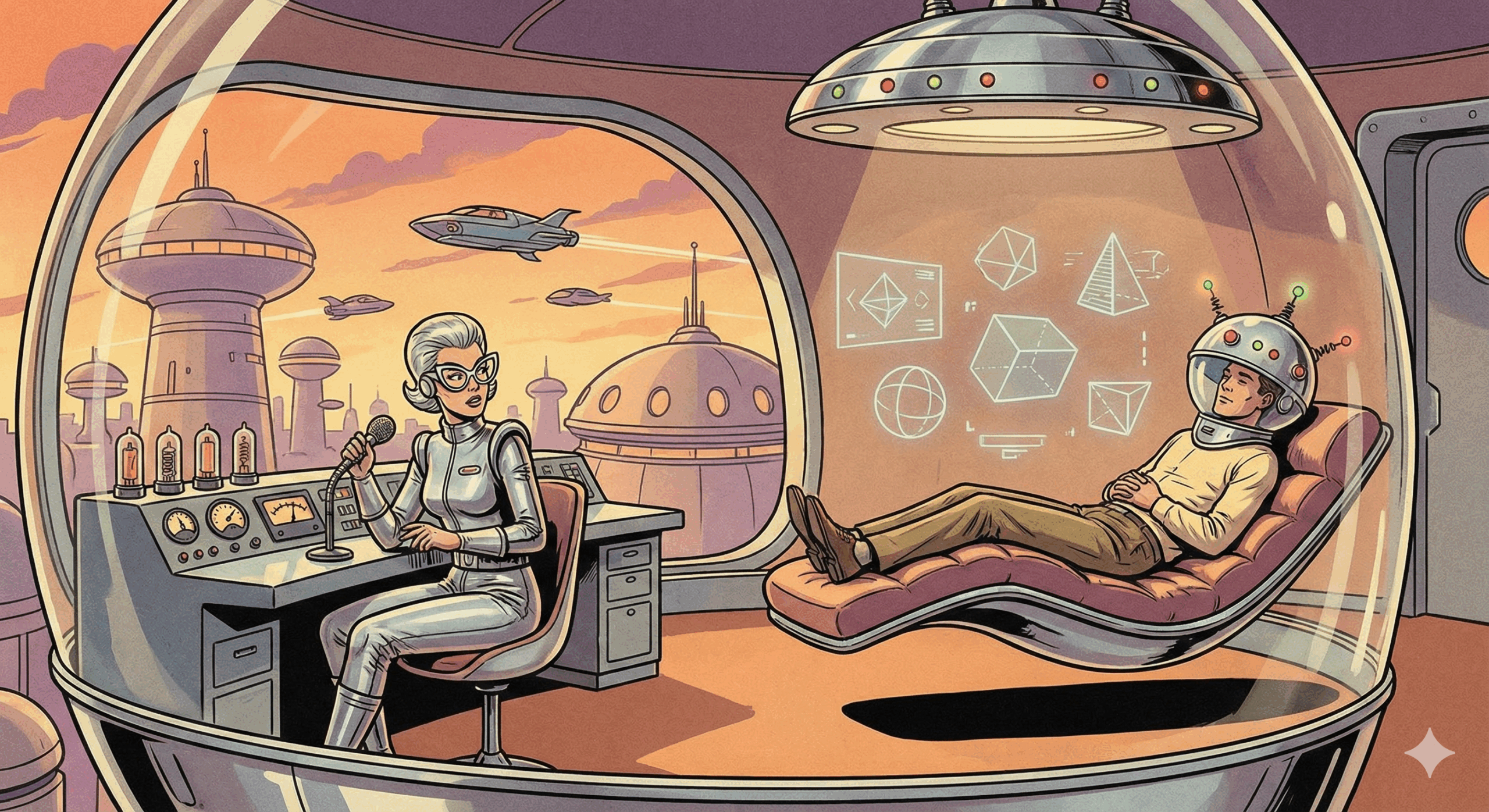
The Primitive Present: How Historians in 2125 Will View the “Golden Age” of Modern Therapy
When we look back at the medical practices of the 19th century—bloodletting, mercury cures, and unsterilized surgeries—we shudder. We recognize that those doctors were doing their best with the limited maps they had. But it is harder to accept that in 100 years, future historians will likely look at our current mental health system with a similar mix of pity and fascination.
They will see the 2020s not as the pinnacle of science, but as a messy, transitional “Middle Ages” of the mind. They will look at our obsession with “chemical imbalances” and manualized talk therapy as crude approximations of a much deeper reality. We are currently standing on the precipice of a revolution that will merge the biological, the spiritual, and the technological into a unified science of consciousness.
This article explores how the seeds of this future are being planted right now, through the re-emergence of shamanism, the discovery of the gut-brain connection, and the hacking of the vagus nerve.
1. The Hardware Hack: From Talk Therapy to Neural Tuning
Future generations will likely be baffled that for a century, our primary method of changing the brain was simply talking to it. While the therapeutic relationship will always remain central, the tools we use to facilitate it are about to change largely.
The Polyvagal Turning Point
Historians will likely mark the work of Stephen Porges as a watershed moment. Before Porges, we treated the nervous system like a simple on/off switch. After him, we understood it as a complex hierarchy of safety and social engagement.
We are currently in the infancy of “bio-hacking” this system. We are moving from merely understanding the Vagus Nerve as the body’s “off switch” for anxiety to actively stimulating it. In 100 years, the idea that we tried to treat trauma without directly addressing the electrical tone of the vagus nerve will seem as negligent as trying to set a broken bone with a pep talk.
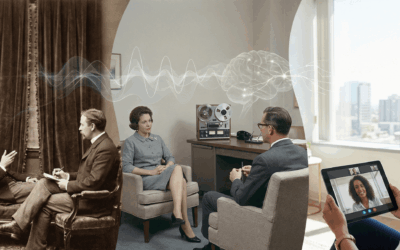
The clinic of the future will be a tech-enhanced therapy room, where wearable neuromodulation devices work in real-time concert with the therapist’s presence to keep the client in the optimal window of neuroplasticity.
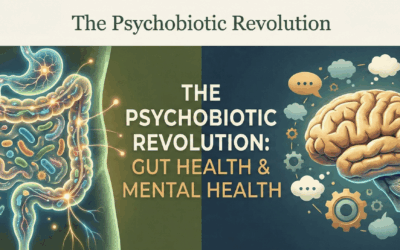
2. The End of the “Head-in-a-Jar”: The Gut-Brain Revolution
Perhaps the biggest blind spot of 20th-century psychology was the belief that the mind lived exclusively in the skull. We are currently waking up to the reality that we are holobionts—ecosystems of bacteria and cells that think and feel together.
Psychiatry Becomes Gastroenterology
Future medicine will view our current distinction between “mental health” and “physical health” as a semantic error. We are already seeing the evidence that inflammation is a primary driver of depression. The days of treating depression solely with serotonin reuptake inhibitors are numbered; the future lies in treating the systemic inflammation of the gut-brain axis.
We are realizing that anxiety is often a symptom of gut dysbiosis. In 2125, a “psychiatric evaluation” will likely start with a microbiome sequencing. The use of micronutrition for mental health will evolve from an “alternative” therapy to a standard of care, recognizing that you cannot build neurotransmitters without the raw materials.
3. The Return of the Shaman: The Re-Sacralization of Medicine
Just as we are discovering the microscopic (the biome), we are re-discovering the macroscopic (the spirit). The mid-21st century will likely be defined by the reintegration of “sacred technologies”—psychedelics and ritual—into clinical practice.
From “Drugs” to “Sacraments”
We are currently witnessing the renaissance of psychedelic therapy and shamanism. Future historians will view the “War on Drugs” as a dark age that delayed the advancement of mental health science by fifty years. They will see that we eventually returned to the rituals of healing practiced by our ancestors, but validated them with fMRI data.
This isn’t just about chemicals; it’s about context. We are learning that altered states of consciousness are necessary to break the rigid predictive coding of the traumatized brain. The future therapist will act as a modern shaman, guiding clients through holographic memory states to rewrite the narrative of the self.
4. The Metamodern Synthesis
So, what does this all look like in 100 years? It looks like integration. The warring “schools” of therapy will dissolve into a unified science of human flourishing.
We will no longer ask “Is it biological or psychological?” We will understand that the architecture of the soul and the machine are one and the same. The therapist of the future will effectively be a “systems engineer” of the human organism—adjusting the gut microbiome, tuning the vagus nerve, and guiding the mythopoetic journey of the soul simultaneously.
This is the vision laid out in Sailing the Foam: History, Madness, and the Future of Therapy. We are moving away from the era of managing symptoms and toward the era of optimizing consciousness.
If you are in therapy today, you are a pioneer. You are participating in a field that is rapidly shedding its skin. By engaging with somatic work, nutritional psychiatry, and depth psychology, you are essentially time-traveling—using the tools of the future to heal in the present.
To understand the philosophical shift that underpins this future, explore the concept of the fusion of science and mysticism.






0 Comments