

The Origin of a Word
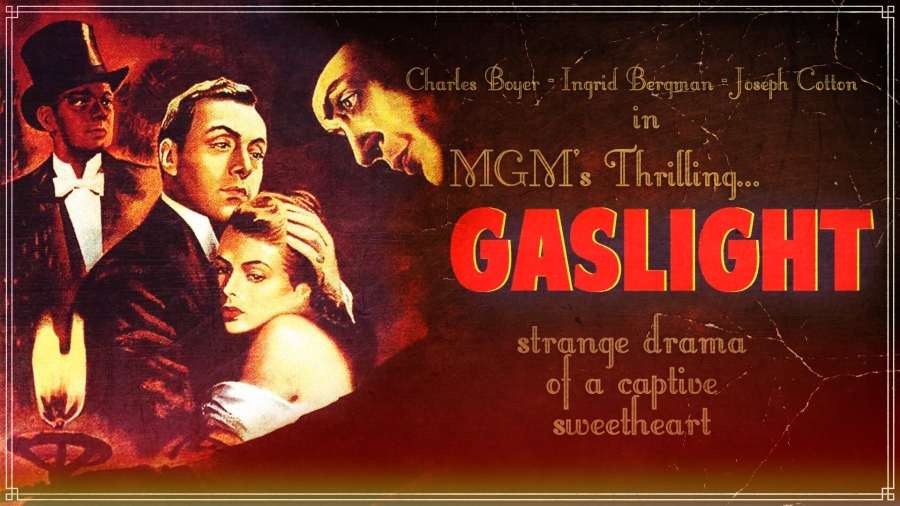
The term “gaslighting” traces to Patrick Hamilton’s 1938 stage play “Gas Light” and its celebrated 1944 Hollywood adaptation starring Ingrid Bergman and Charles Boyer. In the film, a husband systematically manipulates his wife into believing she is losing her mind. He dims the gaslights in their home and insists she is imagining the change. He hides objects and accuses her of theft. He isolates her from society and positions himself as her sole interpreter of reality.
Bergman won the Academy Award for Best Actress. The film received seven Oscar nominations. And a term was born that would take nearly seventy years to enter common usage.
According to the American Psychological Association, gaslighting “once referred to manipulation so extreme as to induce mental illness or to justify commitment of the gaslighted person to a psychiatric institution.” The gerund form “gaslighting” first appeared in print in 1961. The New York Times used it just nine times in the twenty years following Maureen Dowd’s 1995 column that employed the term.
Then came the 2010s.
The American Dialect Society named “gaslight” the most useful new word of 2016. Oxford University Press selected it as a runner-up among the most popular new words of 2018. Merriam-Webster named it Word of the Year in 2022, noting that searches for the term had increased 1,740% that year.
A word born from a psychological thriller about Victorian domestic abuse had become ubiquitous.
The Dilution Problem
With ubiquity came dilution. According to research on therapy speak usage, 38% of people now believe “gaslighting” is misused, and notably, 25% of Generation Z themselves express fatigue with therapeutic terminology deployed as weapons in interpersonal conflict.
The Washington Post reported in 2022 that gaslighting had become a “trendy buzzword” frequently improperly used to describe ordinary disagreements rather than situations aligning with the word’s historical definition. Britannica’s analysis distinguishes genuine gaslighting from normal relationship disagreement: gaslighting requires that “one partner is consistently negating the other’s perception, insisting that they are wrong, or telling them that their emotional reaction is irrational or dysfunctional.”
This distinction matters profoundly. When someone says “You’re gaslighting me” in response to a factual disagreement or a partner pointing out inconsistency between their stated values and actual behavior, the term becomes not a description of abuse but a tool of it.
The Weaponization of Therapeutic Language
Clinical terminology, when it enters popular discourse, loses precision and gains combative power. “Boundaries,” in the therapeutic sense, are rules governing one’s own behavior: “I will leave the room if voices are raised.” In weaponized form, they become demands governing others: “My boundary is that you cannot speak to this person.”
“Toxic” has devolved from describing genuinely harmful patterns to labeling any person or behavior that produces discomfort. It provides permission to “cut off” relationships without the difficult work of conflict resolution.
“Trauma response” can validate genuine suffering or pathologize every emotional reaction one wishes to avoid examining. “I’m protecting my peace” can mean healthy boundary-setting or systematic avoidance of all accountability.
The irony cuts deep: vocabulary developed to facilitate emotional growth becomes a defense against it. The very language of healing gets recruited into the service of the wound.
DARVO: The Predator’s Playbook
In 1997, psychologist Jennifer Freyd coined the acronym DARVO: Deny, Attack, Reverse Victim and Offender. Her research documented a consistent pattern in how perpetrators respond when confronted with their harmful behavior.
According to research published in the Journal of Aggression, Maltreatment & Trauma, DARVO operates through three interconnected steps:
Deny: The perpetrator vehemently denies the harm occurred. This often involves gaslighting proper, making the victim doubt their memory of events.
Attack: When denial fails, the perpetrator attacks the credibility of the person confronting them. They highlight flaws, question motives, accuse the confronter of ulterior agendas.
Reverse Victim and Offender: Finally, the perpetrator positions themselves as the true victim. They claim the confrontation itself is an attack. They assert they are being falsely accused, persecuted, misunderstood.
The research findings are sobering. Studies by Harsey and Freyd demonstrate that exposure to DARVO causes observers to perceive victims as less believable, more responsible for the violence against them, and more abusive. Perpetrators using DARVO are rated as less abusive and less responsible for their actions.
In other words, DARVO works. It successfully shifts perception of responsibility from perpetrator to victim.
Critically, research shows that education about DARVO reduces its effectiveness. When observers understand the pattern beforehand, they are less susceptible to its manipulation. Knowledge is genuinely protective here.
The Two-Faced Soulmate: How Predators Use Shared Wounds
Recent research from the University of Cambridge illuminates a pattern that complicates simple victim-perpetrator narratives. Researcher Mags Lesiak documented what she terms the “two-faced soulmate” profile among domestic abusers.
Before physical violence begins, abusers use “a mix of intense affection and emotional cruelty, combined with tales of their own childhood trauma, to generate a deep psychological hold that can feel like an addiction.” They create what Lesiak calls “trauma bonds,” attachments based in cycles of threat and relief that leave victims desperate for approval.
The research reveals that abusers often lead with their wounds. They share stories of their own suffering. They position themselves as fellow survivors who uniquely understand the victim’s pain. They create apparent intimacy through mutual vulnerability.
Then they weaponize that bond.
“Abusers make sure their partners experience euphoric highs and desperate lows,” Lesiak explains. “This creates a powerful psychological reward system that operates on the same logic as a slot machine.”
This finding has profound implications. It means that someone showing deep interest in your wounds is not automatically safe. It means that shared trauma can be a genuine foundation for connection or a predatory strategy. It means discernment, not just empathy, is required.
The Abuser-Protector Binary and Its Limits
In the 1980s, trauma theory proposed a framework that has persisted in popular understanding: abuse victims either become abusers or protectors. They either turn the violence outward, repeating the pattern on others, or turn it inward, dedicating themselves to shielding others from the same pain.
Research published in Trauma, Violence, & Abuse examined this “cycle of abuse” hypothesis, particularly regarding whether victims become offenders. The findings are more nuanced than the popular binary suggests. While certain factors correlate with the victim-to-offender transition, particularly among male victims of childhood sexual abuse, the majority of abuse victims do not become abusers. The framework, while pointing to something real, is reductive.
What it correctly identifies is that trauma energy moves somewhere. Unprocessed wounding does not simply disappear. It expresses itself, either outwardly in patterns that harm others or inwardly in patterns that shape the self.
But here is what the binary misses, and what rarely gets discussed: the “protector” identity can itself be a trauma response.
When Protection Becomes Pathology
Consider the person who organizes their entire life around preventing others from experiencing the pain they suffered. Their hypervigilance toward potential abuse is constant. Their identity is built on being the one who sees danger others miss. Their empathy is not chosen but compulsive, a force that rides them rather than a capacity they employ.
This is not health. This is wound dressed as virtue.
The hypervigilant protector may genuinely help others. They may intervene in situations where intervention is needed. They may develop real skills in recognizing predatory patterns. But if their protective function operates automatically, if it cannot be modulated, if it defines rather than expresses the self, it remains a trauma response rather than a chosen way of being.
Research on trauma and identity suggests that identification with the role of protector, while less obviously harmful than identification with the aggressor, can still represent incomplete integration of traumatic experience. The protector has turned the wound into purpose, which is better than turning it into weapon, but has not yet metabolized it into wisdom.
The Goal: Informed Response, Not Automatic Reaction
The goal of therapy, properly understood, is not to become an abuser or a protector. It is to become an informed person whose trauma responses do not control them.
This means:
Empathy as choice, not compulsion. The capacity to feel with others is a gift when employed consciously. It becomes a liability when it operates automatically, flooding the self with others’ pain without discrimination or boundary.
Protection as offering, not identity. Helping others avoid harm you have suffered can be meaningful action. It becomes problematic when it constitutes the core of who you believe yourself to be, when you cannot imagine a self that is not organizing against danger.
Response rather than reaction. The traumatized nervous system reacts automatically to perceived threat. The integrated person can notice the reaction, evaluate its appropriateness to the current situation, and choose a response that fits reality rather than history.
Discernment alongside compassion. Understanding that someone who leads with their wounds may be seeking genuine connection or may be employing a predatory strategy. Recognizing that therapy speak can illuminate abuse or become the abuse. Holding complexity rather than collapsing into simple categories.
The Difference Between Wisdom and Wound
The person still controlled by trauma responds to present situations with patterns forged in the past. Their nervous system does not distinguish between genuine current threat and triggered historical memory. Their empathy or vigilance or protective instinct activates automatically, riding them rather than serving them.
The person who has integrated their trauma can recognize when old patterns are being activated. They can evaluate whether the current situation genuinely warrants the response their body is preparing. They can choose, consciously and with discernment, how to act.
One reacts. The other responds.
One is controlled by history. The other is informed by it.
This is the difference between wisdom and wound. Not whether pain was experienced, but whether that pain now serves as data or as driver.
The therapeutic language that has flooded popular discourse, gaslighting and boundaries and trauma response, points toward real phenomena. These terms exist because they name genuine experiences that needed naming. The danger lies not in the vocabulary but in its unreflective deployment, using words as weapons rather than tools, identifying with roles rather than integrating experiences, reacting from wound rather than responding from wisdom.
The gaslights in the 1944 film were not imaginary. Paula was not losing her mind. Gregory was manipulating reality to control her. Naming that manipulation, seeing it clearly, was the beginning of her liberation.
But liberation is not complete when we learn the word for what happened to us. It is complete when we can use that word with precision, apply it where it belongs, refrain from weaponizing it against those who merely disagree with us, and ultimately move beyond the need to organize our identity around the wound at all.
We are not defined by what was done to us. We are not defined by our response to what was done. We are the ones who can hold all of it, learn from all of it, and choose who to become next.
That is not gaslighting. That is growing.

Joel Blackstock, LICSW-S, is the Clinical Director of Taproot Therapy Collective in Hoover, Alabama. He specializes in complex trauma treatment using Brainspotting, EMDR, and depth-oriented psychotherapy.


















0 Comments