

Why do we need matter, the physical universe as described by science, to tell us that we matter, that our lives have significance and meaning?
Consider what happens when someone faces a crisis of meaning. They might turn to religion for assurance that a divine creator values their existence. Or they might turn to science, seeking evidence that consciousness is fundamental to the cosmos, that quantum mechanics proves awareness is woven into reality’s fabric, that physics itself validates the importance of mind. The spiritual seeker and the scientific seeker appear to be traveling opposite directions, but they share a common destination: external validation. Both are asking the universe, whether through theology or through equations, to confirm that human experience counts for something.
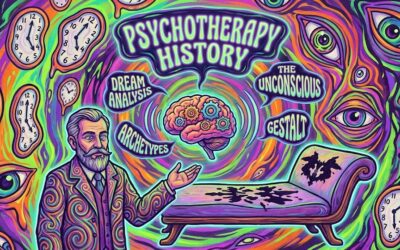
This article traces that search through the history of psychotherapy, from Freud’s militant scientific materialism to Jung’s embrace of the numinous, from Wilhelm Reich’s orgone energy boxes to Einstein’s consoling letter about time being an illusion, from David Bohm’s implicate order to today’s quantum consciousness theories. At every turn, we find brilliant minds reaching beyond the human realm for confirmation that the human realm is worth inhabiting.
The question I want to raise is whether this search is necessary. What if we matter simply because we’re here, because we’re human, because mattering is something human beings create together rather than something we must extract from physics or receive from the divine? What if the very act of looking outside ourselves for permission to be significant is itself the problem, a form of existential outsourcing that keeps us dependent on metaphysical answers we may never definitively obtain?
To explore this, we need to understand how the search has unfolded, what each generation of thinkers hoped to find, and what they actually discovered about the relationship between matter, meaning, and the stubborn human need to know that existence is worthwhile.
Einstein’s Consolation: Time as Illusion
In March 1955, Albert Einstein received word that his lifelong friend Michele Besso had died. Besso had been Einstein’s closest intellectual companion since their student days, the man Einstein thanked by name in his original paper on special relativity, the sounding board for ideas that would reshape physics. Einstein himself was ill, with only weeks to live. Yet he wrote a letter of condolence to the Besso family that has haunted physicists and philosophers ever since:
“Now he has departed from this strange world a little ahead of me. That means nothing. For us believing physicists, the distinction between past, present and future is only a stubbornly persistent illusion.”
This was not mere comfort offered to a grieving family. Einstein was stating what he believed physics had revealed: that time as we experience it, the sense that the past is gone and the future is yet to come, does not correspond to the deeper structure of reality. In the block universe that relativity describes, Besso’s entire existence remains embedded in spacetime. Nothing is truly lost because nothing ever really passes away.
Einstein died one month later. The letter stands as his final meditation on mortality, and it captures something essential about the search we’re examining here. Even Einstein, the arch-rationalist who famously resisted quantum indeterminacy and rejected conventional religion, reached for physics to console himself about death. He needed matter, or rather spacetime geometry, to tell him that existence persists, that significance endures, that the distinction between living and dead is somehow less absolute than it appears.
The believing physicist, it turns out, believes in physics for some of the same reasons others believe in God: because the alternative, that our lives simply end, feels unbearable without some larger frame to hold them.
Freud and the Disenchanted Universe
Sigmund Freud was explicit about his worldview. Influenced by Darwin and the scientific materialism of 19th century Vienna, he insisted that psychoanalysis be understood as a natural science, a rigorous investigation of the mind using the same methods that had proven so powerful in physics and biology. Religion, he argued in The Future of an Illusion, was precisely that: an illusion, a childish wish for a cosmic father who could protect us from life’s terrors and death’s finality.
Freud’s dismissal of religion was comprehensive. Religious beliefs, he claimed, carry “the stamp of the times in which they originated, the ignorant childhood days of the human race.” To be truly civilized, humanity had to outgrow its delusions and construct a better order than religion could provide. He remained, as he wrote a year before his death, “an out and out unbeliever.”
But notice what Freud did not abandon: the search for meaning through understanding. If the cosmos offered no comfort, perhaps the unconscious did. If there was no divine order, perhaps there was a psychic order, deep structures of id, ego, and superego that, once understood, could be mastered. Freud replaced religious meaning with scientific meaning, but he still needed meaning. He still needed the human story to have a shape, to make sense, to go somewhere.
The irony rarely noted: Freud’s materialism still required matter to tell us something. It still needed physics and biology to ground psychological claims. The unconscious had to be “real” in a scientific sense, had to correspond to actual structures and forces, or the whole enterprise collapsed into mere storytelling. Freud wasn’t content to say that therapy helps people feel better. He needed to say it worked because it aligned with how the mind actually operates according to natural laws.
Scientific materialism, it turns out, is still a form of looking outside ourselves for validation. We matter because matter matters. We’re significant because we’re part of the great causal chain that physics describes. The difference from religion is one of reference point, not of basic structure. Both say: something larger than the individual human being confers meaning upon human existence.
Jung and the Return of the Sacred
Carl Jung famously broke with Freud over many issues, but the deepest break was metaphysical. Where Freud saw religion as neurosis projected onto the cosmos, Jung saw the psyche as inherently religious, and religious experience as psychologically essential.
“Among all my patients in the second half of life,” Jung wrote, “there has not been one whose problem in the last resort was not that of finding a religious outlook on life.” This wasn’t an endorsement of any particular religion. Jung was critical of dogmatic Christianity and drew heavily on Eastern traditions, alchemy, and Gnosticism. What he insisted on was that human beings have a religious function as powerful as the instinct for sex or aggression, and that psychological health requires engaging this function rather than suppressing it.
Jung’s concept of the collective unconscious provided the framework. Beneath the personal unconscious, the repository of individual repressed material that Freud had explored, lay a deeper layer shared by all humanity. This collective unconscious contained archetypes: primordial images and patterns that manifest in dreams, myths, and religious symbols across all cultures. The Hero, the Mother, the Shadow, the Self, these weren’t invented by individuals or cultures but discovered, because they’re built into the structure of psyche itself.
When asked whether he believed in God, Jung gave his famous reply: “I don’t believe. I know.” This wasn’t a claim to have met God at a cocktail party. It was an assertion that the God archetype is as empirically real as any other psychological structure, present in dreams, active in the psyche, undeniable to anyone who pays attention to the inner life.
Jung’s approach was enormously influential and remains so. It gave therapists permission to work with spiritual material without reducing it to pathology. It provided a framework for understanding religious experiences as psychologically meaningful rather than as symptoms to be treated. And it validated the widespread intuition that there’s more to the psyche than biology alone can explain.
But notice what Jung was still doing: looking outside the individual for confirmation of significance. The collective unconscious, the archetypes, the Self toward which individuation moves, these are all larger than individual structures that confer meaning on individual experience. Jung replaced Freud’s matter with psyche, physics with mythology, but retained the basic structure: we matter because we participate in something that transcends us.
Reich: Cosmic Energy Through Scientific Methods
Wilhelm Reich represents perhaps the most dramatic attempt to have it both ways, to validate spiritual intuitions through scientific materialism, to find the cosmic energy that mystics described using the methods that Freud championed.
Reich began as one of Freud’s most talented students. His early work on character analysis and what he called “muscular armoring,” the way psychological defenses become encoded in chronic bodily tension, remains influential today, forming the basis for body psychotherapy, Gestalt therapy, and numerous somatic approaches. Reich demonstrated, before anyone else in the Western therapeutic tradition, that mind and body are not separate systems but one unified organism.
But Reich didn’t stop there. As he investigated the energetic basis of emotional life, he became convinced that Freud’s libido wasn’t merely a metaphor but an actual energy that could be measured and manipulated. His experiments in the 1930s led him to claim discovery of a universal life energy he called “orgone,” a blue, pulsating force that permeated all of nature and was responsible for everything from the weather to the formation of galaxies to the vitality of living organisms.
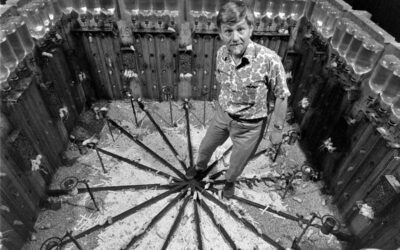
Reich built orgone accumulators, boxes that supposedly concentrated this cosmic energy, and claimed they could treat everything from colds to cancer. He spent his later years in Maine, fighting what he believed were UFO attacks with devices called cloudbusters, eventually dying in federal prison after the FDA obtained an injunction against his work.
It’s easy to dismiss Reich as a cautionary tale of genius collapsed into paranoid pseudoscience. And there’s truth in that reading. But Reich’s trajectory also illuminates something important about the search for external validation. Here was a man who wanted desperately for matter to tell us we matter, who needed the life force that mystics described to be measurable with scientific instruments, who couldn’t rest until cosmic energy was as real as electromagnetic radiation.
Reich explicitly rejected spiritualism. He wrote of the vitalist philosopher Hans Driesch that his theories “turned out to be justified in the end. He landed among the spiritualists,” and Reich meant this as criticism. He wanted materialist validation of energetic reality, not mystical validation. He wanted physics, not poetry.
The irony: Reich’s orgone theory is now classified by the National Center for Complementary and Integrative Health alongside qi, prana, and other “putative energy fields” that have “defied measurement to date by reproducible methods.” Reich sought scientific legitimacy for what remains, in institutional terms, a spiritual claim. He wanted matter to confirm what spirit intuited, and matter declined.
Bohm and the Implicate Order
If Reich represents one trajectory from psychotherapy toward physics, the physicist David Bohm represents movement in the opposite direction, from quantum mechanics toward consciousness and meaning. Bohm, who worked with Einstein and made significant contributions to plasma physics and quantum theory, became increasingly convinced that the standard Copenhagen interpretation of quantum mechanics was incomplete. His alternative, developed over decades, has profound implications for how we understand mind, matter, and their relationship.
Bohm proposed that the reality we perceive, what he called the “explicate order,” unfolds from a deeper level he termed the “implicate order.” In the implicate order, everything is enfolded into everything else. Separation, the sense that this object is distinct from that object, that my consciousness is separate from yours, emerges only at the explicate level. At the deeper level, reality is undivided wholeness.
Bohm used the hologram as his central metaphor. In a hologram, every part contains information about the whole. Cut a holographic plate in half, and you don’t get half an image; you get the complete image at lower resolution. Bohm suggested that the universe operates similarly, with each region containing the entire structure enfolded within it. This “holomovement,” as he called it, was the fundamental ground of both matter and consciousness.
In collaboration with neuroscientist Karl Pribram, Bohm developed models suggesting that the brain itself operates holographically, storing memories not in specific locations but distributed throughout neural patterns, much as information is distributed throughout a hologram. This would explain why memories persist even after significant brain damage, and why consciousness seems unified despite arising from billions of separate neurons.
For Bohm, consciousness was not an afterthought or an accident. It was intrinsic to the implicate order itself. “What lies ahead,” he wrote, “is the development of consciousness.” Mind and matter were not separate substances but different aspects of the same underlying reality, the same holomovement expressing itself in different ways.
Bohm’s work attracted enormous interest outside physics, particularly among those seeking scientific validation for spiritual worldviews. His implicate order seemed to provide a framework for understanding how individual consciousness could be connected to a larger whole, how separation could be illusion, how ancient wisdom traditions might be describing something real. But Bohm himself was careful to distinguish his physics from his philosophy, and mainstream physics has remained skeptical of the implicate order as anything more than an interesting metaphor.
Quantum Consciousness: The Contemporary Search
Today’s versions of this search take multiple forms but serve the same function. The excitement around quantum consciousness, theories proposing that quantum mechanical processes underlie conscious experience, represents the contemporary attempt to find scientific proof that mind matters in a fundamental way.
Sir Roger Penrose, the Nobel Prize winning physicist, has collaborated with anesthesiologist Stuart Hameroff to develop what they call Orchestrated Objective Reduction, or Orch OR. The theory proposes that consciousness arises from quantum computations in microtubules within neurons, and that these quantum processes connect human awareness to fundamental features of spacetime geometry. Consciousness isn’t just what brains do; it’s what the universe does through brains.
The Orch OR theory has faced significant criticism. Physicist Stephen Hawking once observed that Penrose seemed to be arguing that “consciousness is a mystery and quantum gravity is another mystery so they must be related.” Others have pointed out that the brain’s warm, wet environment seems poorly suited to quantum coherence, which typically requires extremely cold and isolated conditions. Yet Hameroff and Penrose have continued to develop their ideas, citing emerging evidence for quantum effects in biological systems and arguing that consciousness research is finally catching up to their predictions.
Meanwhile, neuroscientist Giulio Tononi has developed Integrated Information Theory, or IIT, which proposes that consciousness is identical to integrated information, mathematically represented by the Greek letter phi. Any system that integrates information, that is more than the sum of its parts, has some degree of consciousness according to IIT. This implies a form of panpsychism: even simple systems, perhaps even electrons, might possess rudimentary experience if they integrate information in the right way.
Tononi and his collaborator Christof Koch have been explicit about IIT’s panpsychist implications, arguing that consciousness is not something that suddenly appears at a certain level of complexity but exists in degrees throughout nature. The theory has attracted both fascination and fierce criticism, with some philosophers and scientists arguing it provides genuine insight into the structure of experience while others dismiss it as unfalsifiable pseudoscience.
Strømme and the Universal Consciousness Field
Most recently, Uppsala physicist Maria Strømme has proposed what may be the most ambitious framework yet. In a 2025 paper published in AIP Advances, selected as the issue’s best paper and featured on the cover, Strømme argues that consciousness is not merely connected to physics but is the foundation from which physics emerges. Matter, space, and time are secondary; consciousness comes first.
Strømme’s model treats universal consciousness as a fundamental field, using the mathematical formalism of quantum field theory to describe how individual awareness arises from a unified substrate. Drawing on both cutting edge physics and ancient non dual philosophy, she proposes three organizing principles: universal mind (an underlying formless intelligence), universal consciousness (the capacity for awareness), and universal thought (the dynamic process through which experience differentiates). These aren’t metaphors but formal elements in her mathematical framework.
In this model, the separation we experience between our consciousness and others’ is illusory, a feature of the explicate level rather than the deeper implicate reality. Death, rather than being an ending, represents the return of individualized consciousness to the universal field from which it emerged, like a wave subsiding back into the ocean. Strømme explicitly connects her work to Bohm’s implicate order, Wheeler’s participatory universe, and Heisenberg’s notion of potentia, as well as to Vedantic, Buddhist, Sufi, and Christian mystical traditions.
“Physicists like Einstein, Schrödinger, Heisenberg and Planck explored similar ideas,” Strømme notes, “and I am building on several of the avenues they opened.” Her paper offers testable predictions in physics, neuroscience, and cosmology, attempting to move consciousness studies from philosophy toward empirical science.
Whether Strømme’s theory proves correct remains to be seen. But it represents the latest iteration of a very old pattern: the search for physics, for matter, for science to tell us that consciousness is fundamental, that awareness matters, that we are not accidents of chemistry but expressions of something woven into the fabric of reality itself.
The Existentialist Alternative
There is another possibility, though it’s harder to hold. What if we matter simply because we’re here? What if significance doesn’t require cosmic validation, from physics or spirit or universal consciousness fields, but is intrinsic to the fact of existing as a human being?
The existentialists pointed in this direction. Sartre argued that existence precedes essence, that we exist first, and only afterward do we create whatever meaning our lives have through the choices we make. There’s no cosmic blueprint we’re supposed to fulfill, no divine plan we’re executing, no universal consciousness we’re participating in. There’s just us, thrown into existence, creating significance through action.
Viktor Frankl, the psychiatrist who survived Auschwitz and founded logotherapy, took a different approach but arrived at a related conclusion. For Frankl, meaning wasn’t something we find by looking to the cosmos; it’s something we create through our response to life’s circumstances. Even in the most horrific conditions, humans retain the freedom to choose their attitude, and in that freedom lies the possibility of meaning.
Irvin Yalom has spent decades exploring what he calls the four “ultimate concerns” of human existence: death, freedom, isolation, and meaninglessness. For Yalom, these are not problems to be solved but conditions to be confronted. The therapeutic task is not to provide answers but to help clients engage authentically with questions that have no final resolution. Meaning, in this view, is not discovered like a fossil or downloaded from the cosmos; it’s created through engagement, through relationship, through the courage to face existence directly.
This sounds bleak to many ears. If the universe doesn’t care whether we exist, how can our existence matter? If physics doesn’t privilege consciousness, how can consciousness be significant? If there’s no larger story we’re part of, how can our individual stories mean anything?
But consider the alternative. As long as we need external validation, from God or physics or cosmic energy or quantum consciousness, we remain dependent on something outside ourselves to confer worth. Our significance becomes contingent on getting the metaphysics right. If the quantum consciousness theorists turn out to be wrong, are we suddenly meaningless? If the universal consciousness field proves unmeasurable, do our lives become empty?
The deeper question isn’t whether matter or spirit is more fundamental. It’s why we need either one to tell us we matter. Perhaps we keep rediscovering Gnosticism through different sciences because it is a metaphor for our layers of cognitive processes feel, whether or not it is literally true.
What Therapy Actually Teaches
Here’s what I notice in clinical work: people don’t actually become more healed by believing in quantum consciousness or cosmic energy or even the right theology. What heals is something simpler and harder to name. Connection. Being seen. Speaking truth to another human being and having that truth received. Discovering that one’s experience, however strange or shameful it seems, is human experience, shared, shareable, part of what it means to be a person.
When someone who has carried shame for decades finally tells their story and discovers they’re still acceptable, still worthy of relationship, still part of the human community, something shifts that has nothing to do with metaphysics. It doesn’t matter whether the therapist believes in orgone energy or reductive materialism. What matters is that one human being witnessed another’s existence and affirmed it.
This is the strange secret hiding in plain sight throughout psychotherapy’s history. The theories change. The techniques evolve. The metaphysical commitments flip from materialism to spiritualism and back again. But the healing, when it happens, comes from something that precedes all theory: the basic human capacity to be present with another person’s experience and to recognize it as meaningful.
We matter to each other. That’s not a cosmic claim or a physical measurement. It’s what happens when two people sit in a room together and one of them pays attention to the other’s existence.
The Story We Need
Does this mean the metaphysical questions don’t matter? That Freud and Jung and Reich and Bohm were wasting their time debating the nature of psyche and cosmos? That quantum consciousness research is pointless?
Not exactly. Humans are meaning making creatures. We need stories, not just about ourselves as individuals, but about what kind of universe we inhabit and what our place in it might be. The materialist story and the spiritual story are both responses to this need. They’re both attempts to locate individual human experience within a larger frame that makes that experience intelligible.
The problem comes when we forget that these are stories we’re telling rather than facts we’re discovering. When we need quantum mechanics to prove that consciousness matters. When we need cosmic energy to validate our intuition that life has purpose. When we can’t simply be human without first establishing that humanity has been certified as significant by forces larger than ourselves.
Freud was right that religion can function as an infantile wish for cosmic protection. But he didn’t notice that scientific materialism can function the same way, as a wish for cosmic legitimacy, for the universe to underwrite our projects, for matter itself to confirm that minds matter.
Jung was right that the psyche has a religious function, that humans need to engage with something numinous and larger than self. But he didn’t fully reckon with the possibility that this need itself might be the problem, that health might lie not in satisfying the need but in outgrowing it.
Reich was right that the body carries emotional truth, that energy moves through organisms, that the division between soma and psyche is artificial. But his desperate need for scientific validation of cosmic energy led him down paths that destroyed his credibility and eventually his freedom.
Einstein was right that physics reveals something profound about the nature of time and existence. But even his consoling letter to the Besso family, beautiful as it is, represents another instance of looking to matter for permission to feel that life persists, that death is not final, that the passing of those we love is somehow less absolute than it appears.
Each of them was searching for something to tell them, and their patients, that human existence is worthwhile. Each of them, in different ways, looked outside the simple fact of being human for confirmation that being human is enough.
Permission to Exist
What would it mean to practice therapy without needing matter or spirit to validate our work? What would it mean to sit with another person’s suffering and recognize it as significant simply because it’s happening, not because it connects to archetypal patterns or universal consciousness or quantum processes, but because here is a human being, in pain, asking for help?
This isn’t nihilism. Nihilism says nothing matters. The position I’m pointing toward says everything matters, precisely because there’s no cosmic ledger somewhere determining what deserves to count. In the absence of external validation, all of it counts. Every moment of connection, every recognition of shared humanity, every instance of someone being truly seen by another person, these are the substance of meaning, not approximations of some larger meaning happening elsewhere.
The client who comes in wondering whether their life has purpose doesn’t need a lecture on quantum consciousness or collective unconscious. They need to be met in their questioning, to have their search for meaning recognized as itself meaningful, to discover that another human being takes their existence seriously. That taking seriously is the meaning they’re looking for. It doesn’t come from outside. It happens between people.
Perhaps this is what all the theories have been circling around without quite landing on. Perhaps the significance we keep looking for in matter or energy or cosmic consciousness is actually significance we create together, in relationship, through the mysterious fact that we can recognize each other as mattering.
We Matter Because We’re Here
So here is the simplest version of what I’m trying to say: You matter because you’re matter. Not because quantum physics has proven that consciousness is fundamental. Not because universal energy flows through you connecting you to the cosmos. Not because archetypal patterns in the collective unconscious make your individual life part of humanity’s grand narrative. You matter because you exist, because you’re a human being, because mattering is what human beings do to and for each other.
This won’t satisfy everyone. Some will say it’s not enough, that without cosmic grounding, human significance is arbitrary, a kind of mutual delusion we maintain to avoid facing the void. Others will say I’m missing the point, that the spiritual and scientific searches are not about validation but about truth, about understanding what’s actually going on.
Fair enough. But consider: what changes in your clinical work if you adopt this view? What changes in how you sit with clients, how you receive their stories, how you respond to their despair? My experience is that it changes nothing and everything. Nothing, because the methods remain the same. Everything, because the foundation shifts. You’re no longer trying to connect people to something larger than themselves. You’re recognizing that what they are, human, mortal, confused, longing, is already enough.
The search for external validation has driven much of psychotherapy’s theoretical development, and it will probably continue to do so. We’re meaning seeking creatures, and we’ll keep looking for meaning in quantum fields and cosmic consciousness and whatever comes next. That’s fine. That’s human.
But in the actual work, in the room with another person, maybe we can set that search aside. Maybe we can simply meet each other as human beings, fragile and temporary and fully real, without needing the universe to countersign our significance. Maybe the permission to exist that clients are looking for can be given by another human being, not extracted from physics or theology.
We matter because we’re here. We matter because we’re matter that somehow learned to care about mattering. And in the space between two people who recognize each other’s existence as significant, that’s enough.
Joel is a Licensed Independent Clinical Social Worker (LICSW-S) and Clinical Director of Taproot Therapy Collective in Birmingham, Alabama. His practice integrates depth psychology, neuroscience, and somatic approaches in the treatment of complex trauma, informed by the conviction that human connection, not cosmic validation, is the ground of therapeutic healing.













0 Comments