
The Architecture of Desire: Rethinking Libido from Freud to Friston
The history of depth psychology is, at its core, a history of a single argument: What fuels the human machine? For Sigmund Freud, the answer was singular, biological, and relentless. He believed the human psyche was a steam engine powered by the burning coal of sexual instinct. In his model, every cathedral built, every symphony composed, and every panic attack suffered was merely libido—sexual energy—that had been repressed or sublimated into a socially acceptable form. To Freud, culture was nothing more than a neurotic defense against our animal nature.
However, as the 20th century progressed, this reductionist view collapsed under the weight of clinical evidence. It became clear that humans are driven by forces far more complex than reproduction. We are driven by the need for safety, the hunger for meaning, the will to power, and the biological imperative to predict our environment. To understand the true nature of human motivation, we must trace the evolution of libido theory from Freud’s bedroom to the cutting edge of modern neuroscience.
The First Schism: Jung and the Desexualization of Energy
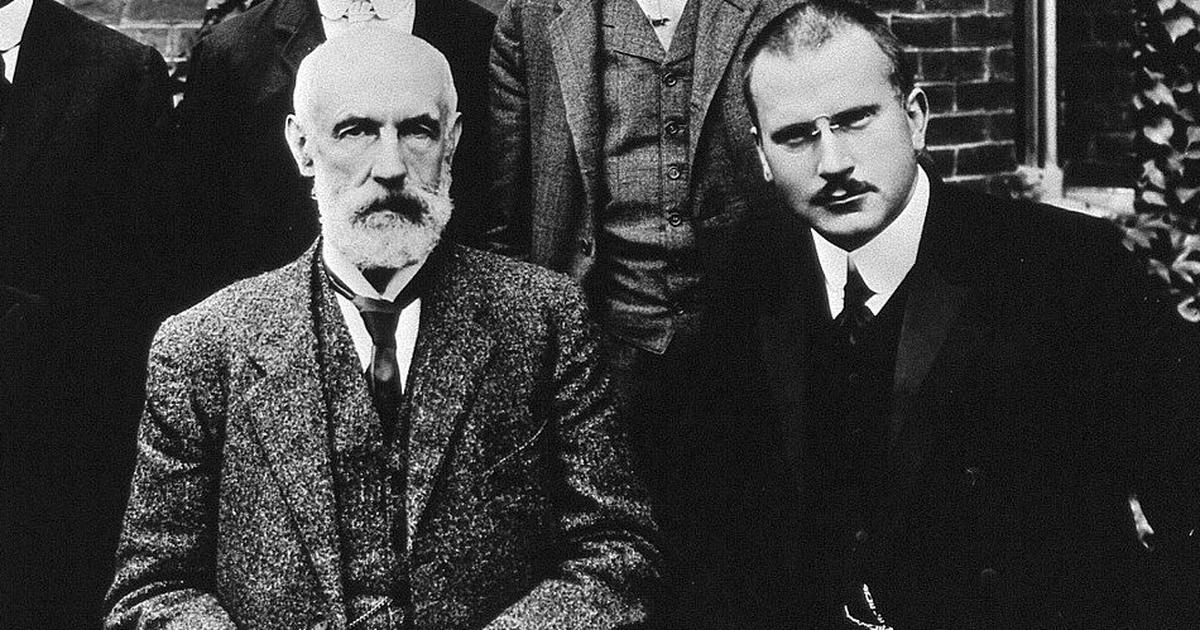
The first and most significant crack in the Freudian edifice came from his chosen heir, Carl Jung. While Freud saw the unconscious as a basement of illicit desires, Jung saw it as a wellspring of creativity. In 1912, the publication of Symbols of Transformation marked the definitive break between the two men. Jung argued that libido was not specifically sexual but was rather a neutral psychic energy, akin to physical energy in physics. Just as physical energy can manifest as heat, light, or motion, psychic energy can manifest as sexuality, but it can also manifest as spirituality, intellectual curiosity, or play.
Jung’s insight was evolutionary. He posits that as humans developed higher consciousness, we gained the ability to “canalize” this raw biological drive. In the animal kingdom, energy is consumed almost entirely by the immediate demands of survival—eating, fighting, and mating. Humans, however, possess a surplus of energy. Jung believed the function of the symbol was to transform this surplus from a biological urge into a cultural value. When a patient dreams of a tower, it is not necessarily a disguised phallic symbol; it may be an image of ascent, ambition, or isolation. By freeing libido from the sexual dogmas, Jung opened the door to a psychology that could address the spiritual and existential crises of modern life, not just its sexual neuroses.
The Will to Power: Alfred Adler and the Social Drive
While Jung looked upward toward the spiritual, Alfred Adler looked outward toward the social. Adler, another early defector from Freud’s circle, argued that the primary drive of the human being was not pleasure, but power. For Adler, the defining feature of the human condition is helplessness. We are born small, weak, and dependent. Therefore, the central engine of the psyche is the “striving for superiority”—a drive to move from a “minus” situation to a “plus” situation. This is the Will to Power.
In the Adlerian view, anxiety and neurosis are not caused by suppressed sexual wishes but by a thwarted sense of competence. A person who is paralyzed by social anxiety is not fighting an Oedipal complex; they are terrified of being revealed as inferior. This shift is crucial for clinical practice because it reorients therapy from digging for sexual trauma to building competence. It aligns perfectly with modern evolutionary psychology, which recognizes that in a tribal species, social rank and utility are survival imperatives. If you cannot contribute, you do not eat. Thus, the drive to work and achieve is not a sublimation of sex, but a primary instinct in its own right.
The Drive for Safety: Karen Horney and Basic Anxiety
If Adler focused on power, the neo-Freudian Karen Horney focused on safety. Writing in the mid-20th century, Horney challenged Freud’s biological determinism and argued that human behavior is shaped primarily by the environment. She introduced the concept of “Basic Anxiety”—the feeling of being small and isolated in a potentially hostile world. For Horney, the energy of the psyche is directed toward managing this anxiety.
Horney identified three primary strategies (or “trends”) that humans use to channel this energy: moving toward people (compliance), moving against people (aggression), or moving away from people (withdrawal). A person who is compulsively seductive is not driven by an overflow of libido, but by a desperate need to secure affection as a shield against anxiety. This was a radical humanization of drive theory. It suggested that our “symptoms” are actually survival strategies—creative adjustments we made as children to feel safe in an unsafe environment.
The Modern Synthesis: Karl Friston and the Free Energy Principle
In the 21st century, the debate over “psychic energy” has moved from the analyst’s couch to the neuroscience lab, and the results are surprisingly consistent with the post-Jungian view. The leading theoretical framework in modern neuroscience is the Free Energy Principle, championed by Karl Friston. This theory posits that the brain is a “prediction machine.” Its biological imperative is not to seek pleasure (Freud) or even power (Adler), but to minimize surprise (or “free energy”).
The brain consumes massive amounts of metabolic energy to build an internal model of the world. When the world behaves differently than we predict—when we encounter “surprise”—our stress systems activate. To reduce this stress (this entropy), we must either change our internal model (learning) or change the world (action). This is the physiological basis of Horney’s “Basic Anxiety.” We are driven to create predictable, safe environments where our internal maps match external reality. Neurosis, in this view, is a failure of prediction—a rigid internal map that can no longer navigate the complexity of the world. Therapy, then, is the process of updating the map. It is the work of “re-binding” the energy that was locked in outdated defense mechanisms so it can be used for new learning and adaptation.
Conclusion: The Implications for Integration
When we look at this lineage—from Freud’s sexual monotheism to Jung’s creative life force, Adler’s social competence, Horney’s safety, and Friston’s predictive processing—a clear picture emerges. We are not driven by a single engine. We are complex, adaptive systems designed to survive, connect, and create meaning. In clinical practice, this means we cannot treat every patient with the same hammer. A patient suffering from a creative block may need a Jungian approach to unlock their symbolic energy. A patient paralyzed by career failure may need an Adlerian approach to rebuild their sense of efficacy. A patient with deep trauma may need a Horneyan or attachment-based approach to establish safety before any work can begin.
Ultimately, the “libido” is nothing less than the force of life seeking to know itself. It flows through the body as sensation, through the heart as emotion, and through the mind as image. The goal of therapy is not to repress this force nor to indulge it blindly, but to build a container strong enough to hold it. This is the work of integration. It is the work of taking the raw voltage of our biology and transforming it into the light of consciousness.
Timeline of Libido Theory
- 1895: Sigmund Freud and Josef Breuer publish Studies on Hysteria, laying the groundwork for the theory of repressed affect.
- 1912: Carl Jung publishes Psychology of the Unconscious, redefining libido as general psychic energy and breaking with Freud.
- 1927: Alfred Adler publishes Understanding Human Nature, formalizing the drive for power and social interest.
- 1937: Karen Horney publishes The Neurotic Personality of Our Time, introducing the concept of Basic Anxiety as the primary driver of behavior.
- 1998: Murray Stein publishes Jung’s Map of the Soul, clarifying the evolutionary function of libido transformation.
- 2010: Karl Friston publishes key papers on the Free Energy Principle, providing a mathematical and biological basis for the drive to minimize uncertainty.
Select Bibliography
- Ellenberger, H. (1970). The Discovery of the Unconscious. Basic Books.
- Friston, K. (2010). The free-energy principle: a unified brain theory? Nature Reviews Neuroscience, 11(2), 127-138.
- Horney, K. (1950). Neurosis and Human Growth. W. W. Norton & Company.
- Jung, C. G. (1956). Symbols of Transformation (CW 5). Princeton University Press.
- Stein, M. (1998). Jung’s Map of the Soul. Open Court.
- Adler, A. (1927). Understanding Human Nature. Greenberg.
- Panksepp, J. (1998). Affective Neuroscience: The Foundations of Human and Animal Emotions. Oxford University Press.















0 Comments