Discover how modern trauma therapy is rediscovering the ancient path of Gnosticism. From the “simulation of self” to the somatic “red pill,” explore how we wake up from the false reality of trauma.


Trauma often leaves the nervous system “stuck” in a past event, reacting to the present as if the danger is still happening. Lifespan Integration (LI) uses a chronological timeline of memories to prove to your body-brain that you have survived and that the “film strip” of your life has moved on.

Clinically Reviewed & Edited By:
Joel Blackstock, LICSW-S, MSW, PIP | Clinical Director, Taproot Therapy Collective
Lifespan Integration harnesses memory reconsolidation—the natural process where memories become “labile” or changeable when recalled in a safe environment. By repetitively viewing your timeline, your brain builds new neural pathways that connect previously isolated trauma fragments into a cohesive life story.
[Image of memory reconsolidation process]
This “bottom-up” approach is particularly effective for pre-verbal trauma or deep-seated attachment wounds that traditional talk therapy cannot reach.
Focused processing for high-stress roles.
Healing developmental and childhood wounds.
Healing attachment in the Southern context.
At Taproot, we offer deep expertise in Lifespan Integration, particularly for complex cases involving neurodivergence and chronic illness. Pamela Hayes is a certified LI therapist who integrates this timeline work with Internal Family Systems (IFS) and somatic approaches.
Her work is uniquely suited for individuals struggling with Perfectionism, Imposter Syndrome, MCAS, EDS, and Dysautonomia, where the body’s history is inextricably linked to its current health.
Neither is “better,” but they serve different needs. EMDR is excellent for processing specific, isolated events. LI is often superior for “complex” trauma where the person feels their entire life has been affected, or for early childhood issues that lack specific words or images.
For a single-incident trauma (like a car accident), clients often see significant relief in 1–3 sessions. For complex developmental trauma, a course of 10–20 sessions is typical to build the necessary neural integration.
Taproot Therapy Collective provides in-person LI therapy at our Hoover clinic and statewide teletherapy for residents in Tuscaloosa, Huntsville, Mobile, and Montgomery. This ensures that every Alabamian has access to specialized trauma care.
Your history shouldn’t dictate your future. If you are seeking a specialized trauma therapist in Hoover, AL who uses the advanced science of Lifespan Integration, our clinic is ready to support your recovery.
📍 Taproot Therapy Collective: 2025 Shady Crest Dr, Suite 203, Hoover, AL 35216
Discover how modern trauma therapy is rediscovering the ancient path of Gnosticism. From the “simulation of self” to the somatic “red pill,” explore how we wake up from the false reality of trauma.

Why are Asian Lady Beetles swarming your Alabama home? Discover the history of this “insect Kudzu,” why they mistake your house for a Japanese cliff, and how their tragic burnout offers a powerful lesson for your mental health and personal growth.
Lifespan Integration Therapy: A Comprehensive Guide to Timeline-Based Healing An in-depth exploration of Lifespan Integration therapy, its principles, protocols, and effectiveness for trauma healing. What is Lifespan Integration Therapy? Lifespan Integration (LI) is an innovative therapeutic approach that has emerged as a powerful modality for healing trauma and promoting neural integration. Developed by Peggy Pace in the early 2000s, LI has evolved significantly through collaborative refinement into a...

Exploring Hardy Nutritionals' Daily Essential Nutrients for Prader-Willi Syndrome Prader-Willi Syndrome (PWS) is a complex genetic disorder that presents numerous challenges for affected individuals and their caregivers. Among these challenges, nutrition management stands as one of the most critical aspects of care. While conventional dietary approaches focus primarily on caloric restriction and macronutrient composition, emerging evidence suggests that micronutrient status may also play an important role in...

Discover innovative mental health solutions for college students at Taproot Therapy Collective. Our comprehensive approach integrates cutting-edge treatments like QEEG brain mapping, neurofeedback, and somatic therapies with specialized support for ADHD, anxiety, trauma, and neurodiversity. With both in-person and teletherapy options available across Alabama, we provide accessible, evidence-based care tailored to the unique challenges of university life. From academic performance to emotional wellbeing, our expert therapists help students thrive during this critical developmental period.RetryClaude can make mistakes. Please double-check responses.

Research on Jungian Therapy: Depth Psychology as an Evidence-Based Practice Jungian analytical psychology, a form of depth psychology, provides a comprehensive framework for understanding the human psyche. Its core focus is the individuation process—the lifelong journey of integrating conscious and unconscious elements to become a more whole, authentic self. While often perceived as more philosophical than empirical, a growing body of rigorous research supports its therapeutic effectiveness. Unlike short-term,...
What are Newer Brain-Based Therapies for Trauma? In recent years, there has been a surge of interest and research into novel therapies that target the brain and nervous system to treat the effects of psychological trauma. These emerging approaches leverage new insights from neuroscience to heal trauma in ways that go beyond traditional talk therapy. By working with the brain and body, they aim to resolve trauma stored in the nervous system and transform painful memories. This article will explore several of the...

Why do we Sleep? Sleep is a fundamental biological process that is essential for the health and well-being of all mammals, including humans. Despite its ubiquity and importance, sleep remains one of the most mysterious and poorly understood aspects of our lives. In this article, we will explore the complex architecture of sleep, including its neurobiology, evolution, and therapeutic implications. We will examine the different stages of sleep, the role of dreams in Jungian analysis, and the various ways in which...

A Kid's Guide to Neurodiversity Hey there! Did you know that everyone's brain works a little differently? It's true! Just like how some people have curly hair and others have straight hair, or some people are tall and others are short, our brains can be different too. This is called neurodiversity, and it's what makes each of us special and unique. What Does Neurodiversity Mean? Imagine your brain is like a super cool computer. Every computer can do amazing things, but some are better at certain tasks than...
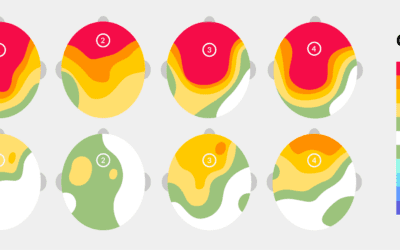
Understanding Neurodivergent Burnout: When the Cognitive Tank Runs Dry Neurodivergent burnout is not simply a reaction to a bad week or a stressful project. It is a profound, physiological depletion of the central nervous system. When the demands of navigating a neurotypical world continually exceed an individual's cognitive and emotional resources, the body eventually forces a shutdown. While clinical burnout can affect anyone, it physically manifests with greater intensity in neurodivergent individuals,...
The Complex Art of Hiding in Plain Sight Understanding Masking in Neurodivergent Individuals Masking, also known as camouflaging, is a common phenomenon among neurodivergent individuals, particularly those with multiple co-occurring conditions. It refers to the conscious or unconscious suppression of natural behaviors and the adoption of neurotypical social norms to fit in. While masking can be a survival strategy in a world not designed for neurodivergent minds, it often comes at a significant personal cost. The...

Beyond Simple Diagnoses: Navigating Complex, Comorbid Neurological Profiles In traditional psychiatry, clinical mapping has historically treated conditions as isolated, single-variable issues. A patient is given a checklist for ADHD, a manual for Autism, or a protocol for Generalized Anxiety Disorder, as if these traits exist in hermetically sealed compartments. In clinical reality, human neurology is deeply intricate, highly fluid, and profoundly interconnected. When analyzing complex neurological profiles,...
Navigating the Complexities of Emotional Understanding What is Autism with Alexithymia? Autism Spectrum Disorder (ASD) and alexithymia are distinct neurological conditions that frequently co-occur. Research suggests that up to 50% of autistic individuals may also experience alexithymia, a condition characterized by difficulty identifying and describing one's own emotions. When someone has both autism and alexithymia, we refer to this unique neurological profile as Autism-Alexithymia. The Diagnostic Evolution of...

Trauma and the Brain: Trauma, whether stemming from emotional abuse, narcissistic abuse, chronic pain, or other experiences, can have a profound impact on the brain and body. Psychologists and therapists are increasingly recognizing the importance of trauma-informed therapy in treating mental health issues like anxiety, depression, PTSD, and more. The Neurobiological Impact of Trauma Trauma can alter the brain's structure and function, particularly in regions like the amygdala, hippocampus, and prefrontal cortex....
What is Lifespan Integration Therapy? Lifespan Integration (LI) is a gentle, body-based therapeutic method that aims to heal without re-traumatizing. Developed by Peggy Pace, a clinical psychologist, LI is founded on the understanding that the mind-body system is equipped with a natural ability to heal itself, given the right conditions and support. LI therapy works by helping clients to access and integrate unresolved traumatic memories and experiences that are believed to underlie many mental health issues....

The Basic Lifespan Integration Protocol The Basic Lifespan Integration Protocol is the foundational technique used in LI therapy. It involves guiding the client through their timeline, from birth to the present moment, while applying specific prompts and techniques to facilitate integration and healing. Book with a Lifespan Integration Therapist Here Other Articles on Lifespan Integration Part1 Part 2 Part 3 Part 4 The basic protocol typically follows these steps: Grounding and resourcing: The therapist guides...
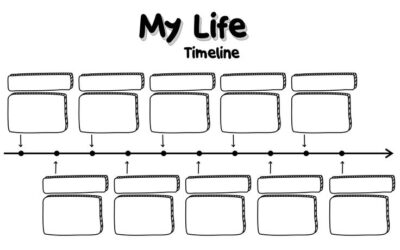
Lifespan Integration for Anxiety and Panic Disorders Anxiety and panic disorders are characterized by chronic, debilitating feelings of fear, worry, and unease. These feelings are often rooted in early, unresolved experiences of threat, danger, or vulnerability. Lifespan Integration can be a powerful tool for resolving the underlying traumas and attachment wounds that fuel anxiety and panic. By processing these experiences and linking them to more adaptive, resourced states, LI can help to rewire the neural...