
Updated November 2026 · By Joel Blackstock, LICSW-S
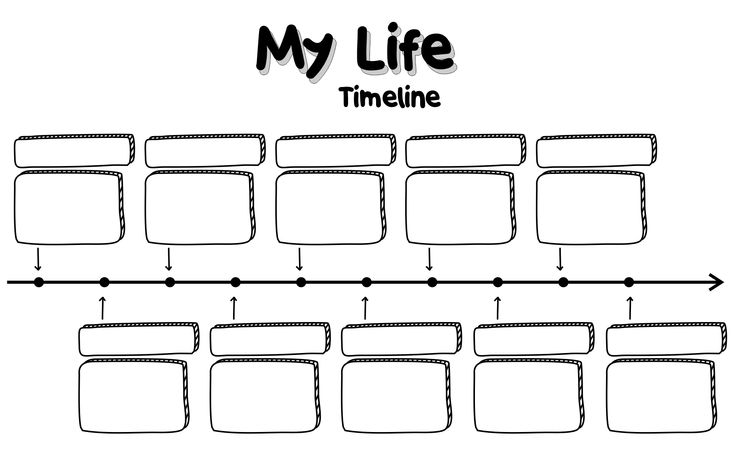
Lifespan Integration (LI) is a trauma therapy that Washington State therapist Peggy Pace began developing in 2002. A therapist guides you through repeated passes of your own timeline, a list of short memory cues running from childhood to the present, so that old reactions start to register as past. Taproot Therapy Collective offers LI in Hoover, minutes from Birmingham, with honest expectations: the research is still early.
Here is the argument of this page. LI rests on a sound psychological idea: trauma memories can stay stuck in the present tense, and a self steadies when it can see its own history as one continuous line. The method built on that idea is gentle and plausible. Its evidence is thinner and narrower than its marketing. The only published randomized trial I could find tested a single session for women with PTSD after one sexual assault, while LI is widely promoted for the lifelong, complex trauma it has barely been tested on. That gap should shape how a therapist offers LI and how you decide whether to try it.
What Lifespan Integration is and where it came from
Pace tells the origin story herself.1 In 2002 a 40-year-old client became so activated while revisiting a childhood memory that, when Pace asked how old she was, she answered "six" in a child's voice. Pace asked her to remember being seven, then eight, then nine, one year at a time, up to forty. Pace writes that this took less than five minutes and brought the woman back to her adult, working self. She began leading other clients year by year from a traumatic memory to the present, and soon replaced numerical ages with memory cues, short reminders of real moments, because cues helped clients drop into the right period of their lives. Researchers who have studied the method date it to the same year.2
Two details from that history still shape LI. Pace says she had used dreamwork and Jungian active imagination with clients all along, and that imaginal dialogue with parts of the self was already part of her practice.1 In a 2018 chapter, she and Cindy Wuflestad describe LI as combining "active imagination, the juxtaposition of ego states in time, and a timeline of memories."3 The second detail is that LI grew out of clinical observation, not out of a research program, and the research arrived later. Pace completed the first edition of her book, Lifespan Integration: Connecting Ego States Through Time,4 in 2003 and sold spiral-bound photocopies of it to therapists; she writes that it has been revised several times since, most recently in 2017.1 The first official training was held in San Francisco in 2004, and LI is now taught in the United States, Canada and Western Europe.5 In French it goes by Intégration du Cycle de Vie, or ICV.6
LI is a trademarked method,5 and training runs through the developer's organization in four levels. Therapists who finish Levels One and Two count as "trained" and can use the basic protocols. "Certified" therapists have completed all four levels, used LI under supervision from LI trainers or consultants, and been through their own LI therapy.7 That distinction matters when you choose a therapist, and it comes up again below.
How a session works: cues, timeline and protocols
Before the timeline work begins, you and the therapist build a cue list. In the version used in the Swedish trial described below, cues are a word or two, such as "yellow bicycle" or "cinema," each calling up one specific memory, spread evenly and in order from the traumatic event to the present; 20 to 30 are usually enough. Most are ordinary moments, positive, neutral and negative, and a cue works better when the memory carries sensory detail such as a color or a smell.8 You do not need a complete memory of childhood. The developer's materials say the method is meant to work for people with gaps in what they remember.9
In session the therapist reads the cues aloud, one after another, and you let each image arise briefly before moving to the next. The therapist then repeats the pass several times. LI's own description compares this to watching repeated "movies" of your life, each a slightly different version of the same story, with new themes surfacing from one pass to the next.9 Throughout, the therapist tries to keep you inside your window of tolerance, the range of arousal in which a person can feel without being flooded or shutting down. Pace writes that therapists vary how many cues they read on each pass, and how fast, for this reason, and that a client who tends to drift may be asked to keep their eyes open or to hold and smell something with a strong aroma.1
The developer describes several protocols. In the standard protocol, used when a present problem is tied to a past event, the therapist guides you to revisit that scene in imagination, "bringing into the past whatever is needed to resolve the memory," and then leads you forward through the timeline to now.9 A PTSD protocol targets one specific traumatic event. A Birth to Present protocol, meant for early attachment problems, is presented as a form of re-parenting in which the therapist's attuned presence stands in for what a caregiver should have provided.10 The developer explains these effects in terms of right-brain-to-right-brain connection and neural "re-setting." Those are hypotheses. I could not find a published brain-imaging study of LI.
The version with the most research behind it is a modified PTSD protocol developed at the WONSA clinic in Stockholm for survivors of sexual assault. It runs in three phases: a brief "rapid exposure" in which fragments of the traumatic memory are retrieved, "cue jumping" through the cue list to show how much time has passed, and imaginal rescripting meant to replace shame with a sense of agency.8 That first phase is worth noticing. LI is often described as an approach that works without exposure, yet its most-tested form includes a short dose of it.
Why a timeline? The psychology underneath
The idea that reviewing a whole life does psychological work is older than LI. In 1963 the psychiatrist Robert Butler proposed that older people go through a universal inner process of life review, and that it helps account for late-life depression in some people and for candor, serenity and wisdom in others.11 LI's developer uses the same phrase, "life review," for what repeated timelines do.9 Developmental psychology later described how a life story forms in the first place. Tilmann Habermas and Susan Bluck reviewed evidence that the ability to build a coherent life story emerges in adolescence, and they named four kinds of coherence such a story needs: temporal, biographical, causal and thematic.12 LI works most directly on the first, the plain sense that one thing came after another and that time has passed. The adolescent timing is also relevant to Lifespan Integration with teenagers.
Trauma research supplies the second piece. In Anke Ehlers and David Clark's cognitive model, PTSD persists when the trauma is processed in a way that produces a sense of serious, current threat, partly because the memory is poorly elaborated and poorly placed in context within autobiographical memory.13 A memory that has not been filed as past keeps firing as if it were happening now. That is close to LI's own premise, and to the wider argument in our piece on how memory systems shape trauma symptoms and treatment.
Two cautions keep the picture from being tidy. The first is that the "fragmented trauma memory" idea is contested. David Rubin and colleagues compared 30 trauma-exposed adults with PTSD and 30 without, using 28 measures of narrative coherence. The trauma memories of people with PTSD were no less coherent than those of people without it, and in some comparisons trauma memories were more coherent than the important or positive memories they were compared with. The authors concluded that factors other than incoherence are probably central to keeping PTSD going.14 If LI helps, it may be less because it assembles scattered fragments and more because it changes the sense of current threat, shame or aloneness attached to a memory.
The second caution concerns memory reconsolidation. Some descriptions of LI, including an earlier version of this page, say it "leverages" reconsolidation. The term refers to findings from animal studies of fear memory, such as Karim Nader, Glenn Schafe and Joseph LeDoux's 2000 experiments in rats, that a retrieved memory can become unstable and needs new protein synthesis to be stored again.15 A 2018 review of the human research found many observations consistent with reconsolidation, along with inconsistent findings and alternative explanations, and called it "a viable but hotly contested explanation."16 It is a reasonable hypothesis about LI, and I found no study that has tested it. For background on the fear-memory research, see our piece on Joseph LeDoux and trauma therapy.
What the research shows so far
One published randomized trial. Gita Rajan and colleagues at the Karolinska Institutet published a pilot randomized trial of one session of the modified protocol, online in 2020 and in print in 2022.8 All participants were female, aged 15 to 65 with a typical age of 24, and had PTSD symptoms after a single sexual assault in the previous five years. Of 135 people who expressed interest, 38 were included, 36 entered the intention-to-treat analysis and 33 the per-protocol analysis. The treatment group received one session of 90 to 140 minutes, and the comparison group waited. Three weeks later, scores on the Impact of Event Scale–Revised had roughly halved in the treatment group and were essentially unchanged on the waiting list. In the per-protocol analysis, 72% of treated participants no longer scored in the PTSD range, compared with 6% of those waiting. No drop-outs or adverse effects were reported. The authors describe the gains as stable at six months, but only 20 treated participants were reassessed then, and because the waiting-list group had been treated by that point, there was no control group to compare against.
That is a striking result, and it deserves a careful reading. It was a small pilot at one clinic. The comparison was a waiting list, not another therapy. The main outcome was measured at three weeks with self-report questionnaires rather than clinical interviews, and the authors note that a waiting-list design with a short follow-up can exaggerate efficacy. Therapists were not blinded. The first author founded and leads WONSA, the nonprofit behind the clinic, and one of the five treating therapists was a co-author; both interests were declared. Most important for complex trauma, the trial excluded anyone with multiple traumas, along with people with active substance abuse, psychosis, ADHD or autism. The authors' own conclusion is conditional: "Provided that this result can be replicated." As of November 2026 I could not find a published replication. Two other studies appear in the US trial registry. A randomized study of LI against a waiting list for PTSD after car accidents, with six participants, was completed at Argosy University in Seattle in 2012; I found no published results.17 A study of LI for complex PTSD at a Paris hospital, planned for 38 participants with no comparison group, is recruiting, with completion estimated for 2027.18
A Cochrane review. A 2023 Cochrane review of psychosocial treatments for adult survivors of rape and sexual assault named LI among "new and emerging non-exposure based approaches." It found low-certainty evidence that psychosocial treatments as a group may reduce PTSD and depression after treatment compared with inactive controls, and it called for head-to-head comparisons between types of therapy, especially novel ones, with follow-up of a year or more.19 No such trial of LI has been published or registered that I could find.
Single-case studies with children. A counselling psychology group at Trinity Western University in British Columbia has published two case studies using the hermeneutic single-case efficacy design. Robert Elliott developed this method to combine quantitative and qualitative data into a case for change and then test rival explanations that have nothing to do with therapy.20 In the first study, a 12-year-old who had been exposed to trauma received nine LI sessions over three months, and the researchers concluded that the child changed significantly, kept the gains at follow-up, and that LI was substantially responsible.21 In the second, a 12-year-old adopted boy had ten sessions with his adoptive mother present, and three expert judges concluded that change occurred, including in the attachment bond, and that it was due to LI.22 The same group has written about adapting the design to study LI as an emerging therapy.23 By case-study standards these are careful. They are still two children.
Qualitative and clinical reports. A French team interviewed 14 certified or pre-certified LI therapists. The therapists said LI improved their clients' emotion regulation, connection to their own experience and self-acceptance, and they described a "feeling of integration" tied to the timeline repetitions and to the therapist's attunement.2 A 2024 study with two of the same authors turned to patients' own accounts of outcomes and of that feeling of integration.24 Other French papers describe single cases, including a patient whose changes the authors mapped onto five dimensions of personal recovery,6 and adults who survived Munchausen syndrome by proxy as children, where the authors stress emotional stabilization before any work on the trauma itself.25 Pace co-wrote a case chapter on LI for anorexia nervosa.3 The developer's site also lists unpublished theses. Rajan's team summarizes one, Bethany Balkus's 2012 dissertation, as 17 women in a Seattle residential program who received two LI sessions on a chosen trauma, with large drops in symptom scores and further improvement three months later.8
Read together, this literature supports a modest claim. LI is a promising approach that appeared well tolerated in the small samples studied, with one small positive trial for single-incident PTSD and a set of encouraging case reports. It does not support the developer's marketing. The official site says LI "is more effective than traditional talk therapies,"5 and its description for therapists says, "Even the most entrenched cases of PTSD will resolve after one or two sessions of LI."10 No trial has compared LI with an established therapy, and the one published trial excluded the entrenched, multiple-trauma cases that sentence promises to resolve. The earlier version of this page called LI a "leading" brain-based therapy. A newer therapy with early evidence is the accurate description.
How LI compares with EMDR, NET and other trauma therapies
For PTSD with complex features, the better-tested options are cognitive behavioral therapy, exposure therapy and EMDR. A 2019 meta-analysis of 51 randomized trials in samples likely to have complex PTSD symptoms found all three superior to usual care for PTSD symptoms. Their benefits were smaller against non-specific comparison treatments, and trauma that began in childhood was associated with poorer outcomes. The authors called for research on whether flexibility in choosing, sequencing and delivering treatment, based on clinical need and patient preference, adds benefit.26 In my view, that is where a newer method such as LI can reasonably enter: as an option for people who have not done well with standard approaches or cannot tolerate them, not as a replacement. Our page on EMDR therapy in Hoover covers the option with the larger trial base.
LI's closest relative with substantial trial data is Narrative Exposure Therapy. In NET, therapist and patient also build a timeline of the patient's whole life, then work through it in order over several sessions, and at the end the patient receives the written narrative as a documented testimony. A 2019 meta-analysis of 16 randomized trials with 947 participants found large pre-to-post reductions in PTSD symptoms that held at follow-up. NET beat inactive comparison conditions and non-trauma-focused therapies, though not active comparison treatments taken together.27 The difference lies in how each handles the worst memories. NET narrates them in detail. LI moves quickly through brief cues and spends little time on any one memory. Our guide to how Narrative Exposure Therapy builds a life narrative shows the contrast.
Other newer methods share LI's interest in imagery, the body and the developmental self. Accelerated Resolution Therapy is another brief, newer trauma treatment, and NARM is built around developmental trauma. Each should be judged on its own evidence rather than on how new it is.
What this looks like in therapy
The timeline is not where LI starts. Even in the single-session Swedish trial, each participant first had a doctor's visit for assessment and instructions on writing a cue list.8 In ordinary outpatient therapy, the first sessions are an assessment: what brings you in, what your history looks like, how you sleep, what sets you off, and whether you dissociate, which can look like losing time, going numb or feeling unreal. If dissociation is significant, the early work is stabilization, and the timeline comes in slowly or waits until you have more footing; French clinicians writing about adults abused through Munchausen syndrome by proxy make the same point about stabilizing first.25 Our page on dissociation therapy in Hoover describes that work. LI's developer distinguishes people who functioned well before a single traumatic event from people whose early needs went unmet, who "will need many more sessions."10 If your history is closer to the second kind, expect a longer course of therapy, not one or two sessions.
The cue list is often drafted at home and then reviewed together; in the Swedish trial, participants wrote theirs a day or two ahead and talked the therapist through it.8 Unremarkable memories belong on it, such as a teacher, a move or a first job, because the point is continuity rather than drama. In session, the therapist reads the cues while you let images come and go, and between passes you may say briefly what came up. Some sessions use the standard protocol: you picture a specific earlier scene and, in imagination, bring the younger self what was missing, often by picturing your adult self there, before traveling forward through the timeline to the present.9 People who have done parts work will recognize the move. LI speaks of ego states where Internal Family Systems speaks of parts, and both work on the premise that painful experience can leave parts of a person cut off from one another, and that those parts can be brought back into contact.
A good LI therapist will tell you what is unknown. Nobody yet knows which ingredient does the work: the repetition, the imaginal rescripting, the brief exposure, or the steady attention of a calm person in the room. Nobody knows how LI compares with EMDR or trauma-focused CBT for complex trauma, because that trial has not been run. A sensible way to proceed is to agree on what you want to change, track it with a short symptom measure every few sessions, and reconsider the plan if nothing is moving.
Questions to ask before starting LI
- What level of LI training have you completed, and are you certified? Trained therapists have finished Levels One and Two; certified therapists have finished all four levels, supervised casework and their own LI therapy.7
- Do you have regular LI consultation for complex cases?
- How do you handle dissociation or overwhelm during a session?
- What would you recommend instead if LI does not fit my history?
- How will we know whether it is working?
LI certification is issued by the developer's organization, not by a state licensing board. The therapist's underlying license and experience with trauma matter at least as much as the LI certificate.
If you live in the Birmingham area and want to talk through whether LI fits what you are dealing with, you can read more about Lifespan Integration therapy at Taproot in Hoover, including the work of therapist Pamela Hayes, whose practice combines LI with IFS, Somatic Experiencing and EMDR. When you are ready, contact our Hoover office to set up a first appointment. We will tell you what we think LI can and cannot do for your situation, and what else we would consider.
References
- Pace, P. (n.d.). Origins and development of Lifespan Integration. Lifespan Integration, LLC. Retrieved November 8, 2026, from https://lifespanintegration.com/origins-and-development-of-lifespan-integration/
- Rejil, S., Smith, J. M., Dubourg, M., & Untas, A. (2020). Psychotherapy through lifespan integration: How do therapists describe the feeling of integration? European Journal of Trauma & Dissociation, 4(3), Article 100162. https://doi.org/10.1016/j.ejtd.2020.100162
- Wuflestad, C., & Pace, P. (2018). Lifespan Integration therapy for eating disorders. In H. L. McBride & J. L. Kwee (Eds.), Embodiment and eating disorders: Theory, research, prevention, and treatment (pp. 317–327). Routledge. https://doi.org/10.4324/9781315159645-23
- Pace, P. (2015). Lifespan Integration: Connecting ego states through time. Eirene Imprint. (First edition published 2003.)
- Lifespan Integration, LLC. (n.d.). Lifespan Integration. Retrieved November 8, 2026, from https://lifespanintegration.com/
- Bajramovic Richet, A., & Duriez, N. (2023). La thérapie par l’intégration du cycle de vie (ICV) : Une thérapie de la réappropriation de soi. Psychothérapies, 43(2), 59–68. https://doi.org/10.3917/psys.232.0059
- Lifespan Integration, LLC. (n.d.). LI therapist categories and roles. Retrieved November 8, 2026, from https://lifespanintegration.com/li-therapist-categories-and-roles/
- Rajan, G., Wachtler, C., Lee, S., Wändell, P., Philips, B., Wahlström, L., Svedin, C. G., & Carlsson, A. C. (2022). A one-session treatment of PTSD after single sexual assault trauma. A pilot study of the WONSA MLI project: A randomized controlled trial. Journal of Interpersonal Violence, 37(9–10), NP6582–NP6603. https://doi.org/10.1177/0886260520965973
- Lifespan Integration, LLC. (n.d.). What is Lifespan Integration? Retrieved November 8, 2026, from https://lifespanintegration.com/what-is-lifespan-integration/
- Lifespan Integration, LLC. (n.d.). Description for therapists. Retrieved November 8, 2026, from https://lifespanintegration.com/description-for-therapists/
- Butler, R. N. (1963). The life review: An interpretation of reminiscence in the aged. Psychiatry, 26(1), 65–76. https://doi.org/10.1080/00332747.1963.11023339
- Habermas, T., & Bluck, S. (2000). Getting a life: The emergence of the life story in adolescence. Psychological Bulletin, 126(5), 748–769. https://doi.org/10.1037/0033-2909.126.5.748
- Ehlers, A., & Clark, D. M. (2000). A cognitive model of posttraumatic stress disorder. Behaviour Research and Therapy, 38(4), 319–345. https://doi.org/10.1016/S0005-7967(99)00123-0
- Rubin, D. C., Deffler, S. A., Ogle, C. M., Dowell, N. M., Graesser, A. C., & Beckham, J. C. (2016). Participant, rater, and computer measures of coherence in posttraumatic stress disorder. Journal of Abnormal Psychology, 125(1), 11–25. https://doi.org/10.1037/abn0000126
- Nader, K., Schafe, G. E., & LeDoux, J. E. (2000). Fear memories require protein synthesis in the amygdala for reconsolidation after retrieval. Nature, 406(6797), 722–726. https://doi.org/10.1038/35021052
- Elsey, J. W. B., Van Ast, V. A., & Kindt, M. (2018). Human memory reconsolidation: A guiding framework and critical review of the evidence. Psychological Bulletin, 144(8), 797–848. https://doi.org/10.1037/bul0000152
- Argosy University. (2015). Lifespan Integration therapy for posttraumatic stress disorder of adults involved in an auto accident (ClinicalTrials.gov Identifier NCT01263067). U.S. National Library of Medicine. Retrieved November 8, 2026, from https://clinicaltrials.gov/study/NCT01263067
- Centre Hospitalier St Anne. (2024). Evaluation of the efficacy of "Lifespan Integration" therapy in patients with complex post-traumatic stress disorder (ClinicalTrials.gov Identifier NCT06535243). U.S. National Library of Medicine. Retrieved November 8, 2026, from https://clinicaltrials.gov/study/NCT06535243
- O’Doherty, L., Whelan, M., Carter, G. J., Brown, K., Tarzia, L., Hegarty, K., Feder, G., & Brown, S. J. (2023). Psychosocial interventions for survivors of rape and sexual assault experienced during adulthood. Cochrane Database of Systematic Reviews, 2023(10), Article CD013456. https://doi.org/10.1002/14651858.CD013456.pub2
- Elliott, R. (2002). Hermeneutic single-case efficacy design. Psychotherapy Research, 12(1), 1–21. https://doi.org/10.1080/713869614
- Rensch, C., Kwee, J., Rossen, L., & McDonald, M. (2021). Lifespan Integration therapy with trauma-exposed children: A hermeneutic single case efficacy study. Journal of Child & Adolescent Trauma, 14(3), 401–413. https://doi.org/10.1007/s40653-021-00359-9
- Lewis, C., Kwee, J., Rossen, L., & McDonald, M. (2022). Integrating attachment processes with Lifespan Integration therapy: A hermeneutic single case efficacy design with an adopted child. Journal of Child & Adolescent Trauma, 15(1), 131–148. https://doi.org/10.1007/s40653-021-00395-5
- Wall, J. M., Kwee, J. L., Hu, M., & McDonald, M. J. (2017). Enhancing the hermeneutic single-case efficacy design: Bridging the research–practice gap. Psychotherapy Research, 27(5), 539–548. https://doi.org/10.1080/10503307.2015.1136441
- Bahans, M., Baudin, G., Dubourg, M., & Untas, A. (2024). Lifespan integration therapy: Patients’ discourse about outcomes and integration feeling. European Journal of Trauma & Dissociation, 8(2), Article 100399. https://doi.org/10.1016/j.ejtd.2024.100399
- Binet, E., & Tarquinio, C. (2016). Intérêt et limites de l’Intégration du Cycle de la Vie (Lifespan Integration) auprès d’adultes victimes du Syndrome de Munchausen Par Procuration pendant leur enfance. L’Évolution Psychiatrique, 81(3), 625–640. https://doi.org/10.1016/j.evopsy.2015.09.003
- Karatzias, T., Murphy, P., Cloitre, M., Bisson, J., Roberts, N., Shevlin, M., Hyland, P., Maercker, A., Ben-Ezra, M., Coventry, P., Mason-Roberts, S., Bradley, A., & Hutton, P. (2019). Psychological interventions for ICD-11 complex PTSD symptoms: Systematic review and meta-analysis. Psychological Medicine, 49(11), 1761–1775. https://doi.org/10.1017/S0033291719000436
- Lely, J. C. G., Smid, G. E., Jongedijk, R. A., Knipscheer, J. W., & Kleber, R. J. (2019). The effectiveness of narrative exposure therapy: A review, meta-analysis and meta-regression analysis. European Journal of Psychotraumatology, 10(1), Article 1550344. https://doi.org/10.1080/20008198.2018.1550344















0 Comments