
Ken Wilber's Integral Theory represents an extraordinary synthesis of diverse intellectual traditions, drawing from hundreds of thinkers across psychology, philosophy, spirituality, and science. Understanding the specific contributions of these sources reveals both...

Book Review of The Sacred in the Profane: Exploring Religion and Order
"The Sacred and the Profane": A Pioneering Study of Religion Mircea Eliade’s The Sacred and the Profane: The Nature of Religion is a seminal text in the academic study of religion. Unlike theology, which approaches religion as an unquestionable truth about the...

Excerpt from The Spider and the Birdhouse: A story I wrote a decade ago about social work
A Look Back: Three Chapters from The Running Wild Anthology Number One About ten years ago, when I was just starting out as a social worker, I wrote a series of interconnected stories. At the time, it was simply a way for me to process the heavy, often unseen...

Using John Gardener’s Grendel to Find the Monster in Your Shadow Side
Who was John Gardner? John Gardner's "Grendel" is a postmodern retelling of the Old English epic poem "Beowulf," which explores themes of existentialism, nihilism, and the nature of evil through the eyes of the titular monster. Published in 1971, the novel is a prime...

A Critical History of the Diagnostic and Statistical Manual of Mental Disorders
THE ARCHITECTURE OF AMERICAN MADNESS Leadership Dynamics, Economic Imperatives, and the Epistemological Crisis of Psychiatric Diagnosis By Joel Blackstock, LICSW-S Clinical Director, Taproot Therapy Collective "The DSM is not a description of nature. It is a...

Clinical Hypnosis: The Neuroscience and Therapeutic Legacy of Milton Erickson
When most people hear the word "hypnosis," they picture a pocket watch swinging back and forth, a stage performer making volunteers cluck like chickens, or perhaps a sinister figure commanding their subject to do something against their will. These images, drawn from...
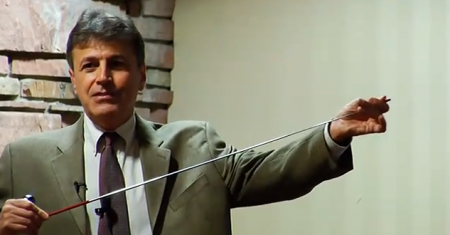
David Grand: From EMDR Trainer to Brainspotting Pioneer Through a Champion Skater’s Frozen Gaze
David Grand discovered brainspotting in 2003 when a figure skater’s eye wobble revealed where trauma was stored in her brain. By maintaining fixed eye position on that “brainspot” rather than using bilateral movement, processing accelerated dramatically. His development of this approach, now used by 13,000+ therapists worldwide, demonstrates how careful clinical observation combined with willingness to deviate from protocol can produce genuine therapeutic innovation for treating trauma, the yips, and performance blocks.

Bessel van der Kolk: The Psychiatrist Who Made Trauma Visible in the Body
Bessel van der Kolk revolutionized trauma treatment by proving trauma lives in the body. Discover his groundbreaking research on EMDR, yoga, neurofeedback, and MDMA therapy that transformed PTSD treatment and validated somatic approaches to healing developmental trauma.

The Architecture of the Soul and the Machine: A Critical History and Future of Psychotherapy
A critical deep dive into the hidden history of psychotherapy, exploring how the personal traumas of founders like Freud and Jung collided with societal forces to shape modern mental health. Drawing on the works of Adam Curtis, James Hillman, and Sonu Shamdasani, this article traces the shift from the “architecture of the soul” to the “technocratization of care,” exposing the impact of profit motives and algorithmic logic while proposing a metamodern path forward for the profession.

Stephen Porges: The Neuroscientist Who Mapped Safety in the Nervous System
When Stephen Porges began studying heart rate variability in newborn infants in the early 1970s, he noticed something curious. Babies whose heart rates fluctuated rhythmically with their breathing, a phenomenon called respiratory sinus arrhythmia, responded better to...