
Ken Wilber’s Integral Theory represents an extraordinary synthesis of diverse intellectual traditions, drawing from hundreds of thinkers across psychology, philosophy, spirituality, and science. Understanding the specific contributions of these sources reveals both the ambition and the limitations of Wilber’s project. This examination explores the key figures whose work formed the scaffolding for Integral Theory, how Wilber interpreted and integrated their ideas, and where his synthesis succeeded or failed to honor the complexity of their original contributions.
The Developmental Psychology Lineage
Jean Piaget: The Architecture of Cognitive Development
Jean Piaget’s genetic epistemology provided Wilber with the fundamental template for understanding development as a series of qualitatively distinct stages. Piaget’s observation that children don’t simply know less than adults but actually construct reality through fundamentally different cognitive structures became central to Wilber’s model. The Piagetian stages—sensorimotor, preoperational, concrete operational, and formal operational—offered Wilber a scientifically grounded framework for understanding the evolution of consciousness.
Wilber extended Piaget’s work beyond childhood development, arguing that cognitive development continues into adulthood through what he called “vision-logic” or “network-logic”—a stage beyond formal operations where the mind can hold multiple perspectives simultaneously without reducing them to a single framework. This extension drew from neo-Piagetian researchers like Michael Commons and Francis Richards, who proposed the existence of postformal stages of cognitive development.
However, Wilber’s use of Piaget has been criticized for oversimplifying the Swiss psychologist’s nuanced understanding of development. Piaget emphasized the active construction of knowledge through interaction with the environment, while Wilber sometimes presented stages as predetermined unfoldings of consciousness. Furthermore, contemporary developmental psychology research has moved beyond rigid stage theories to more dynamic systems approaches that Wilber’s model struggled to accommodate.
Lawrence Kohlberg: The Moral Dimension
Lawrence Kohlberg’s stages of moral development provided Wilber with a framework for understanding how ethical reasoning evolves from preconventional (punishment avoidance) through conventional (social conformity) to postconventional (universal principles) levels. Wilber saw in Kohlberg’s work evidence for his broader thesis that consciousness develops through increasingly inclusive circles of care and concern—from egocentric to ethnocentric to worldcentric to cosmocentric.
Wilber particularly drew on Kohlberg’s concept of hierarchical integration, where each stage transcends and includes the previous one. This became the “transcend and include” principle central to Integral Theory. However, Wilber’s application of Kohlberg’s work has been criticized for perpetuating the cultural biases that Carol Gilligan identified in her critique of Kohlberg’s male-centered conception of moral development.
Carol Gilligan: The Voice of Relationship
While initially overlooking her work, Wilber eventually incorporated Carol Gilligan’s ethics of care into his model, acknowledging that development could proceed through different but equally valid pathways. Gilligan’s distinction between the masculine ethics of justice (emphasized by Kohlberg) and the feminine ethics of care challenged Wilber to recognize that his developmental hierarchy might reflect gender biases.
Wilber responded by proposing that both masculine and feminine developmental lines exist, each with their own stages but following parallel trajectories. He suggested that healthy development involves integrating both agency (masculine) and communion (feminine) at each stage. However, feminist critics argued that Wilber still privileged the ascending, transcendent trajectory associated with masculinity over the descending, immanent path associated with femininity.
Jane Loevinger: Ego Development as Master Line
Jane Loevinger’s model of ego development became particularly important for Wilber because it seemed to integrate cognitive, moral, and interpersonal development into a single framework. Loevinger’s stages—from symbiotic through impulsive, self-protective, conformist, self-aware, conscientious, individualistic, autonomous, to integrated—provided a more holistic view of psychological development than purely cognitive or moral models.
Wilber interpreted Loevinger’s work as describing the development of the self-sense or “proximate self”—the navigator that moves through different states and stages of consciousness. He particularly emphasized her higher stages, seeing in the autonomous and integrated stages evidence for postconventional identity that could embrace paradox and multiple perspectives. Loevinger’s Washington University Sentence Completion Test became one of the few empirical measures that integral theorists used to assess developmental level.
Robert Kegan: The Evolving Self
Robert Kegan’s constructive-developmental theory profoundly influenced Wilber’s understanding of how consciousness develops through alternating periods of differentiation and integration. Kegan’s five orders of consciousness—from the incorporative through the impulsive, imperial, interpersonal, institutional, to the interindividual—mapped the evolution of subject-object relationships throughout the lifespan.
Wilber was particularly drawn to Kegan’s insight that development involves the gradual objectification of what was previously subject. What we are identified with (subject) at one stage becomes something we can observe and reflect upon (object) at the next stage. This process of “making object what was subject” became central to Wilber’s understanding of how meditation and psychotherapy facilitate development.
Kegan’s work also influenced Wilber’s understanding of the “embedding unconscious”—the invisible water in which our consciousness swims at each developmental level. However, Kegan himself has been cautious about Wilber’s use of his work, particularly the claim that spiritual realization represents a continuation of the same developmental process he studied.
Susanne Cook-Greuter: Postautonomous Ego Development
Susanne Cook-Greuter’s research on postautonomous stages of ego development provided Wilber with empirical evidence for development beyond the conventional endpoints recognized by academic psychology. Cook-Greuter identified two stages beyond Loevinger’s integrated stage: the construct-aware stage (where individuals become aware of the constructed nature of reality) and the unitive stage (characterized by a sense of unity with existence).
Wilber saw Cook-Greuter’s work as bridging the gap between conventional developmental psychology and contemplative traditions. Her research seemed to validate his claim that ordinary psychological development could continue into transpersonal or spiritual dimensions. Cook-Greuter initially collaborated with Wilber but later distanced herself from Integral Theory, concerned about the reification of stages and the hierarchical implications of the model.
Eastern Philosophy and Contemplative Traditions
Sri Aurobindo: The Integration of Matter and Spirit
The Indian philosopher-sage Sri Aurobindo provided Wilber with a sophisticated framework for understanding the relationship between evolution and involution, matter and spirit. Aurobindo’s integral yoga aimed at the transformation of human nature through the descent of supramental consciousness, offering a vision of spiritual development that didn’t reject the material world but sought to transform it.
Wilber drew heavily on Aurobindo’s concept of the “psychic being” (the evolving soul) and his detailed mapping of planes of consciousness from matter through vital, mental, overmental, and supramental levels. Aurobindo’s insight that evolution is the reverse process of involution—spirit involving itself in matter and then evolving back toward conscious realization—became foundational to Wilber’s cosmology.
However, scholars of Aurobindo have criticized Wilber for oversimplifying the Indian sage’s nuanced philosophy, particularly his understanding of the integral transformation of matter itself. Where Aurobindo envisioned the actual transformation of physical matter through spiritual force, Wilber tended toward a more metaphorical interpretation compatible with scientific materialism.
Nagarjuna and Madhyamika Buddhism
The Buddhist philosopher Nagarjuna’s doctrine of emptiness (śūnyatā) profoundly influenced Wilber’s understanding of the relationship between form and emptiness. Nagarjuna’s tetralemma—the logical tool that negates all four possible positions (is, is not, both, neither)—provided Wilber with a way to think beyond the limitations of binary logic.
Wilber incorporated the Two Truths doctrine from Madhyamika Buddhism, distinguishing between relative truth (the world of forms and stages) and absolute truth (the emptiness underlying all forms). This allowed him to maintain his developmental hierarchy while acknowledging the ever-present ground of being that transcends all development. The notion that samsara and nirvana are not separate became central to his nondual philosophy.
Plotinus and Neoplatonism
The Neoplatonist philosopher Plotinus provided Wilber with the concept of the Great Chain of Being—a hierarchical structure of reality extending from matter through soul to spirit. Plotinus’s notion of emanation, where lower levels emerge from higher ones while the higher transcends and includes the lower, became fundamental to Wilber’s developmental model.
Wilber particularly drew on Plotinus’s understanding of the relationship between the One (the absolute ground of being) and the many (the manifest world). The Plotinian insight that consciousness can ascend through contemplation from identification with matter to union with the One influenced Wilber’s understanding of states of consciousness and the spiritual path.
Kashmir Shaivism
The Kashmir Shaivism tradition, particularly as interpreted through the work of Swami Muktananda and his lineage, influenced Wilber’s understanding of the relationship between consciousness and energy. The Shaivite concept of spanda (vibration) and the 36 tattvas (levels of reality) provided a detailed map of consciousness that Wilber incorporated into his spectrum model.
The Kashmir Shaivite emphasis on the world as the play (līlā) of consciousness, rather than as illusion (māyā), aligned with Wilber’s affirmation of the manifest world as a legitimate expression of spirit. The tradition’s sophisticated practices for recognizing the identity of individual consciousness with universal consciousness influenced his understanding of pointing-out instructions and state training.
Dzogchen Buddhism
The Dzogchen tradition of Tibetan Buddhism, particularly as taught by teachers like Chögyam Trungpa and Namkhai Norbu, provided Wilber with a sophisticated understanding of primordial awareness (rigpa) and the natural state. Dzogchen’s emphasis on the always-already present nature of enlightenment influenced his distinction between states (temporary) and the ever-present ground of being.
Wilber incorporated the Dzogchen teaching of the three statements of Garab Dorje: direct introduction to one’s nature, deciding upon this unique state, and continuing with confidence in liberation. This influenced his understanding of how pointing-out instructions could introduce practitioners to ever-present awareness regardless of their stage of development.
Western Philosophical Foundations
Georg Wilhelm Friedrich Hegel: Dialectical Development
Hegel’s dialectical philosophy provided Wilber with a model for understanding development as a process of thesis, antithesis, and synthesis. The Hegelian notion that Spirit comes to know itself through the historical process of development became central to Wilber’s understanding of evolution as Spirit-in-action.
Wilber drew particularly on Hegel’s concept of Aufhebung—often translated as “sublation”—which means to simultaneously preserve, destroy, and transcend. This became Wilber’s “transcend and include” principle, where each developmental stage preserves the essential features of previous stages while negating their limitations and lifting them into a higher synthesis.
However, Wilber’s use of Hegel has been criticized by Hegelian scholars for oversimplifying the German philosopher’s complex dialectical method. Where Hegel emphasized the role of negativity and contradiction in driving development, Wilber tended toward a more harmonious vision of staged growth.
Jürgen Habermas: Communicative Rationality
Jürgen Habermas’s critical theory influenced Wilber’s understanding of the relationship between individual development and cultural evolution. Habermas’s theory of communicative action, which distinguished between instrumental rationality and communicative rationality, helped Wilber articulate how different types of knowledge claims require different validity criteria.
Wilber drew heavily on Habermas’s three validity claims—subjective truthfulness, intersubjective justness, and objective truth—which became the basis for his “Big Three” of art, morals, and science (corresponding to the Beautiful, Good, and True). Habermas’s critique of the colonization of the lifeworld by systems also influenced Wilber’s understanding of how techno-economic structures can dominate cultural and personal dimensions.
The discourse ethics developed by Habermas provided Wilber with a model for how post-conventional morality could be grounded in the structure of communication itself rather than in metaphysical assumptions. However, Habermas himself has been critical of attempts to extend his social theory into spiritual or transpersonal dimensions.
Alfred North Whitehead: Process Philosophy
Whitehead’s process philosophy influenced Wilber’s understanding of reality as composed of “actual occasions” of experience rather than static substances. Whitehead’s notion of prehension—how each moment of experience incorporates aspects of previous moments—provided a model for how development could involve both continuity and novelty.
Wilber incorporated Whitehead’s distinction between the consequent and primordial natures of God, seeing in this a philosophical articulation of the relationship between the manifest world of evolution and the unmanifest ground of being. Whitehead’s concept of the “creative advance into novelty” aligned with Wilber’s vision of evolution as Spirit’s creative expression.
Martin Heidegger: Being and Time
Heidegger’s existential phenomenology influenced Wilber’s understanding of the situated nature of human existence and the importance of temporality in consciousness. Heidegger’s concept of Dasein (being-there) as always already thrown into a world of meanings influenced Wilber’s understanding of the intersubjective dimension of consciousness.
Wilber drew on Heidegger’s distinction between ontic and ontological levels of analysis, using this to differentiate between the content of consciousness (ontic) and the structures of consciousness (ontological). Heidegger’s notion of authenticity as owned existence versus the fallenness of das Man (the they-self) influenced Wilber’s understanding of the transition from conformist to post-conventional stages of development.
Transpersonal Psychology Pioneers
Abraham Maslow: Self-Actualization and Beyond
Abraham Maslow’s hierarchy of needs and his later work on self-transcendence provided Wilber with a bridge between humanistic and transpersonal psychology. Maslow’s research on peak experiences and self-actualizing individuals offered empirical support for the existence of higher states of consciousness within a Western psychological framework.
Wilber extended Maslow’s hierarchy beyond self-actualization to include self-transcendence, seeing this as evidence that human development naturally progresses into spiritual dimensions. Maslow’s distinction between deficiency needs and being needs influenced Wilber’s understanding of the shift from deficiency-motivated to abundance-motivated consciousness at higher developmental stages.
Stanislav Grof: Cartography of the Psyche
Stanislav Grof’s research with LSD psychotherapy and holotropic breathwork provided Wilber with detailed maps of non-ordinary states of consciousness. Grof’s extended cartography of the psyche, including the biographical, perinatal, and transpersonal dimensions, influenced Wilber’s understanding of the full spectrum of consciousness.
Wilber incorporated Grof’s COEX systems (systems of condensed experience) into his understanding of how trauma and developmental fixations create distortions in consciousness. Grof’s concept of spiritual emergency as a developmental crisis influenced Wilber’s understanding of how growth often involves temporary regression and disorganization.
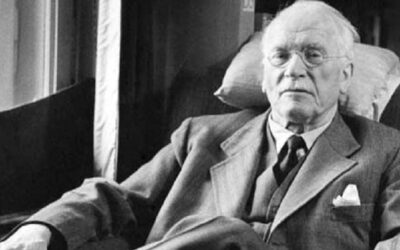
Carl Jung: The Collective Unconscious
Carl Jung’s analytical psychology provided Wilber with a sophisticated understanding of the unconscious and its role in development. Jung’s concepts of individuation, the shadow, archetypes, and the collective unconscious became important elements in Wilber’s model, particularly in understanding the pre-personal and personal stages of development.
However, Wilber critiqued what he called the “pre/trans fallacy” in Jung’s work, arguing that Jung sometimes confused pre-rational (infantile and regressive) with trans-rational (transcendent and progressive) states. This critique became central to Wilber’s attempt to distinguish authentic spiritual development from regression to pre-personal states.
Roberto Assagioli: Psychosynthesis
Roberto Assagioli’s psychosynthesis influenced Wilber’s understanding of the relationship between personal and transpersonal development. Assagioli’s egg diagram, mapping the lower unconscious, middle unconscious, higher unconscious, and superconscious, provided a vertical dimension to psychology that Wilber incorporated into his spectrum model.
Assagioli’s concept of the Higher Self and his techniques for dis-identification and self-identification influenced Wilber’s understanding of how contemplative practices facilitate development. The psychosynthesis emphasis on will and the integration of sub-personalities aligned with Wilber’s vision of integral life practice.
Systems Theory and Complexity Science
Ludwig von Bertalanffy: General Systems Theory
Ludwig von Bertalanffy’s general systems theory provided Wilber with a framework for understanding how wholes emerge from the interaction of parts. The concept of emergent properties—qualities that arise at higher levels of organization that cannot be predicted from lower levels—became central to Wilber’s understanding of developmental stages.
Wilber incorporated systems theory’s emphasis on hierarchy (or holarchy) as a natural organizing principle in nature, from atoms to molecules to cells to organisms to ecosystems. This provided scientific support for his developmental hierarchy of consciousness, though critics argued he oversimplified the complex dynamics of systems theory.
Arthur Koestler: The Holon
Arthur Koestler’s concept of the holon—something that is simultaneously a whole and a part—became fundamental to Wilber’s theoretical framework. Every entity in existence, Wilber argued, is a holon: a whole that contains parts while being part of a larger whole. This provided a non-reductionistic way to understand the relationship between different levels of reality.
Wilber elaborated twenty tenets of holons, describing their characteristics and dynamics. This holon theory became the foundation for his understanding of how individual development, cultural evolution, and cosmic evolution follow similar patterns of increasing complexity and integration.
Ervin Laszlo: Systems Philosophy
Ervin Laszlo’s systems philosophy and his work on evolutionary systems influenced Wilber’s understanding of evolution as a cosmic process tending toward greater complexity and consciousness. Laszlo’s concept of the Akashic field as an information field underlying physical reality resonated with Wilber’s understanding of the subtle dimensions of consciousness.
Wilber drew on Laszlo’s work to argue that evolution shows a direction—toward greater complexity, greater consciousness, and greater unity. This teleological view of evolution, while controversial in mainstream science, became central to Wilber’s cosmology.
Ilya Prigogine: Dissipative Structures
Ilya Prigogine’s work on dissipative structures and non-equilibrium thermodynamics influenced Wilber’s understanding of how order emerges from chaos. Prigogine’s insight that systems far from equilibrium can spontaneously organize into more complex structures provided a scientific model for understanding transformational change in consciousness.
Wilber incorporated Prigogine’s ideas about bifurcation points—moments when systems can suddenly shift to new levels of organization—into his understanding of developmental transitions. This helped explain why development often involves periods of chaos and disorganization before reorganizing at a higher level.
Structuralism and Post-Structuralism
Jean Gebser: Structures of Consciousness
Jean Gebser’s cultural phenomenology provided Wilber with a detailed map of the evolution of consciousness through history. Gebser’s five structures—archaic, magic, mythical, mental, and integral—became central to Wilber’s understanding of collective consciousness evolution.
Wilber was particularly influenced by Gebser’s notion of the integral structure as an aperspectival consciousness that could hold multiple perspectives simultaneously without being bound by any single perspective. This became Wilber’s vision of integral consciousness, though scholars of Gebser have argued that Wilber misunderstood Gebser’s non-developmental, non-hierarchical conception of these structures.
Claude Lévi-Strauss: Structural Anthropology
Claude Lévi-Strauss’s structural anthropology influenced Wilber’s understanding of the deep structures underlying surface features of consciousness. The structuralist insight that diverse cultural expressions share underlying patterns supported Wilber’s search for universal stages of development.
However, Wilber rejected the structuralist tendency to reduce consciousness to impersonal structures, arguing for the importance of both structures and their lived experience. His “structural phenomenology” attempted to integrate third-person structural analysis with first-person experiential exploration.
Michel Foucault: Power and Knowledge
Michel Foucault’s genealogical method and his analysis of power-knowledge relationships challenged Wilber to consider how developmental hierarchies might serve as instruments of power and normalization. Foucault’s critique of the human sciences as disciplines that create the subjects they study raised questions about whether developmental psychology was discovering or constructing stages.
Wilber acknowledged these concerns but argued that while power dynamics certainly influence how development is understood and valued, this doesn’t negate the reality of developmental processes. He attempted to incorporate Foucault’s insights about power while maintaining that some forms of development represent genuine growth rather than mere social construction.
Jacques Derrida: Deconstruction
Jacques Derrida’s deconstruction challenged the hierarchical oppositions that structured much of Western thought. Derrida’s critique of the “metaphysics of presence” and his concept of différance raised fundamental questions about Wilber’s hierarchical model and his claims to integrate all perspectives.
Wilber engaged with deconstruction by arguing that it represented a legitimate but partial perspective—specifically, the green meme or pluralistic stage in his color-coded system. He suggested that deconstruction’s critique of hierarchies was itself a developmental achievement that emerged at a particular stage of consciousness, and that integral consciousness could appreciate deconstruction’s insights while transcending its limitations.
The Synthesis and Its Discontents
Wilber’s synthesis of these diverse sources represents an extraordinary intellectual achievement, bringing together insights from traditions that rarely communicate with each other. His ability to find patterns across developmental psychology, Eastern philosophy, Western philosophy, and systems theory created a framework that has inspired thousands of practitioners and thinkers.
However, the very breadth of Wilber’s synthesis became a liability. Critics from each field argued that he oversimplified their disciplines’ insights to fit his grand scheme. Developmental psychologists pointed out that contemporary research has moved beyond simple stage theories. Buddhist scholars argued that he misunderstood key doctrines like emptiness and Buddha-nature. Critical theorists contended that he domesticated radical critiques into a conservative developmental hierarchy.
The question remains whether any individual, no matter how brilliant, can genuinely master such diverse fields sufficiently to create a valid synthesis. Wilber’s project may have been doomed from the start by its very ambition—the attempt to create a theory of everything necessarily involves simplifications and distortions that undermine the project’s credibility.
Moreover, the sociology of knowledge suggests that grand syntheses serve particular functions in specific historical moments. Wilber’s Integral Theory emerged during the 1980s and 1990s when globalization was creating a need for frameworks that could integrate diverse worldviews. Its decline in the 2000s and 2010s may reflect a shift toward appreciating irreducible diversity rather than seeking universal integration.
Contemporary Relevance and Future Directions
Despite its limitations, Wilber’s synthesis of these diverse thinkers offers valuable lessons for contemporary integral and integrative approaches:
- The importance of developmental thinking: Even if we reject rigid stages, understanding that consciousness can grow and evolve remains valuable for psychotherapy, education, and personal development.
- The value of multiple perspectives: The recognition that different thinkers and traditions offer partial truths that can complement each other remains important, even if we reject the claim to have achieved a final synthesis.
- The integration of East and West: Wilber’s attempt to bring together Western psychology and Eastern contemplative traditions paved the way for contemporary mindfulness-based interventions and contemplative psychotherapy.
- The need for post-metaphysical spirituality: Wilber’s attempt to articulate spirituality in terms compatible with modern science, while controversial, addresses a genuine need in our secular age.
The future of integrative thinking may lie not in grand theories that claim to synthesize everything but in more modest, pragmatic approaches that draw on multiple sources while remaining open to revision. The thinkers Wilber drew from remain valuable resources, but perhaps they are best engaged directly rather than through the filter of a totalizing system.
For practitioners and scholars, the lesson may be to cultivate the capacity to move fluidly between different theoretical frameworks, recognizing that each thinker Wilber drew from offers unique insights that can’t be fully captured in any synthesis. The map is not the territory, and the richness of human consciousness and development exceeds any attempt to fully systematize it.














0 Comments