
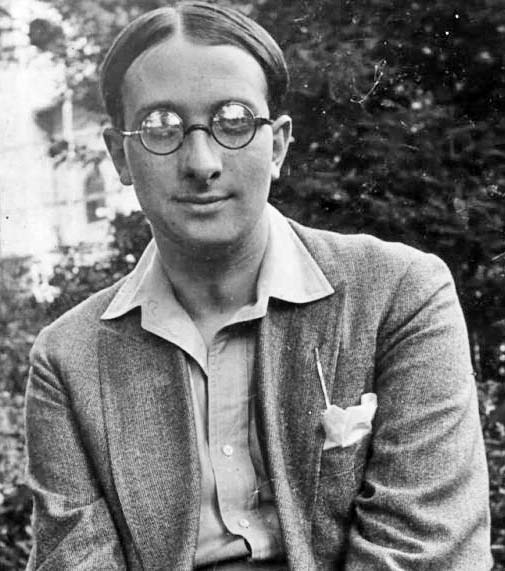
In The Sacred and the Profane (1957), the Romanian historian of religions Mircea Eliade argued that religious people do not experience space and time as uniform. A hierophany, a breakthrough of the sacred, sets up a fixed center that orients everything around it, and festivals reopen a sacred time that can be entered again and again. The profane is the ordinary, uncentered rest.1
Read as psychology, this is a theory of orientation, and it describes something trauma therapists see every week. Trauma takes away both things Eliade said a person needs: a center to stand on and a time that can be returned to. What is left is a present cut off from past and future, with one moment that keeps coming back. Recovery means building a center and a rhythm that hold, inside history rather than in flight from it. Eliade’s own life shows the other danger. In the 1930s he backed Romania’s fascist Iron Guard, a choice his former student Robert Ellwood ties to the same longing for renewal.2
What Eliade meant by sacred and profane
Eliade started from Rudolf Otto’s Das Heilige (1917), the book that gave “numinous” its modern sense: a power experienced as “wholly other,” terrifying as a mysterium tremendum and attractive as a mysterium fascinans.1, 3 Otto analyzed the feeling. Eliade wanted its structure: what the sacred does to space and time.
He opens with Moses told to take off his shoes on “holy ground.” For religious man, Eliade wrote, “space is not homogeneous; he experiences interruptions, breaks in it.” The break matters because it gives direction: “nothing can begin, nothing can be done, without a previous orientation—and any orientation implies acquiring a fixed point.” A hierophany “reveals an absolute fixed point, a center,” and a world is founded around it. Purely profane space has no center; at its extreme Eliade called it “fragments of a shattered universe.”1
Two qualifications matter. Eliade’s religious man, homo religiosus, is an ideal type, not a survey of actual believers, and Robert Ellwood notes that Eliade “tends to slide over” that qualification.2, 4 And Eliade did not think the profane ever wins completely. Even “the most frankly nonreligious man” keeps privileged places, “a man’s birthplace, or the scenes of his first love, or certain places in the first foreign city he visited in youth,” which remain “the ‘holy places’ of his private universe.”1 That sentence is where therapy can start: every client already has places, dates and objects that carry this charge, whether or not they would call them sacred. A shorter piece on Eliade’s sacred center covers the same ground more briefly.
Sacred time, the eternal return and the terror of history
Time works the same way. Religious man, Eliade wrote, lives in “two kinds of time.” Ordinary duration runs one way. Festival time is “reversible”: each festival makes present again an event that happened “in the beginning,” so sacred time is “indefinitely recoverable, indefinitely repeatable.”1 He had developed the idea in The Myth of the Eternal Return (French 1949, English 1954), which he still called his most significant book in 1958.5
That book ends somewhere darker. In archaic cultures, he argued, suffering could be borne once it had a cause: then “the suffering becomes intelligible and hence tolerable.” Modern people have lost most of those frames, and he asked how anyone can “tolerate the catastrophes and horrors of history—from collective deportations and massacres to atomic bombings—if beyond them he can glimpse no sign, no transhistorical meaning.” He called this the terror of history.5
The phrase has a biography. In January 1944, posted at the Romanian embassy in Lisbon, Eliade wrote in his journal, “I should like to write about the ‘terror of history.'”6 Before the year was out his wife Nina had died of cancer in Lisbon, and Romania and its Axis allies were losing the war; he fell into a depression.2 The theory of a time that can be renewed was written by a man whose own time had broken. For a parallel line of thought, see Walter Benjamin’s ideas about shock and traumatic experience.
Eliade raised the obvious objection himself. From one point of view, he wrote, archaic religious man is “paralyzed by the myth of the eternal return,” and a modern psychologist would be tempted to read this as “anxiety before the danger of the new, refusal to assume responsibility for a genuine historical existence.” He called the problem too complex to discuss there, then pushed back: archaic man, he insisted, takes on immense responsibilities, such as helping to create the cosmos.1 A clinician cannot set the question aside, because the same repetition that renews one person traps another.
The broken pole: Eliade’s best story and its problem
Eliade’s most vivid illustration comes from central Australia. In his retelling, the Achilpa, the wild-cat totem people of the Arrernte (then spelled Arunta), carried a sacred pole, the kauwa-auwa, made by the divine being Numbakula. Carrying it on their wanderings and following the way it leaned, they were always in “their world.” When it broke, Eliade wrote, the clan wandered in consternation and finally lay down together to wait for death. “Once contact with the transcendent is lost, existence in the world ceases to be possible—and the Achilpa let themselves die.”1
For a therapist the image is almost too apt. The source tells a different story, at least in its first version. In Baldwin Spencer and F. J. Gillen’s 1899 Native Tribes of Central Australia (Eliade cited their later book, The Arunta), the broken pole belongs to a narrative about Alcheringa (Dreaming) ancestors. Their leader snaps the pole while pulling it from the ground. Carrying it on, the ancestors reach another site “utterly tired out,” too tired and sad to paint themselves, and “lying down together, died where they lay.” A large hill marks the place.7 It explains how a landscape got its sacred sites; it is not a field report of a living clan’s despair. The classicist G. S. Kirk made the larger complaint: that Eliade built the eternal return from Australian material and then applied it to mythologies it does not fit.2
The insight survives in a smaller form. People do orient around centers, and losing one is disorienting. What goes is the claim that an Australian clan proves a universal law. Eliade supplies a vocabulary and a set of questions, not evidence.
Trauma as a lost center and a broken clock
On trauma and time there is direct evidence, though it is correlational. E. Alison Holman and Roxane Cohen Silver studied adult survivors of childhood incest, Vietnam War veterans, and residents of two southern California communities devastated by fire. “Temporal disintegration” at the time of the trauma, in which “the present moment becomes isolated from the continuity of past and future time,” went with a lasting focus on the past, and that past orientation went with more distress long after the trauma had passed, even after accounting for rumination.8
Anke Ehlers and David Clark’s cognitive model of PTSD makes a related point. It proposes that symptoms persist when the trauma is processed in a way that produces “a sense of serious, current threat,” partly because the memory is poorly elaborated and poorly placed in context. In effect, it has not been filed as past.9
Set beside Eliade, the overlap is hard to miss, though what follows is my interpretation, not a finding. The traumatic moment behaves like a counterfeit hierophany. It breaks into ordinary time and becomes a center: everything gets oriented around it, places and dates near it carry a charge, and it can be re-entered. But it is re-entered involuntarily, through flashbacks and triggers, and the repetition renews nothing. Meanwhile the ordinary world goes flat, a “shattered universe” without a center. Eliade was not writing about posttraumatic stress, and the analogy should not be pushed further. Its use is that it gives people words for an experience clinical language leaves abstract.
One caution about the cure. It is often said that finding meaning is what lets people recover. Crystal Park’s review of that literature found some parts of the meaning-making model well supported and others not, and suggested the quality of the meaning made may matter as much as its quantity.10 Meaning helps when it fits the facts of what happened, not when it makes them disappear.
Eliade and Jung: neighbors, not twins
Eliade and Carl Jung knew each other through Eranos, the annual conference at Ascona, Switzerland, which Eliade first attended in August 1950; contacts made there led to the Bollingen Foundation fellowship that supported him in Paris.2, 6
The word “numinous” belongs to Otto, not to Jung. In his 1937 Terry Lectures at Yale, Jung defined religion as “a careful and scrupulous observation of what Rudolf Otto aptly termed the ‘numinosum.'”11 Nor did Eliade’s “archetype” mean Jung’s. In a preface dated November 1958, written for the 1959 English paperback of The Myth of the Eternal Return (then retitled Cosmos and History), he wrote: “I neglected to specify that I was not referring to the archetypes described by Professor C. G. Jung. This was a regrettable error.” For him an archetype was an “exemplary model” or “paradigm,” and he added that “in my book I nowhere touch upon the problems of depth psychology nor do I use the concept of the collective unconscious.”5
Still, Eliade came close to psychology at the end of The Sacred and the Profane, where he saw initiation surviving in psychoanalysis: “The patient is asked to descend deeply into himself, to make his past live, to confront his traumatic experiences again,” a dangerous operation that resembles “initiatory descents into hell.” “A religious symbol conveys its message even if it is no longer consciously understood in every part. For a symbol speaks to the whole human being and not only to the intelligence.”1 It helps explain why visionaries such as William Blake and Emanuel Swedenborg, whose visions influenced Jung, still move readers who share none of their beliefs.
He also set a limit dream work should respect. Modern “private mythologies,” meaning dreams, reveries and fantasies, “never rise to the ontological status of myths,” because they are not “experienced by the whole man.”1 A dream image can carry real weight in Jungian depth therapy without being treated as a revelation. Poets such as Friedrich Hölderlin had written about living after the gods withdrew; Eliade’s claim was that the withdrawal is never total.
Eliade’s life and the Iron Guard
Eliade was born in Bucharest in March 1907. Sources disagree on the day: Wikipedia gives March 13, while several other encyclopedias give March 9. At the University of Bucharest he became a disciple of the logic lecturer Nae Ionescu and earned his diploma in 1928 with a thesis on Italian Renaissance philosophy, not the doctorate the old page described. After studying in Calcutta under Surendranath Dasgupta from 1928, he took his doctorate in 1933 with a thesis on yoga. Back in Bucharest he lectured as Ionescu’s assistant, not as the university’s professor of the history of religions.2
By 1937 he was writing in support of the Legionary Movement, better known as the Iron Guard, which he saw as “a Christian revolution aimed at creating a new Romania.” Articles under his name in Legionary papers praised its leaders, including Corneliu Zelea Codreanu, and Buna Vestire listed him among the members of its party, Everything for the Fatherland, who held county-level responsibilities in the 1937 election campaign. He later denied writing at least one pro-Legionary text printed under his name. Arrested on July 14, 1938, in King Carol II’s crackdown on the Guard, he refused to sign a declaration dissociating himself from it and was held, in a camp and then a clinic, until November.2
He was not driven into exile by the war, as the old page said. In 1940 he became cultural attaché in London, then moved to the Romanian embassy in Lisbon, serving the Legionary government and then Ion Antonescu’s dictatorship in a post that included propaganda. His Jewish friend, the writer Mihail Sebastian, recorded the change in a diary published long after Sebastian died in 1945. As the communists took power at home, Eliade chose not to return to Romania. He taught in Paris at the École Pratique des Hautes Études, joined the University of Chicago in 1956–57, his first regular academic post, and died in Chicago on April 22, 1986.2, 6
Scholars still disagree about how deep the commitment went. Bryan Rennie argues there is no evidence of formal membership or active service. Leon Volovici, Florin Țurcanu, Alexandra Laignel-Lavastine and others have criticized his political involvement and tried to trace antisemitism through his writings and associations, and the historian Sorin Antohi concluded that Eliade “died without ever clearly expressing regret for his Iron Guard sympathies.”2 Robert Ellwood, who studied Jung, Eliade and Joseph Campbell together, links Eliade’s politics to the nostalgia that runs through his scholarship: in Ellwood’s reading, the part of Eliade drawn to the “freedom of new beginnings” in primal myths was the part drawn to the Guard’s promise of a “national resurrection.”2, 4
The lesson for a therapist is not that Eliade’s ideas are poisoned. It is that the hunger he described, for a center, a renewed time and an end to the terror of history, can be fed by a movement as easily as by a ritual. A group that promises a pure origin, total belonging and an enemy to blame for the fall is offering sacred orientation. It also asks its followers to abolish history, other people’s included.
What this looks like in therapy
Nobody needs Eliade’s metaphysics to use his questions. In practice they sort into four kinds of work.
Orientation comes first, but it is not a waiting room. Judith Herman’s Trauma and Recovery (1992) laid out recovery in stages: safety first, then remembrance and mourning, then reconnection.12 In a survey of 50 trauma experts, 84% endorsed a phase-based approach for complex PTSD.13 Other researchers counter that there is no rigorous evidence a separate stabilization phase is necessary, and that insisting on one risks delaying evidence-based trauma-focused treatment.14 In Eliade’s terms the fixed point is a means, not a destination: a body that can feel the chair, a room that stays the same, an appointment at the same hour each week, enough ground to stand on while the harder work of trauma therapy begins.
The moment has to go back into time. If the memory feels current, as Ehlers and Clark describe, part of the work is giving it a date, a before and an after, and a place in a longer story.9
Rituals should be chosen, not compulsive. Anxiety pulls people toward repetition: in one motion-capture experiment, induced anxiety made hand movements more repetitive and rigid, features the authors note also appear in obsessive-compulsive disorder.15 A review describes rituals as tools for regulating emotion, performance and social connection.16 The experimental literature is young, though, and a 2016 study claiming that rituals improve performance by reducing anxiety was retracted in 2024.17 Clinically, the line runs between a ritual that keeps the threat at the center and one that marks a loss and then lets the day go on: an anniversary visit, a candle, a deliberate walk. Eliade’s festivals end, and people go home. A ritual that never ends is a parody of sacred time.
Ask about the sacred directly. A meta-analysis of 49 studies found that positive forms of religious coping went with better adjustment to stress and negative forms with worse.18 Among 532 veterans in residential PTSD treatment, spiritual struggle at intake predicted somewhat worse symptoms at discharge, and adaptive spirituality somewhat better ones; the effects were small.19 Across 97 outcome studies, therapy adapted to clients’ religious and spiritual beliefs matched standard therapy for distress in the more rigorous comparisons and did better for spiritual well-being.20 That supports asking and respecting, not prescribing religion. A therapist cannot hand anyone a sacred center. The work is noticing which places, dates, objects and stories already carry the charge, and whether they orient a person or imprison them. Eliade’s pattern of initiatory descent and return, close kin to Joseph Campbell’s hero’s journey, can help a person see an ordeal as a passage rather than a verdict.
If the floor has gone out from under you and the calendar keeps returning you to the same day, that is something therapy can work with, at whatever pace your nervous system allows. If you are in Alabama and want to talk it through with someone, you can contact Taproot Therapy Collective.
References
- Eliade, M. (1959). The sacred and the profane: The nature of religion (W. R. Trask, Trans.). Harcourt, Brace. (Original work published 1957)
- Mircea Eliade. (2026, October 3). In Wikipedia. Retrieved November 8, 2026, from https://en.wikipedia.org/wiki/Mircea_Eliade
- Otto, R. (1950). The idea of the holy: An inquiry into the non-rational factor in the idea of the divine and its relation to the rational (J. W. Harvey, Trans.; 2nd ed.). Oxford University Press. (Original work published 1917) https://archive.org/details/in.ernet.dli.2015.262513
- Ellwood, R. (1999). The politics of myth: A study of C. G. Jung, Mircea Eliade, and Joseph Campbell. State University of New York Press. https://doi.org/10.1515/9781438402024
- Eliade, M. (2005). The myth of the eternal return: Cosmos and history (W. R. Trask, Trans.). Princeton University Press. (Original work published 1949)
- Smith, J. Z. (2005). Introduction to the 2005 edition. In M. Eliade, The myth of the eternal return: Cosmos and history (W. R. Trask, Trans., pp. ix–xxi). Princeton University Press.
- Spencer, B., & Gillen, F. J. (1899). The native tribes of Central Australia. Macmillan. https://archive.org/details/nativetribesofce00spenuoft
- Holman, E. A., & Silver, R. C. (1998). Getting “stuck” in the past: Temporal orientation and coping with trauma. Journal of Personality and Social Psychology, 74(5), 1146–1163. https://doi.org/10.1037/0022-3514.74.5.1146
- Ehlers, A., & Clark, D. M. (2000). A cognitive model of posttraumatic stress disorder. Behaviour Research and Therapy, 38(4), 319–345. https://doi.org/10.1016/S0005-7967(99)00123-0
- Park, C. L. (2010). Making sense of the meaning literature: An integrative review of meaning making and its effects on adjustment to stressful life events. Psychological Bulletin, 136(2), 257–301. https://doi.org/10.1037/a0018301
- Jung, C. G. (1938). Psychology and religion. Yale University Press. https://archive.org/details/x-psychology-religion
- Herman, J. L. (1992). Trauma and recovery. Basic Books.
- Cloitre, M., Courtois, C. A., Charuvastra, A., Carapezza, R., Stolbach, B. C., & Green, B. L. (2011). Treatment of complex PTSD: Results of the ISTSS expert clinician survey on best practices. Journal of Traumatic Stress, 24(6), 615–627. https://doi.org/10.1002/jts.20697
- De Jongh, A., Resick, P. A., Zoellner, L. A., van Minnen, A., Lee, C. W., Monson, C. M., Foa, E. B., Wheeler, K., ten Broeke, E., Feeny, N., Rauch, S. A. M., Chard, K. M., Mueser, K. T., Sloan, D. M., van der Gaag, M., Rothbaum, B. O., Neuner, F., de Roos, C., Hehenkamp, L. M. J., … Bicanic, I. A. E. (2016). Critical analysis of the current treatment guidelines for complex PTSD in adults. Depression and Anxiety, 33(5), 359–369. https://doi.org/10.1002/da.22469
- Lang, M., Krátký, J., Shaver, J. H., Jerotijević, D., & Xygalatas, D. (2015). Effects of anxiety on spontaneous ritualized behavior. Current Biology, 25(14), 1892–1897. https://doi.org/10.1016/j.cub.2015.05.049
- Hobson, N. M., Schroeder, J., Risen, J. L., Xygalatas, D., & Inzlicht, M. (2018). The psychology of rituals: An integrative review and process-based framework. Personality and Social Psychology Review, 22(3), 260–284. https://doi.org/10.1177/1088868317734944
- Wood Brooks, A., Schroeder, J., Risen, J. L., Gino, F., Galinsky, A. D., Norton, M. I., & Schweitzer, M. E. (2024). Retraction notice to “Don’t stop believing: Rituals improve performance by decreasing anxiety.” Organizational Behavior and Human Decision Processes, 185, Article 104377. https://doi.org/10.1016/j.obhdp.2024.104377
- Ano, G. G., & Vasconcelles, E. B. (2005). Religious coping and psychological adjustment to stress: A meta-analysis. Journal of Clinical Psychology, 61(4), 461–480. https://doi.org/10.1002/jclp.20049
- Currier, J. M., Holland, J. M., & Drescher, K. D. (2015). Spirituality factors in the prediction of outcomes of PTSD treatment for U.S. military veterans. Journal of Traumatic Stress, 28(1), 57–64. https://doi.org/10.1002/jts.21978
- Captari, L. E., Hook, J. N., Hoyt, W., Davis, D. E., McElroy-Heltzel, S. E., & Worthington, E. L., Jr. (2018). Integrating clients’ religion and spirituality within psychotherapy: A comprehensive meta-analysis. Journal of Clinical Psychology, 74(11), 1938–1951. https://doi.org/10.1002/jclp.22681







0 Comments