
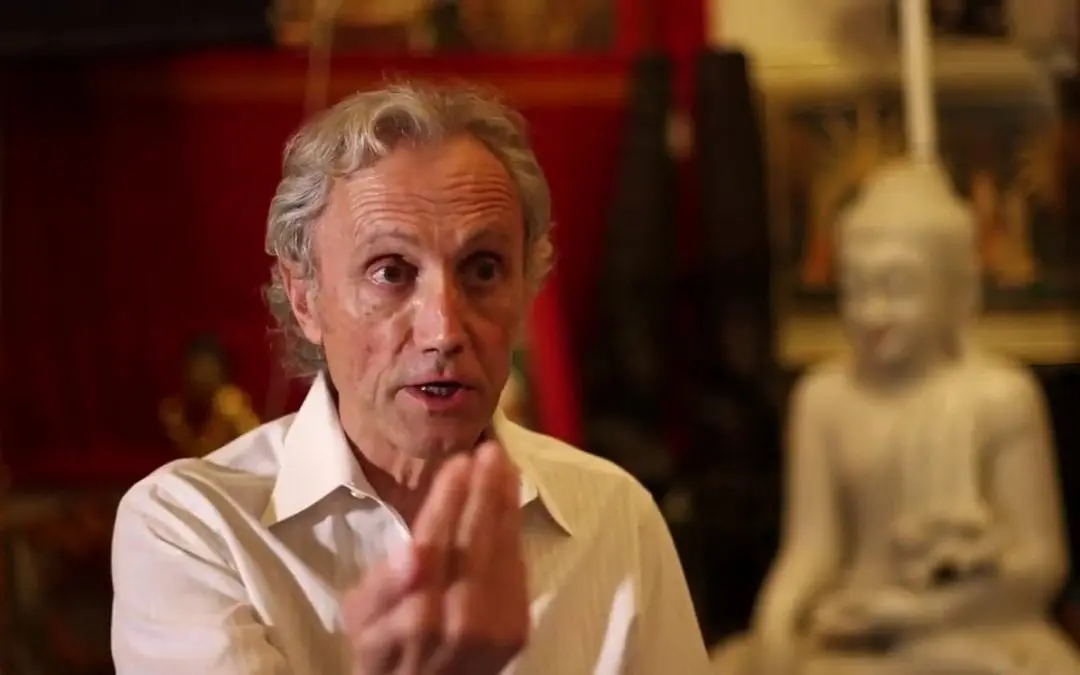
Richard Tarnas (born 1950) is an American cultural historian and philosopher who reads the history of Western civilization through astrology. In The Passion of the Western Mind (1991) he told the story of Western thought from the Greeks to postmodernism; in Cosmos and Psyche (2006) he argued that the great shifts in that story correspond with planetary cycles, read as archetypes of the collective psyche.
Key takeaways
- Richard Tarnas is a cultural historian whose 1991 book The Passion of the Western Mind traces Western thought from the Greeks to postmodernism.
- In Cosmos and Psyche (2006) he argues that planetary cycles correlate with archetypal patterns in history, as signs rather than causes.
- His two suitors parable contrasts knowing the universe as a dead object with knowing it as a living subject, and argues for participatory knowing.
- Tarnas reads hard Saturn and Pluto alignments as seasons of collective crisis and contraction, a kind of archetypal weather rather than fate.
- For depth therapy, his archetypal way of seeing helps clients ask what a painful season is asking of them, not only how to remove it.
Who is Richard Tarnas?
Tarnas first became known as a historian of ideas. The Passion of the Western Mind traces how the West has understood reality, from Plato and Aristotle through medieval Christianity, the Scientific Revolution, Hegel and the Romantics, to Freud, Jung and the postmodern mind.1 The book was widely assigned in university courses and earned a serious hearing from Jungian readers.9
Fifteen years later he published Cosmos and Psyche: Intimations of a New World View, the result of three decades of research into how planetary positions line up with events in history and in individual lives.2 For readers who knew him only as a historian, the turn to astrology came as a surprise. For Tarnas it was the same project carried further: a history of the Western soul that now included the cosmos the soul lives in.
He is not a newspaper horoscope writer. His case for what he calls archetypal cosmology rests on the claim that the universe is not a dead machine but a meaningful whole in which human consciousness takes part. In his view the planets do not cause events the way gravity causes tides. Their cycles correlate with archetypal patterns in the collective psyche, much as a clock’s hands correspond to the time of day without producing it.
Richard Tarnas biography and timeline
Tarnas was born in Geneva, Switzerland, on 21 February 1950 to American parents and grew up in Michigan. He entered Harvard in 1968 and graduated with an A.B. cum laude in 1972.
In 1974 he went to the Esalen Institute in Big Sur, California, to study psychotherapy with the Czech psychiatrist Stanislav Grof, then Esalen’s scholar in residence. He lived and worked there for about ten years and served as Esalen’s director of programs and education. Esalen also brought him into contact with the mythologist Joseph Campbell, who taught there regularly. In 1976 he completed a PhD at the Saybrook Institute with a dissertation on psychedelic therapy, drawing on Grof’s clinical research.5
Tarnas’s astrological research began in those Esalen years. Grof had mapped the stages of non-ordinary states in his LSD research, and the two men began comparing the timing and character of these experiences with the planetary transits of the people having them. That collaboration continued for decades.
Tarnas became founding director of the graduate program in Philosophy, Cosmology, and Consciousness at the California Institute of Integral Studies (CIIS) in San Francisco, where he taught cultural history, archetypal studies and depth psychology, and he has lectured often at Pacifica Graduate Institute. His work connects academic intellectual history with transpersonal psychology, the branch of psychology that studies spiritual and non-ordinary experience.
Key milestones in the life of Richard Tarnas
| Year | Event / Publication |
| 1950 | Born in Geneva, Switzerland. |
| 1972 | Graduates from Harvard. |
| 1974 | Moves to the Esalen Institute to study with Stanislav Grof. |
| 1991 | Publishes The Passion of the Western Mind, a bestseller in intellectual history. |
| 2006 | Publishes Cosmos and Psyche: Intimations of a New World View. |
Between the two major books came Prometheus the Awakener (1995), a short study of the planet Uranus, which grew out of a monograph he first drafted in the late 1970s.3 In 2007 he published the essay “Two Suitors: A Parable” in the journal ReVision.4
What is The Passion of the Western Mind about?
The book is a narrative history of the Western worldview in three movements: the classical Greek vision of an ordered, meaningful cosmos, the Christian worldview that absorbed and transformed it, and the modern scientific worldview that replaced both with a universe of matter in motion.1 Tarnas writes as a sympathetic guide to each stage, letting each worldview make its best case before showing what it could not hold.
The epilogue is where his own position appears. He reads the arc of Western thought as a heroic, largely masculine quest for autonomy that won great powers of reason and control at the cost of separation from nature, the body and the feminine. To describe the crisis of the modern mind he borrows Grof’s model of the stages of biological birth, the perinatal matrices: modern alienation resembles the constriction just before delivery, and it may open into a kind of rebirth and reunion with the larger whole.19 Readers trained in Carl Jung will recognise the move: a culture, like a person, goes through a death of the old ego before something more whole can emerge.
What is archetypal cosmology?
Archetypal cosmology is Tarnas’s name for the study of correlations between planetary positions and the archetypal patterns of human experience. It extends Jung’s idea of archetypes, inherited patterns that shape how people perceive and respond, from the human psyche to the cosmos. For Tarnas, archetypes are not only psychological structures; they are principles that inform both inner experience and the outer world.2
Correlation, not causation
Tarnas leans on Jung’s concept of synchronicity, a meaningful coincidence between an inner state and an outer event that are not causally connected.6 Jung himself took astrology seriously: in a 1911 letter to Freud he reported spending his evenings on it, and in his 1952 synchronicity essay he described an experiment comparing the horoscopes of several hundred married couples.67 Tarnas treats the planets the same way, as signs rather than forces.
He also insists that astrology is archetypally predictive, not concretely predictive. A given alignment points to the kind of energy likely to be in play, not to a specific event. The same archetype can show up as a breakdown or a breakthrough, a war or a work of art, depending on the people and circumstances involved.2
The planetary archetypes
Tarnas gives each planet a cluster of meanings. Three of them carry most of the historical argument in Cosmos and Psyche:
- Saturn: the principle of limit, structure, contraction, time, weight and hard reality; also maturity, discipline and endurance.
- Uranus: the principle of revolution, freedom, sudden awakening, invention and disruption. Tarnas argues that its character matches the Titan Prometheus, who stole fire for humankind, better than the Greek sky god whose name the planet carries. The planet was discovered in 1781, in the age of the American and French Revolutions.3 The Prometheus myth is explored further in Aeschylus’ Prometheus Bound.
- Pluto: the principle of depth, power, instinct, transformation and death and rebirth, the force that drives things up from underneath.
What evidence does Tarnas offer?
Most of Cosmos and Psyche is historical case work. Tarnas tracks each pairing of outer planets across centuries and asks what was happening in culture whenever the two formed a major alignment.2 His most developed example is the Uranus and Pluto cycle. Uranus stood opposite Pluto from about 1787 to 1798, the years of the French Revolution. The two were conjunct from about 1845 to 1856, which takes in the revolutions of 1848 and The Communist Manifesto. They were conjunct again from about 1960 to 1972, the decade of civil rights, the counterculture, the women’s movement and student revolt.
Tarnas does not claim that every event fits. His argument is that the correspondences recur consistently across many cycles and that the quality of each period, its mood of upheaval and empowerment, matches the archetypes involved. He presents the evidence as cumulative and invites readers to test it against history and their own lives. Scholars working with his method have continued the research, notably in Keiron Le Grice’s The Archetypal Cosmos.10
What is the two suitors parable?
Tarnas uses a parable to show how the way we approach the universe shapes what it can show us.4 He asks the reader to imagine being the universe, a cosmos with depth, intelligence and beauty, approached by two suitors.
- The first suitor treats you as an object. He trusts only what can be measured, assumes you have no interior life, and wants knowledge chiefly so that he can predict and control you. You reveal to him your mechanics and nothing more.
- The second suitor approaches you as a living subject. He brings his intellect, but also imagination, feeling and moral attention, and he wants to understand you, not use you. To him you can open your deeper character.
The point is about knowledge, not romance. Tarnas argues that since the Scientific Revolution the modern West has largely courted the cosmos as the first suitor does, and then concluded that the cosmos has no depth to reveal. He calls this disenchanted universe the shadow side of the modern mind’s achievements. The parable invites a participatory way of knowing, the second suitor’s, in which the knower’s whole person is part of the act of knowing. The philosopher Jorge Ferrer, a CIIS colleague, developed a related participatory vision of spirituality in a book for which Tarnas wrote the foreword.11
How does Tarnas understand collective trauma?
Tarnas’s work gives a cosmic frame for collective suffering. In Cosmos and Psyche he traces how periods of war, crisis and contraction tend to fall under the hard alignments of Saturn (structure, limit) and Pluto (destruction, power).2 The First World War broke out in 1914 during a Saturn and Pluto conjunction, and the attacks of September 11, 2001 came during their opposition, which ran from 2001 into 2002. He reads such periods as times when heavy, constricting and violent forces dominate collective life, often followed by hard-won consolidation.
This does not mean people are fated to suffer. Tarnas speaks of something closer to weather: a climate of archetypal pressure that individuals and cultures meet with greater or lesser consciousness. A season of contraction can produce tyranny or it can produce sober resolve; much depends on how it is met. That view sits close to the long tradition of initiation rites, in which ordeal becomes a passage into a new stage of life.
Can a birth chart help with trauma integration?
A birth chart, or natal chart, records the positions of the planets at the moment and place of a person’s birth. In archetypal astrology the chart is read as a map of the archetypal dynamics a person is likely to live with, and transits, the ongoing movement of the planets in relation to that chart, as the seasons through which those dynamics are activated.2
For people who find meaning in this language, it can reframe suffering. A painful period stops being random bad luck and becomes an initiation into a particular archetypal power. A Pluto transit, for example, is read as a time of descent, loss and stripping away that can end in a deeper and more grounded strength. Saturn periods are read as tests of structure that ask a person to take responsibility and build something durable. The value here lies in the question it raises: what is this ordeal asking of me?
Tarnas’s ideas in the therapy room
In depth-oriented therapy, the most useful part of Tarnas’s work is his archetypal way of seeing, whatever a client believes about planets. Many people come to therapy after years of being told their pain is a malfunction to be corrected. Archetypal thinking, in the line running from Jung through James Hillman to Tarnas, asks instead what pattern is living itself out through the symptom and where it might be going.
At Taproot we work with that question in several ways. In Jungian therapy we attend to dreams, images and recurring life patterns as expressions of archetypal themes, and when a client brings astrological language we treat it as one more symbolic vocabulary for their experience. With trauma, where the overwhelming event lives in the nervous system as much as in the story, we pair that symbolic work with brain-based and body-based methods such as Brainspotting, so that the meaning of an ordeal and its stored activation are both addressed. Grief, midlife crisis, spiritual emergency and the sense that an old life has ended without a new one yet in view are the places where this combination tends to help most.
What is Richard Tarnas’s legacy?
Tarnas brought astrology back into serious intellectual conversation by setting it inside the history of Western thought instead of the entertainment pages. The CIIS program he founded has trained a generation of scholars in archetypal cosmology, and in 2009 researchers working with his method launched Archai: The Journal of Archetypal Cosmology.
His deeper target is the disenchanted worldview of modernity, the phrase the sociologist Max Weber used in his 1917 lecture “Science as a Vocation” for a world in which nothing is mysterious in principle and everything can be mastered by calculation.8 In that world, Tarnas argues, human beings appear as lonely accidents in a cold, meaningless void. He sides with the thinkers who refused that picture, from Goethe‘s participatory science to the ecological philosophy of David Abram and the imaginal realm described by Henry Corbin.
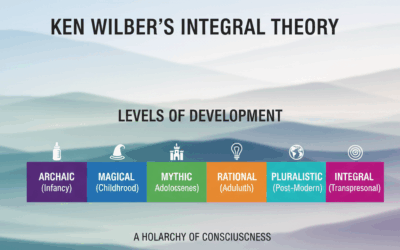
His alternative is a participatory worldview. Human beings are not separate observers of the cosmos; on his view, human consciousness is one of the ways the universe comes to know itself, and individual lives are woven into the larger movements of the heavens. That vision places him alongside transpersonal thinkers such as Ken Wilber and Grof, though with a historian’s patience and a deep loyalty to the Western tradition he spent his life describing.
Where to read more on archetypes and the cosmos
The two essential books are The Passion of the Western Mind and Cosmos and Psyche. For the psychological background, Jung’s synchronicity essay and his collected writings on astrology show where Tarnas’s method begins, and Grof’s Realms of the Human Unconscious describes the perinatal matrices that shaped his reading of Western history.567 Critics of modern psychology’s narrow idea of science will also find common ground in the critique of evidence-based practice.
Tarnas asks what it would mean to treat the universe, and the psyche, as a subject worth listening to. That is close to the posture we take with clients at Taproot: the symptom, the dream and the hard season are approached as meaningful rather than as errors. If that way of working speaks to you, you can contact Taproot Therapy Collective to talk with one of our therapists.
Frequently asked questions
What is Richard Tarnas known for?
Richard Tarnas is known for two books. The Passion of the Western Mind (1991) is a narrative history of Western thought from ancient Greece to postmodernism. Cosmos and Psyche (2006) argues that major turning points in Western history correspond with planetary alignments, interpreted as archetypal patterns. He is also the founding director of the Philosophy, Cosmology, and Consciousness program at the California Institute of Integral Studies.
Does Richard Tarnas think the planets cause events?
No. Richard Tarnas argues that planets do not cause events in the way gravity causes tides. Following Jung’s idea of synchronicity, he treats planetary cycles as meaningful correlations with archetypal patterns in the collective psyche. He also calls astrology archetypally predictive rather than concretely predictive: an alignment points to the kind of energy in play, not to a specific event.
What did Tarnas say about the Uranus Pluto cycle?
Tarnas links Uranus and Pluto alignments with periods of revolution and mass empowerment. The opposition of about 1787 to 1798 coincided with the French Revolution, the conjunction of about 1845 to 1856 with the revolutions of 1848, and the conjunction of about 1960 to 1972 with the civil rights movement, the counterculture and student revolt of the sixties.
How was Richard Tarnas connected to Stanislav Grof?
Richard Tarnas went to the Esalen Institute in 1974 to study psychotherapy with Stanislav Grof and later became Esalen’s director of programs and education. Together they compared the timing of non-ordinary states in Grof’s research with planetary transits, the start of Tarnas’s astrological work. Tarnas also used Grof’s perinatal matrices to interpret Western intellectual history.
What is participatory knowing in Tarnas’s work?
Participatory knowing, for Richard Tarnas, is a way of understanding in which the knower brings imagination, feeling and moral attention as well as reason, and approaches the world as a living subject rather than a dead object. He contrasts it with the disenchanted stance of modern science and illustrates the difference with his parable of two suitors courting the universe.
Related reading
- Francine Shapiro: From Cancer Diagnosis to Revolutionary Trauma Treatment Through Eye Movements
- Yoga Therapy and Trauma-Informed Yoga: Healing Mind and Body Through Mindful Practice
- Who Is Stanislas Dehaene? The Neuroscientist Who Discovered How Consciousness Ignites in the Brain
- Robert A Johnson: Healing Through Mythopoetics
- Johannes Tauler’s Mystical Theology
- Michael Meade: Mythopoetic Wisdom for a Troubled World
References
- Tarnas, R. (1991). The passion of the Western mind: Understanding the ideas that have shaped our world view. Harmony Books.
- Tarnas, R. (2006). Cosmos and psyche: Intimations of a new world view. Viking.
- Tarnas, R. (1995). Prometheus the awakener: An essay on the archetypal meaning of the planet Uranus. Spring Publications.
- Tarnas, R. (2007). Two suitors: A parable. ReVision: A Journal of Consciousness and Transformation, 29(4), 6–8. https://doi.org/10.3200/revn.29.4.6-9
- Grof, S. (1975). Realms of the human unconscious: Observations from LSD research. Viking Press.
- Jung, C. G. (1973). Synchronicity: An acausal connecting principle (R. F. C. Hull, Trans.). Princeton University Press. (Original work published 1952)
- Jung, C. G. (2017). Jung on astrology (S. Rossi & K. Le Grice, Eds.). Routledge. https://doi.org/10.4324/9781315304519
- Weber, M. (1946). Science as a vocation. In H. H. Gerth & C. W. Mills (Eds. & Trans.), From Max Weber: Essays in sociology (pp. 129–156). Oxford University Press. (Original work published 1919)
- Kelly, S. (1993). The rebirth of wisdom: Richard Tarnas, The passion of the Western mind. The San Francisco Jung Institute Library Journal, 11(4), 33–44. https://doi.org/10.1525/jung.1.1993.11.4.33
- Le Grice, K. (2011). The archetypal cosmos: Rediscovering the gods in myth, science and astrology. Floris Books.
- Ferrer, J. N. (2002). Revisioning transpersonal theory: A participatory vision of human spirituality. State University of New York Press.











0 Comments