

Was Carl Jung a scientist or a mystic? He answered the question in his 1937 Terry Lectures at Yale: “Notwithstanding the fact that I have often been called a philosopher, I am an empiricist and adhere to the phenomenological standpoint.”1 He meant that he studied dreams, visions and images of God as facts of experience and declined to rule on whether their objects exist.
That method is the best answer to the question and the key to reading him at all. An archetype, in Jung’s careful usage, describes how human experience tends to be patterned. It is not a spirit, a god or a law of the cosmos. Read archetypes as metaphysics and you get two opposite mistakes from the same root: the believer who treats them as beings to contact, and the debunker who throws Jung out because those beings do not exist. Jung fed both mistakes whenever he broke his own rule, and he broke it more than once. In the consulting room, keeping the rule is still the most useful thing he taught.
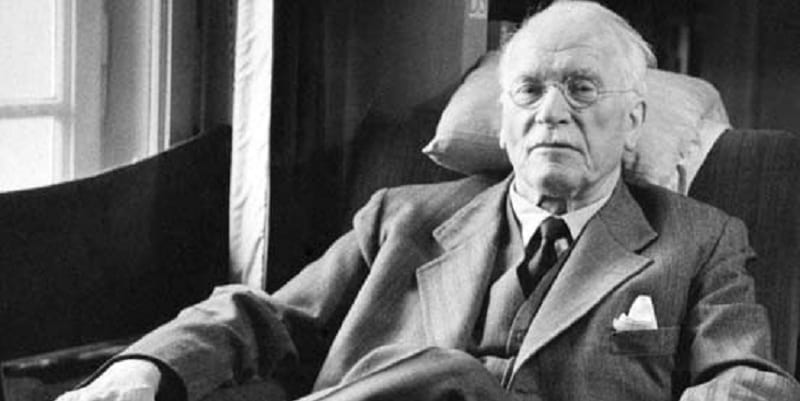
What Jung said he was doing
The Terry Lectures, published by Yale University Press in 1938 as Psychology and Religion, hold Jung’s clearest statement of method. He told his audience that he restricted himself “to the observation of phenomena” and refrained “from any application of metaphysical or philosophical considerations.” His example was the virgin birth. Psychology, he said, “is only concerned with the fact that there is such an idea, but it is not concerned with the question whether such an idea is true or false in any other sense. It is psychologically true in as much as it exists.” He compared the psychologist to a zoologist: “An elephant is true because it exists.”1 An idea that occurs, recurs and has effects can be described and compared the way a species can, without anyone first settling the theology.
He took his central religious term from the German theologian Rudolf Otto, whose Das Heilige (1917) described the numinous. For Jung the numinosum was “a dynamic existence or effect, not caused by an arbitrary act of will”; it seizes a person rather than being produced by them.1 Notice what that definition claims and what it leaves alone. It describes how certain experiences arrive from the inside: given, overwhelming, not chosen. It says nothing about what, if anything, causes them. Late in the lectures, after describing a patient’s vision of a mandala, Jung pressed the point: “we do not establish a metaphysical truth through such formulations. It is merely a statement that the mind functions in such a way.” With religious experience, he added, “there is no question of belief, but of experience.”1
That is Jung’s position at its strongest, and it is coherent. It is also why he has been called almost everything. The publisher’s summary of Sonu Shamdasani’s history of Jung’s psychology opens with a list: occultist, scientist, prophet, charlatan.2 Each label fastens onto a different stretch of a career that ran from a psychiatric laboratory to a private book of visions.
The scientist: mediums and reaction times at the Burghölzli
Jung joined the staff of the Burghölzli, the University of Zurich’s psychiatric hospital run by Eugen Bleuler, on 10 December 1900.3 His doctoral dissertation, On the Psychology and Pathology of So-Called Occult Phenomena, studied an adolescent medium, his cousin Hélène Preiswerk, whose séances he had attended. The subject sounds like a mystic’s résumé. The treatment was a psychiatrist’s: he handled the voices that spoke through her as psychological phenomena to be explained, not as visitors from elsewhere. The scientist-or-mystic question was present at the start of his career, and his first answer was psychological.
The work that made his scientific name came next. At the clinic he and his colleagues ran word-association experiments. A subject heard a list of stimulus words and answered each with the first word that came to mind while the experimenter timed the response; later the subject tried to reproduce the earlier answers. Slow answers, odd answers and failures of reproduction were not random. They gathered around emotionally charged themes, which Jung called complexes. The papers appeared in English as Studies in Word-Association.4 This was measurement and inference from data. In September 1909 Jung lectured at Clark University in Worcester, Massachusetts, received an honorary degree and met William James. He had already resigned from the Burghölzli that March.3
Phenomenology in what sense? Husserl, James and Kant
Jung’s word “phenomenological” invites a comparison with Edmund Husserl, whose Logical Investigations (1900–01) founded phenomenology as a philosophical movement. The comparison is most useful for showing what Jung was not doing. In Ideas I (1913) Husserl made the epoché central: the phenomenologist does not doubt that the world exists but brackets the validity of that everyday conviction, suspending a dogmatic attitude in order to study how things are given to consciousness.5 Jung bracketed one thing, the truth of religious and metaphysical claims. He did not bracket natural science. In the same lectures in which he declined to judge the virgin birth, he called the archetype “a characteristic of the cerebral function” and argued for biological inheritance.1 A Husserlian would have suspended those causal claims too.
Roger Brooke’s Jung and Phenomenology, first published in 1991 and reissued as a classic of Jungian scholarship, takes Jung’s self-description seriously. Even so, the book’s own summary concedes that Jung’s understanding of phenomenology “was inconsistent” and that his “epistemological eclecticism” often leaves him “at cross purposes with himself.”6 So when Jung calls himself a phenomenologist, read it as a working rule about religious content, not as membership in Husserl’s school.
William James is the closer relative. In The Varieties of Religious Experience (1902), his Gifford Lectures, James attacked what he called medical materialism, the habit of disposing of a religious experience by naming its physiology. Medical materialism, he wrote, “finishes up Saint Paul by calling his vision on the road to Damascus a discharging lesion of the occipital cortex, he being an epileptic.” Against it he set what he called “our empiricist criterion”: “By their fruits ye shall know them, not by their roots.”7 That sits very near Jung’s move after the mandala vision, where he notes that “my patient felt a great deal better.”1 James also shared Jung’s wobble. The Stanford Encyclopedia of Philosophy describes him as oscillating between treating religious experience as material for a science of human nature and believing that it reaches a supernatural domain inaccessible to science.8 Jung devoted a chapter of Psychological Types (1921) to James’s division of philosophers into the “tender-minded” and the “tough-minded.”9
The third comparison is Kant, whose limit on knowing things in themselves shapes Jung’s most careful definition. In the Terry Lectures he said he did “not mean an inheritance of representations, which would be difficult if not impossible to prove.” What is inherited, he proposed, is “something like a possibility of regenerating the same or at least similar ideas.”1 Jungian writers call that bare possibility the archetype-as-such and separate it from the images that fill it in.10 Whether Jung read Kant correctly is still argued: Gary Clark’s 2023 essay notes that the existing literature holds that he misread him, and argues that the verdict changes once Kant’s account of aesthetic experience in the Critique of Judgment is taken into account.11 The phrase “primordial image,” which Jung used before “archetype,” came from yet another source. He said he borrowed it from Jacob Burckhardt, the Swiss historian of Renaissance culture.9 The site’s survey of Jung’s similarity to other thinkers follows more of these lines.
Where Jung broke his own rule
Had Jung stayed with “possibility,” his archetypes would sit close to what developmental psychology calls dispositions. He did not stay there. Earlier in the same book he wrote that archetypal patterns are transmitted “also by heredity” and that “even complicated archetypal images can be spontaneously reproduced without any possible direct tradition.”1 That is an empirical claim, and it stands or falls on cases.
His favorite case was Emil Schwyzer, a Burghölzli patient later nicknamed the “Solar Phallus Man.” In 1906 Schwyzer showed Jung how to squint at the sun and move his head to see the sun’s phallus, which he said was the origin of the wind. In 1910 Jung read Albrecht Dieterich’s edition of the so-called Mithras Liturgy, a Greek magical papyrus, and found what he took to be a near word-for-word parallel. For decades afterward he told the story as evidence of inherited images, insisting that the patient could not have known the text because it was not published until 1910. Ronald Huggins’s archival study of 2021 shows how much of this fails. The 1910 edition Jung read was the second; the first appeared in 1903, with the passage on the same page. Schwyzer had been doing his “sun experiments” since the late 1890s, and when Jung’s assistant J. J. Honegger studied him in early 1910, Schwyzer described the tail of light as a ray of light, not a phallus; it was Jung who read Honegger’s report as phallic. Huggins also argues that the papyrus never mentions a solar phallus: the word Jung took for a single pipe hanging from the sun refers to the aulos, the double-piped instrument the sun is playing.3 Jung himself had written an early paper on cryptomnesia, the return of forgotten reading disguised as original thought. His showcase evidence for the collective unconscious never ruled it out.
Christian Roesler’s review of the archetype debate states the general verdict: there is “still no firm scientific foundation for the claim that complex symbolic patterns (as for example the myth of the hero) can be transmitted in a way that every human individual has access to them.”12
Synchronicity was the second crossing. In a 1952 essay, published in a joint volume with the physicist Wolfgang Pauli and translated in 1955 as The Interpretation of Nature and the Psyche, Jung proposed an acausal connecting principle behind meaningful coincidences.13 To support it he drew on J. B. Rhine’s ESP experiments and ran an astrological experiment that Pauli himself objected to. Whatever one makes of synchronicity as a description of how coincidences feel, as a claim about how the world is arranged it is metaphysics, and it is the part of Jung most readily recruited by people who want scientific cover for the paranormal. The essay on the quantum and metaphysics of Carl Jung follows that thread.
The third crossing stayed private for decades. Between 1913 and 1916 Jung deliberately induced and recorded a long series of fantasies and visions, then, from late 1914 until about 1930, wrote them up and copied them, with his own paintings, into a calligraphic folio now called the Red Book. W. W. Norton published it in 2009, edited by Shamdasani.14 It is visionary literature by a psychiatrist about his own descent into images. It proves nothing about the cosmos, but it makes it hard to pretend that Jung’s theory came only from case notes, and it has handed the mystical reading of Jung a sacred text. His late memoir, assembled with Aniela Jaffé, raises its own questions about what Jung said and what editors shaped; see the piece on the censored material from Memories, Dreams, Reflections.
The fourth crossing was a sentence on television. On 22 October 1959 the BBC broadcast John Freeman’s Face to Face interview, filmed at Jung’s home. Asked whether he believed in God, Jung said he did not need to believe: “I know.”15 In the same interview he retold the Schwyzer story.3 Read beside the Terry Lectures, “I know” can be heard as a report of experience, the numinous as a fact of the psyche. Heard on its own, it sounds like a mystic’s creed.
Scholars who take Jung’s epistemology seriously land in a similar place. Marco Heleno Barreto reads Jung as a skeptic about metaphysics whose founding premise, the reality of the psyche, still carries ontological commitments, and he finds an unresolved tension between that skepticism and the therapeutic weight Jung gave to immediate experience.16 The wider argument is old and sharp. Richard Noll’s The Jung Cult (1994) argued that Jung founded a charismatic movement with a cult at its center;17 Shamdasani’s Cult Fictions (1998) disputed Noll’s attribution and reading of a key document and challenged the cult thesis itself.18 The site weighs these charges at more length in The Trial of Carl Jung, and Part 4 of this series traces the history and future of Jungian thought.
Two misreadings with one root
Jung’s popular afterlife splits along the line he kept crossing. One side reads archetypes as beings: goddesses to invoke, guides to channel, energies that live outside the person and can be summoned. David Tacey’s Jung and the New Age (2001) is a sustained critique of that reading from inside Jungian studies, with chapters titled “Jung as Lucifer: Inventing a New Age Guru” and “American New Age Jungian Inflation.”19 Inflation is Jung’s own word for what happens when a person identifies with an energy that religious traditions place outside the self. In the Terry Lectures he used Nietzsche as his example and described people who can no longer project the divine image as being “in actual danger of inflation and dissociation.”1 A spirituality that tells people they are the archetype is, on Jung’s own account, cultivating the symptom he warned about. The essay on the confusion between Jung and the New Age takes this further.
The other side reads the same word as a claim about inherited pictures, finds no gene for the Great Mother, and concludes that Jung was a pseudoscientist. That verdict is right about the strong heredity claim and wrong about the rest. Inside Jungian research the argument has moved to what kind of structure could produce recurring imagery. Jean Knox proposed a developmental model in which “mental contents emerge from the interaction of genes, brain and environment,” with early image schemas as building blocks.20 Erik Goodwyn noted “a growing consensus that Jung’s idea of innate psychological structures was misguided,” then questioned that conclusion by bringing in research on what psychological innateness can mean.10 Roesler asks whether culture does more of the transmitting than biology.12 None of these positions needs a god or a ghost. All of them keep the phenomenological core: people in very different times and places report recurring patterns of experience, and those reports are data. Part 2 of this series, on applying Jungian archetypes, and the essay asking whether Jungian archetypes can be evidence-based go further into the research.
What this looks like in therapy
The phenomenological rule matters most when someone brings an experience that does not fit an ordinary frame: a vivid dream of a dead parent, a sense of presence in an empty room, a coincidence that feels addressed to them, a religious experience they have never told anyone about, or a frightening image that keeps returning. Two quick responses are available, and both end the conversation. One explains the experience away as grief, stress or brain chemistry, which is James’s medical materialism in modern dress. The other confirms its metaphysics: the parent really visited, the universe really sent a sign. Either way the therapist has answered a question the person did not need answered and skipped the one that matters.
The Jungian alternative is to describe before explaining. What exactly happened? Where was it felt in the body? What was going on in the person’s life, and what had they been avoiding? What changed afterward? In practice this sounds less like interpretation than like careful curiosity. Amplification, setting the image beside myths, stories and religious symbols, helps once the experience has been described in its own terms, because it can tell a person that what happened to them has happened to others without telling them what it must mean. Part 3 of this series explains how Jungian analysis works in more detail.
The rule also protects people. Bracketing metaphysics is not the same as ignoring risk. Unusual experiences that come with weeks of lost sleep, an inability to work or care for oneself, voices that command action, or a conviction of a special mission call for medical and psychiatric assessment, and a good depth therapist says so plainly. Jung’s warning about inflation belongs here too. An encounter with the numinous can be held as an experience, or it can harden into a belief that one has been chosen. Therapy should make room for the first and be honest about the second.
The evidence deserves the same plainness. Roesler’s 2013 review gathered naturalistic and retrospective outcome studies of Jungian psychotherapy, mostly from Germany and Switzerland, and reported significant improvements that held at follow-up, with treatments averaging about 90 sessions.21 A 2022 paper by Roesler and Gunnar Reefschläger in Psychotherapy found “some empirical support” but “a strong need for further research, especially with randomized controlled trial designs,” and reported a study of how therapists work with synchronistic experiences when clients bring them.22 That is an honest place to stand: a method with clinical plausibility and modest supporting data, not a proven treatment for any particular condition.
If you are in Alabama and want to work with dreams, images or spiritual experiences in a way that is neither credulous nor dismissive, our page on Jungian depth therapy in Hoover describes how we approach that work.
References
- Jung, C. G. (1938). Psychology and religion. Yale University Press.
- Shamdasani, S. (2003). Jung and the making of modern psychology: The dream of a science. Cambridge University Press. https://doi.org/10.1017/CBO9780511490095
- Huggins, R. V. (2021). C. G. Jung, J. J. Honegger, and the case of Emil Schwyzer (the “Solar Phallus” Man). Phanês: Journal for Jung History, 4, 82–151. https://doi.org/10.32724/phanes.2021.huggins
- Jung, C. G. (Ed.). (1919). Studies in word-association: Experiments in the diagnosis of psychopathological conditions carried out at the Psychiatric Clinic of the University of Zurich. Moffat, Yard & Company. https://doi.org/10.1037/13030-000
- Zahavi, D. (2025). Edmund Husserl. In E. N. Zalta & U. Nodelman (Eds.), The Stanford Encyclopedia of Philosophy. Stanford University. https://plato.stanford.edu/entries/husserl/
- Brooke, R. (2015). Jung and phenomenology (Classic ed.). Routledge. (Original work published 1991) https://doi.org/10.4324/9781315766690
- James, W. (1902). The varieties of religious experience: A study in human nature. Longmans, Green, and Co.
- Goodman, R. (2021). William James. In E. N. Zalta (Ed.), The Stanford Encyclopedia of Philosophy. Stanford University. https://plato.stanford.edu/entries/james/
- Jung, C. G. (1971). Psychological types (H. G. Baynes, Trans., revised by R. F. C. Hull; Collected Works, Vol. 6). Princeton University Press. (Original work published 1921)
- Goodwyn, E. (2010). Approaching archetypes: Reconsidering innateness. Journal of Analytical Psychology, 55(4), 502–521. https://doi.org/10.1111/j.1468-5922.2010.01862.x
- Clark, G. (2023). Rethinking Jung’s reception of Kant and the Naturphilosophen. International Journal of Jungian Studies, 1–31. Advance online publication. https://doi.org/10.1163/19409060-bja10032
- Roesler, C. (2012). Are archetypes transmitted more by culture than biology? Questions arising from conceptualizations of the archetype. Journal of Analytical Psychology, 57(2), 223–246. https://doi.org/10.1111/j.1468-5922.2011.01963.x
- Jung, C. G. (2011). Synchronicity: An acausal connecting principle. Princeton University Press. (Original work published 1952) https://doi.org/10.1515/9781400839162
- Jung, C. G. (2009). The red book: Liber novus (S. Shamdasani, Ed.; M. Kyburz, J. Peck, & S. Shamdasani, Trans.). W. W. Norton & Company.
- Jung, C. G. (1978). The “Face to Face” interview. In W. McGuire & R. F. C. Hull (Eds.), C. G. Jung speaking: Interviews and encounters (pp. 424–439). Princeton University Press. https://doi.org/10.1515/9780691216393-054
- Barreto, M. H. (2019). Empiricism, skepticism, and belief in Jung’s epistemology. In J. Mills (Ed.), Jung and philosophy (pp. 86–108). Routledge. https://doi.org/10.4324/9780429261763-5
- Noll, R. (1994). The Jung cult: Origins of a charismatic movement. Princeton University Press.
- Shamdasani, S. (2003). Cult fictions: C. G. Jung and the founding of analytical psychology. Routledge. (Original work published 1998) https://doi.org/10.4324/9780203360767
- Tacey, D. (2001). Jung and the New Age. Routledge. https://doi.org/10.4324/9781315783246
- Knox, J. (2004). From archetypes to reflective function. Journal of Analytical Psychology, 49(1), 1–19. https://doi.org/10.1111/j.0021-8774.2004.0437.x
- Roesler, C. (2013). Evidence for the effectiveness of Jungian psychotherapy: A review of empirical studies. Behavioral Sciences, 3(4), 562–575. https://doi.org/10.3390/bs3040562
- Roesler, C., & Reefschläger, G. I. (2022). Jungian psychotherapy, spirituality, and synchronicity: Theory, applications, and evidence base. Psychotherapy, 59(3), 339–350. https://doi.org/10.1037/pst0000402








0 Comments