

A woman sits in my office and describes a period of total desolation. Prayer has gone dead. The practices that once sustained her produce nothing. She feels abandoned by something she isn’t sure she believes in, and she cannot tell whether she is depressed or whether something is happening to her.
I have two vocabularies for this and they disagree.
One of them, four hundred years old, has a name for it and a set of criteria for recognizing it. The other, a hundred and twenty years old, has a diagnostic code and a medication algorithm. Both are serious. Both have something the other lacks. And the question of which one is right in her case is not academic — the treatments point in opposite directions.
This is the intersection. Not a comfortable overlap where therapy and spirituality agree that people should be kind to themselves, but a genuine collision between two traditions that are describing the same interior territory with incompatible maps.
Psychology grew out of religion and then disowned it
The split is more recent than people assume.
William James opened the field with The Varieties of Religious Experience in 1902 — the Gifford Lectures, delivered by the man who had already written the foundational American psychology textbook. James treated mystical states as legitimate psychological data. He identified four marks: ineffability, a noetic quality (they arrive feeling like knowledge, not emotion), transiency, and passivity. He refused to decide whether they were true and insisted they were real.
Freud closed the door. In The Future of an Illusion he framed religion as wish-fulfilment, a projection of the father onto the cosmos. When Romain Rolland wrote to him describing an “oceanic feeling” of boundless connection, Freud replied that he could find nothing of the kind in himself and interpreted it as a regression to infantile ego-feeling before the boundary between self and world had formed.
That reading has been enormously influential and it contains something true — some religious experience is regressive. It also settled by assertion a question James had deliberately left open.
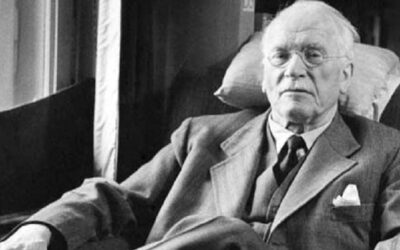
Jung went the other direction and paid for it professionally. In a 1945 letter to P.W. Martin he wrote that the main interest of his work was not the treatment of neurosis but the approach to the numinous, and that attaining the numinous experience releases a person from the curse of pathology. Asked on BBC television in 1959 whether he believed in God, he gave the answer that has been misquoted ever since: he didn’t need to believe, he knew.
Whatever you make of that, it cost him. He has been dismissed as a mystic by academic psychology and claimed as a prophet by people who never read him, which is roughly the worst of both outcomes. We take up the question directly in is Jungian psychology just apologetics for literal belief and trace his actual position in Jung’s influences for his ideas.
There’s one more piece of evidence about how seriously he took this. In 1961, weeks before his death, Jung wrote to Bill Wilson, the founder of Alcoholics Anonymous, about a patient named Rowland Hazard whose recovery had helped seed the entire twelve-step movement. Jung’s formulation was spiritus contra spiritum — the craving for alcohol as a low-level equivalent of the thirst for wholeness, one spirit answerable only by another. A recovery program used by millions traces, through two intermediaries, to a psychiatrist’s letter about the spiritual dimension of addiction.
Why the two fields keep colliding
Strip the metaphysics and therapy and contemplative practice are doing structurally similar things.
Both are technologies for altering interior states through sustained attention. Both assume the presenting self is partial and something more complete lies underneath. Both hold that the path to it runs through material the person is avoiding. Both require a relationship with someone further along — analyst, director, teacher — and both know that relationship is the most dangerous part of the process.
The vocabularies map onto each other with unsettling precision. Ego dissolution and kenosis. Shadow and sin, in the older sense of what one refuses to see. Individuation and theosis. The via negativa — Pseudo-Dionysius insisting God can only be approached by stripping away every predicate — is structurally identical to the analytic move of removing everything the patient is not until something unstripped remains. See Pseudo-Dionysius and apophatic theology.
Meister Eckhart’s Gelassenheit — releasement, letting-be — describes a stance toward inner experience that any contemporary mindfulness protocol would recognize, minus six centuries and the papal condemnation. Eckhart on the unconscious and the ego covers what the Church’s reaction to him reveals about institutions and interior experience generally.
This is not a coincidence or a borrowing. It’s convergent description. Two traditions looking at the same interior and arriving at similar accounts is evidence that there’s an interior there to describe.
The discernment problem, which the mystics solved first
Here is where the contemplative tradition is genuinely ahead of clinical psychology, and it’s the part therapists should actually learn.
The question of whether a dark interior period is spiritual or pathological is not new. It was the central practical problem of spiritual direction for centuries, and the people working on it were not credulous. They were running communities, they had seen every variety of self-deception, and they developed diagnostic criteria.
John of the Cross laid out three signs for distinguishing the passive night of sense from either lukewarmness or physical illness. The person finds no consolation in God or in created things — this rules out simple distraction. The memory remains ordinarily centred on God, with painful concern about backsliding — this rules out indifference. And the person cannot meditate discursively despite genuinely trying, the faculty simply won’t engage.
Notice what that third criterion does. It distinguishes can’t from won’t, and it does so behaviourally. That’s a clinical distinction. We treat it at length in the dark night as therapeutic journey and in John of the Cross for modern psychology.
Teresa of Ávila was blunter and, to modern ears, more surprising. She wrote extensively about melancholia and warned her prioresses not to confuse it with mystical states. She thought some of her nuns were ill rather than favoured, said so, and prescribed rest, food and less austerity. A sixteenth-century Carmelite was doing differential diagnosis and coming down on the side of the body. See the Interior Castle.
Ignatius of Loyola built the most systematic version in his rules for the discernment of spirits — consolation and desolation, and a set of tests for whether a movement of the soul leads toward or away from integration. The rules are essentially a phenomenology of motivational states with attention to how they change over time. Read cold, they’re a manual for tracking affective trajectory.
Earlier still, Evagrius Ponticus named acedia, the noonday demon — a listlessness and aversion to one’s own life that fourth-century monks knew intimately. Read the descriptions and it is unmistakably a depressive presentation, catalogued fifteen hundred years before the DSM.
Clinical psychology arrived at this territory late and with less nuance. The DSM added V62.89, Religious or Spiritual Problem, in 1994, largely through the advocacy of David Lukoff — an acknowledgement that a person can be in genuine spiritual difficulty without being mentally ill. It’s a single line in a manual that the mystics would have considered a decent start. Our critical history of the manual is here.
Where it goes wrong: three failure modes
Mistaking the pre-rational for the trans-rational
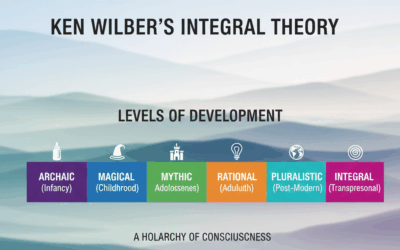
Ken Wilber’s most durable contribution is the pre/trans fallacy: pre-rational and trans-rational states resemble each other from outside, because both are non-rational. Confusing them runs in both directions and both are damaging.
Reduce every mystical experience to regression and you get Freud on the oceanic feeling — an entire category of human experience explained away. Elevate every non-rational state to attainment and you get psychosis validated as awakening, which is how people end up untreated and sometimes dead.
The distinction is real and it’s clinical. Trans-rational states generally include rational capacity rather than lacking it. The person can still function, still reality-test, still tell you what happened afterward. Pre-rational states can’t. Stanislav and Christina Grof drew the same line as spiritual emergence versus spiritual emergency — the same process, but one has capacity to metabolize it and one is drowning. See Grof on holotropic states.
Spiritual bypassing
John Welwood coined the term in 1984 for the use of spiritual practice to avoid unfinished psychological work. It remains the most precise diagnosis of a very common presentation.
Forgiveness deployed to skip the anger. Non-attachment used to avoid grief. Everything happens for a reason, applied to an event that happened because somebody did something to a child. Equanimity is a real attainment and it’s also an excellent hiding place, and the difference is whether the person went through the material or around it.
The tell is usually the body. A genuinely integrated loss and an intellectualized one look similar in conversation and completely different somatically. This is one of the reasons Brainspotting and other body-based approaches cut through so quickly with spiritually sophisticated clients — the nervous system hasn’t read the books.
It’s also why contemplative practice isn’t universally safe. See why meditation can sometimes make trauma worse.
The therapist becomes a guru
This is the serious one.
When a client is in contact with material that feels numinous, the person sitting across from them becomes a candidate for the projection. Jung named this directly: the analyst receives what belongs to the Self and has to be able to hand it back. Not everyone can.
The history of psychotherapy contains more than one practice that crossed the line. The Sullivanian Institute took Harry Stack Sullivan’s genuinely valuable idea that the self is constituted interpersonally and drove it to the point of systematically dismantling members’ families and marriages. It ended as an outright cult, run by therapists, with a coherent theoretical justification for everything it did. We tell that story in the anatomy of an urban psychotherapy cult.
The mechanism isn’t exotic. It’s ordinary transference plus a framework that makes the therapist’s authority unfalsifiable. Every high-control group we’ve examined runs the same play — the Solar Temple, the Branch Davidians, Jonestown — and the common factor is a leader who could not return the projection. Our broader analysis is in the psychology of cults, and the pattern in how to avoid cults of personality.
The commercial version is milder and more common. Theosophy is instructive — Blavatsky produced real influence on Jung and Yeats alongside documented fraud, and both are true simultaneously. See Blavatsky and the theosophical legacy and the confusion between Jung and the New Age.
What the research can and cannot settle
The empirical work on mystical experience is better than skeptics assume and proves less than enthusiasts claim.
Walter Pahnke’s Good Friday Experiment in 1962 gave psilocybin to divinity students before a service and found that the drug group reported experiences meeting James’s criteria at far higher rates. Roland Griffiths’s team at Johns Hopkins replicated the core finding under modern conditions in 2006, and participants rated the experience among the most personally meaningful of their lives — at fourteen-month follow-up.
What this establishes is that the experience is reliably inducible and durably meaningful. What it does not establish is anything about what the experience is of. A reproducible neural correlate tells you where to look, not what’s there. Anyone who says the imaging proves God, or disproves God, has stopped doing science and started doing apologetics in either direction.
The honest position is James’s, still, after a century: the experiences are real, their meaning is undetermined, and the fruits are the only evidence available. We cover the neuroscience in the fusion of science and mysticism and the history of consciousness.
What a therapist can actually do
Four things, in practice.
Take the content seriously without adjudicating it. You do not have to share a client’s cosmology to work with it, and you do not have to correct it. A client’s religious framework is usually load-bearing, and pulling it out because you find it implausible is malpractice dressed as rigour. Lionel Corbett’s work on the religious function of the psyche is the best guide here — see Corbett on the psyche and the sacred.
Do the differential honestly. Dark night and major depression can look identical in a fifty-minute hour and have opposite treatments. Use John’s criteria alongside a proper assessment. If the person has lost desire itself — not consolation, but wanting — that is much more likely to be illness. If desire persists and only satisfaction has gone, something else may be happening. Either way, rule out the body first: thyroid, sleep, medication, substances. Teresa would have.
Watch for bypassing in yourself. A therapist who prefers the mystical register can collude with a client’s avoidance for years, and both parties will describe the work as deep. If nothing is changing in the person’s actual life, that’s the data.
Return the projection. Every time. If a client tells you that you have changed their life, the clinically and ethically correct move is to hand it back — they did the work, they took the risk, and the thing they’re seeing in you is theirs. The therapists who ended up running cults were, almost without exception, people who found that projection too pleasant to refuse.
The woman in the office
In the end I did what the tradition and the clinic both recommend, because on this they agree.
We ruled out the body. We looked at what had changed in her life. We tracked whether desire itself had collapsed or only its objects. We did not decide in the first session, or the fifth, what kind of darkness this was — and I told her plainly that I didn’t know, which she found more useful than confidence would have been.
Both traditions, at their best, say the same thing about this territory: you cannot think your way across it, you should not go alone, and the only reliable evidence about what happened is what your life looks like afterward.
James called that the test of the fruits. Ignatius called it discernment. Jung called it individuation. They are describing the same instruction, which is to keep going and pay attention, and to be suspicious of anyone — therapist, priest, or teacher — who tells you they already know how it ends.







0 Comments