
Updated November 2026 · By Joel Blackstock, LICSW-S
Pseudo-Dionysius the Areopagite was an anonymous Christian Neoplatonist, probably writing in Syria around 500 CE under the name of a man St. Paul converted in Athens. His short Mystical Theology made apophatic theology central to Christian mysticism. Every name for God is denied, starting with the crudest, and then the denials are denied too. What remains is a “darkness of unknowing,” not a better definition.1–3
That last step is the part worth borrowing for psychotherapy. Someone who arrives saying “I am broken” rarely needs a nicer label. The apophatic move is to loosen the hold of any final verdict on who they are, starting with the harshest and most obviously false, so their experience can be met before it is named. Dionysius adds a warning that therapists need too: you cannot unsay what you have never said. The negative way rests on the affirmative one.
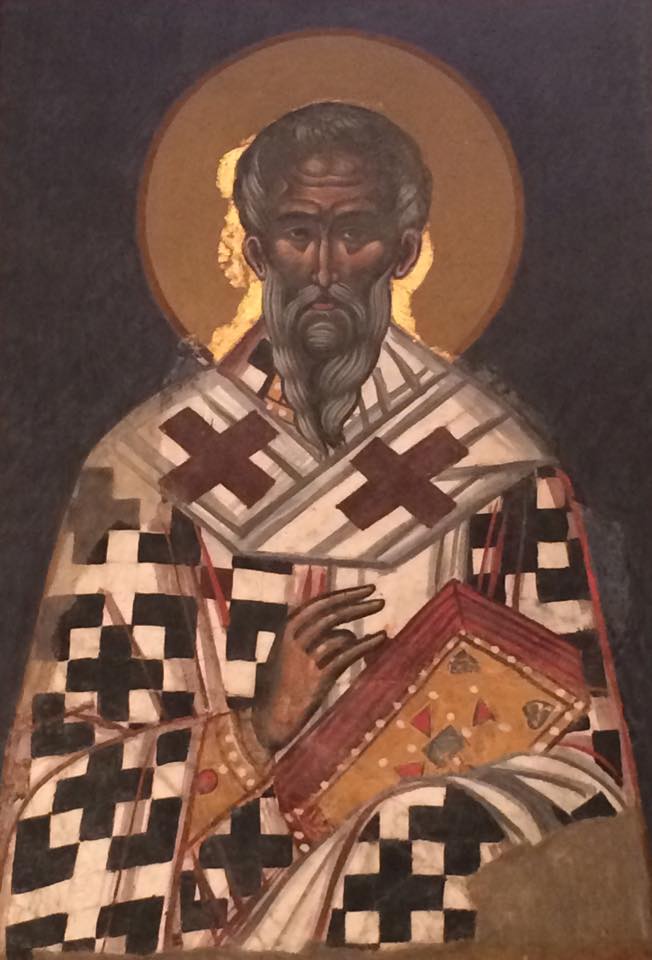
Who wrote as Dionysius, and when
Acts 17:34 names a Dionysius, a member of the Areopagus court in Athens, among the few who believed after Paul’s speech there. Sometime around 500 an unknown writer took that name and wrote four treatises and ten letters, addressed to figures of the apostolic age such as Timothy. The treatises are The Divine Names, The Mystical Theology, The Celestial Hierarchy and The Ecclesiastical Hierarchy. They mention at least seven other works that have never been found and may never have existed.1
The disguise largely held for a thousand years. In 532, when followers of Severus of Antioch cited the Fourth Letter at a colloquy held under Emperor Justinian, Hypatius of Ephesus objected that no earlier Father had ever quoted these texts. Lorenzo Valla raised doubts in 1457, John Grocyn in 1501, and Erasmus from 1504 on.1, 3 The question was effectively settled in 1895, when Hugo Koch and Josef Stiglmayr showed independently that the discussion of evil in chapter 4 of The Divine Names draws on Proclus’s treatise on the existence of evils. Proclus died in 485, and Severus first cites Dionysius between 518 and 528, so the corpus falls between those dates.1, 3 His account of the church’s rites most closely resembles Syrian liturgy. Proposed identities include Peter the Iberian and Damascius, the last head of the Neoplatonic school at Athens, and there is no consensus.3 The Stanford Encyclopedia’s authors point out that “forgery” is a modern idea. Writing under an ancient persona was a recognized convention, and Dionysius presents himself as a transmitter of tradition, not an inventor.1
What the Mystical Theology actually says
The Mystical Theology runs only five short chapters. For Dionysius, “mystical” meant hidden, not a private ecstatic experience.1 It opens with a prayer to be led up to where the divine mysteries lie hidden “in the dazzling obscurity of the secret Silence,” then retells Moses’ ascent of Sinai. Moses purifies himself, hears the trumpets and sees the lights, and still “meets not with God Himself” but only “the place wherein He dwells.” Then he is plunged “unto the Darkness of Unknowing.”2
Three features of the method matter for what follows.
It removes rather than adds. Dionysius compares the negative method to sculptors who, “carving a statue out of marble, remove all the impediments” and “by this mere removal display the hidden statue itself in its hidden beauty.”2 Plotinus had used the same image, telling his readers to “never cease chiselling your statue.”4 C. E. Rolt, whose translation appeared in 1920, made the point that keeps this from being nihilism: a sculptor who wanted only negation would smash the marble instead of carving it.2
It has an order. Affirmations start at the top, with Goodness and Being, and work down. Negations start at the bottom. It is “truer to deny that drunkenness or fury can be attributed to Him” than to deny that the categories of human thought apply to Him, so the crude images go first and the cherished ones go last.2
It negates the negations. Denying that God is “living” does not mean God is lifeless. A negation here is not a privation, the absence of something that could be present. God is beyond living and lifeless alike.1 The final chapter concludes that “nor can any affirmation or negation apply to it.”2
Dionysius did not invent negative theology. He reworked a line running from Plotinus to Proclus, alongside the Christian Platonism of Gregory of Nyssa, and gave it the authority of an apostolic name.1 And “the Cloud of Unknowing” is not his phrase. It is the title of an anonymous English book from the late fourteenth century that drew on him. The same author is credited with Deonise Hid Divinite, a free Middle English translation of the Mystical Theology.5
Hierarchy, angels, and what Jung actually took
The Celestial Hierarchy arranges the angels in nine ranks, three groups of three: seraphim, cherubim and thrones; dominions, powers and authorities; principalities, archangels and angels. The Ecclesiastical Hierarchy mirrors them on earth, from bishops down to catechumens, penitents and the possessed. Each rank receives light from above and passes it on, and the work of hierarchy is purification, illumination and perfection.1 The old page called this a “Great Chain of Being.” That label was made famous by the historian of ideas Arthur Lovejoy in his 1936 book of that name. Dionysius’s word was hierarchia, and the source at its head he called the “thearchy.”1, 6
The earlier page also claimed that Jung read the celestial hierarchy as an early catalogue of complexes and archetypes. I could not find any such passage. What Jung actually took from Dionysius was smaller and easier to check. In “Archetypes of the Collective Unconscious” he traced his key term back through Philo and Irenaeus and noted that it “occurs several times in Dionysius the Areopagite,” citing the “immaterial Archetypes” of The Celestial Hierarchy and the “Archetypal stone” of The Divine Names.7 In Mysterium Coniunctionis he compared an alchemical transformation in three stages with the three stages “mentioned by Dionysius the Areopagite as characterizing the mystical ascent”: purification, illumination and perfection.8 Dionysius gave Jung vocabulary and a pattern of transformation, not a theory of the psyche. (For a Christian visionary who wrote at length about angels, and whom Jung mentions in a footnote to that same passage, see our piece on Swedenborg’s visions and Jung.)
Where the apophatic thread ran
In 827 the Byzantine emperor Michael II sent a manuscript of the corpus to Louis the Pious. Hilduin, abbot of Saint-Denis near Paris, translated it around 838, so badly that Charles the Bald asked John Scottus Eriugena to translate it again. Eriugena finished in 862.1 Hilduin had also identified the author with St. Denis, the first bishop of Paris. A few centuries later Abbot Suger drew on Dionysian themes to explain how his new Gothic church at Saint-Denis raised the soul toward God.1, 3 Albert the Great and Thomas Aquinas wrote commentaries on him. The Rhineland mystics Meister Eckhart, Tauler and Ruusbroec absorbed him. Nicholas of Cusa’s On Learned Ignorance and the Cloud owe a debt to his agnosia, or unknowing, and his influence reaches the Spanish Carmelite St. John of the Cross.1 Our overview of how the Christian mystics shaped Jungian thought follows several of these lines into the twentieth century.
A clearer line into the consulting room runs through the psychoanalyst Wilfred Bion. Bion told analysts to lay aside memory, desire and understanding, and he brought Keats’s “negative capability,” the ability to stay with uncertainty, into analytic technique. Judith Pickering’s study of Bion and the apophatic way traces the image of “a beam of intense darkness” in his thinking back to Dionysius,9 whose opening chapter speaks of being led “to the Ray of that divine Darkness.”2 The old page also listed Stanislav Grof as an heir of Dionysius. I found no evidence for that and have cut it.
Unsaying “I am broken”
Verdicts about the self are not a figure of speech in clinical work. When Edna Foa and colleagues built the Posttraumatic Cognitions Inventory, negative cognitions about the self formed one of its three factors. These scores tracked PTSD severity and helped separate trauma survivors who had PTSD from those who did not.10 “I am broken” is often doing real work in a person’s suffering.
The usual response is to argue with it. You are not broken; you are a survivor. In Dionysius’s terms that is cataphatic, the swapping of one name for another. Sometimes it helps. Often the new name rings false, and the argument keeps the person inside a courtroom where the only question is which verdict wins. The apophatic move is different. It does not say “I am not broken,” which only flips the verdict. It treats “broken” as the wrong kind of word to hold a whole person, much as “lifeless” is the wrong kind of word for God.
Psychology has its own name for this. Researchers call it decentering: shifting from inside an experience to a view of it. Bernstein and colleagues break it into meta-awareness, disidentification from internal experience, and reduced reactivity to what thoughts say.11 Acceptance and commitment therapy calls a close cousin defusion. A meta-analysis of 66 laboratory component studies found significant positive effects for defusion, acceptance and present-moment exercises compared with inactive conditions, and larger effects when the method was experiential rather than just explained.12 Those were short laboratory tasks, not full courses of therapy, and the comparison was with inactive conditions rather than with arguing back. They show only that loosening a thought’s grip can help, not that it beats replacing the thought.
His order matters too. He begins with the denials that are easiest to make, the drunken and furious images. In therapy the harsh, plainly false verdicts often loosen first: “I deserved it,” “everyone can see what’s wrong with me.” The flattering identities come last and cost more: “I’m the strong one,” “I’m the one who holds everyone together.” Dionysius did not deny Goodness until late in his list.
Depth psychology has its own language for the darkness at the end. The sentence “the experience of the self is always a defeat for the ego” is Jung’s, from Mysterium Coniunctionis.8 Edward Edinger quoted it in Ego and Archetype (1972). In a section on alienation and religious experience, he set “what St. John of the Cross called ‘the dark night of the soul,’ what Kierkegaard called ‘despair,’ and what Jung called ‘defeat of the ego'” side by side as states that typically come before religious experience.13 That is a description, not a prescription. Not every darkness is a dark night, and depression should be treated as depression.
The affirmative way also comes first in Dionysius’s own plan: the names, then their removal. A person who never had a stable story about themselves cannot be asked to let go of one. Trauma clinicians argue about how much this sequence matters. In a survey of 50 experts run by a task force of the International Society for Traumatic Stress Studies, 84% endorsed phase-based or sequenced treatment for complex PTSD.14 A later critique by 21 trauma researchers found the evidence that a separate stabilization phase is necessary methodologically limited, and warned that guidelines requiring one may delay effective trauma-focused treatment.15 Counselors also have a name for unknowing used as a hiding place: spiritual bypass, using spiritual beliefs and practices “to avoid genuine contact” with psychological unfinished business.16
What this looks like in therapy
In practice we listen for verdict sentences, the “I am” statements that close a question instead of opening one. We do not rush to replace them. We get curious about when the verdict first appeared, whose voice it sounds like, and what happens in the body when it is said aloud. In parts-based therapy the inner judge is usually treated as a protector doing a job it took on long ago. The work is to understand that job before asking it to stand down.
We build the affirmative side first: a working account of the person’s history, strengths and relationships, plus enough sleep and steadiness that loosening an old identity does not feel like falling. After that the negations can begin, at the crude end. The therapist practices a smaller apophasis of their own by not deciding in advance who the client is. Some clients cast the therapist as a hierarch who hands down illumination. That role is worth noticing and talking about, not accepting.
Experiences of dissolution or boundlessness need careful assessment. Dissociation, depersonalization, mania and psychosis can all be mistaken, from the inside, for the “darkness of unknowing.” For people of faith, Dionysius can be a relief, because he shows that the tradition already has a language for not knowing. Therapy does not ask anyone to adopt that language or give it up. On evidence: the outcome research on Jungian therapy comes mainly from naturalistic and retrospective studies, chiefly in Germany and Switzerland.17 We use depth work alongside approaches with stronger trial evidence, and we do not present it as a proven treatment for any specific disorder. If the history behind it interests you, our account of how Jung’s psychology developed is a good next read.
Common questions
What is apophatic theology?
Apophatic theology is the practice of speaking about God by denying what God is not, as opposed to cataphatic theology, which makes positive statements. In Pseudo-Dionysius the denials are themselves denied, because God is beyond both affirmation and negation.
Why is he called Pseudo-Dionysius?
Because he wrote as Dionysius the Areopagite, Paul’s first-century convert, but used the work of Proclus, who died in 485. Scholars therefore date the writings to roughly 485 to 528 and add “Pseudo” to the name.
Did Pseudo-Dionysius write The Cloud of Unknowing?
No. The Cloud of Unknowing is an anonymous Middle English work from the late fourteenth century. Its author drew on Dionysius and is credited with translating the Mystical Theology into English as Deonise Hid Divinite.
If a verdict about yourself has stopped feeling like an opinion and started feeling like a fact, you do not have to argue with it alone. Our Jungian depth therapy in Hoover makes room for questions of meaning and faith alongside symptoms, and existential therapy is another way in. You can contact us to talk through which might fit.
References
- Corrigan, K., & Harrington, L. M. (2023). Pseudo-Dionysius the Areopagite. In E. N. Zalta & U. Nodelman (Eds.), The Stanford encyclopedia of philosophy (Summer 2023 ed.). Metaphysics Research Lab, Stanford University. https://plato.stanford.edu/archives/sum2023/entries/pseudo-dionysius-areopagite/
- Dionysius the Areopagite. (1920). On the divine names and the mystical theology (C. E. Rolt, Trans.). Society for Promoting Christian Knowledge; Macmillan. https://www.ccel.org/ccel/rolt/dionysius.html
- Pseudo-Dionysius the Areopagite. (2026). In Wikipedia. Retrieved November 8, 2026, from https://en.wikipedia.org/wiki/Pseudo-Dionysius_the_Areopagite
- Plotinus. (1926). Plotinus: The ethical treatises, being the treatises of the first Ennead (S. MacKenna, Trans.; Vol. 1). Medici Society. (Original translation published 1917). https://archive.org/details/enneads01plot
- The Cloud of Unknowing. (2026). In Wikipedia. Retrieved November 8, 2026, from https://en.wikipedia.org/wiki/The_Cloud_of_Unknowing
- Lovejoy, A. O. (1936). The great chain of being: A study of the history of an idea. Harvard University Press.
- Jung, C. G. (1968). The archetypes and the collective unconscious (R. F. C. Hull, Trans.; 2nd ed.; Collected Works, Vol. 9, Part 1). Princeton University Press. (Essay originally published 1934, revised 1954)
- Jung, C. G. (1970). Mysterium coniunctionis: An inquiry into the separation and synthesis of psychic opposites in alchemy (R. F. C. Hull, Trans.; 2nd ed.; Collected Works, Vol. 14). Princeton University Press.
- Pickering, J. (2019). Apophatic epistemology in Bion. In The search for meaning in psychotherapy: Spiritual practice, the apophatic way and Bion (pp. 205–220). Routledge. https://doi.org/10.4324/9781315639581-16
- Foa, E. B., Ehlers, A., Clark, D. M., Tolin, D. F., & Orsillo, S. M. (1999). The Posttraumatic Cognitions Inventory (PTCI): Development and validation. Psychological Assessment, 11(3), 303–314. https://doi.org/10.1037/1040-3590.11.3.303
- Bernstein, A., Hadash, Y., Lichtash, Y., Tanay, G., Shepherd, K., & Fresco, D. M. (2015). Decentering and related constructs: A critical review and metacognitive processes model. Perspectives on Psychological Science, 10(5), 599–617. https://doi.org/10.1177/1745691615594577
- Levin, M. E., Hildebrandt, M. J., Lillis, J., & Hayes, S. C. (2012). The impact of treatment components suggested by the psychological flexibility model: A meta-analysis of laboratory-based component studies. Behavior Therapy, 43(4), 741–756. https://doi.org/10.1016/j.beth.2012.05.003
- Edinger, E. F. (1992). Ego and archetype: Individuation and the religious function of the psyche. Shambhala. (Original work published 1972)
- Cloitre, M., Courtois, C. A., Charuvastra, A., Carapezza, R., Stolbach, B. C., & Green, B. L. (2011). Treatment of complex PTSD: Results of the ISTSS expert clinician survey on best practices. Journal of Traumatic Stress, 24(6), 615–627. https://doi.org/10.1002/jts.20697
- De Jongh, A., Resick, P. A., Zoellner, L. A., van Minnen, A., Lee, C. W., Monson, C. M., Foa, E. B., Wheeler, K., ten Broeke, E., Feeny, N., Rauch, S. A. M., Chard, K. M., Mueser, K. T., Sloan, D. M., van der Gaag, M., Rothbaum, B. O., Neuner, F., de Roos, C., Hehenkamp, L. M. J., … Bicanic, I. A. E. (2016). Critical analysis of the current treatment guidelines for complex PTSD in adults. Depression and Anxiety, 33(5), 359–369. https://doi.org/10.1002/da.22469
- Cashwell, C. S., Bentley, P. B., & Yarborough, J. P. (2007). The only way out is through: The peril of spiritual bypass. Counseling and Values, 51(2), 139–148. https://doi.org/10.1002/j.2161-007X.2007.tb00071.x
- Roesler, C. (2013). Evidence for the effectiveness of Jungian psychotherapy: A review of empirical studies. Behavioral Sciences, 3(4), 562–575. https://doi.org/10.3390/bs3040562










0 Comments