

The Beebe model is Jungian analyst John Beebe’s eight-function map of personality type. It takes the eight function-attitudes from Carl Jung’s Psychological Types (1921), such as introverted intuition or extraverted feeling, and gives each one an archetypal role: Hero, Parent, Child, Anima or Animus, and four shadow figures. The result shows how one type behaves at its best, when defensive and under stress.
Key takeaways
- The Beebe model, developed by Jungian analyst John Beebe, assigns each of Jung’s eight function-attitudes to an archetypal role such as Hero, Parent, Child or Trickster.
- The first four positions form ego consciousness, while positions five to eight repeat the same functions in the opposite attitude and appear mostly under stress.
- A function’s position in the stack shapes how it behaves, so the same function feels heroic in one type and critical or tricky in another.
- Loops, grips and shadow eruptions become easier to recognise and work with once a person knows which archetypal figure is speaking.
- Therapists use the model to name inner figures with compassion, which supports individuation and calmer relationships.
The psyche works something like an orchestra, with different psychological functions carrying different parts in how we perceive, judge and respond to the world. Many people know a four-letter type code. Fewer know that Beebe built a framework that explains not only our strengths but our shadows, our defenses and the unconscious patterns that surface when life presses on us.
Who is John Beebe and where does the model come from?
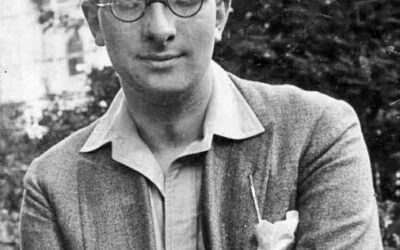
John Beebe, born in 1939 in Washington, D.C., is a psychiatrist and Jungian analyst who practises in San Francisco. He trained at Harvard College and the University of Chicago medical school, qualified as an analyst at the C. G. Jung Institute of San Francisco in 1978, later served as its president, and was the first American co-editor of the London-based Journal of Analytical Psychology. His book Integrity in Depth (1992) traces how a person’s moral backbone forms in the psyche3, and that interest in the “spine” of personality runs straight into his type theory.
The raw material is Jung’s. In Psychological Types, first published in 1921, Carl Jung described two attitudes of consciousness, extraversion and introversion, and four functions: thinking and feeling, which judge, and sensation and intuition, which perceive. Combining them gives eight function-attitudes, written in type shorthand as Te, Ti, Fe, Fi, Se, Si, Ne and Ni. Jung held that one function becomes dominant, that a second helps it, and that the function opposite the dominant one stays least developed and closest to the unconscious, which he called the inferior function4.
Isabel Briggs Myers and her mother Katharine Briggs turned Jung’s scheme into the Myers-Briggs Type Indicator, and Gifts Differing (1980), by Isabel Briggs Myers with Peter Myers, set out the familiar ordering of dominant, auxiliary, tertiary and inferior functions for each of the sixteen types6. That four-function sequence is where most popular personality psychology stops.
Beebe went further. From his 1984 paper on psychological types in transference and countertransference onward, he argued that each of the eight function-attitudes is carried by a particular archetypal figure, so that a function’s position in the stack decides the tone in which it shows up. His fullest statement is the chapter “Understanding consciousness through the theory of psychological types” (2004)2 and the collected papers in Energies and Patterns in Psychological Type: The Reservoir of Consciousness (Routledge, 2016)1. We have also written about how the model shapes belief and outlook in the Beebe model and worldview.
One distinction helps. The MBTI is a questionnaire, and academic psychologists have criticised its four-letter categories, for instance on how often people’s reported type changes on retesting9, while its four scales line up fairly well with four of the Big Five personality traits10. Beebe’s model is a different kind of thing: a clinical and archetypal map of how consciousness is organised, built by an analyst from decades of listening to patients. It is used to think with, not to score.
What are the eight archetypal positions in the Beebe model?
Traditional Jungian and MBTI typology works with four functions. Beebe kept those four and added the four function-attitudes left over, the same functions in the opposite attitude, recognising that we carry a whole constellation of patterns that appear in different situations. Each of the eight positions carries an archetypal energy that colours how its function behaves1.
The four positions of ego consciousness
The first four positions hold the ego-syntonic functions, the parts of ourselves we identify with and feel comfortable showing.
- Hero or Heroine (1st, dominant). Your most trusted tool for meeting reality. Like the hero archetype in myth, it is competent, confident and quick to take charge, and it can be one-sided.
- Father or Mother, often called the Good Parent (2nd, auxiliary). Beebe’s own labels are Father and Mother. This function supports and looks after both the self and others, and it tempers the Hero.
- Puer or Puella, the Eternal Child (3rd, tertiary). Playful, inventive and charming, but also easily hurt and quick to become defensive.
- Anima or Animus (4th, inferior). Jung’s inferior function. It serves as a bridge to the unconscious, carries our longing and ideals, and is the function most likely to be projected onto a partner.
Beebe gives these four a body image. The line from Hero to Anima or Animus is the spine of the personality, the axis along which integrity develops. The Parent and Child functions are the arms, the ways we reach out to care for others and to play1. A person whose spine is strong can stand up for what they value, and a person whose arms are free can relate.
The four shadow positions
Positions five through eight hold the same four functions with the attitude reversed. They operate more unconsciously and usually come forward under stress, conflict or threat. Each one is the shadow of a position in the first four.
- Opposing Personality (5th). The shadow of the Hero. It contradicts, resists and argues, and it is how we defend ourselves when our main way of operating is challenged.
- Senex or Witch (6th). The shadow of the Parent. The senex is the old man of myth and the witch the dark mother: critical, harsh and limiting at their worst, and at their best the source of hard-won wisdom and necessary limits.
- Trickster (7th). The shadow of the Child. It creates double binds and paradoxes, slips out of traps, and can make fools of others or of us.
- Demonic or Daimonic Personality (8th). The shadow of the Anima or Animus. Beebe calls this position both demonic and daimonic because it holds our most destructive potential and also, in the older Greek sense of the daimon, a capacity for deep change and spiritual opening2.
The figures are not arbitrary. The witch archetype, the trickster archetype and the daimon in the history of psychotherapy each carry centuries of myth and story, and Beebe’s claim is that the same figures organise our typology from inside.
How do you work out your function stack from your type?
Your four-letter type determines your eight-function stack, though the translation is not obvious at first. The type code is a map to eight function-attitudes arranged in archetypal positions, and learning to read it turns a label into something you can use for self-knowledge.
Finding the dominant function
Start with the first and last letters. The first letter, I or E, tells you the attitude of the dominant function. In the MBTI convention the last letter, J or P, always describes the function you use in the outer, extraverted world: J means that function is a judging one (thinking or feeling), P means it is a perceiving one (sensing or intuition)6. So an extravert’s dominant function matches the J or P. An introvert’s dominant is introverted, which means it is the other kind: J types who are introverted lead with a perceiving function, and P types who are introverted lead with a judging function.
A worked example: INTJ
An INTJ is introverted and J, so the extraverted function is a judging one, and the dominant is an introverted perceiving function. The perceiving letter is N, so the Hero is introverted intuition (Ni). The auxiliary switches both attitude and kind, giving extraverted thinking (Te) as Parent. The tertiary is introverted feeling (Fi) as Child, and the inferior is extraverted sensation (Se) as Anima or Animus.
The shadow functions repeat these four in the opposite attitude and in the same order. Ni becomes Ne, the Opposing Personality. Te becomes Ti, the Senex or Witch. Fi becomes Fe, the Trickster. Se becomes Si, the Demonic Personality. The full INTJ stack therefore reads Ni, Te, Fi, Se, then Ne, Ti, Fe, Si.
Why position matters more than the function
Understanding the stack means seeing that you do not simply “use Ni” or “have Te.” Each function sits in a particular archetypal position that colours how it appears. An INTJ’s Hero Ni and an INFJ’s Hero Ni share a position, yet they work in different psychological company, because one is supported by Te and the other by Fe. An INTJ’s Te Parent nurtures through efficiency and logic, while an ENTJ’s Te Hero conquers with the same qualities. The function is the same; the archetype carrying it is not2.
How do the first four functions show up in daily life?
Once you know your stack, the real work begins: recognising these functions in your actual experience, and paying special attention to moments of stress or conflict, when the less conscious positions announce themselves.
The Hero
The Hero feels like home base, the state where you are most confident and natural, and it is what you reach for first when solving a problem. It feels energising. For an ISFJ, the Si Hero constantly compares the present with the past, building a rich internal library of sensory memories and impressions. The ISFJ does not have to try to do this; it happens as automatically as breathing.
The Parent
The Parent function develops more consciously. Type writers following Isabel Myers describe the auxiliary as maturing through adolescence and early adulthood, giving balance to the dominant6. It is the way you look after yourself and others. An ESTP’s Ti Parent might help friends think through a problem logically, offering analytic support without the aggressive edge that Ti carries for a Ti-dominant Hero. Notice how readily you fall into a caretaking role through this function.
The Child
The Child, or tertiary, has a double nature: playful and creative when you feel safe, touchy and defensive when you feel threatened. When you are defensive you may notice it appearing as childish behaviour, or as unexpectedly creative problem-solving. An INFP’s Si Child might delight in making cosy spaces and keeping meaningful traditions, then become rigid about “how things should be done” under stress. This function often holds both your greatest creative potential and your sorest spots.
The Anima or Animus
The inferior function both fascinates and frustrates. It represents qualities you admire in others but struggle to embody, and it appears in relationships and in moments when you try to reach beyond your usual ego boundaries. Jungians had long associated the inferior function with the contrasexual figure of the unconscious, and Beebe made that link central to his model2. An ENTP’s Si inferior might show up as attraction to people with a fine memory for detail and steady routines, alongside a real struggle with those very habits. Because it carries both ideals and projections, this position is where much of the drama described in our piece on anima and animus in relationships takes place.
How do the shadow functions show up?
The shadow functions need different ways of recognising them because they operate further from awareness. Jung’s shadow is the part of the personality we disown, and Beebe’s four shadow positions give it a typological shape.
The Opposing Personality
The fifth function emerges as stubborn resistance or playing devil’s advocate. An ISTJ’s Hero Si says “this is how things are.” When someone else’s extraverted sensing pushes on that, the ISTJ’s own Opposing Se may come out to argue about what is happening right now. The ISTJ becomes unusually focused on immediate sensory fact, but in an oppositional, point-scoring way rather than an enjoying one.
The Senex or Witch
The sixth function activates when you feel incompetent or when others show incompetence in its area. An ISFP or ISTP, whose Parent is Se, carries Si in this position. Such a person might turn harshly judgmental about people who forget important details or ignore established procedure, often in exactly the areas where they themselves struggle. When someone triggers this function you may become unusually critical or controlling. It often carries shame and pushes that shame onto others.
The Trickster
The seventh function creates double binds and confusing situations, for others and for yourself. An ISFP’s Ne Trickster might, when cornered, offer several contradictory possibilities, not to deceive but to open escape routes: “Maybe this, or maybe that, or perhaps neither, or both?” The function destabilises a situation when you feel trapped. The double bind, a message that makes every response wrong, has its own history in family therapy and trauma work, covered in our piece on trauma and the double bind.
The Demonic or Daimonic Personality
The eighth function stays mostly unconscious except in extreme crisis. An INTP’s Fi Demon might appear as devastating personal attacks that seem completely out of character, aimed at another person’s deepest values and emotional soft spots with surgical precision. Rarely reached on purpose, it can break through as destructive rage or as a deep reorientation of the whole personality. It carries our most destructive potential and, paradoxically, our capacity for real transformation1.
What do common personality patterns look like through the Beebe model?
We all know people who reliably frustrate us, and the model gives a useful way of reading what drives them. These sketches are patterns, not diagnoses, and the same patterns can be found in ourselves.
The perpetual contrarian (a strong Opposing Personality)
Whatever you suggest, this person argues the opposite. That is often an overactive fifth function. For INTJs and INFJs the Opposing Personality is extraverted intuition, set against their Hero Ni, so they may reflexively throw up a cloud of alternative possibilities to knock down someone else’s vision. For ESTPs and ESFPs it is Si opposing their Se, and they may suddenly insist on how things “should” be done according to past precedent.
Such people are not usually trying to be difficult. The psyche is defending the dominant function by forcefully asserting its opposite. In dealing with them, it helps to let them feel that the alternative view is heard. Instead of arguing back, acknowledge the counterpoint and then reframe your idea to include their concern.
The micromanaging critic (Senex or Witch activation)
Everyone knows someone who becomes impossibly critical about particular things. The normally easygoing ISFP who turns tyrannical about scheduling details is showing Si Senex. The usually warm ISFJ or INFJ who becomes coldly self-righteous about personal values and perceived unfairness is showing Fi Witch. In each case the sixth function is demanding perfection in an area where the person feels unsure of themselves.
When someone’s Senex or Witch is active, they are often projecting their own insecurity. The INFJ lecturing you about your lack of principle may be defending against their own uncertainty about what they personally want. The INTJ or ISTJ who suddenly becomes a pedant about definitions and logical consistency (Ti Witch) may feel threatened by having their own frameworks questioned. Seeing this helps you realise that the criticism is not really about you; it belongs to their complexes.
The chaos creator (Trickster manifestation)
Some people seem to create drama wherever they go, sending mixed signals and setting up no-win situations. For ISTPs and ISFPs, the Ne Trickster can show up as a stream of contradictory possibilities that leaves everyone confused. For ENTJs and ENFJs, the Si Trickster can show up as inconsistent accounts of past events or of how a procedure was supposed to work.
The Trickster appears when someone feels trapped or powerless. The ISFP who keeps changing the plan feels confined by other people’s expectations. The ENFJ who cannot keep the story straight about what happened feels hemmed in by concrete detail. They are not consciously trying to deceive. The psyche is trying to make room for escape through confusion.
The emotional vampire (Anima or Animus projection)
Some people seem to drain your energy, constantly seeking validation or projecting their ideals onto you. This often involves the fourth function, which bridges conscious and unconscious. An ENTJ, with Fi in this position, might unconsciously look for others to carry their emotional life for them. An ESTP, with Ni here, might become preoccupied with finding someone who “truly understands” their hidden depths.
These people are seeking the integration of their inferior function through someone else rather than developing it themselves. They may idealise you one moment and devalue you the next, as you inevitably fail to live up to the projected ideal. Recognising the pattern helps you keep boundaries while seeing that the behaviour comes from a genuine need for wholeness.
The walking time bomb (the Demonic Personality takes over)
Occasionally someone seems possessed by destructive energy, lashing out in ways that look completely out of character. This is often the eighth function in control. A normally detached, analytical ISTP may explode with moralising accusations about what other people value, which is Fi in the Demon position. A typically warm ESFJ may turn cold and strategically ruthless, which is Te in the same place.
The Demonic Personality tends to appear when every other defence has failed. It holds both destruction and the possibility of transformation. When you see someone in its grip, they are in psychological crisis. The best response is to avoid escalating and, if possible, help them find safety and grounding.
What are loops and grips?
The stack also helps to identify two unhealthy patterns that type practitioners call loops and grips. Neither word is Beebe’s, but both fit his model well.
Loops
A loop is a term from the type community for bypassing the auxiliary and bouncing between the dominant and the tertiary, which share an attitude. An INTJ in an Ni-Fi loop stays entirely introverted: elaborate inner visions coloured by private values, cut off from outside reality because the extraverted Te Parent never gets to test them. Breaking a loop means deliberately engaging the auxiliary. That INTJ needs Te: writing ideas down, talking them through, testing them against facts and other people.
Grips
The grip comes from the psychologist Naomi Quenk, first in Beside Ourselves (1993) and then in Was That Really Me? How Everyday Stress Brings Out Our Hidden Personality (2002). Under fatigue, illness or stress, the inferior function erupts in a crude, exaggerated form, and the person feels taken over by something that does not seem like them7. We have written more about Naomi Quenk’s work on the inferior function.
An ISFJ in the grip of Ne becomes fearful about possibilities, seeing disaster everywhere. That is not healthy extraverted intuition but Ne filtered through the inferior position’s fears and projections. Quenk describes recovery as a return to the dominant function’s comfort while gently stepping back from the inferior’s panic. The ISFJ needs Si’s groundedness, familiar routines and trusted memory, while acknowledging but not feeding the catastrophic forecasts.
How does the Beebe model help in relationships?
Knowing your stack changes how you read relationship dynamics. It also helps you interpret other people’s behaviour in the moment. Someone approaching you is usually leading with one of their first four functions, but stress can quickly bring up the shadow ones.
Reading motivations in everyday interactions
A colleague who constantly questions your ideas may be exercising a Ti Hero, trying to help through analysis rather than attacking you. A friend who always wants to reminisce, perhaps an ESFJ or ESTJ, may be using a Si Parent to create comfort through shared memory. A supervisor who suddenly becomes playful may be in their Puer or Puella, a sign that they feel safe enough to create.
When interactions turn sour, shadow functions are usually involved. The normally rational person who becomes stubborn may be in their Opposing Personality. The usually kind person who becomes cutting may be speaking from their Senex or Witch. Recognising these shifts lets you respond to what is happening psychologically rather than to surface behaviour.
Opposition, mentoring and attraction
When someone consistently triggers your Opposing Personality, they are often leading with the function you oppose. An ENTJ leading with Te can repeatedly set off an INTP’s Opposing Te, and the INTP becomes unusually focused on external organisation and efficiency, but in a resistant way.
Parent and Child positions create natural mentoring pairs. Someone with an Fe Parent, such as an ISFJ or INFJ, readily looks after someone with an Fe Child, such as an ENTP or ESTP. The ENTP may feel grateful and a little infantilised at the same time.
Anima and Animus projections create intense attraction and frustration. We are drawn to people who embody our inferior function strongly, seeing in them our own completion. An ISTJ with Ne inferior may be fascinated by an ENFP’s ability to see endless possibilities, and later frustrated by what feels like chaos and inconsistency. An INFJ may project Se Anima onto an ESTP partner, admiring and resenting their physical presence and spontaneity. Jungians have long noted that we often choose partners who carry what we have not lived, the theme of why we marry our shadow.
Shadow triggers reveal where a relationship is hard. When a partner consistently activates your Senex or Witch, you find yourself unusually harsh. Seeing the pattern lets you step back and ask: “Is this my Si witch speaking? Am I putting my own struggle with memory and tradition onto them?”
Practical steps for difficult relationships
First, identify which functions are in conflict. Is your Hero triggering their Opposing Personality? Is their Senex or Witch attacking your Puer or Puella? Once you see the dynamic you can adjust. If someone’s Opposing Personality keeps challenging your Hero, try meeting them from your Parent function instead, which sidesteps the contest and creates a more caring exchange. If their Senex or Witch goes after your vulnerabilities, answer from your Hero or Parent rather than from a defensive Child. In close relationships, knowing each other’s Anima or Animus function matters most, because that is where each partner places their unlived potential.
What exercises help develop each function?
Developing consciousness of your functions takes deliberate practice. The aim is not to become good at everything but to notice what you already do unconsciously and give each function a fitting outlet.
Hero and Parent
Start with a few minutes a day of consciously engaging the Hero. If you lead with Ni, practise envisioning future scenarios. If you lead with Te, organise something systematically. For further growth, seek more complex challenges that need this function: an ENFP’s Ne Hero thrives on brainstorming, creative projects and theoretical frameworks. Stretch the function while staying aware of how you use it.
The Parent grows by caring for others through it. An ISTP with an Se Parent might teach someone a physical skill, noticing how sensory attention guides the teaching. An ENFJ with an Ni Parent might help others see the patterns and possibilities in their lives. An INTJ’s Te Parent might mentor someone in planning, and an ESFP’s Fi Parent might help someone clarify what they value. Teaching through this function strengthens it and fulfils its archetypal role.
Child
The Child needs safe places to play. An INTJ’s Fi Child needs permission to explore personal values without judgment. A thinking type with a feeling Child might write poetry; an intuitive with a sensing Child might build something with their hands. Healing this function often means recognising where you were shamed or shut down in this area as a child. If your thinking Child was dismissed as “cold” or “mean,” you may need to reclaim your right to logical analysis. If your feeling Child was labelled “too sensitive,” you may need to take your emotional responses seriously. A person whose Se Child was shamed for physical exuberance might take a dance class; one whose Ni Child was called “weird” for seeing patterns might find a group that values intuition.
Anima or Animus
Inferior function work calls for gradual, patient exposure. This function will not become a strength in the usual sense, but it can become a source of wholeness. Aim for basic competence and a conscious relationship rather than mastery, practise in low-stakes situations, and accept feeling clumsy and exposed. An ESTJ with Fi inferior might name one feeling a day. An INFJ with Se inferior might commit to one attentive sensory experience daily, like really tasting the morning coffee. An ESTP with Ni inferior might journal weekly about where life is heading, and an INFP with Te inferior might set up one simple system, starting with one drawer or one daily routine.
A daily, weekly and monthly rhythm
Some people find it useful to build a regular practice. Morning pages can move through the functions in order: the Hero’s view of the day ahead, the Parent’s care plan, a few minutes of the Child’s play, and one small goal for the inferior. An evening review can note when shadow functions appeared and what set them off. A weekly check-in asks which functions were most active, what triggered the shadow ones, and where a loop or grip occurred. That is data collection rather than self-judgment. Some go further and take one function as a theme for a month, cycling through all eight and then starting again with deeper practices.
When the picture does not fit
If you cannot find a function in yourself, you may be looking in the wrong place or at the wrong time. Shadow functions in particular appear only under certain conditions, so watch the situations likely to evoke them.
If functions seem to sit in the wrong positions, reconsider your type. Beebe devoted a whole paper to the difficulties of recognising psychological type1. What looks like an Fe Hero may be a heavily defended Fe Child shaped by family or culture. Social expectations also play a part: MBTI samples have long shown more women than men reporting a feeling preference, and type practitioners observe that thinking-dominant women sometimes identify as feelers, and feeling-dominant men as thinkers, because of the roles they were raised into.
If shadow functions seem constantly active, you are probably under chronic stress. Constant opposition, criticism, trickery or demonic outbursts describe a psyche under siege. That calls for attention to the life circumstances creating the pressure, not just more function work.
How do you work with the shadow functions directly?
Shadow work with this model is advanced practice. It needs a reasonably strong ego and, ideally, a therapist alongside. Begin simply by noticing when the shadow functions activate. What sets off your Opposing Personality’s resistance, your Senex or Witch’s criticism, your Trickster’s confusion, or your Demon’s rage? Recognition is already the start of integration.
Dialogue instead of possession
The next step is to talk with these functions rather than be possessed by them. When your Senex or Witch activates, pause and ask: “What standard is being violated here? What incompetence am I detecting? Is this about them or about my own struggles?” Ask the others too. What is my Opposing Personality protecting me from? What freedom is my Trickster looking for? What change is my Demon demanding? This is close to Jung’s practice of active imagination, in which the ego meets an inner figure on equal terms.
Trickster work means noticing when you are setting up double binds and choosing clarity. An INTJ, whose Trickster is Fe, may send confusing emotional signals in tense moments. Saying plainly, even awkwardly, “I’m uncomfortable and don’t know how to say this well” is better than the Trickster’s mixed messages.
Work with the Demonic Personality calls for the most care, preferably with professional support. It involves recognising this figure’s double nature as destroyer and renewer. It carries energy for deep change, but reaching it safely needs preparation and containment.
What integration looks like
Integration does not mean letting shadow functions run wild. It means taking in what they know. The Opposing Personality’s doubt can become discernment. The Senex or Witch’s criticism can become appropriate boundaries. The Trickster’s chaos can become flexibility. The Demon’s destructive force can become the courage to change.
The colleague who always pushes your buttons may be triggering your Opposing Personality. The areas where you become irrationally critical may be your Senex or Witch trying to protect you from feeling incompetent. Instead of letting your Trickster derail an important conversation, you can learn to notice it and choose another response. Instead of being possessed by your Demon in a crisis, you can learn to let its energy move you toward change.
The transcendent function
The key to this kind of growth is what Jung called the transcendent function: the capacity to hold the tension between two opposing positions until a third, new attitude emerges that neither side could produce alone. Jung wrote the essay “The Transcendent Function” in 1916, and it was not published until the late 1950s5. In type terms it might mean holding your Hero’s confidence together with your Opposing Personality’s doubt, or joining your Parent’s care with your Senex or Witch’s necessary limits. Jung’s idea of holding the tension of opposites is the same move applied to the whole psyche.
Can the Beebe model guide work and career choices?
The stack can help you reflect on work, though it does not dictate a career. Many people in every type thrive in every kind of job, and Beebe’s model was built for understanding consciousness rather than for job placement. Used as a set of questions, it can be helpful.
Does your work use your Hero? People often feel drained when their main function is idle for long stretches. An ESTP with an Se Hero may find that work involving physical engagement with immediate reality feels most alive, and that a long run of purely abstract analysis is tiring.
How do you lead? The Parent function often shows how a person naturally mentors. An INFJ’s Fe Parent suggests leading through attunement to others and creating harmony. An ENTJ’s Ni Parent suggests leading through long-range strategy. Leadership that comes from the Parent tends to feel authentic to others.
Where are you creative and where are you exposed? The Child brings both. An ESTJ’s Ne Child may need protection from mockery about “crazy ideas,” along with real space for new thinking in the right settings.
What stretches you and what sets off your complexes? The inferior function indicates this. An ENFJ with Ti inferior may struggle in places that constantly highlight dispassionate analysis, while benefiting from work that sometimes asks for it without making it the whole job.
What integration looks like for different types
Each type faces its own integration tasks. Four examples show the pattern.
- INTJ (Ni, Te, Fi, Se): balancing visionary Ni with practical Te, giving the Fi Child room for personal values without sliding into perfectionism, and slowly developing Se presence in the body and the senses without demanding mastery.
- ESFP (Se, Fi, Te, Ni): enjoying the Se Hero’s immediacy while developing the Fi Parent’s quieter wisdom, protecting the Te Child from harsh judgment while building basic organisation, and approaching the Ni inferior’s long-range visions patiently and in small steps.
- ISTP (Ti, Se, Ni, Fe): honouring the Ti Hero’s precision while developing the Se Parent’s capacity to teach, tending the Ni Child where intuition was dismissed, and opening gradually to the Fe inferior’s emotional connection without forcing it.
- ENFJ (Fe, Ni, Se, Ti): drawing on the Fe Hero’s gift for harmony while grounding it in the Ni Parent’s insight, protecting the Se Child’s need for physical expression, and developing the Ti inferior’s analysis without harsh self-criticism.
Each type has its own challenges and gifts, its own shadows to integrate and potentials to live out. Knowing your stack means knowing something about your particular psychological work.
How does the Beebe model connect to individuation?
The ultimate goal of working with the model is individuation, Jung’s word for becoming whole by bringing all parts of the psyche into relationship. Writers such as Murray Stein have described individuation as a lifelong process rather than an achievement. In type terms it does not mean becoming good at everything. It means becoming conscious of all eight functions and the roles they play.
As you grow more conscious of your functions you gain flexibility. Instead of being locked into habit, you can choose which function serves a situation: the Hero for familiar problems, the Parent when care is needed, the Child for play, and even a shadow function when its perspective is what the moment needs. Your type becomes a dynamic map for development rather than a static label.
That awareness brings responsibility and freedom. Responsibility, because you can no longer blame others unconsciously for triggering your shadows; you have to own your projections and complexes. Freedom, because consciousness creates choice. As you become less reactive to others activating your shadow, you can stay present in hard conversations and meet people in the grip of their own shadow functions with compassion instead of retaliation.
The Jungian tradition has always treated this as slow work. Marie-Louise von Franz, in her lectures on the inferior function, argued that the inferior function never becomes as reliable as the dominant one, and that its slowness and touchiness are precisely what keep it a doorway to the unconscious8. Her essay was published with James Hillman’s on the feeling function in Lectures on Jung’s Typology (1971). For more on both thinkers, see the psychology of Marie-Louise von Franz and James Hillman’s archetypal psychology.
Through this lens a frustrating interaction becomes a chance to understand. The person who always contradicts you becomes a mirror of your own dynamics. The emotional reaction that makes no sense becomes a message from the shadow. The relationship pattern that keeps repeating becomes a map to unlived potential. Working with the model is not about fixing yourself or others but about becoming more conscious, and the psyche always has another layer. The model offers the map; each person still has to walk the ground.
How do therapists use the Beebe model?
Beebe developed the model in the consulting room, and one of his early papers on it, published in the journal Chiron in 1984, dealt with psychological types in transference and countertransference1. The questions it opens are practical: what happens when a therapist’s Hero meets a client’s Opposing Personality, or when a client casts the therapist as Good Parent, Senex or Witch. In therapy the model is used less as a typing exercise than as a way of naming which part of a person is speaking at a given moment.
In practice, at Taproot we listen for these shifts. A client who is warm and articulate when describing work but becomes brittle, vague or cruel when a parent comes up is often moving from the first four positions into the shadow ones. Naming the figure (“that sounds like the critic who shows up whenever you feel incompetent”) gives the client some distance from it. That is close to how parts work treats inner figures as sub-personalities with their own fears and jobs, and the Beebe model can sit comfortably beside it.
The model is especially useful for people stuck in repeating relationship conflicts, for perfectionism and harsh self-criticism (often the Senex or Witch turned inward), for stress states where someone “is not themselves,” and for midlife turning points, when the inferior function and its longings tend to press forward. Shadow positions often hold the residue of old injuries, so we pair this kind of reflection with work that reaches the body and the nervous system, such as Brainspotting, ETT and somatic therapy, when a pattern is held below the level of words.
Above all the model gives clients a vocabulary of compassion. The Trickster, the Witch and the Demon are not proof that someone is bad; they are archetypal figures that every psyche carries. Our Jungian therapy uses type, dreams and the shadow to help people see their whole cast of characters and live with more choice. If you would like to explore your own patterns with a therapist, you can contact Taproot Therapy Collective.
Frequently asked questions
What are the eight archetypes in John Beebe’s model?
In John Beebe’s model the first four positions are the Hero or Heroine (dominant), the Father or Mother (auxiliary), the Puer or Puella (tertiary) and the Anima or Animus (inferior). The four shadow positions are the Opposing Personality, the Senex or Witch, the Trickster and the Demonic or Daimonic Personality. Each shadow figure carries one of the first four functions in the opposite attitude.
What are the shadow functions for an INTJ?
An INTJ’s conscious stack in the Beebe model is Ni Hero, Te Parent, Fi Child and Se Anima or Animus. The shadow functions reverse each attitude in the same order: Ne as Opposing Personality, Ti as Senex or Witch, Fe as Trickster and Si as Demonic Personality. These shadow functions tend to surface during conflict, fatigue or crisis rather than in everyday life.
Is the Beebe model the same as the MBTI?
No. The MBTI is a questionnaire based on Jung’s typology that sorts people into sixteen four-letter types. John Beebe’s model uses those types but adds four shadow functions and gives every function an archetypal role. It is a clinical map of how consciousness is organised, built by a Jungian analyst, and is meant for reflection rather than scoring.
What does it mean to be in the grip of your inferior function?
Naomi Quenk used the word grip for a stress state in which a person’s least developed, inferior function erupts in a crude, exaggerated form. An ISFJ in the grip of Ne may imagine disasters everywhere. Recovery usually involves rest and a return to the dominant function’s familiar strengths while not feeding the inferior function’s panic.
Who is John Beebe?
John Beebe, born in 1939, is an American psychiatrist and Jungian analyst in San Francisco. He is a past president of the C. G. Jung Institute of San Francisco and was the first American co-editor of the Journal of Analytical Psychology. He wrote Integrity in Depth and Energies and Patterns in Psychological Type, where his eight-function model is set out.
Related reading
- The Archetype’s in Brand Psychology: Building Authentic Identity Through Jung’s Timeless Wisdom
- Breaking the Cycle: Understanding and Healing as an Adult Child of an Alcoholic
- From Skepticism to Science: How Emotional Transformation Therapy is Revolutionizing Mental Health Treatment – A Deep Dive with MJ Denis
- The Innocent Archetype: Exploring Purity and Victimhood
- The Caregiver Archetype: Exploring the Nurturing side
- The Lover Archetype: Exploring Conection and Control
References
- Beebe, J. (2016). Energies and patterns in psychological type: The reservoir of consciousness. Routledge. https://doi.org/10.4324/9781315685946
- Beebe, J. (2004). Understanding consciousness through the theory of psychological types. In J. Cambray & L. Carter (Eds.), Analytical psychology: Contemporary perspectives in Jungian analysis (pp. 95-127). Brunner-Routledge. https://doi.org/10.4324/9780203492048-9
- Beebe, J. (1992). Integrity in depth. Texas A&M University Press.
- Jung, C. G. (2014). Psychological types (H. G. Baynes, Trans., rev. R. F. C. Hull; Collected Works of C. G. Jung, Vol. 6). Princeton University Press. (Original work published 1921) https://doi.org/10.1515/9781400850860
- Jung, C. G. (1969). The transcendent function. In The structure and dynamics of the psyche (R. F. C. Hull, Trans.; Collected Works of C. G. Jung, Vol. 8, 2nd ed.). Princeton University Press. (Original work written 1916)
- Myers, I. B., & Myers, P. B. (1980). Gifts differing. Consulting Psychologists Press.
- Quenk, N. L. (2002). Was that really me? How everyday stress brings out our hidden personality. Davies-Black.
- von Franz, M.-L., & Hillman, J. (1971). Lectures on Jung’s typology. Spring Publications.
- Pittenger, D. J. (2005). Cautionary comments regarding the Myers-Briggs Type Indicator. Consulting Psychology Journal: Practice and Research, 57(3), 210-221. https://doi.org/10.1037/1065-9293.57.3.210
- Furnham, A. (1996). The big five versus the big four: The relationship between the Myers-Briggs Type Indicator (MBTI) and NEO-PI five factor model of personality. Personality and Individual Differences, 21(2), 303-307. https://doi.org/10.1016/0191-8869(96)00033-5









0 Comments