
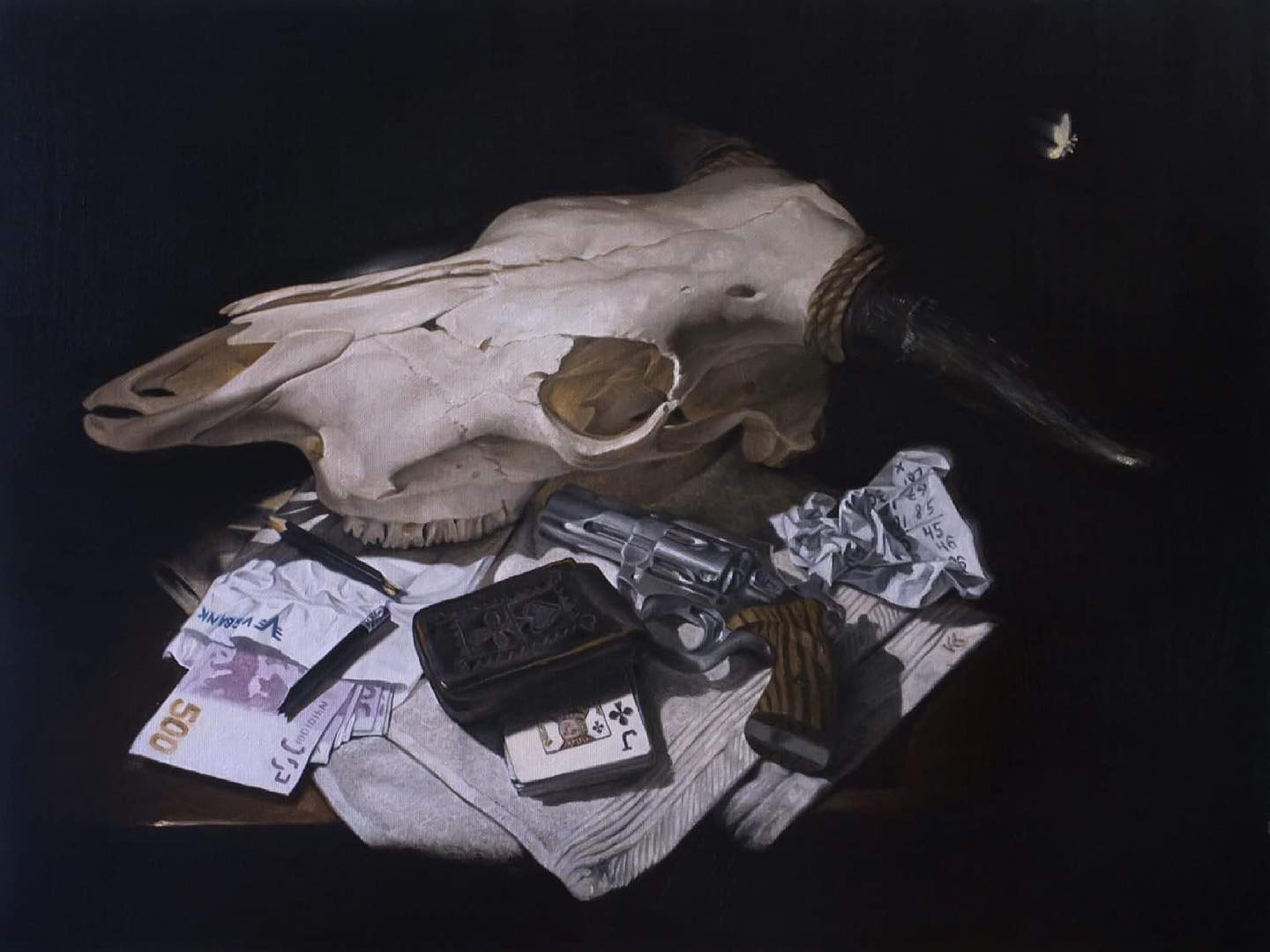
The trickster archetype is the rule-breaking, shape-shifting figure found in myths around the world (Hermes, Loki, Coyote, Raven, Eshu, Reynard the Fox), who steals, lies and plays tricks that often leave the world changed. Carl Jung called him “a collective shadow figure, a summation of all the inferior traits of character in individuals,” and a mirror of an early, undifferentiated stage of consciousness.1
This article argues something narrower and more useful. The trickster is what a psyche produces when its official structure cannot change on purpose. Whatever a rigid life leaves out does not vanish. It comes back as the slip of the tongue, the joke at the wrong moment, the deadline that keeps getting missed, the symptom that ignores willpower. Jung said as much in 1954: the trickster appears in “the unsuspecting modern man” whenever he feels “at the mercy of annoying ‘accidents’ which thwart his will and his actions with apparently malicious intent.”1 In therapy the work is neither to banish the trickster nor to obey him. It is to read what he keeps breaking, and why.
What the trickster archetype is
Lewis Hyde’s Trickster Makes This World (1998) is still the best general book on the figure, and it starts with appetite. Trickster stories, Hyde writes, preserve images “from the days when what mattered above all else was hunting,” and the trickster himself is “at once culture hero and fool, clever predator and stupid prey.”2 Hyde’s emblem for that double nature is Norse. In the thirteenth-century Prose Edda, Loki, hiding from the angry gods and passing his days as a salmon, works flax and yarn into meshes “in the manner that nets have since been made.” When the gods approach he burns the net and leaps into the river, but they recognize the ashes as a device for catching fish, make one of their own and catch him with it.2, 3 The trickster invents the trap and then swims into it.
The Greek version is Hermes. The Homeric Hymn to Hermes calls the newborn god “a robber, a cattle driver, a bringer of dreams, a watcher by night, a thief at the gates.” “Born with the dawning, at mid-day he played on the lyre, and in the evening he stole the cattle of far-shooting Apollo.” He drives off fifty cows with their hoof-prints reversed, then climbs back into his cradle and denies everything. Zeus “laughed out loud to see his evil-plotting child well and cunningly denying guilt about the cattle.” The quarrel ends in an exchange, not a punishment: Hermes gives Apollo the lyre he invented, and Zeus makes the brothers friends.4 Odysseus, Hyde notes, got his gift for lying from his grandfather Autolycus, “who got it in turn from his father, Hermes.”2 We follow that inheritance through Homer in the trickster archetype in the Odyssey.
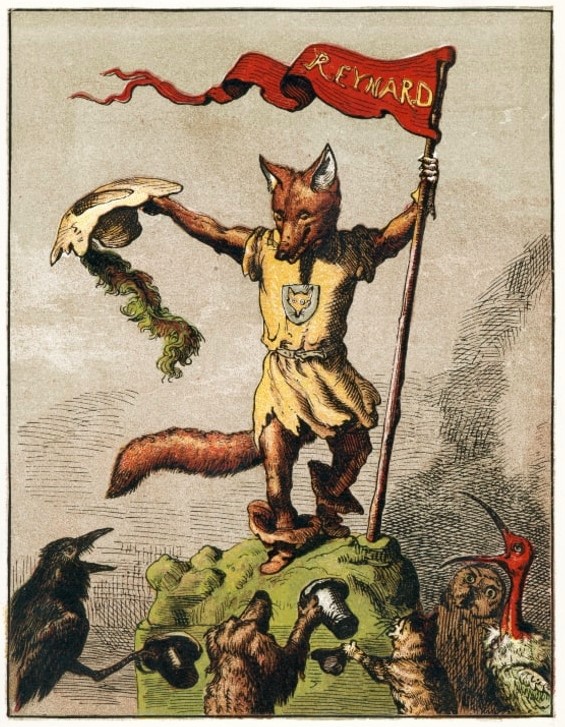
Elsewhere the figure changes species but keeps the job. On the North Pacific coast Raven steals daylight, and steals the bait off fishermen’s hooks without being hooked himself. Coyote builds the first fish weir. Among the Yoruba, Eshu, the orisha of crossroads and chance who carries messages between people and the gods, walks between two friends wearing a hat that is black on one side and white on the other, and they quarrel over its color.2, 5 Medieval Europe had Reynard the Fox, the hero of a cycle of beast fables whose first surviving versions date from the second half of the twelfth century. Reynard lies his way through a lion’s court of animals, and the tales are often read as satire of political and religious institutions.
Not every scholar thinks these figures belong to one type. Reviewing Hyde in The New York Times, Paul Mattick noted that some anthropologists question whether the trickster is a constant type at all.5 “Trickster” is a scholar’s category laid over very different figures, and Eshu is a living orisha, not a literary device. What they share is a function: they cross the lines a culture draws, and the crossing changes something.
Radin, Jung and Kerényi: the 1956 Trickster
The psychological reading starts with one book. Paul Radin (1883–1959), a student of Franz Boas, did fieldwork among the Winnebago, today the Ho-Chunk Nation of Wisconsin and the Winnebago Tribe of Nebraska, mostly between 1908 and 1912. In 1956 he published their trickster cycle in English as The Trickster: A Study in American Indian Mythology, with commentaries by the classicist Karl Kerényi and by Jung.6 A German edition, Der göttliche Schelm, had appeared in Zurich in 1954.1
The cycle’s hero, Wakdjunkaga, is not admirable. In Jung’s summary of Radin’s text, the trickster’s “body is not a unity, and his two hands fight each other.” He takes off his anus and gives it a job to do. He turns himself into a woman and bears children, and from his penis he makes useful plants. He gets his head stuck inside an elk’s skull and is outwitted by the animals again and again. By the end of the cycle, though, his behavior “becomes quite useful and sensible,” and Jung credits Radin with seeing that the civilizing process begins inside the cycle itself.1
Kerényi read the Winnebago figure against Greek myth and gave a section of his commentary to how Wakdjunkaga differs from Hermes.6 His long partnership with Jung is its own story; see who Karl Kerényi was and why Jung needed him. Reading myths as symbols rather than as failed science was not new. Nearly a century and a half earlier Friedrich Creuzer had argued, in his Symbolik und Mythologie der alten Völker (1810–12), that Greek myth carried the symbolism of an older revelation.
Jung’s essay makes three claims that still matter clinically.
First, the trickster is a memory. He is “a faithful reflection of an absolutely undifferentiated human consciousness, corresponding to a psyche that has hardly left the animal level.” Jung’s most vivid European example was the medieval church, which once let the trickster in through the front door. A children’s bishop was elected on Innocents’ Day and dressed in pontifical robes. A report from 1198 complained that the Feast of the Circumcision at Notre Dame in Paris had been desecrated “not only by smutty jokes, but even by the shedding of blood.” When these customs vanished from the church, Jung notes, the same comic types reappeared in Italian popular theater.1
Second, the trickster is a shadow. “The trickster is a collective shadow figure, a summation of all the inferior traits of character in individuals.” In ordinary life the same energy shows up as “a personal ‘gaffe,’ ‘slip,’ ‘faux pas,’ etc., which are then chalked up as defects of the conscious personality.”1 Jung meant shadow in its technical sense, the part of the personality the ego cannot see itself as having. Becoming conscious of it, he wrote in Aion, “involves recognizing the dark aspects of the personality as present and real,” and it “meets with considerable resistance.”7
Third, telling the story is a form of treatment. Jung argued that the Winnebago kept the myth because it worked. Retelling it is “the best and most successful method of keeping the shadow figure conscious and subjecting it to conscious criticism,” and “like many other myths, it was supposed to have a therapeutic effect.”1
Why rigid systems produce tricksters
Set Jung’s examples beside the others and a pattern appears: the trickster gets loud where structure is tight. A church that ordered every day of the year had to make room for a fools’ feast. A court of animals ruled by a lion produced Reynard. In the American South, African Americans told stories of Br’er Rabbit, the small animal who wins by wit, whose roots run to the hare of West and Central African storytelling; some scholars read him as a figure for enslaved people outwitting their enslavers. The trickster is the shape excluded energy takes when the official order gives it no legitimate door.
Hyde draws the conclusion for whole cultures. As his reviewer summarized the argument, since “there is no way to suppress change,” the only alternative to “cataclysmic upheavals” is “a way of living that allows constant, if gradual, alterations,” and that is the trickster’s way.5
The same holds inside a person. Kashdan and Rottenberg’s review of psychological flexibility, the capacity to “recognize and adapt to various situational demands” and to “shift mindsets or behavioral repertoires,” is blunt: “In many forms of psychopathology, these flexibility processes are absent.”8 A rigid psyche still has to change somehow. When it cannot change by choice, change arrives the trickster’s way: sideways, at a bad moment, against the will. Jung’s phrase for this is exact. Behind the accidents and slips, “the trickster is represented by counter-tendencies in the unconscious.” He also ended the essay on a hopeful note: just as the Winnebago cycle closes with a hint of a saviour, the individual shadow “contains within it the seed of an enantiodromia, of a conversion into its opposite.”1
The myths also show what a workable container looks like. In the sixteenth-century Chinese novel Journey to the West, the Monkey King Sun Wukong storms heaven and is pinned under a mountain by the Buddha for five hundred years. He is released to escort the monk Tang Sanzang on a pilgrimage for Buddhist scriptures, and early in the journey he is tricked into wearing a gold circlet that tightens whenever the monk recites a certain sutra. The novel neither kills the trickster nor lets him run. It harnesses him to a journey. Hermes gets a similar settlement: his theft ends in a trade, the lyre for friendship and an office among the gods.4 The serpent in Genesis, “more subtil than any beast of the field” (Genesis 3:1, King James Version), plays a trickster’s part with no bargain struck, and that story ends in exile; we look at it more closely in what the Garden of Eden symbolizes.
When the trickster turns destructive
None of this makes the trickster safe. The Prose Edda‘s verdict on Loki is double: “He has often brought the asas into great trouble, and often helped them out again, with his cunning contrivances.” Then the trouble stops being recoverable. Loki learns that the mistletoe alone never swore an oath to spare Baldr, puts it in the hands of the blind god Höðr, and guides the throw that kills him. The gods bind Loki with the entrails of his own son. A serpent drips venom on his face; his wife Sigyn catches it in a dish, and when she turns away to empty it he twists “so violently that the whole earth shakes.” At Ragnarök he steers the ship of the enemy host, and he and Heimdall kill each other.3 The wider cast is in our Norse mythology dictionary for depth psychology.
The Māori hero Māui fished up the North Island and slowed the sun. His last trick was to crawl into the sleeping goddess of death, Hine-nui-te-pō, and win immortality for people by coming out through her mouth. He told the birds not to laugh. The pied fantail could not hold it in, the goddess woke, and Māui died. In James Frazer’s retelling from George Grey’s collection, “the Maoris set down human mortality at the door of the pied fantail, since but for his unseasonable merriment we might all have lived for ever.”9 The trickster’s own weapon, laughter at the wrong moment, finishes him.
Jung’s sharpest warning was about groups. An unowned shadow waits “for a favourable opportunity to reappear as a projection upon one’s neighbour,” and “as soon as people get together in masses and submerge the individual, the shadow is mobilized.”1 The trickster a culture will not see in itself comes back as the scapegoat, or as the con man everyone agreed to believe.
Even the trickster’s best tool cuts both ways. Rod Martin and colleagues’ Humor Styles Questionnaire separates four habits: affiliative and self-enhancing humor, which bring people together or keep a person steady, and aggressive and self-defeating humor, which wound others or the self.10 A 2018 meta-analysis of 37 studies (12,734 people) found that the health-promoting styles had small-to-medium positive correlations with mental health, self-defeating humor was associated with worse mental health, and aggressive humor showed no overall relation.11 The studies are correlational, so they cannot show that humor causes anything. They do suggest that the person who mocks himself first is not necessarily the healthiest one in the room, a caution that applies to the jester archetype as well.
What this looks like in therapy
In a consulting room the trickster rarely arrives as a god. He arrives as a pattern, and four are common.
The saboteur. Someone makes a sincere plan, such as finishing a degree or keeping a budget, and something keeps wrecking it at the last moment. The usual response is more discipline, which tightens the very structure the sabotage is reacting against. A depth-oriented therapist asks a different question: what does this disruption protect, and what does it protest? Parts-based approaches such as Internal Family Systems (IFS) therapy make the same move concretely, treating the saboteur as a part with a job rather than a defect to overpower. That is a way of listening, not a guarantee of change.
The joke at the edge. Humor often appears exactly where grief or shame gets close. Sometimes it is a relief valve that lets a person stay with something hard; sometimes it is an exit. Noticing which one just happened, and saying so gently, is often more useful than laughing along or letting it pass.
The trickster in dreams. Foxes, coyotes, con men, clowns, a thief in the house: in Jungian work such figures are read as compensations, images of what the dreamer’s conscious attitude leaves out. Jung observed that the shadow “frequently appears in the phenomenology of dreams as a well-defined figure.”1 Our Jungian dream interpretation dictionary covers many of these images.
The rupture in the room. The trickster also shows up between client and therapist: the missed session, the sarcastic aside, the test of the rules of the work. Researchers call these ruptures in the therapeutic alliance. A 2018 meta-analysis of 11 studies (1,314 patients) found a moderate association between repairing ruptures and better outcomes (r = .29). A second analysis, of six studies, found no significant effect of training therapists in rupture resolution (r = .11).12 These are associations, not proof of cause, but they fit the trickster’s old lesson: a break handled honestly can become the place where change starts.
Two limits matter. Not every disruption is a message from the unconscious. ADHD, substance use, mood episodes, trauma responses and plain exhaustion can all look like a trickster at work, and they call for careful assessment, and often practical structure, before interpretation. And the trickster should not be romanticized. Sun Wukong needed his circlet. Some people come to therapy because their own trickster has run their life for years, and for them the work is building a container, not loosening one.
If the same disruption keeps arriving every time your life gets organized, it may be worth getting curious about it instead of only fighting it. At Taproot Therapy Collective in Hoover we work with these patterns through Jungian depth therapy and parts-based approaches, in person and by teletherapy across Alabama. If you would like to talk it through, you can contact us here.
References
- Jung, C. G. (2003). Four archetypes: Mother, rebirth, spirit, trickster (R. F. C. Hull, Trans.). Routledge. (Trickster essay originally published 1954; paragraphs 456–488 of Collected Works Vol. 9, Part 1)
- Hyde, L. (1998). Trickster makes this world: Mischief, myth, and art. Farrar, Straus and Giroux.
- Sturluson, S. (1901). The younger Edda: Also called Snorre’s Edda, or the Prose Edda (R. B. Anderson, Trans.). Scott, Foresman. (Original work written in the 13th century) https://www.gutenberg.org/ebooks/18947
- Evelyn-White, H. G. (Trans.). (1914). Hesiod, the Homeric hymns, and Homerica. W. Heinemann; Macmillan. https://www.gutenberg.org/ebooks/348
- Mattick, P. (1998, February 15). Hotfoots of the gods. The New York Times. https://www.nytimes.com/books/98/02/15/reviews/980215.15mattict.html
- Radin, P. (1956). The trickster: A study in American Indian mythology (with commentaries by K. Kerényi and C. G. Jung). Routledge & Kegan Paul.
- Jung, C. G. (1968). Aion: Researches into the phenomenology of the self (R. F. C. Hull, Trans.; 2nd ed., Collected Works Vol. 9, Part 2). Princeton University Press. (Original work published 1951)
- Kashdan, T. B., & Rottenberg, J. (2010). Psychological flexibility as a fundamental aspect of health. Clinical Psychology Review, 30(7), 865–878. https://doi.org/10.1016/j.cpr.2010.03.001
- Frazer, J. G. (1922). The belief in immortality and the worship of the dead: Vol. 2. The belief among the Polynesians. Macmillan. https://www.gutenberg.org/ebooks/33524
- Martin, R. A., Puhlik-Doris, P., Larsen, G., Gray, J., & Weir, K. (2003). Individual differences in uses of humor and their relation to psychological well-being: Development of the Humor Styles Questionnaire. Journal of Research in Personality, 37(1), 48–75. https://doi.org/10.1016/S0092-6566(02)00534-2
- Schneider, M., Voracek, M., & Tran, U. S. (2018). “A joke a day keeps the doctor away?” Meta-analytical evidence of differential associations of habitual humor styles with mental health. Scandinavian Journal of Psychology, 59(3), 289–300. https://doi.org/10.1111/sjop.12432
- Eubanks, C. F., Muran, J. C., & Safran, J. D. (2018). Alliance rupture repair: A meta-analysis. Psychotherapy, 55(4), 508–519. https://doi.org/10.1037/pst0000185











0 Comments