

Outside emergencies, an Alabama prescriber may issue a controlled-substance prescription after a telehealth visit only if three things are true: the visit is live audio or video, the prescriber has had at least one in-person encounter with the patient in the past 12 months, and a legitimate medical purpose was established in that window.1 The DEA’s extension through December 31, 2026 does not remove that state requirement.2
The federal extension is often read as if it settled the question. It did not, and the reason is structural rather than political. Federal telemedicine rules allow remote prescribing only when it is “in accordance with applicable Federal and State laws,”2 so a prescriber treating someone located in Alabama has to clear both bars, and Alabama’s is the higher one. My argument follows from that. For Alabama patients, getting a stimulant, a benzodiazepine or buprenorphine by telehealth is a continuity problem, not a permission problem. The binding constraint is a 12-month in-person clock, and the clinical risk gathers at the moments that clock runs out: a prescriber leaves, a patient moves, an annual visit slips.
I am a clinical social worker, not a lawyer and not a prescriber. What follows is policy commentary from a clinical vantage point, built from the statute, the Alabama Board of Medical Examiners’ own published guidance and the Federal Register. Prescribers with compliance questions should talk to an attorney who practices Alabama health regulatory law. Patients with access questions should call their prescriber’s office.
What federal law allows through December 31, 2026
The federal baseline is the Ryan Haight Online Pharmacy Consumer Protection Act of 2008. It generally requires at least one in-person medical evaluation before a practitioner prescribes a controlled substance remotely. Once that single evaluation has happened, the federal requirement is satisfied for that practitioner and patient indefinitely, however much time passes.2
In March 2020 the DEA set that requirement aside for the public health emergency. Since May 2023 the DEA and the Department of Health and Human Services have extended the flexibilities four times. The first, in May 2023, kept the full flexibilities only through November 11, 2023, with an extra year for telemedicine relationships formed by then; the second, published October 10, 2023, extended them to all practitioner-patient relationships through 2024. The third followed on November 19, 2024, and the fourth on December 31, 2025. The fourth temporary rule runs from January 1 through December 31, 2026. It lets DEA-registered practitioners prescribe Schedule II through V medications by audio-video telemedicine without an in-person evaluation, and it allows audio-only visits for Schedule III through V medications approved to treat opioid use disorder.2
A separate, permanent rule covers buprenorphine. It was published January 17, 2025, its effective date was pushed back twice, and it took effect December 31, 2025.3,4 Under it, a prescriber who has never examined the patient may prescribe opioid use disorder medications in Schedules III through V by audio-only telemedicine for up to six calendar months, after reviewing the prescription drug monitoring program of the state where the patient is located. Later prescriptions require an in-person evaluation or another form of telemedicine the law allows. The pharmacist must verify the patient’s identity before filling. A state or federal photo ID is the expected form, but a patient without one can show other documentation of identity; the agencies wrote that they were not requiring government-issued photo identification.3
The intended permanent replacement for the temporary rules is a proposed “special registration” for telemedicine, published in January 2025, which would create three registrations, including one for online platforms.5 As of this update on November 8, 2026, the Federal Register shows neither a final special registration rule nor a fifth extension. If nothing changes before January 1, 2027, the Ryan Haight default returns nationally. The buprenorphine rule stays, because it is permanent, and so does a separate permanent rule for Veterans Affairs patients.4
What Alabama law requires
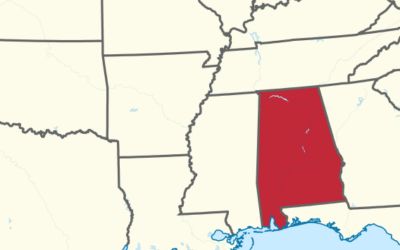
Alabama wrote its own telehealth statute in 2022. Act 2022-302, sponsored by Sen. Dan Roberts and carried in the House by Rep. Paul Lee, was signed by Governor Kay Ivey on April 12, 2022 and took effect July 11, 2022.6,7 It is codified at Ala. Code §§ 34-24-700 through 34-24-707. Section 34-24-704(b)(1) says a controlled-substance prescription may be issued as a result of telehealth only if each of these applies:1
- The visit uses synchronous audio or audio-visual communication, on HIPAA-compliant equipment, with the prescriber responsible for the prescription. If you are a therapist checking your own platform, our post on which HIPAA changes apply to therapists in 2026 covers the privacy side.
- The prescriber has had at least one in-person encounter with the patient within the preceding 12 months.
- The prescriber has established a legitimate medical purpose for the prescription within the preceding 12 months.
The statute sets two exceptions. These conditions do not apply in an in-patient setting, and a physician may prescribe a controlled substance to treat a patient’s medical emergency, as the Board of Medical Examiners and the Medical Licensure Commission define by rule.1,6 The rule covers every scheduled drug, including Schedule III ketamine; we cover that drug’s other Alabama issues in our legal update on ketamine-assisted therapy in Alabama.
Alabama’s rule is stricter than the federal default that would return if the DEA flexibilities lapse. Federal law asks for one in-person evaluation, ever. Alabama asks for one within the preceding 12 months, every year. The Alabama clock is also tied to the individual prescriber, which is the problem the Board later had to patch.
An out-of-state prescriber faces more than the in-person rule. Alabama treats telehealth care as delivered where the patient is physically located, so a physician treating a patient in Alabama generally needs a full Alabama license, with narrow exceptions for irregular or infrequent care (fewer than 10 days or 10 patients a year) and for consultation with an Alabama-licensed physician.1,8 To prescribe any controlled substance in Alabama, a physician also needs an Alabama Controlled Substances Certificate. It is renewed every year by December 31, and renewal requires a current Alabama-specific DEA registration and registration to query the state’s prescription drug monitoring database.9 The Board’s legal staff have answered the obvious question directly: the federal DEA waiver does not let an out-of-state physician prescribe controlled substances to an Alabama patient without the state certificate.10
An earlier version of this post misdescribed the Board’s general prescribing rule, so the correction belongs here. Ala. Admin. Code r. 540-X-9-.11 says the prescriber, “when possible, should personally examine the patient.” Its list of exceptions is illustrative, not exhaustive. The listed circumstances “may include, but not be limited to” several situations, and the first one named is “electronic encounters such as those in telemedicine.” For controlled substances, the rule’s third subsection tells licensees to follow every federal and state statute and Board rule on controlled-substance prescribing, which points straight back to § 34-24-704.11
What counts as the in-person encounter
One route does not require prescriber and patient to share a room. Section 34-24-703(f)(3) says that a telehealth visit that includes video, delivered to a patient at an originating site with the in-person assistance of someone licensed by the Board of Medical Examiners or the Board of Nursing, counts as an in-person visit for the purposes of the four-visit rule described below.1 In a June 22, 2023 letter to the Birmingham VA Health Care System, the Board read that provision together with § 34-24-704 and applied it to controlled substances: the VA’s clinical video protocol met the § 34-24-704 in-person requirement as long as the staff member physically present with the patient for check-in and check-out held a Medical Examiners or Nursing license.12 The Board’s published summary adds the limit that matters most to people in my field. A licensed professional counselor or licensed social worker at the originating site does not meet the requirement.8
So the telepresenter route is open in Alabama, but only with a Board of Medical Examiners or Board of Nursing licensee, such as a physician, physician assistant, nurse practitioner, nurse midwife or nurse, physically present with the patient. A counseling center or a private practice staffed by LPCs and LICSWs cannot serve that function, even when the patient is already sitting in that office.
The second route rests on Board guidance alone. Read literally, § 34-24-704(b)(1)b means a patient examined in person by one physician in a group needs a new in-person visit before a colleague in the same group can prescribe by telehealth. In August 2024 the Board issued a guidance letter: a subsequent prescriber “in the same practice or physician group, of the same or similar specialty” may continue prescribing on the strength of the earlier prescriber’s in-person examination. The conditions are specific. Each prescriber has full access to the patient’s records, including documentation of the in-person evaluation for the same condition within the preceding 12 months, and protocols exist to continue care if the original prescriber cannot see the patient. The Board explained itself in one sentence: it “acknowledges the apparent conflict between Ala. Code § 34-24-704(b)(1)b and established, safe medical practice and issues this guidance as a temporary accommodation.”10
That sentence is the most candid line in Alabama’s telehealth record. The regulator charged with enforcing the statute has acknowledged in writing an apparent conflict between its text and safe medical practice, and it solved the problem with guidance rather than a rule or an amendment. The accommodation still appeared in the Board’s February 2026 training materials,10 but guidance is not statute, and a later Board can withdraw it. Practices that depend on it should document each of its conditions every time. For the broader argument about why licensed professions should watch who writes their rules, see our essay on pressure on social work and the professions that come next.
One more provision confuses people. Section 34-24-703(f) separately requires an in-person visit, or a referral for one, within 12 months when a physician or practice group has treated the same patient by telehealth more than four times in a year for the same unresolved condition. That four-visit rule does not apply to mental health services as defined in Ala. Code § 22-50-1.1 The exemption sits in § 34-24-703, not in § 34-24-704, and the Board’s training materials present the controlled-substance conditions without it.10 A psychiatrist providing mental health care by video is not bound by the four-visit rule, but the 12-month in-person requirement still governs any controlled prescription.
Three in-person rules that get confused
Much of the confusion I hear comes from three different rules that each involve an in-person visit and a calendar.
- The DEA rule decides whether federal law allows a controlled prescription without any in-person evaluation. It is waived through December 31, 2026.2
- Alabama’s prescribing rule requires the prescriber’s in-person encounter within the preceding 12 months for any controlled prescription issued after a telehealth visit, whatever the DEA waiver says.1
- Medicare’s billing rule for mental health telehealth requires an in-person visit within six months before the first telehealth service and within 12 months of later ones, with exceptions. Under current law it takes effect only after December 31, 2027. CMS says beneficiaries who began home mental health telehealth before January 1, 2028 count as established and will need an annual in-person visit instead.13 Since January 1, 2024, marriage and family therapists and mental health counselors have been able to bill Medicare directly.14
The first and third rules have moved repeatedly since 2020. The second has not. As of this update, the Board’s telemedicine page still lists the same three conditions the statute set in 2022.8 For other places where Alabama policy and clinical practice meet, see our guide to policy changes for Alabama therapists and our post on HB445 and marijuana in Alabama.
Where the gap matters most: buprenorphine and stimulants
For buprenorphine, the federal and state rules now point in opposite directions. Federal law lets a new patient start treatment by phone and continue for six months without meeting the prescriber.3 Alabama requires an in-person encounter with that prescriber, or a video visit with a nurse or other Board-licensed clinician physically present, within the 12 months before any telehealth prescription.1 Once that encounter has happened, Alabama does allow audio-only follow-up, because § 34-24-704 accepts synchronous audio as well as video. The practical rule for someone starting treatment in Alabama is to make the first visit in person, or at a clinic with a nurse present, and then to protect the annual in-person visit as carefully as a refill date.
Continuity matters for concrete reasons. In an analysis of Medicare beneficiaries with opioid use disorder by researchers from the CDC, CMS and the National Institute on Drug Abuse, receiving OUD-related telehealth during the pandemic was associated with higher odds of staying on medication (adjusted odds ratio 1.27) and lower odds of a medically treated overdose (adjusted odds ratio 0.67).15 A separate Medicare study found that opioid overdose was 2.89 times more likely in months with a buprenorphine treatment gap than in treated months.16 In Medicaid claims, adverse outcomes after stopping buprenorphine were common even among people who had taken it for six months or longer, and about 5% had a medically treated overdose in the six months after stopping.17 These are observational studies. They show association, not proof that telehealth or unbroken prescribing caused the better outcomes. A 2025 systematic review of patient and clinician experiences with telehealth buprenorphine found both groups generally favorable, with technology problems and clinicians’ uncertainty about whom it suits among the reservations.18
There is a real argument on the other side, and clinicians should hear it rather than wave it off. In November 2025 a federal jury convicted the founder and the clinical president of Done, an ADHD telehealth startup, in a scheme to distribute Adderall illegally over the internet and to commit health care fraud.19 In May 2022, Walmart and CVS said they would stop filling controlled-substance prescriptions issued by Done and Cerebral.20 Whatever one thinks of Alabama’s rule, the risk that in-person requirements are meant to address is not imaginary.
Even a lawful prescription can stall at the counter. Interviewing patients, prescribers and pharmacists in Pennsylvania and California, Textor and colleagues found that distance between patient, prescriber and pharmacy worked as a “red flag” for pharmacists and produced “red tape”: geographic restrictions, confirmation calls, cancellations and refusals. In some cases, patients whose expectations of access went unmet faced new risks, including a return to injection drug use.21 That was a small qualitative study, not a national estimate. National telehealth platforms raise a related question. A company that cannot meet Alabama’s in-person rule has a business reason not to accept Alabama patients who need controlled medication. I know of no systematic count of how many decline, so ask before you enroll.
What this looks like in therapy
Therapists do not prescribe, but we often see a medication gap coming before anyone else does, because we may see a patient weekly while the prescriber sees them every few months. In practice that means a few routine habits.
- Know the date. With a signed release, ask when the patient last saw the prescriber in person and note when 12 months will be up. If the prescriber belongs to a group that relies on the August 2024 accommodation, a colleague of the same or similar specialty in that group may be able to continue care. A prescriber outside the group cannot rely on the earlier visit.
- Plan around moves and travel. Telehealth is legally delivered where the patient is sitting. A student who leaves for college out of state, or a patient who spends months with family elsewhere, may be outside an Alabama-licensed prescriber’s reach. The Board notes that Florida, Georgia, Tennessee and Mississippi all require a physician treating a patient located there by telemedicine to hold that state’s license, or in Florida a telehealth registration.10
- Do not count the counseling visit. Sitting in a therapist’s office does not satisfy the prescriber’s in-person requirement, and an LPC or social worker cannot act as the telepresenter.8
- Treat a lapse as a clinical event. For someone on buprenorphine, a gap in treatment is associated with higher overdose risk.16 Put the in-person date in the safety plan, along with crisis resources in the Birmingham area for after-hours emergencies.
The psychological work is quieter. Some patients on stimulants, benzodiazepines or buprenorphine already expect to be treated as drug seekers. When a pharmacy refuses a prescription or a platform will not take an Alabama address, they tend to hear a verdict on their character rather than a regulatory mismatch. Part of therapy is separating those two things out loud: naming the rule, naming whom it applies to, and keeping the shame it provokes from turning into a reason to stop treatment. For adults with ADHD there is an added irony. Tracking a 12-month clock, an annual visit and a pharmacy’s policy is exactly the kind of task the condition makes hard, which is why, in therapy for ADHD and AuDHD, the calendar belongs in the treatment plan. For people in recovery, the same logic applies to therapy after drug and alcohol rehab: the appointments that keep medication lawful are part of relapse prevention.
If you live in Alabama and want therapy that stays coordinated with your prescriber across these rules, we see clients in person in Hoover and through teletherapy anywhere in Alabama, and with a signed release we can coordinate with your prescriber. Contact us to ask about availability. This post is policy commentary, not legal or medical advice.
References
- Telehealth Medical Services, Ala. Code §§ 34-24-700 to 34-24-707 (2022), enacted by Ala. Act No. 2022-302 (S.B. 272). Bill text: https://alison.legislature.state.al.us/files/pdf/SearchableInstruments/2022RS/PrintFiles/219316-1.pdf
- Drug Enforcement Administration & Department of Health and Human Services. (2025, December 31). Fourth temporary extension of COVID-19 telemedicine flexibilities for prescription of controlled medications. Federal Register, 90, 61301. https://www.federalregister.gov/documents/2025/12/31/2025-24123
- Drug Enforcement Administration & Department of Health and Human Services. (2025, January 17). Expansion of buprenorphine treatment via telemedicine encounter. Federal Register, 90, 6504. https://www.federalregister.gov/documents/2025/01/17/2025-01049
- Drug Enforcement Administration & Department of Health and Human Services. (2025, March 24). Expansion of buprenorphine treatment via telemedicine encounter and continuity of care via telemedicine for Veterans Affairs patients: Delay of effective date. Federal Register, 90, 13410. https://www.federalregister.gov/documents/2025/03/24/2025-05007
- Drug Enforcement Administration. (2025, January 17). Special registrations for telemedicine and limited state telemedicine registrations. Federal Register, 90, 6541. https://www.federalregister.gov/documents/2025/01/17/2025-01099
- Medical Association of the State of Alabama. (2022, May 20). Breaking down the new telehealth law. https://alabamamedicine.org/breaking-down-the-new-telehealth-law/
- Burr & Forman LLP. (2022, May 13). Effective July 11 Alabama has new telehealth rules: What physicians need to know. Reprinted from Birmingham Medical News. https://www.burr.com/newsroom/articles/effective-july-11-alabama-has-new-telehealth-rules-what-physicians-need-to-know
- Alabama Board of Medical Examiners. (n.d.). Telemedicine. Retrieved November 8, 2026, from https://www.albme.gov/resources/licensees/telemedicine/
- Alabama Board of Medical Examiners. (n.d.). Alabama Controlled Substances Certificate (ACSC). Retrieved November 8, 2026, from https://www.albme.gov/licensing/md-do/registrations/acsc/
- Hawthorne, E. (2026, February 19). Prescribing controlled substances by telehealth: Legal FAQs (Slide presentation). Alabama Board of Medical Examiners. https://www.albme.gov/uploads/pdfs/2._Hawthorne_Telehealth_Prescribing_.pdf
- Alabama Board of Medical Examiners. (2023). Contact with patients before prescribing, Ala. Admin. Code r. 540-X-9-.11 (amended effective September 14, 2023). https://admincode.legislature.state.al.us/api/rule/540-X-9-.11
- Perkins, W. M. (2023, June 22). Letter to Andrew Sellers, M.D., and Oladipo Kukoyi, M.D., Birmingham VA Health Care System, regarding the Clinical Video Telehealth protocol and Ala. Code § 34-24-704(b)(1)b. Alabama State Board of Medical Examiners. https://www.albme.gov/uploads/pdfs/Telehealth-In-Person-Visit.pdf
- Centers for Medicare & Medicaid Services. (2026, October 8). Telehealth FAQ. https://www.cms.gov/files/document/telehealth-faq-updated-02-04-2026.pdf
- Centers for Medicare & Medicaid Services. (n.d.). Marriage and family therapists and mental health counselors. Retrieved November 8, 2026, from https://www.cms.gov/medicare/payment/fee-schedules/physician-fee-schedule/marriage-and-family-therapists-mental-health-counselors
- Jones, C. M., Shoff, C., Hodges, K., Blanco, C., Losby, J. L., Ling, S. M., & Compton, W. M. (2022). Receipt of telehealth services, receipt and retention of medications for opioid use disorder, and medically treated overdose among Medicare beneficiaries before and during the COVID-19 pandemic. JAMA Psychiatry, 79(10), 981–992. https://doi.org/10.1001/jamapsychiatry.2022.2284
- Gibbons, J. B., McCullough, J. S., Zivin, K., Brown, Z. Y., & Norton, E. C. (2022). Association between buprenorphine treatment gaps, opioid overdose, and health care spending in US Medicare beneficiaries with opioid use disorder. JAMA Psychiatry, 79(12), 1173–1179. https://doi.org/10.1001/jamapsychiatry.2022.3118
- Williams, A. R., Samples, H., Crystal, S., & Olfson, M. (2020). Acute care, prescription opioid use, and overdose following discontinuation of long-term buprenorphine treatment for opioid use disorder. American Journal of Psychiatry, 177(2), 117–124. https://doi.org/10.1176/appi.ajp.2019.19060612
- Aronowitz, S. V., Zucker, N., Thompson, M., James, R., Clapp, J., & Mandell, D. (2025). Patient and provider experiences with opioid use disorder care delivered via telehealth: A systematic mixed-studies review. Drug and Alcohol Dependence, 266, 112522. https://doi.org/10.1016/j.drugalcdep.2024.112522
- Woodall, A. (2025, December 3). Founder and president of ADHD startup convicted in Adderall case. Patch. https://www.patch.com/california/san-francisco/founder-president-adhd-startup-convicted-adderall-case
- Reuters. (2022, May 26). Walmart, CVS to halt filling prescriptions for controlled substances by Cerebral, Done. Reprinted by CHADD. https://chadd.org/adhd-in-the-news/walmart-cvs-to-halt-filling-prescriptions-for-controlled-substances-by-cerebral-done/
- Textor, L., Ventricelli, D., & Aronowitz, S. V. (2022). ‘Red flags’ and ‘red tape’: Telehealth and pharmacy-level barriers to buprenorphine in the United States. International Journal of Drug Policy, 105, 103703. https://doi.org/10.1016/j.drugpo.2022.103703



















0 Comments