

As Goes Social Work, So Go the Doctors
The dismantling of one profession’s evidence base is not really an attack on that profession. It is a demonstration. The same machinery is being built for nursing and for medicine, and the thing it is built to remove is the same in all three: the power of a clinician, standing on a code and a science the payer did not write, to refuse.
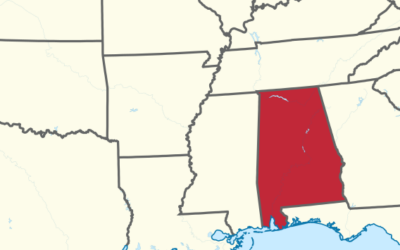
In the last week of January, the Alabama House of Representatives voted seventy-six to fourteen to repeal a sixty-year-old statute. The statute did something very dull. It required the University of Alabama to maintain a standalone School of Social Work, with its own dean, its own budget, its own walls. The bill that repealed it, House Bill 152, was two sections long. Its sponsor described it as a matter of flexibility and outcomes-based funding. In April the Senate passed it thirty-four to nothing, the governor signed it, and on the first of October the school ceases to exist as a thing the legislature requires the university to have.
If you are a physician reading this, you have probably already stopped paying attention, because this is a story about social work in a state you do not live in, and you have your own problems. I want to ask you to keep reading. Because the same week that Alabama was doing this to a school of social work, the state of Kansas was doing something structurally identical to a board of nursing, and it was signed by a Democrat, and almost no one noticed that the two acts were the same act.
That is the subject of this essay. Not the people doing it. The act itself, and the fact that the act has begun to travel.
What Is Actually Being Taken Apart
Let me describe what was built before I describe what is being dismantled, because the thing being dismantled is invisible until you can see its shape.
There is a particular kind of authority that does not come from the state. It comes from a profession governing itself. A group of practitioners agrees, over generations, on what competence looks like. They write it down. They train people in it, they test for it, they discipline the ones who violate it, and they accredit the schools that teach it. The state recognizes this authority but does not author it. When you are treated by a clinician, the thing standing between you and harm is not a legislator. It is this slow, peer-built, self-correcting body of standards, enforced by people who answer to the standards rather than to an election.
There is a reason this authority gets written down in numbers and credentials and pass rates rather than left to private judgment. Historian of science, Theodore Porter, once noticed that institutions reach for quantification precisely when they cannot rely on trust, when their decisions must be defended to strangers and outsiders and hostile parties who will not simply take an expert’s word. The license, the board exam, the accreditation standard: these are not the profession’s knowledge. They are the profession’s knowledge translated into a form that can survive contact with people who do not share its values. Porter called this mechanical objectivity, the substitution of explicit rules for expert discretion in order to hold authority at a distance from suspicion. It is armor. And like all armor, it can be turned against the body it was built to protect.
It is worth saying plainly what that authority is for. A code of ethics is not decoration. It is the thing that lets a clinician refuse. When a payer wants a cheaper course of treatment than the patient needs, when an employer wants a diagnosis bent to fit a contract, when there is money to be made by doing the wrong thing, the practitioner’s standing to say no rests on a standard that did not come from the payer or the employer or the legislature. The evidence base does the same work from the other direction. Science is not neutral toward profit. It is a record of what does not work, and a record of what does not work is precisely what you do not want enforced if you are the one selling it. The ethics and the science together are the friction that has always stood between a sick person and the people positioned to treat that person as a source of revenue. That friction is the thing being removed.
Here is the vulnerability. If professional authority lives in those external artifacts, in the statute that mandates the school and the standard that accredits it and the exam that licenses the graduate, then whoever controls the artifacts controls the profession. You do not need to win an argument about clinical science. You do not need to retrain anyone or persuade anyone of anything. You need only to relocate the artifacts, to move the power to define competence out of the profession and into the legislature. Do that, and the profession continues to exist in name while quietly becoming something the state can author.
That is the act. Everything that follows is a variation on it.
Alabama Was the Test
Social work was the natural place to run the test, and not for flattering reasons.
In 2022 the body that accredits social work programs updated its standards to require that students demonstrate competence in anti-racism, diversity, and structural analysis. The profession’s code of ethics already named social justice as an obligation. In 2024 Alabama passed Senate Bill 129, which prohibits public universities from teaching what it calls divisive concepts, including the proposition that systems can be structurally racist. A school of social work in Alabama was now required by its accreditor to teach something the state had made it unlawful to teach. Comply with the state and lose accreditation. Keep accreditation and break the law. There was no third option, and that was not an accident. The profession had been selected for this fight precisely because its ethics made the collision unavoidable.
House Bill 152 did not resolve the collision by banning anything. That is the elegant part. It simply removed the 1965 statute that gave the School of Social Work its independence. The university’s spokesman called this autonomy, and it is autonomy of a kind: autonomy for the central administration from the legislature. What it removes is the school’s autonomy from the central administration. A school can be defended. A department absorbed into a larger college, its dean downgraded to a chair, its budget set by someone managing a dozen other departments, cannot. When the fiscal pressures arrive, and they always arrive, the program loses quietly to constituencies with more weight. No one ever has to say the word ideology. The reorganization is routine. The accreditation defense dissolves not because anyone overruled the accreditor but because there is no longer a distinct thing for the accreditor to accredit.
A companion bill went further, and is worth knowing about even though it stalled in committee. House Bill 382 would have prohibited any accreditor from penalizing an Alabama university for complying with state law, and authorized the university’s trustees to sue the accreditor if it tried. As a legal mechanism it is probably toothless, since federal courts will likely route those disputes into the arbitration that accreditation agreements already require. But the bill states its intention in one extraordinary line. As introduced, it authorized a public institution to pursue accreditation from a body it names outright, the Commission for Public Higher Education, or any other accrediting agency not approved by the United States Department of Education. The legislature wrote into Alabama law, by name, an accreditor that the federal government had not approved and that at the time had accredited no one, a phantom written into statute. For now the bill still requires the institution to keep a federally approved accreditor alongside it, so the reserved seat sits empty for the moment. But you do not reserve a seat in law for a body that does not exist unless you mean for it to exist, and mean for it to matter. The bill treats the national accreditor as a hostile foreign power to be sued into compliance, and in the same breath it writes the politically aligned replacement into law before that replacement has drawn its first breath. Even unpassed, it is a blueprint rather than a grievance.
Not a Conspiracy, Which Is Worse
It would be comforting to describe all of this as a plan, a single coordinated campaign run from a control room somewhere. Much of the writing on these laws describes it exactly that way, and I understand the temptation. But I think it is wrong, and I think the truth is more frightening than the conspiracy.
What is actually happening is that a mechanism has been demonstrated to work, and a working mechanism does not require a conspiracy. It needs only to be available. The fight over diversity in higher education forged a particular tool, a way to relocate authority over a profession from the profession to the state. The tool was made for an ideological purpose. But a tool, once made, lies on the bench available to anyone, and it does not remember why it was forged. It will open any door. And every time someone uses it, for any reason at all, using it becomes a little more ordinary, the next use a little easier to justify, the thing itself a little less remarkable.
And there is one interest that has wanted this particular door open for a very long time, and has never troubled to hide it. Long before the culture war found social work, there was a patient and well-funded argument, circulated for decades through model legislation and think-tank papers, that professional licensing is not a public protection at all but a cartel, a racket, a monopoly that inflates wages and offends the free market. The people who make that argument are indifferent to anti-racism. What they want is a clinical workforce with no independent authority to refuse, no board that can decline to certify, no code that can decline an order, no evidence base that can decline to bill for what does not work. That is worth an enormous amount of money to insurers, to managed care companies, to the private equity that now owns a growing share of American clinics and hospitals, because professional ethics is the last thing standing between those entities and a free hand. That interest predates the culture war and will outlast it. The ideological fights flare up and die down above it, and each one, whichever side wins, moves the deregulation a step closer, because the culture war keeps handing it a crowbar it could not have forged on its own. Sometimes the crowbar is passed over from the right, in the name of fighting woke ideology. Sometimes, as with the licensing exam, it is passed over from the left, in the name of fighting bias. The project underneath does not care who hands it the tool. It cares only that the tool keeps being handed over.
You can see the convergence most clearly inside social work itself, in the long fight over its licensing exam. When the national exam board released its own demographic data, it showed that Black candidates passed the clinical exam on the first attempt at a rate of about forty-five percent, against about eighty-four percent for white candidates, a gap of nearly forty points. Reformers on the left read this as evidence of a biased instrument and pushed for pathways to licensure that do not require the exam at all, and several states built them. Deregulators on the right read the same crisis as a reason to abandon the national exam entirely and substitute something of their own. One side wants to remove a barrier it sees as discriminatory. The other wants to remove a standard it sees as captured. They arrive, from opposite ends of the moral universe, at the same destination: the unbundling of a unified national credential. The credential does not survive being wanted gone by everyone at once.
Then watch the same act spread across professions and across the aisle, which is how you know it is not one party’s plot but something closer to a contagion of method.
In Florida, then Texas, then Alabama, the state supreme courts have moved to strip the national law-school accreditor of its gatekeeping role over the bar exam. Alabama’s order, issued at the end of April, will let graduates of unaccredited law schools sit for the exam beginning next year. The justification this time was not anti-racism. It was competition, and cost, and the language of breaking up a cartel. Same act. Different reason.
Six southern public university systems have announced their own accreditor, the Commission for Public Higher Education, to stand beside or replace the regional body that has accredited their institutions for a century. Its founders in Florida, the governor most of all, describe it as a weapon against what they call woke accreditation cartels and a way to reclaim control over what the universities are permitted to teach. Its founders in North Carolina and Georgia describe it, with apparent sincerity, as a way to cut paperwork and administrative burden, and they have worked to distance it from the politics. Both of those things are true at once, which is what makes the body so useful. The same institution can be a sincere efficiency measure and an instrument of ideological capture, and the people building it do not have to agree with each other about which it is. It does not yet accredit anyone. It is seeking federal recognition somewhere around 2027. But the parallel infrastructure is being poured now, in concrete, in public. Alabama poured its share early. The accreditor that does not yet exist is already written, by name, into the text of a bill drafted to free the state’s universities from the accreditor that does.
It is worth being precise about which layer this operates on. Accreditation comes in two layers stacked on top of each other. One accredits the whole institution, and the century-old regional body the new commission was built to replace is an institutional accreditor of that kind. The other accredits the specific program, and for social work that body is the Council on Social Work Education, the same accreditor whose anti-racism standards collided with Alabama law to begin with. The new commission sits at the institutional layer. It does not reach down and touch the social work program directly. But it is a finished, working proof that a state can stand up its own accreditor the moment it dislikes the standards of the national one, and nothing in that proof confines it to the layer where it was first demonstrated. Run the identical move one level down, against the programmatic accreditor, and no one has to dissolve a school or sue anyone. The state simply routes the program through a body that has quietly deleted the standards it objected to, and the degree goes on being called a social work degree while certifying something the profession never agreed to. The institutional accreditor is the prototype. The programmatic one is where the same method goes next.
And then there is Kansas, which is the case that should end any remaining belief that this is one party’s project.
In April a Democratic governor signed House Bill 2528. The bill redefined unprofessional conduct for nurses so that it covers only acts related to patient care, and it voided two decades of the nursing board’s disciplinary records, back to 2005, for everything else. It required every sitting member of the board to be removed and the board reconstituted. It passed with bipartisan support. And it arrived wrapped not in the language of ideology but in the language of mercy. Nurses had testified about being disciplined for clerical errors, about licenses that lapsed during family emergencies, about a board that treated a missed renewal deadline as though it were a threat to a patient. The lead advocate was a libertarian legal foundation. The face of the bill was a nurse practitioner whose license lapsed while she cared for her husband through cancer treatment.
Read that story and you will feel the pull of it, because it is true and it is sympathetic. That is exactly what makes it the perfect vehicle. No one had to argue that nursing boards should answer to legislatures. They only had to find a board doing something cruel, and let the cruelty justify the transfer. The board itself warned, in testimony almost no one read, that the bill as written might leave it no grounds to discipline a person practicing with no license at all, and might break the data requirements that keep Kansas inside the multistate nursing compact. Those warnings were structural and boring and lost to the better story.
Alabama relocated authority over a profession using the crowbar of anti-racism politics. Kansas relocated authority over a profession using the crowbar of compassion for overworked nurses. The motives could not be more opposed and the act is identical. The mechanism does not care why you use it.
The Profession This Was Always For
Which brings us to the field that all of this was always going to reach, and in some places already has.
The method for capturing a medical board is even cleaner than the method for capturing a school, because a board is a small body of appointees. Fill the seats and you do not need to pass a single ban. Florida’s medical board, reconstituted with the governor’s appointees, simply declared a category of evidence-based care to be unprofessional conduct, overriding the standards of the national pediatric and medical associations without the legislature ever having to take a vote. The board became an instrument. The standard of care became whatever the instrument said it was.
The same machinery runs in the other direction. When medical boards tried to discipline physicians for promoting unproven pandemic treatments, several legislatures passed laws shielding those physicians from discipline, and several attorneys general warned their boards off the cases entirely. In one state the attorney general personally intervened to defend a physician the board had sanctioned. Strip a board of the power to punish disinformation and you have done the same thing as packing it. You have moved the definition of acceptable practice out of the profession and into politics. A board that cannot discipline the spread of falsehood is not a self-governing profession. It is a logo.
And beside all of this, alternative certification boards have grown up next to the established ones, so that a practitioner who rejects the mainstream consensus can purchase legitimacy from an authority more agreeable to his views. The body that has certified medical specialists for a century has documented the result: physicians it stripped of certification, for offenses ranging from sexual misconduct to mis-prescribing controlled substances, who now hold an alternative board’s credential and go on practicing. This is the same pattern transposed into medicine. Not one standard enforced by a profession, but a market of standards a practitioner can shop until the credential finally agrees with him.
None of this required a master plan. It required only that the social work test succeed well enough to prove the method. The method is now proven.
Who Profits
So far this has been a story about legislatures and boards, which can make it sound like an argument about politics. It is not. The legislatures are the instrument. To see what the instrument is for, look at the one part of American law that has, for a century, kept corporations from owning doctors outright.
It is called the corporate practice of medicine doctrine, and some version of it exists in roughly two thirds of the states. The premise is old and plain. A clinician who can be fired by a shareholder cannot be relied on to put the patient first, so a company may not own a medical practice or employ the physician who runs it. The doctor’s loyalty is meant to run to the patient, and the doctrine exists so that no one can buy it.
Capital has spent the past decade building a way around the doctrine instead of repealing it. The vehicle is called the management services organization. A private equity firm cannot legally own the practice, so it installs one compliant physician as the nominal owner, a figure the lawyers themselves call the friendly PC, and then binds that owner to a management contract that hands the firm everything that actually decides how medicine gets practiced: the billing, the staffing, the schedule, the referrals, and the bulk of the revenue, drawn back out as management fees. The physician owns the practice on paper. The firm runs it in fact. This is not a fringe maneuver. When an emergency medicine group challenged one of these structures in California, the private equity owner walked away from the entire state rather than let a court decide whether it had been practicing medicine without a license.
Now the two halves of this essay meet. The only thing a clinician inside one of those arrangements can invoke to refuse a corporate instruction, to decline the impossible patient load or the profitable test the patient does not need, is the professional standard. The board, the code, the evidence base. It is the same armor every earlier section has been about. And the people dismantling that armor on the licensing side are coming for the doctrine itself. The Cato Institute’s handbook for state lawmakers lists, in one sentence, three things state governments should eliminate: the licensing of medical professionals, certificate-of-need laws, and the corporate practice of medicine. Not reform. Eliminate. The same shop that drafts the universal-recognition bills and publishes that licensing is a cartel wants gone the last doctrine standing between a hospital ward and a hedge fund.
Seen from there, the earlier moves stop looking like separate culture-war skirmishes and start looking like demolition on a single building. The accreditor unbundled in Alabama, the board defanged in Kansas, the medical board captured in Florida, the degree hollowed out in West Virginia, and the corporate-practice doctrine deleted wherever it still stands. None of that deregulates medicine. It transfers it, whole, to whoever can afford to buy a practice and hire a physician to sign for it.
What It Costs
Whatever one state does to its professions does not stay in that state.
There exists a body of model legislation, circulated for years among state lawmakers, that treats occupational licensing itself as the problem, an anti-competitive racket to be dismantled. Its signature provision requires a state to license anyone already licensed in another state, and, more remarkably, anyone who simply worked for three years in a state that required no license at all. Read that against everything above. If one state builds a pathway to clinical licensure that bypasses the accredited degree, and West Virginia has effectively done this in social work by letting people qualify through a four-year internal agency program instead of an accredited school, universal recognition obligates the other states to honor it. The floor in the most deregulated state becomes the floor everywhere it can migrate. This is not a side effect. It is the design, and its authors are explicit that the aim is to generalize across every licensed profession. They are thinking in decades. What they did not have to supply was the motive force, because the motive force is being generously supplied by everyone else, for their own unrelated reasons.
The first thing this breaks is the trust that lets professionals move across state lines. The nursing compact, the emerging social work compact, the physician compacts all rest on one assumption, that every member state means the same thing by the word licensed. Once Kansas voids its disciplinary records, and Alabama lets unaccredited graduates sit for the bar, and Florida accredits its own universities, and a state licenses social workers who never attended a social work program, that assumption fails. The careful states will eventually be forced to refuse reciprocity in order to protect their own populations, and the careful states will be cast as the obstructionists for doing it. The result is not a national profession with portable standards. It is fifty professions, and a clinician’s competence becomes a function of which legislature happened to define it.
The second thing it breaks is the faculty. A professor of social work in Alabama is now asked to choose between violating the law and violating the ethics of her field. People do not stay in that position. They leave for states that do not ask it of them, and they take their grants and their research with them, and the education available in the states that drove them out degrades accordingly, and the people most harmed by the degraded education are the ones who could never afford to leave.
But the deepest cost is the one the entire exercise was meant to produce, and it is not chaos. A deregulated profession is not a profession in disorder. It is a profession that has lost the power to refuse, which is a very orderly condition from the point of view of whoever now gives the orders. Picture the end state plainly. A social worker who can no longer cite a code to decline what an agency demands. A nurse whose board may discipline only the narrowest physical harm, working at whatever staffing level the corporation finds profitable. A physician whose standard of care is set by a board the payer helped to seat, or by no board at all, free to bill for the unproven and unable to refuse the lucrative. Take the ethics and the science out of the three professions that stand at the bedside, and what remains is a workforce that does as it is told by the people who profit from the telling. That is the destination. Not only a country with worse clinicians, though it will have those, but a country in which the doctor and the nurse and the social worker have been quietly converted from agents of the patient into instruments of the payer, and stripped of the professional standing they would need to even name the conversion while it is happening to them.
While It Is Still Someone Else’s Profession
I want to end where I began, with the request to the physician and the nurse who assumed this was a social work story.
It was never a social work story. Social work was chosen to go first because it was the softest target, a profession that is mostly women, mostly underpaid, explicitly aligned with the marginalized, and bound by an ethics that made it impossible to comply and survive at the same time. It was selected for the same reason you test a weapon against the least defended position. The defending of it was always going to fall to people who did not believe it was their fight.
But the question that Alabama is actually asking is not a question about social work. It is this. Can a legislature overrule a profession’s own definition of competence, and make the practitioner answer to the election rather than to the standard? If the answer turns out to be yes, the answer is yes for all of you. The body that accredits your medical school, the board that licenses your nursing practice, the certification that says you are qualified to do the thing you spent a decade learning to do, every one of them lives in the same kind of external artifact that is being relocated right now, in the open, in the dull and reasonable language of flexibility and efficiency and mercy and competition.
The mistake is to wait for the version that arrives wearing your own profession’s name and your own preferred politics. Because by then the method will be so thoroughly ordinary that it will no longer look like anything at all. It will look like housekeeping. It will look like a two-section bill. The defense of an accreditor in Alabama, and the integrity of a nursing board in Kansas, and the autonomy of a medical board in Florida are not three stories. They are one act, performed by different hands, for different reasons, on different victims. And the only thing that has ever stopped an act like this is the refusal of the people it has not yet reached to pretend that it is not coming for them.
That refusal has to happen while it is still someone else’s profession. After that, there is no one left with the standing to refuse.
Sources and further reading
- Alabama House Bill 152 (2026 Regular Session), repealing the 1965 standalone School of Social Work mandate (Article 7, Chapter 47, Title 16). Coverage: Alabama Reflector, The Crimson White, 1819 News; bill history via LegiScan. Signed by Gov. Kay Ivey; effective Oct. 1, 2026.
- Alabama Senate Bill 129 (2024), restricting “divisive concepts” at public institutions.
- Alabama House Bill 382 (2026), sponsored by Rep. Susan DuBose; advanced out of the House Education Policy Committee but did not become law. As introduced, Section 1(b) names the Commission for Public Higher Education and authorizes a public institution to pursue accreditation by it “or other accrediting agency not approved by the United States Department of Education,” provided the institution maintains accreditation from a federally approved agency. Bill text via the Alabama Legislature; status via Alabama Daily News.
- Council on Social Work Education, 2022 Educational Policy and Accreditation Standards (anti-racism, diversity, equity, and inclusion competencies).
- Commission for Public Higher Education, announced June 26, 2025 by six southern public university systems (Florida, Georgia, North Carolina, South Carolina, Tennessee, Texas); an institutional accreditor positioned as an alternative to the regional accreditor SACSCOC, distinct from the programmatic accreditor for social work (CSWE); seeking U.S. Department of Education recognition c. 2027-2028, framed by Florida leadership as a check on “woke” accreditation and by other member systems as administrative burden reduction. Coverage: Inside Higher Ed, The Assembly, Georgia Public Broadcasting; AAUP; CPHE.org.
- Alabama Supreme Court order (April 30, 2026) ending the ABA-accreditation requirement for bar admission, following Florida and Texas. Coverage: ABA Journal.
- Florida Senate Bill 7044 (2022), mandating accreditor changes.
- Association of Social Work Boards, 2022 Exam Pass Rate Analysis (first-time clinical exam pass rates: ~45% Black, ~84% white test-takers). Alternative-pathway legislation including Illinois SB 1632 (2021).
- American Legislative Exchange Council, Model Interstate-Mobility and Universal-Recognition Occupational Licensing Act.
- West Virginia Code §30-30-16, provisional licensure to practice social work.
- Kansas House Bill 2528 (2026), signed by Gov. Laura Kelly on April 7, 2026; redefines “unprofessional conduct,” voids non-practice disciplinary actions back to 2005, and reconstitutes the Board of Nursing. Coverage: Kansas Reflector, Nurse.com, Pacific Legal Foundation; opposition testimony from the Kansas State Board of Nursing.
- Florida Board of Medicine rule restricting gender-affirming care for minors; state laws shielding physicians from discipline for prescribing unproven treatments (e.g., Missouri, North Dakota, Tennessee) and related attorney-general interventions; AAPS v. ABMS; alternative certification bodies (NBPAS, ABPS). ABMS has stated that it identified physicians whose certifications its member boards revoked for misconduct, including sexual harassment and mis-prescribing controlled substances, who hold NBPAS certification.
- The corporate practice of medicine doctrine, in force in roughly two-thirds of states, and the management-services-organization (“friendly PC”) structure used to work around it; AAEMPG v. Envision, in which the private-equity-backed Envision withdrew from California rather than face a ruling on the arrangement; state countermeasures including California SB 351 (2025) and Oregon SB 951 (2025).
- Cato Institute, Cato Handbook for Policymakers, “Health Care Regulation,” recommending that state governments eliminate the licensing of medical professionals, certificate-of-need laws, and corporate-practice-of-medicine laws.
















0 Comments