
Dreams keep their place in therapy because they are the purest projective material available. Nobody wrote them, nobody edited them, and the person who produced them was not trying to make an impression. In a way, dreams are our own personal mythology.
Patients bring recurring dreams that have run for years — sometimes decades. My working understanding is that a recurring dream is an attempt the unconscious is making to tell you something, and that if you aren’t listening, it keeps trying. Sometimes a patient and I chew on one for months. But when the person finally hears what the dream is saying, it usually stops. I’ve watched that happen often enough to stop being surprised by it.
This is a guide to the images that show up most often, and — more importantly — to the method for reading them. The method matters more than the catalogue, and I want to make the case for that before handing over any symbols at all.
What the science actually says about dreaming
For most of the late twentieth century, the dominant neuroscientific position was that dreams are meaningless. Hobson and McCarley’s activation-synthesis model, published in 1977, held that the brainstem generates random activation during REM and the cortex confabulates a story around the noise. On that account, looking for meaning in a dream is looking for meaning in static.
That position has not aged well, and the work that undermined it deserves to be better known among people who read dreams.
Mark Solms’ lesion studies are the decisive evidence. Solms studied patients with various brain injuries and found a dissociation that activation-synthesis cannot accommodate. Patients with brainstem damage who lost REM sleep entirely continued to report dreaming. Patients with damage to the ventromesial frontal white matter — a dopaminergic pathway with nothing to do with REM generation — stopped dreaming altogether while their REM sleep continued normally.
Dreaming and REM are separable. And the pathway that turns dreaming off is the mesolimbic dopamine system — what Jaak Panksepp called the SEEKING system, the circuitry of appetite, curiosity and motivated pursuit.
Which means dreams are not random. They are motivated. They are generated by the system that wants things. See Solms on the conscious id and the neuroarchitecture of oneiric consciousness.
Antti Revonsuo’s threat simulation theory adds a functional account. He proposed that dreaming evolved as a rehearsal mechanism — a safe environment for practising responses to threat. The theory makes a checkable prediction: dream content should over-represent danger relative to waking life. It does, substantially and across cultures.
Matthew Walker’s work on overnight therapy supplies the emotional mechanism. REM sleep is the only state in which noradrenaline — the brain’s stress neurochemical — is essentially absent. Walker’s proposal is that REM allows emotional memories to be reprocessed without the chemical signature of the original distress, stripping the charge while preserving the content. Dreaming, on this account, is how the nervous system metabolizes experience.
Put those together and the picture is remarkably close to what depth psychology claimed without the imaging. Dreams are motivated, they rehearse what matters, and they process emotion. See the architecture of sleep and what are dreams.
Dreams as rehearsal for change
Jung’s formulation was that dreams use the past to conceptualize the future. When we are on the edge of a large and often unavoidable change, we dig into the unconscious to try to predict what’s coming — and the unconscious builds collages out of past experience and hidden belief.
That reading sits comfortably beside Revonsuo’s simulation account. Both say the dream is a model being run. The difference is scope: Revonsuo’s model rehearses physical threat, Jung’s rehearses psychological transition. In practice most clinically significant dreams are the second kind.
This is why dreams intensify around thresholds — a marriage ending, a parent dying, a career decision, a diagnosis. The system is running scenarios. See an introduction to Jungian dream interpretation.
How to read a dream, before you read any symbols
This is the part people skip, and skipping it is why dream dictionaries produce nonsense.
The dreamer’s association comes first, always. If a patient dreams of a horse, what matters is what horses mean to them — whether they grew up around them, whether one threw them at nine, whether their father kept them. The general symbolism is a fallback for when personal association is genuinely absent, not a replacement for asking.
Amplify, don’t free-associate. This was Jung’s break with Freud. Free association leads away from the image — you chain outward until you arrive at a complex you could have reached from any starting point. Amplification stays put: circle the image, gather parallels from myth, story and culture, but keep returning to the thing itself. The image is the message, not a code for the message.
James Hillman pushed this furthest with his instruction to stick to the image and resist translating it into concepts. A dream about a black dog should stay a black dog as long as possible, because the moment you decide it “means depression” you stop looking at it. See Hillman on re-visioning psychology.
Assume compensation. Jung held that dreams compensate for one-sidedness in the conscious attitude. The person who is relentlessly rational dreams of chaos. The person who is collapsed dreams of power. When a dream seems to contradict everything you know about a patient, that contradiction is likely the point.
Read the series, not the dream. A single dream is a sentence fragment. Marie-Louise von Franz was emphatic that dreams should be read in sequence, because the unconscious develops a theme across weeks and the direction of travel carries more information than any one night. See von Franz on dreams and the unconscious.
Objective or subjective. A dream about your mother might be about your mother, or about the mothering function in you. Both readings are legitimate and they produce different work. Usually it’s worth trying both aloud and watching which one lands in the body.
That last check is the closest thing to a validity test dream work has. If an interpretation is right, something shifts — a breath, a change in posture, a sudden quiet. If nothing moves, the interpretation is clever and wrong.
Architecture: the images of the self
The house
A house in a dream is almost always the dreamer’s understanding of their own life. It is the most reliable symbol in the entire repertoire.
Dreams of moving house, of adding on, of damage to the structure, tend to cluster around unconscious fear that the life journey is going off course. Pay attention to style and furnishing — a patient who dreams of their own house as their grandmother’s house is telling you something specific about whose life they think they’re living.
Finding new rooms is the single most common house dream, and it almost always represents discovering opportunity or unrecognized aspects of the self. Patients often report it with a distinctive quality of pleasure and disbelief — this was here the whole time. It frequently arrives before people consciously know they’re about to change something.
A party in your house you weren’t told about is the other common one. This usually points to feeling left out, uninvited, peripheral in your own life. Sometimes it’s the experience of watching other people be more comfortable in your existence than you are.
Basements and attics follow the vertical logic that structures most human metaphor — down is older, buried, repressed; up is aspiration, abstraction, sometimes dissociation. Jung’s own famous house dream, with its descent through historical layers into a prehistoric cave, is where the idea of the collective unconscious came from.
Rooms you can’t enter, doors that won’t open, hallways that keep going — these tend to mark material that is present and not yet available. Not repressed exactly. Adjacent.
The garden
The garden is an old archetype running through myth and legend, and it represents the deep and true self — separate from anxiety and ego.
We lose access to the garden in dreams during stressful periods, when we lose access to ourselves and to the capacity to feel. We stumble back into it when contact with the self is needed. Patients are frequently surprised by the lushness of it, which is itself the point: the shock of unexpectedly seeing who you actually are.
Unintegrated material shows up in the garden as things out of place — trash, graffiti, an object that doesn’t belong, an animal that shouldn’t be there. The garden dream is often where shadow material first appears in a form the dreamer can tolerate.
The walled garden — the hortus conclusus, the temenos — carries additional weight. Enclosure implies protection, and protection implies something worth protecting.
Thresholds, stairs and bridges
Doorways, gates, staircases, bridges and tunnels are transition images, and they intensify around actual life transitions with almost boring reliability.
What matters is the quality of the crossing. Is the bridge sound? Is something waiting on the far side? Can you get back? A patient who repeatedly dreams of bridges that end partway across is telling you something precise about a decision they’ve half-made.
Movement: the images of control and direction
The car
The car is our sense of control.
Life regularly reminds us that we govern far less than we would like, and we regularly pretend otherwise. Car dreams are where that pretence breaks down.
Driving with no brakes is among the most common dreams in the whole catalogue, and it speaks almost always to lack of control over the pace and direction of life. Related: the accelerator sticking, the wheel not responding, the car moving while you’re in the back seat.
Driving in heavy fog, or suddenly on unfamiliar roads in an unknown country points to fear of directionlessness rather than fear of speed. Different problem, different work.
Someone else driving is worth asking about directly. Who? A parent, a partner, a stranger, nobody at all? That answer usually names the thing the dreamer has handed their agency to.
Not being able to find the car — in a parking structure, on a street, in a city — often shows up during periods when a person has lost their sense of forward motion entirely. It rhymes with the lost-and-wandering dream and frequently co-occurs with it.
Falling and flying
Falling arrives most often at the edge of sleep, and there’s a plausible physiological component in the hypnic jerk. But falling within a developed dream narrative usually carries the sense of losing support — the ground going, the structure failing, the thing you were standing on turning out not to hold.
Flying is more ambiguous than the self-help literature suggests. Sometimes it’s genuine liberation. Sometimes it’s escape from something on the ground that needs attending to. Ask what the flier is flying away from before you congratulate them.
Being chased
The most universal dream there is, and the one Revonsuo’s threat simulation theory predicts most directly.
Clinically, the question that produces movement is not “what is chasing you” but “what happens if you stop?” Patients almost never consider this. Many recurring chase dreams resolve — permanently — after the dreamer turns around inside the dream and looks at the pursuer. Sometimes they can be coached to do this while awake, rehearsing the turn.
Very often the pursuer, once faced, turns out to be small, or familiar, or already known.
The shadow and its animals
In Jungian psychology the shadow is everything we do not want to examine or accept — memories, behaviours, desires that frighten us, but more often deep parts of the life journey we refuse to acknowledge.
The shadow is most recognizable in our reactions to it in other people. When we are disproportionately judgmental, angry or afraid of someone, it’s usually because they represent something in us that we judge, fear or hate. We can see the shadow in others and tell it exactly what we think of it. We force other people to hold parts of us we aren’t ready to hold ourselves.
In dreams the ego is not standing guard, so we encounter the shadow directly — most commonly as animals. See the Jungian shadow, fifty common symbols of the shadow in dreams, and how animals show up in dreams.
The wolf
The wolf is one of the oldest and usually earliest forms the shadow takes. It’s as common in children’s dreams as in children’s stories.
Wolves belong to the vast black mystery of night, of woods, and of the hidden darkest parts of the family. Before children can articulate their experience intellectually they express it metaphorically, and the wolf is often the earliest available metaphor. Shadows in the bedroom become wolves. Children hear howling in the night.
Little Red Riding Hood is worth sitting with, because the structure is exact. A child meets the wolf in the shadow of the woods. The wolf then hides inside the child’s family — wearing the grandmother — and simultaneously hides the family inside its belly. Children who sense something predatory in their household frequently dream the wolf long before they can say what is wrong.
The wolf reminds us there is something vast and visceral in the dark with teeth and claws, and that we are small. When it appears in adult dreams it usually indicates fear of the environment or of large parts of the self — and it emphasizes how dark and impenetrable those parts remain.
The snake
The snake is a boundary transgressor. It enters sacred places the shadow isn’t supposed to reach — gardens, temples, bedrooms, the inside of the family.
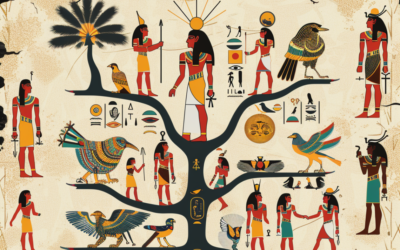
The darkness the wolf represents is a known danger. The snake appears unexpectedly, in a place that was safe, or suddenly at your feet. In Egyptian myth and Arthurian legend alike it arrives during apparent peace and creates discord.
In dreams the snake often behaves as a trickster rather than a predator. We frequently don’t react to it as a threat; we talk to it, and it talks back, like a salesman who wins our trust. The snake wants to cross a line. It wants into our homes, our hearts, our churches. There is no warning — you don’t see the snake until you see it, and then it’s late.
When the snake appears, my working assumption is that a boundary is about to be violated or already has been. That’s the question I ask.
Worth noting the ambivalence, though: the snake is also Asclepius, also kundalini, also the ouroboros. Transformation and violation share an image, because both involve something crossing a line that was supposed to hold.
The spider
The spider is old in art and culture, and unlike the snake it can appear anywhere. It is the image of disorientation and confusion.
In myths and dreams spiders are almost never ordinary size — they are minute or enormous. They walk through walls. They arrive from nowhere.
What makes this form of the shadow so frightening is that it signals the rules are changing, or that you never knew the rules. Spiders spin webs and lay traps. When they appear, they remind us we are not as in control as we believe — and often that we are already caught in something we didn’t see being built.
Other animals worth knowing
The bear carries maternal power and territorial rage together, and often appears around mothers — either the dreamer’s or the one they’re becoming.
The dog is domesticated shadow. Loyal, familiar, but with the wolf still in it. A threatening dog usually means something the dreamer thought was tame.
Rats and insects in swarms tend to appear around contamination, shame, and the sense of being overwhelmed by something small and multiplying. This is frequently a disgust image rather than a fear image, and disgust usually points toward shame.
Birds generally carry thought, message, perspective. Crows and ravens are frequently psychopomps — the thing that arrives when something is ending.
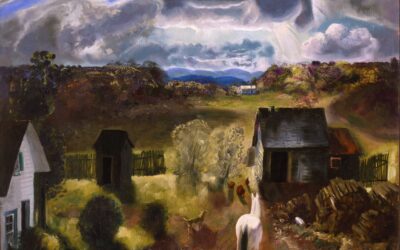
The horse is instinctual power that can be ridden, which makes it a hopeful image. A horse in a dream is usually shadow that is available to be worked with rather than fought.
See monsters in dreams and the dragon archetype.
The body’s images
Teeth falling out. Extraordinarily common and cross-culturally consistent. Usual associations: loss of power, fear of ageing, shame about appearance, and — specifically — anxiety about speech. Teeth are in the mouth. A run of teeth dreams frequently accompanies a period when someone can’t say something.
Nakedness in public. Exposure, shame, imposture. The detail that matters is whether anyone notices. Patients who dream themselves naked in a crowd that doesn’t react are describing something different from those whose crowd stares.
Injury or paralysis. Being unable to move or speak while something approaches maps closely onto the freeze response, and in patients with trauma histories this frequently isn’t symbolic at all — it’s a somatic memory surfacing in the format available. See what is dissociation.
Pregnancy and birth. Almost never literal outside actual pregnancy. Usually something forming that isn’t ready, and that the dreamer has feelings about carrying.
The clinical value of tracking these is that they anchor to the body — see glass objects in the mouth for an extended example of one recurring somatic image.
Water
Water is the unconscious itself in nearly every tradition that thinks about dreams, and the relevant variables are depth, clarity and motion.
Calm clear water tends to accompany periods of access — things are visible.
Dark or murky water is the more common presentation and usually indicates material that is present and not yet visible.
Flood is being overwhelmed by unconscious content, and it is a genuinely useful warning sign. A run of flood dreams often precedes a decompensation by weeks.
Drowning versus swimming is the distinction that matters clinically. Swimming means there’s capacity. Drowning means there isn’t. Campbell’s line about the artist swimming in the ocean the psychotic drowns in is exactly this image, and dreams supply the diagnostic.
Wells, springs, deep pools are narrow apertures to great depth — usually a specific access point to something otherwise unreachable.
The people in dreams
The stranger of your own sex is classically a shadow figure. Watch how the dreamer describes them; the adjectives are usually the disowned quality.
The figure of the opposite sex Jung read as anima or animus — the contrasexual function carrying the undeveloped half of the personality. Read at the subjective level, this figure often represents capacities the dreamer projects rather than owns.
The dead appear frequently, and it’s worth resisting the urge to psychologize immediately. Grief dreams often arrive in a recognizable sequence — first the dead person is confused or doesn’t know they’ve died, later they are peaceful, later still they simply visit. That progression frequently tracks the grief itself.
The child — your own, or an unknown one you’re responsible for — usually points to something vulnerable and new that requires care. Forgetting a baby somewhere is a very common dream in people who have neglected something essential in themselves.
The old man or woman tends to arrive as guide or teacher, and often at genuine impasses. Jung’s Philemon was of this kind. Worth taking seriously when it happens.
Recurring dreams: why they repeat and what stops them
The recurring dream is the clearest evidence that dreaming is purposive rather than random.
Something has not been received. The dream returns, often for years, with remarkable stability of detail. And it stops — usually abruptly — when the dreamer actually gets it. Not when they produce a plausible interpretation, but when something lands.
Two practical notes from clinical experience.
First, the change that stops a recurring dream is frequently not an insight but a decision. The dream was rehearsing a transition; once the transition is made, there’s nothing to rehearse.
Second, recurring dreams often change slightly before they stop. A door that was always locked opens. A room that was always empty has someone in it. Those alterations are worth tracking closely, because they indicate the material is moving.
Nightmares versus trauma nightmares
This distinction is clinically important and frequently missed, and getting it wrong can hurt people.
Symbolic nightmares — the chase, the flood, the intruder — are the ordinary dreaming process working with difficult material. They respond well to interpretation, and engagement usually helps.
Replicative trauma nightmares are different in kind. They replay the event, often with near-literal fidelity, sometimes nightly, frequently waking the person in a full autonomic state. They do not develop across a series. They do not respond to interpretation, and attempting to interpret them can retraumatize.
These require treatment, not reading. Imagery Rehearsal Therapy, developed by Barry Krakow, has the strongest evidence base: the person rewrites the nightmare while awake, changing whatever they want, and rehearses the new version daily. It works better than it sounds like it should, and it works without requiring the person to process the trauma narratively.
If you are treating someone whose nightmares replay an event rather than symbolize one, treat the nightmare first. The symbolic dream work becomes available afterward, and often becomes available quite quickly.
Working with your own dreams
Write them down immediately. Dream memory decays within minutes of waking and the decay is not graceful — you lose the strangest and most specific material first, which is the material that matters.
Record the feeling, not just the plot. The affective tone is more diagnostic than the narrative. A dream about a pleasant garden that felt menacing is a menacing dream.
Note the ending. Where the dream stops is informative. Dreams that break off mid-action are often unfinished business in a literal sense.
Don’t reach for a dictionary. Ask what the image means to you first, and only consult general symbolism when you’ve genuinely got nothing.
Read across weeks. One dream is a fragment. Five in a row is an argument.
Try the interpretation out loud and watch your body. Correct readings produce a physical response. That’s the closest thing to a check that exists here, and it’s more reliable than cleverness.
Our fuller reference on symbols is the Jungian dream interpretation dictionary, with movement-based approaches covered in walking dream therapy, and reading recommendations in the best book on Jungian dream interpretation.
What not to do
Don’t interpret someone else’s dream unless they ask. Dreams are unguarded material, and telling someone what their dream means is a genuine intrusion. Ask questions instead.
Don’t over-read a single dream. Most dreams are the nervous system doing housekeeping. The ones that matter announce themselves — they have a different quality, they stay with you, and you’ll know.
Don’t treat symbols as fixed. Everything in this article is a starting point for a question, not an answer. The snake that means boundary violation for one patient means transformation for the next, and the only way to find out is to ask.
Don’t chase dreams instead of living. Dreams rehearse change. They are not a substitute for making it, and there’s a kind of patient who will happily analyze imagery for years rather than do the thing the imagery keeps pointing at.
Colour and detail
Colour is worth attending to when it’s unusually vivid, because vividness is generally a marker of significance — Jung’s “big dreams” tend to be saturated in a way ordinary dreams aren’t.
We cover the territory in the symbolism of colour in dreams and in detail for the most charged one in what does red mean in a dream.
The same caution applies. Red is not a code. Ask the dreamer what red is.
A closing note
The reason I keep working with dreams after years of doing it isn’t that the symbols are reliable. It’s that the process is honest in a way waking conversation often isn’t.
A patient can talk convincingly about their marriage for an hour and then report a dream in which their house is on fire and they are calmly making tea. The dream does not care what the person has decided to believe. It shows the situation as the deeper systems have assessed it, using the only vocabulary those systems have.
Solms’ finding, that dreaming runs on the circuitry of wanting, makes this less mysterious than it used to be. The dream is what desire looks like when the censor is off duty. It has been paying attention the entire time.




0 Comments