
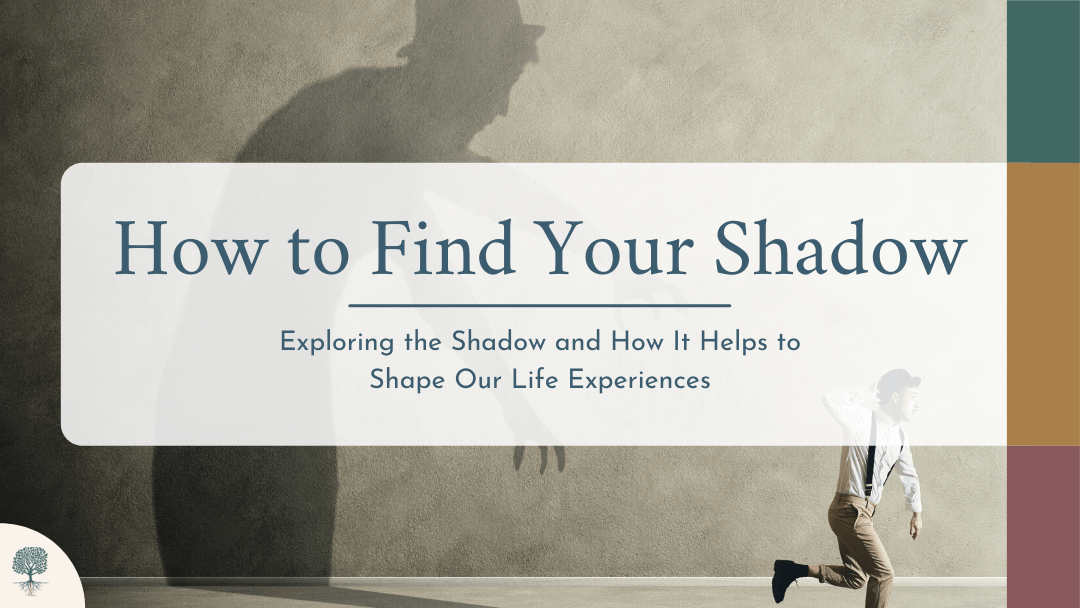
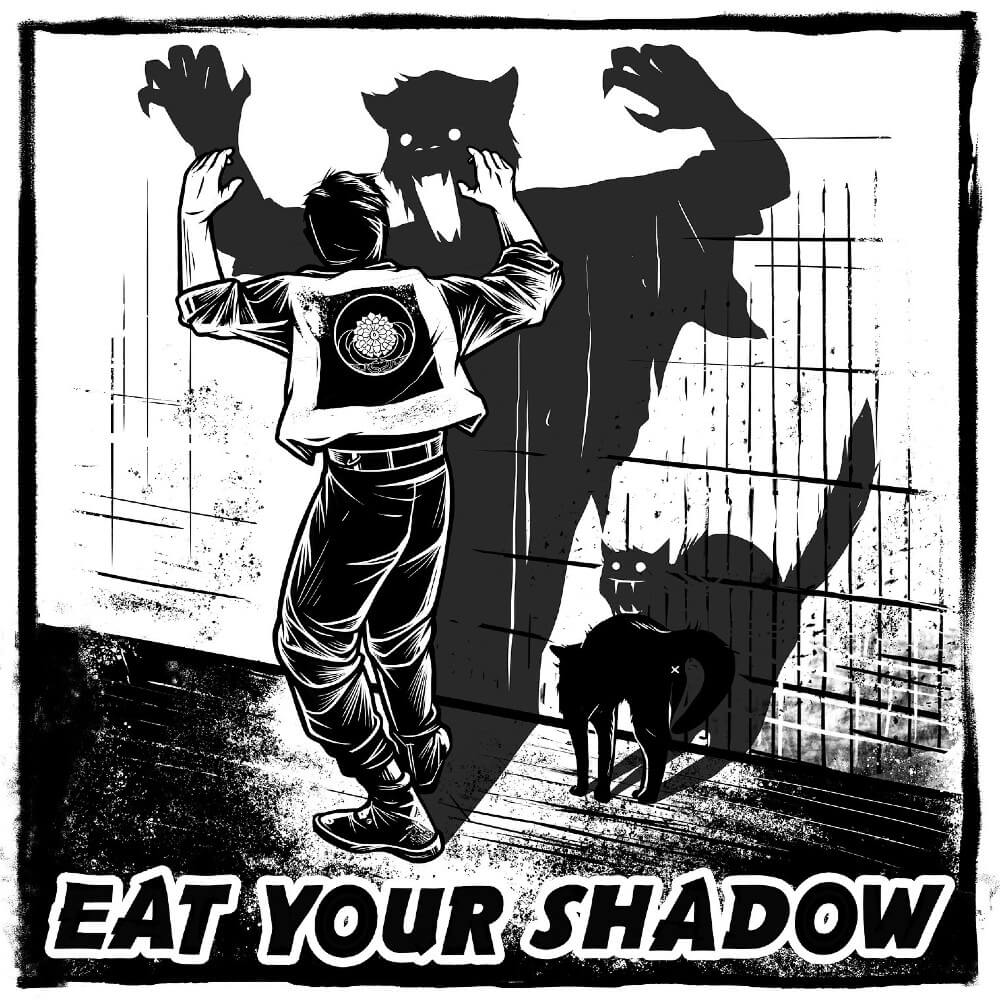
The Jungian shadow is the part of the personality that the conscious ego refuses to recognize as its own: the traits, impulses, desires and even talents that did not fit the person we were taught to be. Carl Jung argued that everyone carries a shadow, that it shows itself through projection, moods and dreams, and that facing it is the first task of psychological maturity.
Key takeaways
- Jung defined the shadow as everything a person refuses to acknowledge about themselves, which keeps returning through projection, moods and dreams.
- The shadow is not simply evil: Jung said it also holds childish and vital qualities, and later Jungians call repressed gifts the golden shadow.
- Projection drives much relational conflict, and taking projections back turns a partnership into a place where both people can change.
- Erich Neumann and Jung showed how groups and nations project their shadow onto scapegoats, so shadow work has political and spiritual stakes.
- Therapists work with the shadow through dreams, projection, parts work and body-based trauma methods, pacing the work so shame does not overwhelm the client.
What is the Jungian shadow in psychology?
There’s a picture opposite me / Of my primitive ancestry / Which stood on rocky shores / And kept the beaches shipwreck-free / Though I respect that a lot / I’d be fired if that were my job / After killing Jason off / And countless screaming Argonauts / Blue bird of friendliness / Like guardian angels it’s / Always near
They Might Be Giants, “Birdhouse in Your Soul” (Flood, 1990)
The song’s narrator, a night light, looks at a picture of a primitive ancestor who guarded a rocky shore, respects it, and is relieved that the job is not his, given the heroes it would have had to kill. That is a fair picture of the shadow. Each of us has an older, rougher inheritance that we keep at arm’s length, and part of us is quietly fascinated by it.
Jung’s original conception of the shadow
Jung did not arrive at the shadow from theory. After his break with Freud in 1913 he went through several years of what he later called his confrontation with the unconscious, recording dreams, visions and active imagination in the notebooks that became Carl Jung’s Red Book.7 In one dream from December 1913 he ambushed and killed Siegfried, the heroic figure he had admired, and woke understanding that his own heroic, willful attitude had to die. The figures he met in those years were often parts of himself he would rather not have owned.
Out of that experience and his clinical work Jung built a working definition. In the 1939 essay “Conscious, Unconscious, and Individuation” he wrote that “the shadow personifies everything that the subject refuses to acknowledge about himself and yet is always thrusting itself upon him directly or indirectly,” giving as examples inferior traits of character and other incompatible tendencies.2 The definition has two halves. The shadow is refused, and it keeps coming back.
His fullest statement came in Aion (1951), where the shadow is the first archetype he discusses. There he wrote: “The shadow is a moral problem that challenges the whole ego-personality, for no one can become conscious of the shadow without considerable moral effort. To become conscious of it involves recognizing the dark aspects of the personality as present and real.”1 Jung added that this recognition is the essential condition for any self-knowledge and that it usually meets with considerable resistance. In his structure of the psyche the shadow is the layer closest to consciousness: below the persona, the social mask, and before the deeper figures of anima, animus and Self.
Why did Jung see the shadow as universal and natural?
Jung insisted that the shadow is not a pathology that some people have and others lack. In his 1937 Terry Lectures at Yale, published as Psychology and Religion (1938), he wrote: “Everyone carries a shadow, and the less it is embodied in the individual’s conscious life, the blacker and denser it is.”3 A trait that is known can be corrected and moderated by other interests. A trait that is denied grows in isolation.
Nor did Jung equate the shadow with evil. In the same lectures he said that the shadow is “merely somewhat inferior, primitive, unadapted, and awkward; not wholly bad,” and that it “even contains childish or primitive qualities which would in a way vitalize and embellish human existence, but convention forbids!”3 The shadow becomes dangerous when it is ignored, because then it acts without the ego’s knowledge.
Behind this sits Jung’s idea of compensation. He saw the psyche as a self-regulating system, much as the body maintains its temperature and chemistry. When conscious life becomes one-sided, the unconscious produces the opposite: the relentlessly agreeable person dreams of rage, the rigidly rational one is ambushed by superstition or infatuation. The shadow carries much of this counterweight. Acknowledging it is how a person stays whole rather than brittle, and how the psyche’s own corrective signals get heard instead of erupting as symptoms.
What is the golden shadow?
Most writing on the shadow concerns its dark side, but Jung saw that positive qualities can be repressed too. In Aion he noted exceptions to the usual pattern: “those rather rare cases where the positive qualities of the personality are repressed, and the ego in consequence plays an essentially negative or unfavourable role.”1 A child punished for being bold, clever or expressive may bury exactly those traits, and an adult who was told not to get above herself may hide her ambition so thoroughly that she no longer knows she has it.
Later Jungians gave this a name, the golden shadow. Robert A. Johnson made it widely known in Owning Your Own Shadow (1991), arguing that people often resist their own nobility more fiercely than their darkness, and that they hand their gold to others by projecting it onto heroes, teachers, celebrities and lovers.8 Johnson treated the reclaiming of that gold as part of finding one’s vocation: the gift is not discovered ready-made but has to be lived into and worked for.
Reclaiming the golden shadow can be as hard as facing the dark one. It often means tolerating feelings of unworthiness, the fear of being envied or of failing in public, and the old family rule that said this gift was dangerous. When it is reclaimed, people usually report more energy, creativity and a sense of direction, because they have stopped spending effort keeping a part of themselves out of sight.
How does the shadow shape relationships?
Shadow projection and attraction
Projection is the main way the shadow enters relationships. What we cannot see in ourselves we see, often vividly, in someone else. Jung’s definition explains why: the shadow is refused, yet it keeps “thrusting itself” on us, and the easiest place for it to land is another person.2 The sign of projection is the intensity of the reaction. An ordinary dislike is proportionate. A shadow projection brings a charge of contempt, fascination or moral outrage that the other person’s behavior does not quite justify.
Falling in love often carries the golden shadow. We are drawn to someone who seems to have the confidence, freedom or tenderness we never developed. The reverse is also common: the colleague we cannot stand may be carrying our own disowned arrogance, laziness or need for attention. Recognizing the pattern does not make the other person blameless. It means asking what part of the reaction belongs to us. The site has a longer discussion of why we marry our shadow.
The shadow dance in partnerships
In couples, projection rarely runs one way. Each partner places disowned material on the other, and each partly takes in what is placed on them, a process analysts call introjection. The cautious partner sees the spontaneous one as reckless; the spontaneous partner sees the cautious one as controlling; each becomes more extreme in the role, and the fight repeats.
Sabina Spielrein, first Jung’s patient at the Burghölzli and then a psychoanalyst in her own right, wrote about the destructive edge of love in her 1912 paper “Destruction as the Cause of Coming into Being.” She argued that the sexual drive contains a dissolving component: to unite with another, part of the ego has to give itself up, and that surrender is felt as both longing and threat.9 Her paper helps explain why intimacy so often brings up the most primitive fears and why passion and conflict arrive together.
John Welwood, a psychotherapist who combined Buddhist practice with Western psychology, described in Journey of the Heart (1990) and Perfect Love, Imperfect Relationships (2006) how couples get stuck when each partner treats the other as the cause of their pain. His remedy was to take back projections: to notice the old wound that a partner’s behavior touches and to hold it with the same care one wants from the partner.
Healing through shadow work in relationships
Projection is also an opportunity. Because a partner reliably triggers our shadow, the relationship becomes a place where hidden material can be seen and worked with. Safety comes first. Arielle Schwartz, a psychologist who writes on complex PTSD, stresses that people can only look at shame-laden parts of themselves when the nervous system feels safe enough to stay present. Harville Hendrix’s Imago Dialogue, introduced in Getting the Love You Want (1988), gives couples a structure for this: one partner speaks while the other mirrors back what was said, validates its logic and expresses empathy, so that blame gives way to curiosity.
Thomas Moore, a former monk turned psychotherapist, described in Soul Mates (1994) a soulful relationship as one in which partners can bring the whole of themselves, including what they normally hide out of fear or contempt. On that view the relationship is a vessel for change in both people, not a contract between two finished selves.
What is the collective shadow?
Groups have shadows too
Groups, institutions and nations also define themselves by what they exclude. A culture that prizes self-reliance may disown dependency and project it onto the poor; a society that sees itself as peaceful may forget the violence in its founding. This collective shadow is built from shared histories of trauma, cultural blind spots and the injustices a society would rather not see.
Erich Neumann took this up in Depth Psychology and a New Ethic (German 1949, English 1969). Writing as a Jewish analyst who had left Germany for Palestine, he argued that the “old ethic” of striving for perfection forces people to repress what does not fit the ideal. The repressed material is then projected onto an outsider, and the community purifies itself by attacking that scapegoat. Neumann’s “new ethic” asks each person to accept responsibility for their own shadow so that it does not have to be carried by someone else.10
Shadow projection in politics
Politics shows the collective shadow most plainly. Movements gain energy by naming an enemy who carries everything a group fears in itself, and leaders can become screens for a population’s disowned resentment and appetite for power. In a BBC broadcast on 3 November 1946, published as “The Fight with the Shadow,” Jung tried to explain the catastrophe of Nazi Germany. His starting rule was that “the psychopathology of the masses is rooted in the psychology of the individual,” and he described how, from 1918 on, he had seen images of primitivity, violence and cruelty in the dreams of his German patients.6
In Aion Jung stated the same principle in general form: “The psychological rule says that when an inner situation is not made conscious, it happens outside, as fate. That is to say, when the individual remains undivided and does not become conscious of his inner opposite, the world must perforce act out the conflict and be torn into opposing halves.”1
The pattern is familiar today in the demonizing of political opponents and the scapegoating of immigrants and minorities. Andrew Samuels, a London Jungian analyst, made this his subject in The Political Psyche (1993) and Politics on the Couch (2001). He argues that a mature politics needs citizens who can admit the shadow side of their own convictions and stay in dialogue with people who disagree.11
Confronting the cultural shadow
Facing a collective shadow means an honest reckoning with historical injustice and a willingness to repair it. The forms vary: truth and reconciliation commissions, such as South Africa’s in the 1990s, public apologies, memorials, reparations and long-term dialogue within and between communities.
Coming to the Table, founded in 2006 at Eastern Mennonite University’s Center for Justice and Peacebuilding, is one American example. It brings together descendants of enslaved people and descendants of slaveholders to tell the truth about that history and to build relationships across it. Groups like this make room for painful facts to be spoken and heard, which is how grief that has never been mourned can begin to move.
What role does the shadow play in spirituality and religion?
The shadow side of spiritual traditions
Religious traditions have long had their own language for what Jung called the shadow. Christianity speaks of original sin and the daily examination of conscience; Buddhism names the kleshas, the afflictive emotions, with greed, hatred and delusion at their root. Both treat the darker side of human nature as something to be seen clearly rather than denied.
Spiritual communities can also have a shadow of their own when they suppress anger, sexuality, doubt or ordinary need in the name of higher ideals. John Welwood coined the term spiritual bypassing in 1984 for the use of spiritual ideas and practices to avoid unfinished emotional business, prop up a shaky sense of self or dismiss basic needs and developmental tasks.12 The meditator who is calm on the cushion but cannot tolerate conflict at home is a common example. Bypassing produces a false transcendence in which the shadow is simply moved out of view.
Integrating the shadow on the spiritual path
The mystical traditions often ask for the opposite movement: descent before ascent. St. John of the Cross described the dark night of the soul, in which consolations fall away and the person is stripped of an ego-centred faith. The Malamatiyya, the “people of blame” who emerged among Sufis in ninth-century Nishapur, hid their good deeds and courted public reproach so that pride could not feed on piety.
Thomas Moore’s Dark Nights of the Soul (2004) carries this into modern life. Moore treats depression, loss and failure as passages that can take a person below the ego toward what actually sustains them, rather than as malfunctions to be removed as fast as possible.
Integration of the shadow also protects against the abuse of spiritual authority. Leaders and institutions that deny their own appetite for power, sex or money are the ones most likely to act it out on followers. Mariana Caplan’s Eyes Wide Open: Cultivating Discernment on the Spiritual Path (2009) urges seekers to develop discernment so that they neither project their golden shadow onto a charismatic teacher nor ignore the warning signs when the teacher’s shadow appears.
The shadow and the sacred
Many traditions frame the encounter with darkness as initiation: a descent into the underworld from which a person returns changed. Joseph Henderson, a San Francisco analyst trained by Jung, wrote about the hero’s struggle with the shadow in his chapter “Ancient Myths and Modern Man” in Man and His Symbols (1964), and in Thresholds of Initiation (1967) he traced how the archetype of initiation, with its pattern of ordeal, death and rebirth, keeps appearing in the dreams of modern people who have no rites of passage.
Jung put the spiritual point bluntly in his 1945 essay “The Philosophical Tree”: “One does not become enlightened by imagining figures of light, but by making the darkness conscious.”5 For Jung, an image of God or of the Self that excludes darkness is incomplete. Integrating the shadow is not a detour from the spiritual path; on his account it is the path.
How have later thinkers extended Jung’s idea of the shadow?
Jung’s concept has kept developing. Clinicians and researchers have connected it with attachment theory, trauma studies and affective neuroscience, all of which describe how parts of experience get split off from awareness when they were too dangerous to feel.
Some post-Jungians have argued that Jung focused too much on the inner life of the individual and too little on relationships and social systems, and historians have examined how his own era shaped his assumptions about gender and race. These discussions have mostly enlarged the shadow concept rather than discarded it. Samuels, for example, argues that personal and collective shadows cannot be separated, so that shadow work includes changing the structures of power that keep certain groups carrying a society’s projections.11
Where does the body come into shadow work?
Much of the shadow is stored in the body before it ever reaches words. Wilhelm Reich argued in Character Analysis (1933) that people hold back forbidden feelings through chronic muscular tension, which he called character armor. A clenched jaw may hold anger the person has never allowed; a collapsed chest may hold grief. Reich’s observation is the root of most later body-based therapy.
Peter Levine’s Somatic Experiencing, set out in Waking the Tiger (1997), works with the incomplete defensive responses that remain in the nervous system after trauma. Pat Ogden’s Sensorimotor Psychotherapy, described in Trauma and the Body (2006), tracks posture, gesture and impulse in the session. Both approaches give access to material that may be preverbal: a person who cannot say what they are ashamed of may still feel their shoulders curl forward whenever a certain memory comes near, and that sensation becomes the doorway.
Richard Schwartz’s Internal Family Systems therapy, developed in the 1980s and set out in his 1995 book, is not Jungian, but it has close parallels to Jung’s theory of complexes, the emotionally charged clusters Jung first measured in his word association experiments at the Burghölzli. IFS sees the psyche as a family of parts: exiles that hold old pain and shame, managers that keep them hidden, and firefighters that act out when the pain breaks through. Shadow material often lives in exiles and in the protectors that guard them. By getting to know each part and its protective intention, a client can unburden the shame that keeps the shadow locked in place.
What does neuroscience add to shadow work?
Neuroscience has given shadow work new vocabulary for how fast and how far below awareness emotional reactions run. Paul MacLean’s triune brain model described layers of older and newer brain systems, and Stephen Porges‘s polyvagal theory describes how the autonomic nervous system shifts between social engagement, mobilization for fight or flight, and shutdown, often before the conscious mind has registered any threat.14 Porges calls this unconscious detection of safety and danger neuroception. The site’s guide to the biology of safety covers the theory in more detail.
Jaak Panksepp’s affective neuroscience identified seven primary emotional systems shared by mammals and rooted in subcortical circuits: SEEKING, RAGE, FEAR, LUST, CARE, PANIC/GRIEF and PLAY.13 When RAGE or FEAR fires, it can override slower cortical judgment, which is close to what Jungians describe as being possessed by the shadow. Shame, in Panksepp’s framework, is not a primary system but a social emotion built on top of them, which fits the clinical observation that shame forms in relationships and has to be healed in them.
Tools such as QEEG brain mapping record electrical activity across the cortex and compare it with normative databases. A map does not picture the shadow itself, but it can show patterns of over-arousal or under-arousal that accompany chronic threat states, and it can guide neurofeedback training aimed at steadier self-regulation. As these methods develop, depth psychology and brain science are describing the same territory from two sides: what Jung called autonomous complexes, neuroscientists describe as networks that switch on outside conscious control.
What would planetary shadow work look like?
The original argument for shadow work extends from individuals to the systems people build. Climate change, extreme wealth inequality and racial injustice can each be read as the result of things a civilization would prefer not to see: the cost of consumption, the people left out of prosperity, and the violence in its history.
A planetary shadow work would mean reckoning with colonialism, slavery, genocide and the destruction of ecosystems, and with the intergenerational trauma those histories leave in families and communities. It would also mean noticing how economic and political life depends on projection, from the demonizing of the poor to treating the natural world as an object for use. Bringing those patterns into awareness is the precondition for building arrangements based on interdependence and shared care.
The Australian scholar David Tacey makes a related case in The Darkening Spirit: Jung, Spirituality, Religion (2013). He argues that spirit, as Jung understood it, includes darkness, and that a culture which has lost touch with the sacred tends to meet it in destructive, unrecognized forms. For Tacey, reconnecting with a spirit that contains both light and dark is a necessity for the century ahead, not a private hobby.
How do therapists work with the shadow?
In therapy the shadow usually shows up indirectly. Clients come with a reaction that seems bigger than its cause, a recurring dream figure, a type of person they always clash with, a self-sabotaging habit, or a talent they keep abandoning. A Jungian therapist treats these as messages. Common methods include dream work, in which a threatening or repulsive dream figure is approached as a part of the dreamer; active imagination, in which the client deliberately dialogues with such a figure; and close attention to projection, including what the client projects onto the therapist.
Shadow material is often tied to trauma. The anger a child could not safely feel, the need that was punished, the sexuality that was shamed: these were pushed out of awareness because they were dangerous at the time. That is why insight alone is rarely enough. At Taproot we pair depth work with body-based and brain-based methods. In Brainspotting, a fixed eye position linked to a felt sense in the body helps a client stay with material that would usually trigger a protective shutdown, so the disowned feeling can be processed rather than only talked about. Parts work lets a client meet the protector that has kept the shadow hidden and ask what it is afraid would happen if it stepped aside.
The work is paced. Meeting the shadow can stir intense shame, so the therapist’s first job is to build enough safety and regulation that a client can look at what they have avoided without being flooded. People doing this alone with journaling prompts sometimes push too hard, open more than they can hold and end up more ashamed than when they started, which is why a steady relationship with a therapist matters. The aim is not to drag every dark trait into the light at once but to widen, step by step, the range of feeling and behavior a person can call their own.
Which Jungian thinkers shaped shadow work?
Many analysts and writers have extended Jung’s idea. A short guide to the most useful:
- Carl Jung (1875-1961) defined the shadow and placed it at the start of individuation, most fully in Aion (1951).1
- James Hillman founded archetypal psychology with Re-Visioning Psychology (1975) and argued for honoring the soul’s dark and pathological images rather than curing them away.
- Erich Neumann wrote The Origins and History of Consciousness (1949) and Depth Psychology and a New Ethic (1949), the classic account of scapegoating.10
- Henry Corbin, a scholar of Islamic mysticism, described the imaginal world, a realm of images that are real in their own right, which shaped how Jungians approach dream figures.
- David Tacey writes on Jung, spirituality and the dark side of spirit, notably in The Darkening Spirit (2013).
- Robert Moore, with Douglas Gillette, wrote King, Warrior, Magician, Lover (1990), describing the shadow poles of each masculine archetype, such as the tyrant shadow of the King.
- Hal and Sidra Stone developed Voice Dialogue and wrote Embracing Our Selves (1989), a method for speaking directly with disowned selves.
- John Beebe extended Jung’s typology into an eight-function model in which four shadow functions carry the opposing personality, the senex or witch, the trickster and the demonic; see the Beebe model.
- Marie-Louise von Franz explored the shadow through folklore in Shadow and Evil in Fairy Tales (1974).
- Jolande Jacobi wrote the standard introduction The Psychology of C. G. Jung (1942) and Complex, Archetype, Symbol (1957).
- Anthony Stevens connected archetypes with evolutionary biology in Archetype (1982).
- Thomas Moore brought soul and shadow into popular psychology with Care of the Soul (1992).
- Sonu Shamdasani, a historian of psychology, edited and introduced Jung’s Red Book (2009).7
- Arnold Mindell founded process-oriented psychology, beginning with Dreambody (1982), which follows unconscious material as it appears in body symptoms and group conflict.
- James Hollis wrote Why Good People Do Bad Things: Understanding Our Darker Selves (2007), a clear modern treatment of the personal shadow.
- Sabina Spielrein anticipated later theories of the destructive drive in her 1912 paper on destruction and becoming.9
- Edward Edinger described the ego’s relationship to the Self, including the role of shadow and inflation, in Ego and Archetype (1972).
Why does the shadow still matter?
The shadow operates on every level: in the individual, in couples, in cultures and in religious life. Shadow work is lifelong. It means reclaiming lost parts of ourselves, healing the wounds that made them necessary to lose, and taking back projections that harm other people.
Jung saw this as a task with collective stakes. In his 1959 BBC Face to Face interview with John Freeman, asked about the future, he said that the great danger in the world is man himself, and that we know far too little about the human psyche and need to study it much more. Decades later, with weapons, climate and polarization on everyone’s mind, the remark reads less like pessimism than like a clinical observation.
The answer Jung offered was not to deny or crush the shadow but to face it with courage and compassion, so that its energy and its hidden gold can be used rather than acted out. In Psychology and Alchemy (1944) he wrote that “there is no light without shadow and no psychic wholeness without imperfection. To round itself out, life calls not for perfection but for completeness; and for this the ‘thorn in the flesh’ is needed, the suffering of defects without which there is no progress and no ascent.”4 The alchemists’ language suited him because it described turning base material into gold, which is what integrating the shadow feels like from inside.
That is also why the shadow is less a problem to solve than a mystery to live with. The parts of ourselves we feared become teachers and allies once we stop running from them. Rainer Maria Rilke put the attitude in a poem from The Book of Hours, in Anita Barrows and Joanna Macy’s translation:15
Let everything happen to you: beauty and terror. Just keep going. No feeling is final. Don’t let yourself lose me.
Nearby is the country they call life. You will know it by its seriousness.
Give me your hand.
At Taproot Therapy Collective in Hoover we work with the shadow through dreams, the body and the nervous system, pairing Jungian therapy with trauma-focused methods so that what was disowned can be felt, understood and lived. If you want to explore that work, our therapists can talk with you about where to begin.
Frequently asked questions
What is the shadow according to Carl Jung?
For Carl Jung, the shadow is the part of the personality that the conscious ego will not recognize as its own. In 1939 he wrote that it personifies everything a person refuses to acknowledge about himself, yet it keeps pressing in through projections, irrational reactions and dream figures. Jung saw recognizing it as a moral effort and the first step toward self-knowledge.
Is the Jungian shadow always negative?
No. Jung said the shadow is inferior, primitive and awkward but not wholly bad, and that it contains childish qualities that could vitalize human life. He also noted that positive traits can be repressed. Later writers such as Robert A. Johnson called these buried gifts the golden shadow and argued people often resist their own nobility more than their darkness.
How do I know if I am projecting my shadow onto someone?
The clearest sign of shadow projection is a reaction out of proportion to what the other person did: intense contempt, obsession, envy or moral outrage. Admiration that feels like worship can be projection of the golden shadow. Asking which part of the reaction resembles something you deny in yourself is the usual starting point for taking a projection back.
What is shadow work in therapy?
Shadow work in therapy is the gradual process of noticing, understanding and integrating disowned parts of the self. A therapist may use dream work, active imagination, attention to projection, parts work and body-based trauma methods. Because shadow material is often bound up with shame and old danger, a good therapist builds safety first and paces the work.
What is the collective shadow?
The collective shadow is what a group, institution or nation disowns about itself and projects onto outsiders. Erich Neumann argued in 1949 that communities purify themselves by attacking scapegoats who carry their repressed traits, and Jung linked mass movements in Nazi Germany to unconscious forces in individuals. Facing a collective shadow means reckoning honestly with history and repairing harm.
Related reading
- The Emperor’s Inner Work: Marcus Aurelius, Meditations, and the Roots of Psychotherapy
- The Secret Carl Jung: Uncovering the Censored Material from Memories, Dreams, Reflections
- The Evolution of Addiction Recovery: How Jungian Psychology is Creating Deeper, More Sustainable Healingaft
- How to Understand Jung Part 2: Applying Jungian Archetypes
- The Trial of Carl Jung: Assessing a Legacy
- Synthesizing Post-Freudian and Post-Jungian Perspectives on Trauma and the Psyche
References
- Jung, C. G. (1968). Aion: Researches into the phenomenology of the self (R. F. C. Hull, Trans.; 2nd ed., Collected Works Vol. 9, Pt. 2). Princeton University Press. (Original work published 1951)
- Jung, C. G. (1968). The archetypes and the collective unconscious (R. F. C. Hull, Trans.; 2nd ed., Collected Works Vol. 9, Pt. 1). Princeton University Press. (Includes “Conscious, unconscious, and individuation,” originally published 1939)
- Jung, C. G. (1969). Psychology and religion: West and East (R. F. C. Hull, Trans.; 2nd ed., Collected Works Vol. 11). Princeton University Press. (Psychology and Religion originally published 1938)
- Jung, C. G. (1968). Psychology and alchemy (R. F. C. Hull, Trans.; 2nd ed., Collected Works Vol. 12). Princeton University Press. (Original work published 1944)
- Jung, C. G. (1967). Alchemical studies (R. F. C. Hull, Trans.; Collected Works Vol. 13). Princeton University Press. (Includes “The philosophical tree,” originally published 1945)
- Jung, C. G. (1970). Civilization in transition (R. F. C. Hull, Trans.; 2nd ed., Collected Works Vol. 10). Princeton University Press. (Includes “The fight with the shadow,” originally broadcast 1946)
- Jung, C. G. (2009). The red book: Liber novus (S. Shamdasani, Ed.; M. Kyburz, J. Peck, & S. Shamdasani, Trans.). W. W. Norton.
- Johnson, R. A. (1991). Owning your own shadow: Understanding the dark side of the psyche. HarperSanFrancisco.
- Spielrein, S. (1994). Destruction as the cause of coming into being. Journal of Analytical Psychology, 39(2), 155-186. https://doi.org/10.1111/j.1465-5922.1994.00155.x (Original work published 1912)
- Neumann, E. (1969). Depth psychology and a new ethic (E. Rolfe, Trans.). G. P. Putnam’s Sons for the C. G. Jung Foundation for Analytical Psychology. (Original work published 1949)
- Samuels, A. (1993). The political psyche. Routledge.
- Welwood, J. (2000). Toward a psychology of awakening: Buddhism, psychotherapy, and the path of personal and spiritual transformation. Shambhala.
- Panksepp, J. (2011). Cross-species affective neuroscience decoding of the primal affective experiences of humans and related animals. PLoS ONE, 6(9), e21236. https://doi.org/10.1371/journal.pone.0021236
- Porges, S. W. (2009). The polyvagal theory: New insights into adaptive reactions of the autonomic nervous system. Cleveland Clinic Journal of Medicine, 76(Suppl. 2), S86-S90. https://doi.org/10.3949/ccjm.76.s2.17
- Rilke, R. M. (2005). Rilke’s book of hours: Love poems to God (A. Barrows & J. Macy, Trans.). Riverhead Books. (Translation first published 1996)
















0 Comments