
Updated November 2026 · By Joel Blackstock, LICSW-S
Erich Neumann’s The Origins and History of Consciousness (German 1949, English 1954) argues that the ego grows out of the unconscious in stages that myth records: the uroboros, the Great Mother, the separation of the World Parents, the hero’s fight with the dragon, and transformation. Neumann held that each person repeats this sequence “in modified form.”1 That premise has not held up.
The biology Neumann leaned on, the idea that development replays evolution, was abandoned in its strong form long ago, and infant research has led psychoanalysts to question the picture of a newborn dissolved in fusion with the mother. What survives is smaller and more useful. Neumann’s stages describe two fears that run through adult life and through therapy: the fear of being swallowed by whatever holds us, and the fear of being cut off from it. Read as a description of engulfment and separation, rather than as a history of the human race, his map still earns a place in a clinician’s office.
Who Erich Neumann was
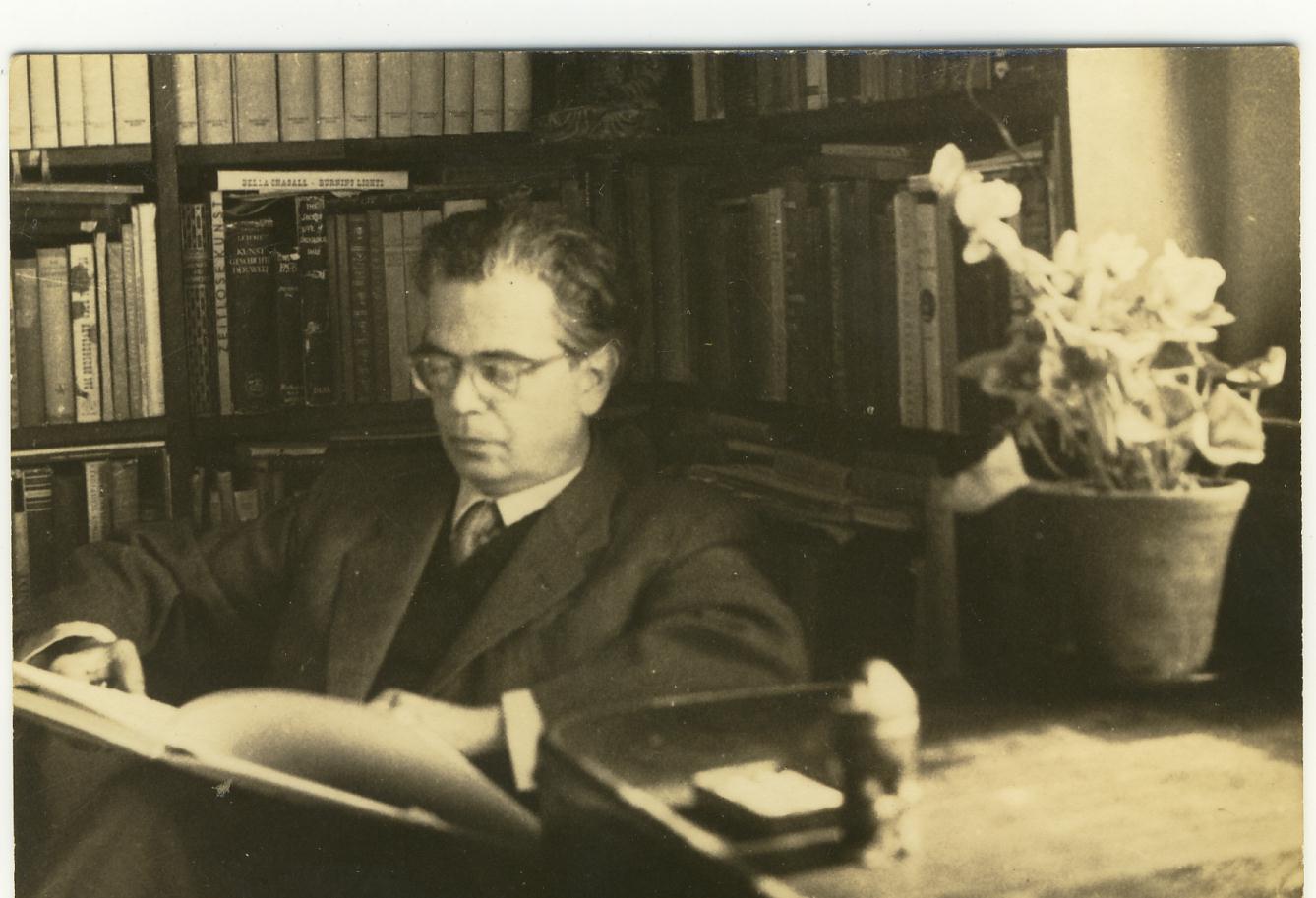
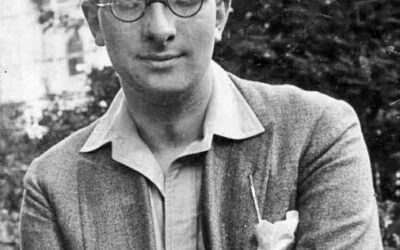
Neumann was born in Berlin on 23 January 1905 to a Jewish family. He took a doctorate in philosophy at Erlangen in 1927 with a dissertation on Johann Arnold Kanne, a Christian Romantic philosopher who had absorbed Jewish mysticism. He then studied medicine in Berlin and passed his examinations in 1933, but the race laws barred him, as a Jew, from an internship; the university granted the degree decades later.2
In 1934 he met Jung and studied with him in Zurich. The same year he and his wife Julie, both Zionists since their teens, emigrated to Palestine, then under British rule. He practiced as an analyst in Tel Aviv for the rest of his life, became president of the Israel Association of Analytical Psychologists, and from 1948 until his death lectured regularly in Europe, notably at the Eranos conferences in Ascona, Switzerland. Julie, also an analyst, later edited his posthumous book on childhood. He died of kidney cancer in Tel Aviv on 5 November 1960, at fifty-five.2, 3
His friendship with Jung was close but ambivalent, and Paglia attributes the ambivalence to Jung’s sporadic antisemitism.2 Their full correspondence was not published until 2015.4 Angelica Löwe’s reading of letters from 1938 and 1939 shows the strain at its worst. In 1934 Jung had proposed that the unconscious is differentiated by ethnic group. After the November pogroms, Neumann’s reflections on what they meant for the Jews as a people led Jung to modify that view, and the shift threw Neumann into a crisis of disorientation and desertion. After years of silence the two renewed the friendship.5 Gerhard Adler’s essay “On Erich Neumann: 1905–1960” appears in Creative Man, the second volume of Neumann’s collected essays; see our profile of Gerhard Adler and classical Jungian analysis.6
The major books: Depth Psychology and a New Ethic (1949; English 1969), which read Nazi-era scapegoating as the projection of repressed forces; The Origins and History of Consciousness (1949; English 1954, with a foreword by Jung); The Great Mother (first published in English, 1955); Art and the Creative Unconscious (German 1954; English 1959); and The Child (1963, posthumous; English 1973).1, 2, 7, 8, 9, 10
What The Origins and History of Consciousness argues
Part I, “The Mythological Stages in the Evolution of Consciousness,” moves through three groups of myth. The creation myth covers the uroboros, the Great Mother and the separation of the World Parents. The hero myth covers the birth of the hero, the slaying of the mother and the slaying of the father. The transformation myth covers the captive and the treasure, and Osiris. Part II restates the sequence as stages of personality, a piece of what Neumann calls speculative “metapsychology,” and two appendices follow on the group and on “mass man.”1 For a chapter-by-chapter reading, see our review of The Origins and History of Consciousness.
The uroboros is the serpent swallowing its own tail. For Neumann it stands for the state before an ego exists, when inside and outside, self and world, nourishment and threat are not yet told apart. The Great Mother stage follows. A small ego has appeared, but it lives at the mercy of what contains it, and the myths of this stage are about son-lovers such as Adonis and Attis, who are adored and then destroyed. With the separation of the World Parents, earth and sky are pried apart, and opposites appear: light and dark, inner and outer. Neumann ties this split to a sense of original guilt, because becoming separate feels like a transgression.
The hero then turns from defense to attack; on the heroic level, Neumann writes, “the ego plucks up courage and goes over to the offensive.” Slaying the mother means refusing the regressive pull back into containment. The father stands for what Neumann calls “the world of the fathers,” the conscience that carries the collective’s values, so slaying him means risking that collective’s judgment. The hero, he writes, “stands between two worlds: the inner world that threatens to overwhelm him, and the outer world that wants to liquidate him for breaking the old laws.” Transformation, the Osiris stage, is where the victorious ego stops conquering and begins relating to something larger than itself.1
Centroversion and the ego–Self axis
Neumann’s most original term is centroversion, “the innate tendency of a whole to create unity within its parts and to synthesize their differences in unified systems.” He gives it “a biological and organic prototype” in the self-regulating body. Later, he says, it “manifests itself as a directive center, with the ego as the center of consciousness and the self as the psychic center,” and in the second half of life, as the ego grows aware of it, the individuation process Jung described may begin.1 It is not, as some summaries say, a blend of introversion and extraversion: Neumann means the pull of the whole toward a center, which both attitudes serve.
The relationship between the ego and that center is the ego–Self axis. In The Child, Neumann traces how this ego–Self relationship forms inside the “primal relationship” of infant and mother, and he gives a full chapter to what follows when that relationship is disturbed.10 For how a later American Jungian worked with the ego–Self relationship, see our profile of Edward Edinger and the process of individuation.
The Great Mother: holding and devouring
The Great Mother is a study of one archetype through hundreds of images, from prehistoric figurines to Renaissance painting. Its central distinction is between two “characters” of the Feminine. The elementary character contains, shelters and holds on to what it has borne. “In the transformative character,” Neumann writes, “the accent is on the dynamic element of the psyche, which, in contrast to the conservative tendency of the elementary character, drives toward motion, change, and, in a word, transformation.” The Good Mother, the Terrible Mother and a Great Mother who is both, he insists, “form a cohesive archetypal group.”8
The Terrible Mother is the devouring earth, the Gorgon, Kali, the gullet of the underworld. Neumann’s point is that one vessel does both jobs. In his list of containing symbols, the nest, the cradle, the bed and the ship sit next to the coffin.8 What shelters a small ego is what can swallow it, and the difference often lies in timing: holding that fits an infant becomes confinement for someone ready to leave.
The feminist goddess movement drew on Jungian images of the Great Mother, but Paglia argues that Neumann kept a distance its popularizers did not. He valued Bachofen’s work on “mother right” only “if understood psychologically rather than sociologically,” and he did not sanitize the goddess’s terrible side.2, 8 For a psychiatrist’s later use of goddess figures as archetypes in women’s lives, see our profile of Jean Shinoda Bolen and the goddess archetypes.
Where the theory fails
Recapitulation. For Neumann this is no loose analogy. In his final chapter he sets out to show “how the basic laws whose operation we have been tracing in the psychic history of mankind are recapitulated, in modified form, in the ontogenetic life history of the individual in our culture,” and he says this link alone justifies the book’s range.1 The formula descends from Ernst Haeckel’s biogenetic law, that ontogeny recapitulates phylogeny, which also shaped G. Stanley Hall’s child psychology and Freud’s thinking. Stephen Jay Gould’s history of the doctrine shows how it fell apart in biology in the early twentieth century and how readily it was used to rank peoples as “childlike.”11 Modern embryology keeps only a narrow version: some individual characters do appear in an order that tracks evolution, but development does not replay whole ancestral stages.12
History and “primitive” mind. Neumann knew the timeline was soft. He wrote that the stages “can be correlated with prehistoric and historical epochs” only in a way that “is not absolute, only relative,” and he compared his method to Flinders Petrie’s “sequence-dating” of early Egypt.1 Still, the book rests on the ethnology of its day, which equated tribal peoples with an earlier, more childlike consciousness, and the language shows it, as when Neumann writes of “the Asian masses now entering history.” That part is a period document.
Matriarchy and gender. Archaeology has produced no good evidence for a prehistoric age of matriarchy, and Cynthia Eller’s study argues that the story is an invented past.13 Neumann’s hedge, that the matriarchal stage is psychological and not sociological, helps, but he still codes consciousness as masculine and the unconscious as feminine, and he builds the hero sequence around the male ego. A footnote in Origins admits, “We disregard here the special conditions that apply to the female.”1 For a feminine psychology written from the inside rather than as a footnote, see our profile of Esther Harding.
Infancy. The uroboric baby, an ego not yet separate from the mother, belongs to a family of psychoanalytic ideas running from Freud to Mahler: primary narcissism, Mahler’s normal autism and symbiosis, and primary self–other undifferentiation. Infant research has led psychoanalysis to question all of them. Daniel Stern’s work made the influential case that infants are organizing a sense of self and other from the first months of life.14, 15
Inside the Jungian world. Andrew Samuels’s map of post-Jungian schools places Neumann in the classical school. The developmental school grew up in London around Michael Fordham, who built his model from analytic work with children and from infant observation rather than from myth. In Fordham’s model the infant starts as an integrated primary self that “deintegrates” and “reintegrates” through exchanges with the mother. In 1981 he devoted a long paper, “Neumann and Childhood,” to Neumann’s account of early development.16, 17 An earlier version of this page called Neumann “the bedrock of developmental Jungian psychology.” That had it wrong; see our profile of Michael Fordham’s developmental analytical psychology. Wolfgang Giegerich made the equation itself the target in his essay “Ontogeny = Phylogeny?”18 James Hillman’s archetypal psychology went further and dropped the heroic, developmental model of the ego altogether. David Tacey argues that this missing developmental element is what undid Hillman’s model, since development is a necessity that can ruin any system that refuses it.19
What this looks like in therapy
Strip away the claim about prehistory and Neumann’s sequence describes two fears clinicians meet every week. Neither is a stage someone is “stuck in”; both are recurring pulls, often felt in the same relationship.
Engulfment. For some people, closeness registers as danger. A partner’s wish for more time feels like being swallowed. A family’s expectations feel like a body they cannot get out of. Even a good therapist can come to feel like a trap. These clients keep their distance, leave as relationships deepen, or guard their independence at the cost of company. In Neumann’s terms they are fleeing the elementary character of the Mother, the side that holds on.
Separation. For others, the danger runs the other way. Saying no to a parent, leaving a church, changing careers or ending a marriage brings a guilt out of proportion to the act. This is the separation of the World Parents as people actually live it: becoming distinct feels like a crime. The “dragon fight” here is not heroic. It usually means tolerating someone else’s disappointment without collapsing back into the old role.
Many people carry both. A 2022 paper on intersubjectivity names the pair, “fears of abandonment and symbiotic swallowing,” in describing borderline conditions.15 Neumann’s images work as a shared language, not a diagnosis. A client who dreams of being pulled under water, or of a house with no doors, does not need to hear that they are at the Great Mother stage. It helps more to ask what the image is protecting them from, and what it would cost to leave.
In Neumann’s language, some ordinary habits, such as oversleeping or numbing with screens or substances, can look like a pull back toward the undifferentiated state. Losing time or feeling unreal is a different matter: those can be signs of dissociation, which needs careful clinical assessment rather than a mythic reading; our page on dissociation therapy in Hoover explains how we approach it. Across 295 studies, the strength of the working alliance correlates with outcome at about r = .28 in many kinds of therapy.20 That is a correlation, not proof that the relationship causes improvement, though it supports the value of a steady relationship; it does not test Neumann’s stages, which should not be presented as an evidence-based treatment.
Centroversion may be the most usable idea of all. Neumann says the unity of the whole “is maintained by compensatory processes.”1 Many depth therapists work from the same assumption: a symptom is often an attempt at balance that overshoots, and the useful question is what it is trying to correct.
Why Neumann is still worth reading
Three things hold up. The Great Mother remains a rich visual archive of the feminine, with 74 figures and 185 plates.2 Art and the Creative Unconscious argues that a group, like a dreamer, has a “compensatory mechanism” that rounds out its one-sided conscious values. The collective unconscious, he writes, has “perpetual eruptions” that “prevent the stagnation and death of a culture,” and the individuals who carry those compensating forces, artists among them, are essential to that process.9 And his appendix on mass man, published four years after the war, insists that modern regression into the crowd “does not and cannot possibly mean a genuine regeneration”: it produces “a mass such as has never existed before.”1
Neumann is best read the way he read Bachofen: psychologically, not as history. His chronology is speculative and his gender scheme is dated, but his account of how it feels to be held, swallowed, cut loose and slowly reorganized is still among the clearest in Jungian writing.
If these themes are showing up in your own life, whether as a pull between closeness and escape or as guilt at becoming your own person, depth work can give them a shape. You can read about Jungian depth therapy at Taproot in Hoover or contact us to ask whether it fits what you are looking for.
References
- Neumann, E. (1962). The origins and history of consciousness (R. F. C. Hull, Trans.; Vols. 1–2). Harper Torchbooks. (Original work published 1949; first English edition Pantheon Books for Bollingen Foundation, 1954, Bollingen Series XLII). Quotations from Vol. 2, pp. 261, 264, 286–287, 308, 318, 341, 364, 380, 384, 397–398, 441.
- Paglia, C. (2006). Erich Neumann: Theorist of the Great Mother. Arion: A Journal of Humanities and the Classics, 13(3), 1–14. https://www.bu.edu/arion/files/2010/03/Paglia-Great-Mother1.pdf
- Neumann, E. (1963). Das Kind: Struktur und Dynamik der werdenden Persönlichkeit (J. Neumann, Ed.). Rhein-Verlag.
- Jung, C. G., & Neumann, E. (2015). Analytical psychology in exile: The correspondence of C. G. Jung and Erich Neumann (M. Liebscher, Ed.; H. McCartney, Trans.). Princeton University Press. https://doi.org/10.1515/9781400865918
- Löwe, A. (2015). The correspondence between Erich Neumann and C. G. Jung on the occasion of the November pogroms, 1938. Journal of Analytical Psychology, 60(3), 336–352. https://doi.org/10.1111/1468-5922.12154
- Adler, G. (1982). On Erich Neumann: 1905–1960. In E. Neumann, Creative man: Five essays (The essays of Erich Neumann, Vol. 2, pp. xi–xvii). Princeton University Press. https://doi.org/10.1515/9781400886432-002
- Neumann, E. (1969). Depth psychology and a new ethic (E. Rolfe, Trans.). Hodder & Stoughton. (Original work published 1949)
- Neumann, E. (1955). The Great Mother: An analysis of the archetype (R. Manheim, Trans.). Pantheon Books. (Bollingen Series XLVII)
- Neumann, E. (1959). Art and the creative unconscious: Four essays (R. Manheim, Trans.). Pantheon Books. (Bollingen Series LXI; original work published 1954)
- Neumann, E. (2018). The child: Structure and dynamics of the nascent personality (R. Manheim, Trans.). Routledge. (Original work published 1963) https://doi.org/10.4324/9780429481277
- Gould, S. J. (1977). Ontogeny and phylogeny. Belknap Press of Harvard University Press.
- Richardson, M. K., & Keuck, G. (2002). Haeckel’s ABC of evolution and development. Biological Reviews, 77(4), 495–528. https://doi.org/10.1017/S1464793102005948
- Eller, C. (2000). The myth of matriarchal prehistory: Why an invented past won’t give women a future. Beacon Press.
- Stern, D. N. (1985). The interpersonal world of the infant: A view from psychoanalysis and developmental psychology. Basic Books.
- Williams, R., & Trentini, C. (2022). Two modes of being together: The levels of intersubjectivity and human relatedness in neuroscience and psychoanalytic thinking. Frontiers in Human Neuroscience, 16, 981366. https://doi.org/10.3389/fnhum.2022.981366
- Samuels, A. (1985). Jung and the post-Jungians. Routledge & Kegan Paul.
- Fordham, M. (1981). Neumann and childhood. Journal of Analytical Psychology, 26(2), 99–122. https://doi.org/10.1111/j.1465-5922.1981.00099.x
- Giegerich, W. (2020). Ontogeny = phylogeny? In The neurosis of psychology: Primary papers towards a critical psychology (pp. 19–39). Routledge. https://doi.org/10.4324/9781003041528-2
- Tacey, D. (2014). James Hillman: The unmaking of a psychologist. Part one: His legacy. Journal of Analytical Psychology, 59(4), 467–485. https://doi.org/10.1111/1468-5922.12094
- Flückiger, C., Del Re, A. C., Wampold, B. E., & Horvath, A. O. (2018). The alliance in adult psychotherapy: A meta-analytic synthesis. Psychotherapy, 55(4), 316–340. https://doi.org/10.1037/pst0000172








0 Comments