
In the spring of 1952 Carl Jung sat down to answer Martin Buber, who had just accused him in print of being a Gnostic. Jung opened his reply with an inventory of the names he had been called over the years. He had been labeled a Gnostic and the opposite of one. He had been called a theist and an atheist, a mystic and a materialist. He listed the charges with the weariness of a man who had been reading his own reviews for four decades, and then he declined all of them. He was a psychiatrist, he said. He described what he saw.
Nobody believed him. The religious thinkers thought he had shrunk God down to a content of the human mind. The scientists thought he had smuggled God into the clinic under a lab coat. I have come to think both groups read him correctly, and that the anger on each side is the best evidence we have of where he was standing. Jung held a position in the middle of the oldest argument in Western thought, he held it for fifty years, and he refused every invitation to step off it. The people who came after him mostly accepted the invitation. The work each of them produced shows exactly which direction they stepped.
What Jung said he was doing
 Jung’s public account of his method never changed. In the Terry Lectures at Yale in 1937 he called himself an empiricist who kept to a phenomenological standpoint and stayed out of metaphysics. His argument ran like this. If a patient dreams of God, the dream is a fact. The image exists, it has effects, it can be compared to other images across cultures and centuries. Whether anything stands behind the image is a question psychology has no instruments to answer. I have written elsewhere about whether that method is empiricism, mysticism, or literalism, and the short version is that it is a borrowed Kantian limit. We know appearances. We do not know things in themselves. Jung applied that to the soul. We know the God-image. We do not know God.
That would be a tidy position if he had kept to it. He did not. The same man who wrote those sentences spent the years after 1913 in a deliberate confrontation with his own visions and recorded them in a calligraphic manuscript that his heirs kept in a bank vault until 2009. Anyone who has spent time with The Red Book knows it does not read like the lab notes of an agnostic. In 1947 he described the deepest layer of the archetype as “psychoid,” something that was neither mental nor physical and could never become conscious. By the 1950s, working with the physicist Wolfgang Pauli, he was writing about a single underlying reality of which mind and matter are two faces, and offering synchronicity as its fingerprint. He always added a hedge. The one world was a “probable hypothesis.” But a man who has no metaphysics does not need to hedge one.
The famous television moment shows the whole pattern in under ten seconds. In 1959 John Freeman of the BBC asked Jung whether he believed in God. Jung paused, said it was difficult to answer, and then said he did not need to believe because he knew. The clip has been circulating as proof of Jung the mystic ever since. What gets left out is that the letters poured in, and within weeks Jung was explaining that he meant he knew of the existence of God-images, and that he had not said there is a God. He said the thrilling thing on camera and the careful thing in the correspondence. He meant both.
Buber: you have made God a tenant of the psyche
Buber’s attack came in an essay later collected in Eclipse of God. His complaint was specific. Jung claimed to speak only as a psychologist, Buber said, but he kept overstepping. When Jung wrote that God does not exist apart from the human subject who experiences him, that was no longer a clinical observation. It was a theological claim made by someone who refused to take responsibility for it. Buber had also seen the Seven Sermons to the Dead, the strange little text Jung printed privately in 1916 under the name of the Gnostic teacher Basilides, and he drew the obvious conclusion. For Buber this was Gnosticism in modern dress: a doctrine that handles mysteries as knowledge to be possessed instead of a presence to be met.
The disagreement went deeper than labels. Buber’s entire theology of I and Thou depends on God being genuinely other, a You who addresses a person from outside. A God located in the unconscious can never be that. A person can analyze it, integrate it, relate to it as a part of the self, but cannot be called by it. From where Buber stood, Jung had taken the one relationship that pulls a human being out of himself and folded it back inside.
Jung’s reply was irritated and, I think, evasive. He waved the Sermons away as a youthful indiscretion, which was a remarkable thing to say about a text that grew directly out of the experiences he considered the source of everything he later wrote. He insisted again that he made no claims about God, only about images. Buber answered that this was exactly the problem. A psychology that claims jurisdiction over every statement a person can make about God, and then says it is being modest, has not stayed in its lane. It has annexed the whole road.
Buber was not the only religious thinker to reach this point with him. Victor White, an English Dominican priest, spent years as Jung’s closest theological friend and hoped to join Thomas Aquinas to analytical psychology. The friendship broke in the mid-1950s over the question of evil. Catholic doctrine treats evil as a privation of good. Jung said his consulting room taught him otherwise, that evil was a real force and that the God-image itself had a dark side, and he put that argument into Answer to Job. White could not follow him there. Once again Jung said he was only reporting what he observed, and once again a serious theologian told him that he was doing theology whether he admitted it or not.
Assagioli: you stopped one floor short
Roberto Assagioli came at Jung from the same side as Buber but with a different grievance, and the quarrel was much friendlier. Assagioli was a young Florentine psychiatrist when he visited the Burghölzli hospital in Zurich before the First World War. Jung mentioned him to Freud as their first promising Italian. Assagioli wrote his doctoral thesis on psychoanalysis, drifted away from Freud about as fast as Jung did, and spent the rest of his life building psychosynthesis. He always said that of all the modern schools Jung’s stood nearest to his own. In 1966, five years after Jung died, he gave three lectures in Florence under the title “Jung and Psychosynthesis” and laid out where they parted.
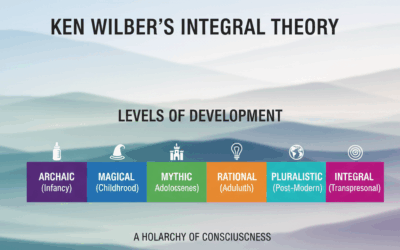
There were three main objections. The first concerned the map. Jung’s collective unconscious, Assagioli argued, lumped together things that belong on different floors of the house. Archaic instinct and the highest reaches of inspiration, compassion, and mystical insight were all filed under one heading. Assagioli split them. He drew a lower unconscious, a middle unconscious, and a higher unconscious or superconscious, and he thought Jung’s failure to separate the cellar from the attic led people to mistake regression for revelation. Ken Wilber would later make a career out of the same complaint.
The second objection concerned the Self. For Jung the Self was an archetype, a hypothesis required by the evidence, something that showed up in mandalas and dreams of wholeness and could not be told apart, empirically, from an image of God. Assagioli thought that was a failure of nerve. In his view the Self was a reality a person could experience directly, and a psychology that would only describe its symbols had stopped at the door. The third objection was the will. Jung’s patients are acted upon by complexes and archetypes. Assagioli wanted a psychology in which a person could choose, and he thought Jung had left that faculty almost untouched. I have written about how psychosynthesis runs the hero’s journey in the opposite direction from Jung, starting from the heights and working down.
Buber and Assagioli wanted opposite things. Buber wanted God left outside psychology altogether, wholly other, addressed in prayer and not in analysis. Assagioli wanted the spiritual brought all the way inside psychology and affirmed as fact. They agreed on one point only. Jung’s “merely psychological” God was an unstable halfway house, and he ought to move out of it in one direction or the other.
The scientists were angry first
The irony is that Jung had already lost the other half of the room decades earlier, for the opposite offense. He began as a laboratory man. Under Eugen Bleuler at the Burghölzli he ran word association experiments with stopwatches and galvanometers, and the concept of the complex came out of reaction-time data. That work was respectable enough to bring him to Freud’s attention and to an honorary degree at Clark University in 1909.
Then he started reading mythology, and the break with Freud followed. By Jung’s later account, Freud had begged him to treat the sexual theory as a dogma and a defense against occultism. That account comes from Memories, Dreams, Reflections, a book Jung himself said was not really his autobiography and which was heavily shaped and cut by other hands, so the scene deserves some caution. The verdict of the psychoanalytic movement is not in doubt, though. Jung had gone over to religion. Academic psychology reached the same conclusion without needing Freud’s help. For most of the twentieth century a graduate student who cited Jung in a research department was announcing that he did not expect a job. The alchemy books sealed it. So did the astrology, the flying saucers, and the I Ching. In the 1990s Richard Noll argued that Jung had founded a cult, and although the historian Sonu Shamdasani dismantled much of Noll’s evidence, the accusation stuck because it matched what the scientists already believed.
So the theologians said he was a reductionist and the reductionists said he was a theologian. A man can only draw both charges at once by actually occupying the ground between them.
Why he stayed there
There are cynical explanations for Jung’s position and some of them are true. He wanted medical standing. He was a pastor’s son who had watched his father lose his faith and keep preaching, and he had no wish to be caught making claims he could not back. Calling himself an empiricist gave him cover.
The better explanation is that the middle was his method. Jung’s whole clinical psychology rests on holding the tension of opposites until something new appears that neither side could have produced alone. He applied the same rule to his theory. Spirit and matter, he wrote, meet each other on the psychic plane, and the psyche is the only place we ever encounter either one. If he had declared the archetypes to be brain structures, the numinous quality of his patients’ experience would have become a side effect. If he had declared them to be gods, he would have founded a church. He kept both descriptions running in parallel, like a physicist using wave and particle, and accepted that it made him look shifty.
The cost of this is real and his critics were right to name it. Jung slides between saying the archetype is a condition of experience, which is a modest claim, and saying it is a transcendent reality, which is a very large one, and he often does it inside a single paragraph. He let readers hear whichever version they preferred. But the ambiguity is also the reason two completely different research traditions could both grow out of his books and both quote him accurately.
What his heirs did with the tension
After Jung died in 1961 the middle did not hold. Andrew Samuels later sorted the field into three schools, classical, developmental, and archetypal, and the sorting principle is close to the one I am describing. Each school answered the question Jung left open, and the answer determined what kind of work it could do.
The classical analysts, mostly trained in Zurich, took the late Jung at his word. Marie-Louise von Franz spent her career on fairy tales, alchemy, and the archetypal nature of number. Edward Edinger described a patient’s suffering as damage to the connection between the ego and the Self and treated individuation as a religious process in everything but name. Erich Neumann told the history of consciousness as a single myth running from the uroboros to the hero. The products of this outlook are recognizable on any shelf. They are seminar transcripts and commentaries. The evidence is a parallel from a Gnostic text or a Grimm tale. The case history reads as a pilgrimage. The books are published for the general reader and they have changed a great many lives, including the lives of people who would never read a journal article. They are also nearly impossible to test, and when they speak about “primitive” peoples or the eternal feminine they carry assumptions from 1930s Europe that have not aged well.
The developmental analysts went the other way. In London, Michael Fordham decided that Jungians knew a great deal about the second half of life and almost nothing about babies, and he rebuilt the theory around infant observation and the transference. Anthony Stevens went to ethology and argued that archetypes are evolved behavioral programs of the kind Lorenz and Tinbergen found in animals. Jean Knox replied that genes cannot carry symbolic content and that what Jung called archetypes are better understood as simple spatial patterns every infant builds from having a body and a caregiver. George Hogenson went further and argued that archetypes are not stored anywhere at all. They arise, he said, out of the interaction of brain, environment, and story, and there is no place where one could be said to be. Erik Goodwyn has since argued that the genetics behind Knox’s objection are out of date, and the argument is still running. Christian Roesler collected outcome studies from Germany and Switzerland showing that patients in Jungian treatment improve and stay improved, while admitting that without randomized trials nobody can call it proven. The products here are different in kind. They are papers in the Journal of Analytical Psychology with citations from cognitive science. The dream is read for what it says about the patient’s attachment history and the relationship in the room. I have covered much of this literature in a piece on whether archetypes can be evidence-based and another on how archetype theory has changed since Jung.
It is tempting to call this second group the materialists, and I used to. Most of them would reject the word. Fordham kept the Self. Knox is describing emergence, not reduction. Goodwyn calls his own position non-reductive. What they share is a rule about evidence: claims about biology have to satisfy biologists. That rule buys credibility with insurers, universities, and the rest of the mental health field. It also carries a price. Several of these writers have ended up asking in print whether the word “archetype” still does any work, and a Jungian psychology with the numinous removed starts to look a lot like attachment-informed psychodynamic therapy with unusual reading lists.
The same dream sorts the two camps quickly. A woman dreams of a flood rising through her childhood house. A classical analyst reaches for the deluge myths, the alchemical solutio, the dissolving of an old attitude so a new one can form, and asks what the dream is for. A developmental analyst asks what was happening in that house when she was four, who was supposed to keep her safe, and why the dream arrived the week the analyst announced a vacation. Both are practicing Jungian dream interpretation. Both can cite the Collected Works. They will write up the case for different journals and neither article will reference the other.
Two men who refused the choice
James Hillman is often filed with the mystics and occasionally, by people who have not read him, with the scientists. He belongs with neither. Hillman attacked the medical model and the developmental model as fantasies of cure and growth, and then he turned and attacked the classical Jungians for a disguised monotheism that wanted to gather every image up into the Self. His alternative was soul, which he defined as a perspective and not a substance, a third thing between matter and spirit that lives in images and prefers the valley to the mountaintop. He took the idea of an imaginal world that is real without being literal from Henry Corbin. The work this produced is essays, some of the best prose the field has, and a clinical instruction to stay with the image and stop translating it. I have tried to sort out what Hillman thought he was doing with the ego in a separate piece.
Wolfgang Giegerich thought Hillman had not gone far enough. For Giegerich the image is still a picture, and a psychology that stops at pictures is still a child’s psychology. He brought Hegel’s dialectic into the field and argued that the soul is thought working itself out through history, that the gods are truly gone, and that Jung’s attempt to find them again inside the individual was nostalgia. He charged Jung with exactly the evasion Buber had charged him with, from the opposite direction. What Giegerich’s outlook produces is dense theoretical treatises and very little that a clinician can use on a Tuesday afternoon, which he would probably take as a compliment.
Hillman and Giegerich are the two heirs who understood that the middle was the point. Each tried to give it a new name. Neither made it any more comfortable to stand in.
The people trying to reopen the question
A smaller group of writers has spent the last twenty years trying to get back to the ground Jung actually stood on, with better tools than he had. They do not get much attention outside the journals, and they are the ones I find most interesting.
The first approach starts from the Pauli correspondence. The physicist and philosopher Harald Atmanspacher has given the late Jung’s position a proper name, dual-aspect monism, and a formal statement. Mind and matter are treated as two complementary aspects of one underlying reality that is neither mental nor physical and cannot be reached directly by measurement. Atmanspacher calls this the Pauli-Jung conjecture, and the word conjecture is chosen carefully. It makes no claim to have proven the one world. It says only that the idea can be stated precisely enough for a physicist to argue with. Roderick Main has used the same material to ask whether Jung offers a way out of the disenchanted modern picture of the world without giving up critical thought. Joseph Cambray has read synchronicity through the science of complex systems, as the kind of pattern that appears when a system organizes itself without any single cause directing it.
The second approach comes up from biology. Hogenson and Warren Colman treat the archetype as something that emerges from a living system embedded in a culture, with Colman putting most of the weight on symbolic culture itself. Goodwyn has proposed that recurring motifs in myth and dream are stable states that minds everywhere settle into because certain stories resonate with how human memory and emotion work, and he has tried to put that in a form that can be tested. None of these writers thinks a god is a gene. None of them thinks the experience of the numinous is explained away once the mechanism is described. The same convergence is visible from outside the field, and I have argued that there is an unnoticed rehabilitation of Jung in computational neuroscience.
What both approaches have in common is that they stop treating Jung’s ambiguity as an embarrassment to be cleaned up. They treat it as a description of the problem. A theory of the psyche has to account for a brain and for an experience of meaning, and so far every theory that explains one has done it by quietly dropping the other. These writers have not solved that. They have at least stopped pretending it is solved.
Where the argument lands in a trauma practice
This is not an academic dispute for those of us who treat trauma. Early in my career I worked with people diagnosed with schizophrenia, and the question Jung faced on the wards of the Burghölzli is the one that work put in front of me every day. A man tells you that a presence speaks to him. You can treat that as dopamine. You can treat it as revelation. Either choice ends the conversation. Jung’s refusal to choose is what allowed him to keep listening, and it is still the most useful clinical stance I know.
Donald Kalsched’s work shows the split and the repair together. He describes how a traumatized child’s psyche divides, with protective figures that guard an innocent core and then turn into persecutors. His vocabulary is classical. The figures are angels and demons, and what they protect is the personal spirit. His justification is drawn from Allan Schore’s research on early right-brain development and the neuroscience of dissociation. He uses the scientists to explain why it happens and the mystics to describe what it is like from inside. Jung’s idea that complexes behave like splinter personalities is also the plain ancestor of modern parts-based therapy, and the Self in Internal Family Systems has the same double character as Jung’s. It is a clinical function and something its founder talks about in nearly religious terms.
In our own practice the two languages get used for different jobs. When a client is flooded and cannot stay in the room, I am thinking about the midbrain, the nervous system, and what a brainspotting session or a brain map can tell us. That is the developmental camp’s world and I am glad it exists. When the same client, months later, has a dream that reorganizes how she understands her life, the neuroscience has nothing to say about what the dream means to her, and Jungian depth work does. The danger sits at each extreme. A purely spiritual frame can sanctify a defense, so that a protective voice gets obeyed as a guide when it should be understood as a wound. A purely material frame can stabilize a person and leave her with no account of why she survived. I have criticized the evidence-based practice paradigm for the second failure and the New Age reading of Jung for the first. They are the same mistake made in opposite directions.
The use of an uncomfortable position
Buber was right that Jung overstepped. Assagioli was right that he held back. Freud’s circle was right that he had left science as they understood it, and the Zurich faithful were right that something sacred was at stake in his work. Jung managed to disappoint all of them because each of them wanted an answer and he had decided that the question was more valuable.
I do not think that makes him a coward, though he was sometimes evasive about it and his reply to Buber is not his finest hour. A therapist does not get to settle metaphysics before the session starts. The person in the chair has an experience that is at once a pattern of neural firing and the most meaningful event of her life, and treatment that honors only one of those descriptions will fail her. Jung built a psychology that could hold both, and the fact that it made him enemies on every side is a fair measure of how difficult that is. Anyone who wants to go further into the primary sources can start with our free Jungian psychology resource library.
Sources and further reading
- C.G. Jung, Psychology and Religion (Terry Lectures, 1937), Collected Works vol. 11
- C.G. Jung, “On the Nature of the Psyche” (1947/1954), Collected Works vol. 8
- C.G. Jung, “Religion and Psychology: A Reply to Martin Buber” (1952), Collected Works vol. 18
- C.G. Jung, Mysterium Coniunctionis (1955-56), Collected Works vol. 14
- Martin Buber, Eclipse of God (1952)
- Roberto Assagioli, “Jung and Psychosynthesis” (lectures given 1966, published 1967)
- Ann Conrad Lammers and Adrian Cunningham, eds., The Jung-White Letters (2007)
- Andrew Samuels, Jung and the Post-Jungians (1985)
- Anthony Stevens, Archetype: A Natural History of the Self (1982)
- Jean Knox, Archetype, Attachment, Analysis (2003)
- Erik Goodwyn, “Approaching archetypes: reconsidering innateness,” Journal of Analytical Psychology (2010), with responses
- Christian Roesler, “Evidence for the Effectiveness of Jungian Psychotherapy,” Behavioral Sciences (2013), and Deconstructing Archetype Theory (2023)
- George Hogenson, “The Baldwin effect: a neglected influence on C.G. Jung’s evolutionary thinking,” Journal of Analytical Psychology (2001)
- Harald Atmanspacher, “The Pauli-Jung Conjecture and Its Relatives,” Open Philosophy (2020)
- Joseph Cambray, Synchronicity: Nature and Psyche in an Interconnected Universe (2009)
- Roderick Main, Breaking the Spell of Disenchantment (2022)
- Warren Colman, Act and Image (2016)
- James Hillman, Re-Visioning Psychology (1975) and “Peaks and Vales” (1976)
- Wolfgang Giegerich, The Soul’s Logical Life (1998)
- Donald Kalsched, The Inner World of Trauma (1996) and Trauma and the Soul (2013)
- Sonu Shamdasani, Cult Fictions (1998) and Jung and the Making of Modern Psychology (2003)










0 Comments