
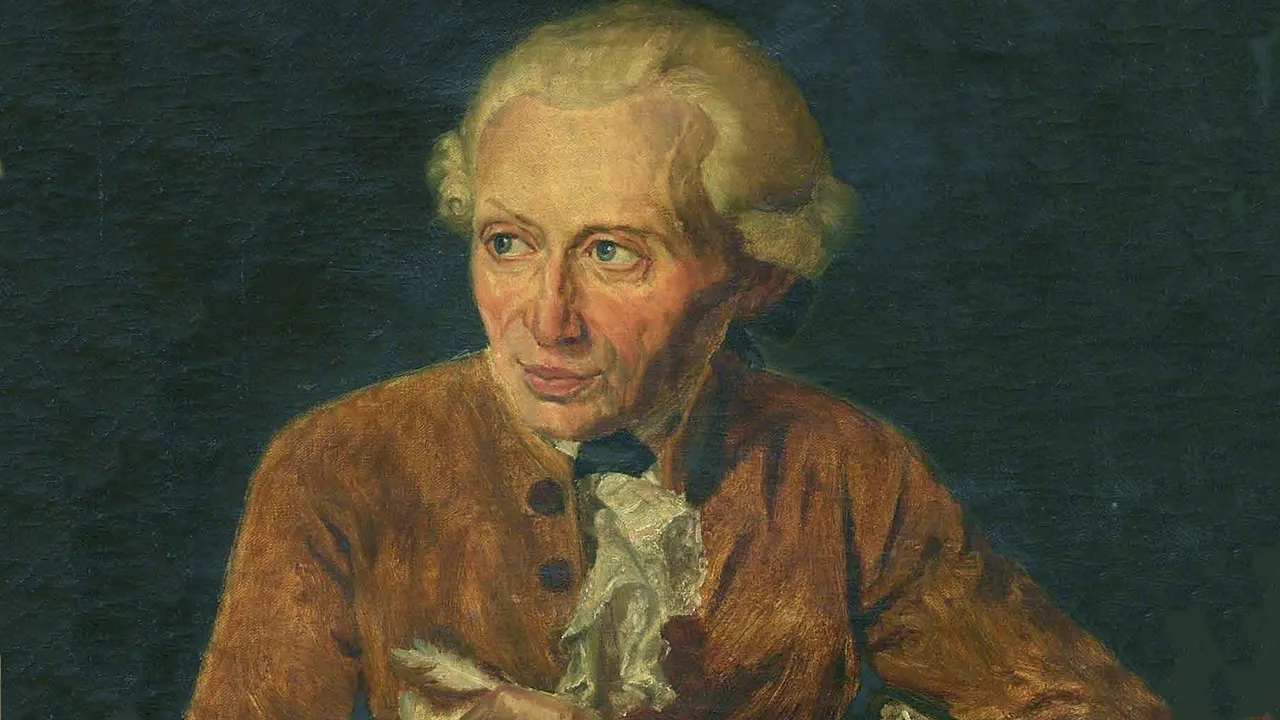
Kant’s influence on psychology comes mainly from one claim in the Critique of Pure Reason (1781, revised 1787): we never meet the world raw, because the mind supplies the forms through which anything can appear to us. Versions of that claim run through Helmholtz’s theory of perception, Freud’s account of the unconscious, Jung’s archetypes, the schemas of cognitive therapy and today’s predictive-processing neuroscience.
My argument is that good therapy makes the same move Kant made. It works on the forms through which a life is experienced rather than arguing about the facts. There is a twist, though. Kant’s forms are universal and fixed: space, time and the basic categories, such as cause and effect, hold for every human knower and cannot be unlearned. The forms therapy works with, from a belief that “people always leave” to an inner figure that turns every boss into a persecutor, are partly learned, and they can loosen. Jung stands between the two, and that tension is the most useful thing Kant hands a clinician.
What Kant actually claimed
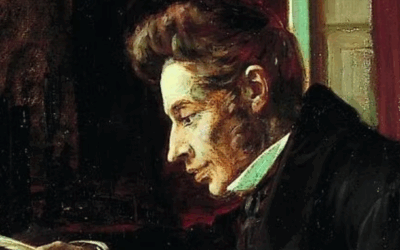
Immanuel Kant was born in Königsberg, Prussia (now Kaliningrad, Russia), on 22 April 1724 and died there on 12 February 1804. He taught for fifteen years as an unsalaried lecturer before he was given the chair in logic and metaphysics in 1770, then spent a decade on the Critique.1
“Copernican revolution” is the commentators’ label. In the 1787 preface Kant proposed that, instead of assuming our knowledge must conform to objects, we try assuming that objects must conform to our knowledge. This, he wrote, “would be just like the first thoughts of Copernicus,” who made progress on the motions of the heavens by letting the observer move instead of the stars.1, 2 On this view, what appears to us is built from two contributions: sensory matter we receive passively, and forms our own faculties supply. Space and time are the forms of sensibility. The understanding adds a table of categories, among them substance and cause, which Kant derived from the basic logical forms of judgment. What things are apart from those forms, the thing in itself, we cannot know.1
The part of the Critique that matters most for psychology is one of the least read: the schematism. Concepts are general and sensations are particular, so something has to bring them together. Kant’s answer was the schema, a rule by which the imagination produces an image. “The concept dog,” he wrote, “specifies a rule whereby my imagination can trace the shape of such a four-footed animal in a general way,” without being tied to any one dog he has seen. He doubted its workings would ever be fully laid bare and called the schematism “a secret art residing in the depths of the human soul.”3 Psychology has been trying to read that art ever since.
Kant doubted psychology could be a true science
Kant did not expect psychology to become a science in his strict sense. In the Metaphysical Foundations of Natural Science (1786) he gave two reasons. Mathematics cannot get a grip on the inner life, whose only form is time, a single dimension with too little structure to build on. And an observer cannot separate and recombine mental states the way a chemist handles samples; inner observations can be divided “only by mere division in thought.”4
Psychology took his ideas anyway. Because a Kantian form of intuition need not be innate, researchers such as J. G. Steinbuch (1811) and C. Th. Tourtual (1827) could study empirically how spatial perception develops.4 Johann Friedrich Herbart, the second successor to Kant’s chair at Königsberg (1809), tried in Psychologie als Wissenschaft (1824–1825) to build a mathematics of the mind. It was a dead end, but it encouraged experimentalists such as Gustav Fechner to measure the psyche.5 Hermann von Helmholtz argued that perception is assembled through learned “unconscious inferences.” How Kantian that was is still debated. The Marburg neo-Kantian Ernst Cassirer judged that Helmholtz linked his theory “deliberately to Kant” but made the a priori depend on the results of science.6
Kant also wrote about mental illness directly, in the Essay on the Maladies of the Head (1764) and the Anthropology from a Pragmatic Point of View (1798). He sorted mental derangement by which power was impaired, whether understanding, imagination, judgment or reason, and named what all of them share: “The only universal characteristic of madness is the loss of common sense (sensus communis) and its replacement with logical private sense (sensus privatus).” By common sense he meant something public, the capacity to test one’s judgments against other people’s.7
Freud: the unconscious as a thing in itself
Freud made the comparison himself. In “The Unconscious” (1915) he argued that mental processes are unconscious in themselves and that consciousness perceives them the way the senses perceive the outer world:
“Just as Kant warned us not to overlook the fact that our perceptions are subjectively conditioned and must not be regarded as identical with what is perceived though unknowable, so psycho-analysis warns us not to equate perceptions by means of consciousness with the unconscious mental processes which are their object.”8
Then he softened it, hoping that “internal objects are less unknowable than the external world.”8 That hope is the wager of psychoanalysis: the mind can be known, but only indirectly, through slips, dreams, symptoms and the relationship with the analyst. Feyaerts and Vanheule call Freud’s psychological reading of Kant contentious, since Kant was analyzing the conditions of knowledge rather than describing a mental mechanism.9
Jung: archetypes as inherited forms of apprehension
Jung leaned on Kant harder than Freud did. The Kant scholar Valentin Balanovskiy argues that Jung was “deeply influenced” by Kant and that the two shared an apriorism that gave rise to the archetypes of the collective unconscious, understood as a priori conditions of any psychic experience.10 In “Instinct and the Unconscious” (1919), the essay usually cited as his first use of the word, Jung wrote: “Archetypes are typical modes of apprehension, and wherever we meet with uniform and regularly recurring modes of apprehension we are dealing with an archetype, no matter whether its mythological character is recognized or not.”11 In the same essay he placed Kant in the idea’s history: “Finally Kant reduced the archetypes to a limited number of categories of understanding.”11 A mode of apprehension is not a picture stored in the mind. It is a way of taking things up, and that is the Kantian part. The mother archetype is not a memory of a mother. It is a readiness to experience someone as the one who holds or the one who swallows, which particular experiences then fill in.
Jung also carried Kant’s limit on knowledge into the unconscious. He separated the archetypal image, which appears in dreams and myths, from the archetype as such, which in his later work he called psychoid and placed beyond direct experience. Balanovskiy compares this psychoid factor to the thing in itself: it “always remains beyond the frames of possible cognition.”10 In a 1929 letter to Kurt Plachte, Jung called psychic reality “the only form of being we can experience directly.”10 He had named that standpoint in Psychological Types (1921), esse in anima, being in the soul, and introduced it straight out of Kant’s critique of the ontological argument for God.12
The differences matter as much as the debt. Kant’s forms belong to every human knower, and for Kant an a priori form of intuition “need not be innate.”4 Jung’s archetypes are inherited dispositions of the human species, charged with emotion and often personified as figures with intentions of their own. The shift from a condition of knowledge to an inherited, emotional pattern is large, and part of the scholarly literature argues that Jung simply misread Kant. Gary Clark has recently pushed back, arguing that the critics overlook Kant’s account of affect-based aesthetic experience in the Critique of Judgment (1790).13 Either way, Jung did something Kant never would have: he made the forms of experience a subject for psychotherapy. For the longer story, see how Jung’s psychology developed from his reading and his clinical work, where Jung stands among other philosophers, and Schelling’s post-Kantian philosophy of the unconscious and trauma.
From Kant’s schemata to cognitive therapy’s schemas
The word schema came into psychology by more than one route, and Kant’s schematism is the oldest of them. Frederic Bartlett’s Remembering (1932) took the term from the neurologist Henry Head’s “body schema” and used it to show how existing expectations reshape what people recall.14 Aaron Beck later made schemas the center of cognitive therapy. In his later generic cognitive model, schemas organize a person’s expectancies, self-evaluations, rules and memories, and the beliefs they carry are the target of treatment.15
Beck did not trace his method to Kant. His 1979 depression manual with Rush, Shaw and Emery stated that “the philosophical origins of cognitive therapy can be traced back to the Stoic philosophers” and quoted Epictetus: “Men are disturbed not by things but by the views which they take of them.”16, 17 Albert Ellis, the founder of rational emotive behavior therapy, credited the Stoics too.17 The Kantian reading came later. In 2007 the psychologist Jeffrey Nevid argued that Kant’s epistemology is “foundational to cognitive approaches to psychotherapy,” and that rigid use of certain Kantian forms of judgment, namely necessity, disjunction, particularity and universality, has counterparts in the cognitive distortions therapists treat.18 The Stoic says your view of the event is the problem. The Kantian adds that the view has a structure, and the structure arrives before the event does.
The evidence for cognitive behavioral therapy is broad. A 2012 review of 106 meta-analyses found the strongest support for anxiety disorders, somatoform disorders, bulimia, anger control problems and general stress.19 Whether it works by changing beliefs is much less settled. A 2007 review of component studies found little evidence that the specifically cognitive techniques add much to the effectiveness of the therapy, and little support for the idea that cognitive change is what causes symptoms to improve.20 Stefan Hofmann disputed that reading in a published commentary.21 The Kantian picture describes what cognitive therapy aims at. It is not yet a proven account of why it helps.
Kant in the brain sciences
Neuroscience has not left Kant behind. Predictive processing, an influential framework in perception research, holds that the brain perceives by predicting its sensory input from a learned model of the world and correcting the prediction when it fails. In 2016 the philosopher L. R. Swanson argued that Kant anticipated its core ideas: perception generated from the top down, abstract “hyperpriors” that work like Kant’s forms of space and time, generative models that behave like his schemata, and imagination as part of perception.3
The route ran through Helmholtz. The 1995 paper that introduced the “Helmholtz machine” stated, “Following Helmholtz, we view the human perceptual system as a statistical inference engine whose function is to infer the probable causes of sensory input,” and Karl Friston’s free-energy principle was introduced in the same Helmholtzian terms.3 Kant had complained that the role of imagination in perception had “never occurred to any psychologist.” Predictive-processing models now build something like it, the generation of expected input, into perception itself, and our post on Karl Friston and Carl Jung follows the line into depth psychology. For therapy the point is practical. If perception is prediction, people see what their model expects, and their deepest expectations are the hardest to notice because they feel like reality rather than like a view of it.
What this looks like in therapy
Kant’s turn gives a therapist one question that keeps paying off. Not only “What happened?” but “What is the form through which this keeps showing up?” The examples below are general patterns, not individual clients.
Necessity. Someone says, “I must never let anyone down.” Debating whether they did let someone down misses the point, because the must is the form. Therapy slows down on it: where the rule came from, what it protects against, what happens in the body when it is questioned. Reframing means turning an absolute law into a preference the person can weigh.
Universality. “Everyone always leaves.” The word always turns a few painful endings into a law of nature. The work is to bring the judgment back to particulars: who left, when, and who stayed. The aim is not to talk anyone out of grief but to let the judgment fit the evidence.
Disjunction. “Either I am excellent or I am worthless.” An either-or allows only two outcomes and, given how often anyone falls short of excellent, nearly guarantees the second. The therapist looks for the excluded middle, and for what the person fears would happen if the either-or relaxed.
The lens itself. After trauma, a belief such as “the world is dangerous” can work like a hyperprior. Sounds, faces and silences are read through it before thought begins. If the predictive picture is right, a model like that changes when experience repeatedly fails to confirm it, not when it loses an argument. That is consistent with the component studies above, though they were not designed to test it. It is also one reason trauma work attends to the body and the relationship, not only to beliefs.
Archetypal forms. In Jungian depth therapy the same question takes another shape. When every supervisor becomes the same cold judge, the work is to recognize a pattern the psyche keeps reaching for, give it a face through dreams and images, and separate that figure from the actual people it lands on. The archetype does not disappear. The person’s relationship to it changes.
Kant’s account of madness adds a quieter point. If what fails in severe disturbance is the ability to test private judgments against a shared world, then much of ordinary therapy is a structured exchange of reasons with one other person: private sense brought back into common sense, at a pace the client can bear. His ethics belongs in the room too, as a resemblance rather than a source. His Humanity Formula says we should never treat humanity, in ourselves or in others, as a means only, but always as an end in itself.22 The National Association of Social Workers’ code of ethics, the standard for my profession, asks social workers to “respect the inherent dignity and worth of the person” and to promote clients’ “socially responsible self-determination.”23 And the ideal of “What Is Enlightenment?” (1784), thinking for yourself rather than letting others think for you, describes the goal: a client who leaves with their own judgment stronger, not with the therapist’s opinions installed.1
There is also a limit, and Kant’s fixed forms point to it. Some forms of experience cannot be revised. Finitude, time and the separateness of other minds are not distortions to be corrected. Therapy that treats every painful frame as an error will eventually hit one of these, and that is where existential therapy and Irvin Yalom’s work on death, freedom, isolation and meaning take over.
If you recognize a rule you cannot stop obeying, or a pattern that keeps casting the same people in the same roles, it can help to look at the lens with someone trained to see it. Taproot Therapy Collective in Hoover works in person and by teletherapy across Alabama; you can contact us to ask whether we are a good fit.
References
- Rohlf, M. (2024). Immanuel Kant. In E. N. Zalta & U. Nodelman (Eds.), The Stanford encyclopedia of philosophy. Stanford University. https://plato.stanford.edu/entries/kant/
- Kant, I. (1998). Critique of pure reason (P. Guyer & A. W. Wood, Eds. & Trans.). Cambridge University Press. (Original work published 1781; 2nd ed. 1787)
- Swanson, L. R. (2016). The predictive processing paradigm has roots in Kant. Frontiers in Systems Neuroscience, 10, Article 79. https://doi.org/10.3389/fnsys.2016.00079
- Watkins, E., & Stan, M. (2023). Kant’s philosophy of science. In E. N. Zalta & U. Nodelman (Eds.), The Stanford encyclopedia of philosophy. Stanford University. https://plato.stanford.edu/entries/kant-science/
- Kim, A. (2015). Johann Friedrich Herbart. In E. N. Zalta (Ed.), The Stanford encyclopedia of philosophy. Stanford University. https://plato.stanford.edu/entries/johann-herbart/
- Patton, L. (2023). Hermann von Helmholtz. In E. N. Zalta & U. Nodelman (Eds.), The Stanford encyclopedia of philosophy. Stanford University. https://plato.stanford.edu/entries/hermann-helmholtz/
- Scholten, M. (2016). Schizophrenia and moral responsibility: A Kantian essay. Philosophia, 44(1), 205–225. https://doi.org/10.1007/s11406-015-9685-4
- Freud, S. (1957). The unconscious. In J. Strachey (Ed. & Trans.), The standard edition of the complete psychological works of Sigmund Freud (Vol. 14). Hogarth Press. (Original work published 1915)
- Feyaerts, J., & Vanheule, S. (2017). Expression and the unconscious. Frontiers in Psychology, 8, Article 2162. https://doi.org/10.3389/fpsyg.2017.02162
- Balanovskiy, V. (2017). I. Kant and C. G. Jung on the prospects of scientific psychology. Estudos Kantianos, 5(1), 375–390. https://doi.org/10.36311/2318-0501.2017.v5n1.26.p375
- Jung, C. G. (1960). Instinct and the unconscious. In The structure and dynamics of the psyche (R. F. C. Hull, Trans.; Collected Works, Vol. 8, pp. 136–138). Princeton University Press. (Original work published 1919)
- Jung, C. G. (1971). Psychological types (H. G. Baynes, Trans., rev. R. F. C. Hull; Collected Works, Vol. 6, paras. 63–67). Princeton University Press. (Original work published 1921)
- Clark, G. (2023). Rethinking Jung’s reception of Kant and the Naturphilosophen. International Journal of Jungian Studies, 1–31. Advance online publication. https://doi.org/10.1163/19409060-bja10032
- Bartlett, F. C. (1932). Remembering: A study in experimental and social psychology. Cambridge University Press.
- Beck, A. T., & Haigh, E. A. P. (2014). Advances in cognitive theory and therapy: The generic cognitive model. Annual Review of Clinical Psychology, 10, 1–24. https://doi.org/10.1146/annurev-clinpsy-032813-153734
- Beck, A. T., Rush, A. J., Shaw, B. F., & Emery, G. (1979). Cognitive therapy of depression. Guilford Press.
- Cavanna, A. E., Purpura, G., Riva, A., Nacinovich, R., & Seri, S. (2023). The Western origins of mindfulness therapy in ancient Rome. Neurological Sciences, 44(6), 1861–1869. https://doi.org/10.1007/s10072-023-06651-w
- Nevid, J. S. (2007). Kant, cognitive psychotherapy, and the hardening of the categories. Psychology and Psychotherapy: Theory, Research and Practice, 80(4), 605–615. https://doi.org/10.1348/147608307X204189
- Hofmann, S. G., Asnaani, A., Vonk, I. J. J., Sawyer, A. T., & Fang, A. (2012). The efficacy of cognitive behavioral therapy: A review of meta-analyses. Cognitive Therapy and Research, 36(5), 427–440. https://doi.org/10.1007/s10608-012-9476-1
- Longmore, R. J., & Worrell, M. (2007). Do we need to challenge thoughts in cognitive behavior therapy? Clinical Psychology Review, 27(2), 173–187. https://doi.org/10.1016/j.cpr.2006.08.001
- Hofmann, S. G. (2008). Common misconceptions about cognitive mediation of treatment change: A commentary to Longmore and Worrell (2007). Clinical Psychology Review, 28(1), 67–70. https://doi.org/10.1016/j.cpr.2007.03.003
- Johnson, R., & Cureton, A. (2025). Kant’s moral philosophy. In E. N. Zalta & U. Nodelman (Eds.), The Stanford encyclopedia of philosophy. Stanford University. https://plato.stanford.edu/entries/kant-moral/
- National Association of Social Workers. (2021). Code of ethics of the National Association of Social Workers. https://www.socialworkers.org/About/Ethics/Code-of-Ethics/Code-of-Ethics-English
















0 Comments