
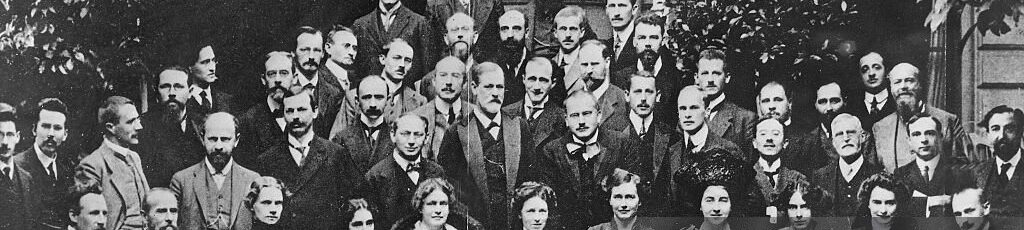
Eugen Bleuler (1857–1939) was the Swiss psychiatrist who coined the word schizophrenia. In a Berlin lecture on April 24, 1908, and then in his 1911 monograph Dementia Praecox or the Group of Schizophrenias, he replaced Emil Kraepelin’s “dementia praecox” with a name for what he took to be the core problem: a splitting, or loosening, of the connections between thinking, feeling and willing.
His argument had two halves, and psychiatry has spent the century since keeping one and dropping the other. Bleuler assumed a physical disease process that the science of his day could not locate. He also insisted that the particular delusion or voice is the person’s meaningful response to that disturbance, open to understanding like anyone’s inner life. The two halves belong together: psychosis is neither only a brain event nor only a biography, and the clinician’s job is to hold both. Carl Jung absorbed that double stance at Bleuler’s hospital, the Burghölzli, and it still sets the right terms for therapy.
Who Eugen Bleuler was
Bleuler was born on April 30, 1857, in Zollikon, just outside Zurich, and died there on July 15, 1939. He studied medicine in Zurich, was an assistant physician at the Waldau asylum near Bern from 1881 to 1883, and took his doctorate in 1883. Study trips took him to Charcot in Paris, to Bernhard von Gudden in Munich, and to London. In 1885 he joined the Burghölzli, Zurich’s university psychiatric hospital, as an assistant physician.1, 2
The step that shaped everything after came in 1886, and it took him away from the Burghölzli, not back to it: at 29 he became director of the asylum at Rheinau. He stayed more than twelve years, living with long-term patients and, by his son’s account, giving them as much personal contact as he could.1, 2 Kraepelin worked heavily from case records; Bleuler built his picture of the illness from years of watching the same people up close.2, 3
In 1898 he returned to the Burghölzli as director and professor of psychiatry, appointed against the wishes of the Zurich medical faculty, and held the chair until 1927.1, 2 He wrote on caring for patients in private homes (1891) and on early discharge (1905), and counted social circumstances as part of the course of illness.1
From dementia praecox to schizophrenia
Kraepelin had sorted the major psychoses by course: dementia praecox ran a poor course, manic-depressive insanity remitted. Bleuler collected outcome data on patients admitted with dementia praecox and concluded that prognosis could not define the group. Yet he believed there was something “specifically schizophrenic” behind its varied surface, and he shared Kraepelin’s assumption of a physical disease no one could yet identify.1, 4
He went public at the German Psychiatric Association meeting in Berlin on April 24, 1908.2, 4 In one English translation: “I wish to emphasize that in Kraepelin’s dementia praecox it is neither a question of an essential dementia nor of a necessary precociousness.” He added that no adjectives or nouns could be formed from “dementia praecox,” then gave his reason for the new word: “In my opinion the breaking up or splitting of psychic functioning is an excellent symptom of the whole group.”1 The name joins the Greek schizein, to split, with phren, a word that first meant the diaphragm and later came to mean the mind or spirit.2
The full statement came in 1911, a volume of more than 400 pages in Gustav Aschaffenburg’s Handbuch der Psychiatrie (Deuticke).5 Joseph Zinkin’s English translation followed in 1950.6 The title matters: a group of schizophrenias, not one disease, described provisionally in case no unifying feature existed.1
What Bleuler meant by splitting
Bleuler used two separate distinctions, and much later confusion comes from merging them. Fundamental symptoms were present in every case; accessory symptoms, including hallucinations and delusions, might or might not appear. Primary symptoms came straight from the presumed disease process; secondary symptoms were the psyche’s understandable reactions to it.1, 7
Only one symptom was both: the disturbance of associations, the loosening of the links by which simple mental acts combine into coherent thought and feeling. In Anke Maatz’s translation of the 1911 text, “The connections between associations are lost. The disease interrupts the threads that give direction to our thoughts in an irregular fashion.”1 Moskowitz and Heim read it not narrowly as a thought disorder but as a core, organically based psychological deficit underlying the other symptoms.8
Two other fundamental symptoms carried names Bleuler invented. Ambivalence meant the simultaneous presence of contradictory ideas and feelings, and the inability to bring them together.1, 9 Autism (German Autismus), which he set out in the 1911 monograph, described a patient getting lost in private ideas, feelings and intentions without adapting to outside reality. He built the word from “auto-erotism,” a term proposed by the British sexologist Havelock Ellis and taken up by Freud, and he dropped the “erotism” to strip out the sexual meaning.1, 10
Textbooks compress all this into “the four A’s”: associations, affect, ambivalence, autism. Bleuler never gave those four precedence or presented them that way. The historian Kieran McNally calls the mnemonic a caricature that now masquerades as historical fact and pushes aside the symptom Bleuler kept returning to, splitting.11
Here is the double stance in his own words. The disease process, he wrote in 1908, “cannot account for the fact that it is a specific delusional idea or a specific hallucination that occurs.” It produces fundamental disturbances, on which, with precipitating and determining factors, hallucinations and delusions take shape.1 The form came from the illness; the content came from the person. Manfred Bleuler wrote that his father “studied the schizophrenic’s life essentially in the same way as we study the inner life of neurotics, of healthy men, and of ourselves.”1 He saw many so-called pathological phenomena as exaggerations of normal psychic functions, different in degree rather than kind.3
He did not, as is sometimes said, trace schizophrenia to childhood conflict or trauma. He assumed a neurobiological cause, believed heredity played a part, and used psychoanalytic ideas to explain the coloring of symptoms rather than their origin.1, 2 Stephan Heckers describes him as agnostic about mechanism, preferring psychological understanding to neural explanation, and as giving hope by making schizophrenia less predictive of outcome.12
Splitting, then, was not a second personality, yet the popular “split personality” reading is not pure error. Moskowitz and Heim argue that Bleuler’s splitting is closely tied to dissociation, and that his thinking owed more to Pierre Janet, especially Janet’s category of psychasthenia, than to Freud.8 Readers of Janet’s theory of dissociation will see the resemblance.
The Burghölzli, Freud and Jung
Maatz and colleagues call Bleuler the only influential academic psychiatrist of his time who brought psychoanalysis into treatment and research at his own hospital, while staying cautious about its claims.1 He had reviewed Breuer and Freud’s Studies on Hysteria favorably before Jung arrived, which undercuts Jung’s later claim, in letters to Freud, that he had recruited his chief to the movement.13
Jung was on the staff from 1900 to 1909, senior physician from 1905, and Bleuler’s reports backed his doctorate in 1902.13 With Franz Riklin and Bleuler’s encouragement, he used word-association experiments to give Freud’s idea of repression an experimental footing.2 His 1907 Psychology of Dementia Praecox read psychotic content as organized around emotionally charged complexes (English translation, 1909).14 In 1908 he and Bleuler published a joint paper on complexes and the causes of illness in dementia praecox.1 Jung resigned on March 7, 1909; faculty minutes suggest the rejection of a psychopathology research laboratory he had hoped for was a major reason.13 For what those years meant later, see the development of Carl Jung’s psychology.
Freud tried to analyze Bleuler by letter, and the attempt failed. Ernst Falzeder argues that Bleuler’s break with the organized movement was a crucial, long-underestimated turning point in psychoanalysis’s short-lived flirtation with academic psychiatry, and probably mattered more to its later course than the departures of Alfred Adler, Wilhelm Stekel or even Jung.15 Dalzell adds that Bleuler’s views on Freud’s theories stayed consistent; he left the movement, not the ideas he had accepted.16 The schisms kept coming, through Jung to Otto Rank and his theory of will, and the politics behind them are traced in The Fractured Soul, on the schisms of early psychotherapy.
The influence outlasted the split. Bleuler’s late, speculative writings proposed the “psychoid,” one organizing life principle beneath body, mind and social life.1 Jung’s psychoid layer of the unconscious, set out in “On the Nature of the Psyche” (1947), comes down a line from the vitalist Hans Driesch through Bleuler’s Psychoide.17
What survived in diagnosis, and what did not
Bleuler’s word is on the diagnosis, but his concept mostly is not. His schizophrenia was wide: its core could appear in diluted form as “latent schizophrenia” or schizoid character, and for decades continental psychiatry anchored the diagnosis to that core rather than to hallucinations and delusions.7 Bleuler went on to write about schizoidia, the milder schizoid disposition, in 1922 and 1929; who first used the label is disputed, and Maatz and colleagues credit Kurt Binswanger with introducing it explicitly in 1920.1 Psychoanalysis took the word elsewhere, as in Ronald Fairbairn’s 1940 paper “Schizoid Factors in the Personality,” an early piece of the object relations theory of Ronald Fairbairn.18
Breadth became a liability once reliability was the priority. In a study published in 1971, videotaped diagnostic interviews with eight patients were shown to large audiences of psychiatrists in the eastern United States and in Britain. The American concept of schizophrenia proved much broader, taking in patients British raters would have called depressed, manic, neurotic or personality-disordered.19 DSM-III (1980) began a neo-Kraepelinian era of descriptive categories, and DSM-5 defines schizophrenia mainly by positive symptoms, requiring at least one of hallucinations, delusions or disorganized speech. The first two are what Bleuler called accessory.20 Ambivalence appears in none of the DSM-5-TR criteria for the schizophrenia spectrum.9
So the common claim that Bleuler laid the foundation for the modern DSM overstates his influence on its criteria. Josef Parnas argues nearly the opposite: the clinical core that Bleuler and the continental tradition described bears little resemblance to current operational definitions, and DSM-IV and ICD-10 seem to capture mainly a chronic paranoid-hallucinatory subset of patients.7 What survived is the name, the expectation that outcomes vary, and a phenomenological line of research. Louis Sass and Parnas describe schizophrenia as at root a disturbance of the basic sense of self, an “ipseity disturbance” beneath the scattered symptoms,21 a modern descendant of Bleuler’s search for something “specifically schizophrenic.”
His coinages had different fates. Ambivalence passed into everyday speech. Autism went elsewhere: in 1943 Leo Kanner described “autistic disturbances of affective contact” in children he saw as having an innate difficulty forming affective bonds, a different idea from Bleuler’s active withdrawal into fantasy, and the two meanings have been kept apart since the 1970s.10 Bleuler’s “autistic” patients were not autistic in the modern sense.
Even the name has proved fragile. After a 1993 request from a national federation of patients’ families, Japan’s psychiatric society replaced Seishin Bunretsu Byo (“mind-split disease”) with Togo Shitcho Sho, “integration disorder,” in 2002.22, 23 Afterward the share of patients told their diagnosis rose from 36.7% to 69.7% within three years.23 The aim, Maatz and colleagues note, was to swap an incurable, Kraepelinian picture for a hopeful, Bleulerian one,1 by retiring a literal translation of Bleuler’s own word.
What this looks like in therapy
Bleuler’s double stance becomes two questions a clinician can ask about almost any symptom. What is happening to the form of this person’s experience, the capacity to think in a line, feel in proportion, stay present? And what does the content mean: why this fear, this image, this voice saying these words? A purely biological approach asks only the first; a purely interpretive one asks only the second, as though insight could dissolve a disturbance of the whole mind. Bleuler asked both.1
Most people in outpatient therapy are not psychotic, and for them Bleuler’s other idea matters more: that these phenomena exaggerate ordinary mental life.3 Ambivalence is the clearest case. Wanting to leave a marriage and wanting to stay. Loving a parent and being furious with them. People often arrive having swung between the two for years, each time treating the latest position as the true one. Much of the work is keeping both feelings in view long enough to see what each is protecting. Jungian depth therapy approaches this through the complexes Jung first mapped with word-association tests on Bleuler’s wards.
Splitting in Bleuler’s sense also sits close to dissociation,8 and that has a practical consequence: hearing voices, losing time or feeling unreal does not by itself mean schizophrenia. In one small comparison study, people with dissociative identity disorder were more likely than people with schizophrenia to report voices beginning before age 18, more than two voices, and both child and adult voices.24 Telling these apart takes careful assessment. Our page on dissociation therapy in Hoover describes how that assessment is approached.
When psychosis is present, the strongest evidence supports coordinated specialist care. A 2018 meta-analysis of 10 trials (2,176 patients) found specialized early intervention services beat usual care on all 13 pooled outcomes, including dropout, hospitalization and symptoms.25 A 2022 network meta-analysis of 90 trials found that almost every family intervention model reduced relapse at 12 months, with family psychoeducation alone outperforming more complex programs, though confidence ranged from moderate to very low.26 A 2014 meta-analysis found that cognitive behavioral therapy for schizophrenia symptoms has small effects, which shrink further when outcome assessors are blinded.27 A 2001 Cochrane review found sparse data, no evidence that psychodynamic therapy helps hospitalized patients, and no randomized trials of psychoanalysis at all.28 Bleuler’s respect for meaning does not make insight-oriented therapy a treatment for schizophrenia, and outpatient therapy is no substitute for psychiatric care.
What the Burghölzli tradition does offer is the human stance inside that care. Bleuler’s son Manfred, himself later a researcher on long-term outcomes,29 described his father’s approach as two pillars: personal communication aimed at understanding the patient’s intentions and ways of adapting to reality, and shared work and leisure in groups.1 Harry Stack Sullivan, who spent years working with psychotic patients, reached a similar conviction in his interpersonal theory of psychiatry. If you or someone close to you is newly hearing voices or holding frightening beliefs others do not share, start with a psychiatric evaluation. In an emergency, call or text 988, or use our list of crisis resources in Birmingham.
Bleuler is worth reading for the stance more than the system: take the disturbance seriously, and the person’s meanings too. If ambivalence, inner splitting or dissociative experiences are part of what you carry and you want a therapist who attends to both, you can contact Taproot Therapy Collective to talk about whether our approach fits.
References
- Maatz, A., Hoff, P., & Angst, J. (2015). Eugen Bleuler’s schizophrenia—a modern perspective. Dialogues in Clinical Neuroscience, 17(1), 43–49. https://doi.org/10.31887/DCNS.2015.17.1/amaatz
- Ashok, A. H., Baugh, J., & Yeragani, V. K. (2012). Paul Eugen Bleuler and the origin of the term schizophrenia (SCHIZOPRENIEGRUPPE). Indian Journal of Psychiatry, 54(1), 95–96. https://doi.org/10.4103/0019-5545.94660
- Stotz-Ingenlath, G. (2000). Epistemological aspects of Eugen Bleuler’s conception of schizophrenia in 1911. Medicine, Health Care and Philosophy, 3(2), 153–159. https://doi.org/10.1023/A:1009919309015
- Maatz, A., & Hoff, P. (2014). The birth of schizophrenia or a very modern Bleuler: A close reading of Eugen Bleuler’s “Die Prognose der Dementia praecox” and a re-consideration of his contribution to psychiatry. History of Psychiatry, 25(4), 431–440. https://doi.org/10.1177/0957154X14546606
- Bleuler, E. (1911). Dementia praecox oder Gruppe der Schizophrenien. In G. Aschaffenburg (Ed.), Handbuch der Psychiatrie. Deuticke.
- Bleuler, E. (1950). Dementia praecox or the group of schizophrenias (J. Zinkin, Trans.). International Universities Press. (Original work published 1911)
- Parnas, J. (2011). A disappearing heritage: The clinical core of schizophrenia. Schizophrenia Bulletin, 37(6), 1121–1130. https://doi.org/10.1093/schbul/sbr081
- Moskowitz, A., & Heim, G. (2011). Eugen Bleuler’s Dementia praecox or the group of schizophrenias (1911): A centenary appreciation and reconsideration. Schizophrenia Bulletin, 37(3), 471–479. https://doi.org/10.1093/schbul/sbr016
- Deters, L. B., Silvia, P. J., & Kwapil, T. R. (2022). The Schizotypal Ambivalence Scale: An item response theory analysis. Behavioral Sciences, 12(8), 247. https://doi.org/10.3390/bs12080247
- Jeong, S. H., & Son, J. W. (2026). The concept of autism in autism spectrum disorder and schizophrenia spectrum disorder: Historical divergence and phenomenological rapprochement. Journal of the Korean Academy of Child and Adolescent Psychiatry, 37(2), 82–94. https://doi.org/10.5765/jkacap.260003
- McNally, K. (2009). Eugene Bleuler’s four As. History of Psychology, 12(2), 43–59. https://doi.org/10.1037/a0015934
- Heckers, S. (2011). Bleuler and the neurobiology of schizophrenia. Schizophrenia Bulletin, 37(6), 1131–1135. https://doi.org/10.1093/schbul/sbr108
- Möller, A., Scharfetter, C., & Hell, D. (2003). Das “psychopathologische Laboratorium” am “Burghölzli” (The “psychopathologic laboratory” at the Burghölzli: Development and termination of the working relationship of C. G. Jung and Eugen Bleuler). Der Nervenarzt, 74(1), 85–90. https://doi.org/10.1007/s00115-002-1282-7
- Jung, C. G. (1909). The psychology of dementia praecox (F. Peterson & A. A. Brill, Trans.). Journal of Nervous and Mental Disease Publishing. https://doi.org/10.1037/10783-000 (Original work published 1907)
- Falzeder, E. (2007). The story of an ambivalent relationship: Sigmund Freud and Eugen Bleuler. Journal of Analytical Psychology, 52(3), 343–368. https://doi.org/10.1111/j.1468-5922.2007.00666.x
- Dalzell, T. G. (2007). Eugen Bleuler 150: Bleuler’s reception of Freud. History of Psychiatry, 18(4), 471–482. https://doi.org/10.1177/0957154X07077556
- Addison, A. (2009). Jung, vitalism and “the psychoid”: An historical reconstruction. Journal of Analytical Psychology, 54(1), 123–142. https://doi.org/10.1111/j.1468-5922.2008.01762.x
- Fairbairn, W. R. D. (2013). Schizoid factors in the personality. In Psychoanalytic studies of the personality (pp. 25–49). Routledge. https://doi.org/10.4324/9780203129449-5 (Original work published 1940)
- Kendell, R. E., Cooper, J. E., Gourlay, A. J., Copeland, J. R., Sharpe, L., & Gurland, B. J. (1971). Diagnostic criteria of American and British psychiatrists. Archives of General Psychiatry, 25(2), 123–130. https://doi.org/10.1001/archpsyc.1971.01750140027006
- Loch, A. A. (2019). Schizophrenia, not a psychotic disorder: Bleuler revisited. Frontiers in Psychiatry, 10, 328. https://doi.org/10.3389/fpsyt.2019.00328
- Sass, L. A., & Parnas, J. (2003). Schizophrenia, consciousness, and the self. Schizophrenia Bulletin, 29(3), 427–444. https://doi.org/10.1093/oxfordjournals.schbul.a007017
- Maruta, T., & Matsumoto, C. (2019). Renaming schizophrenia. Epidemiology and Psychiatric Sciences, 28(3), 262–264. https://doi.org/10.1017/S2045796018000598
- Sato, M. (2006). Renaming schizophrenia: A Japanese perspective. World Psychiatry, 5(1), 53–55. https://pubmed.ncbi.nlm.nih.gov/16757998/
- Dorahy, M. J., Shannon, C., Seagar, L., Corr, M., Stewart, K., Hanna, D., Mulholland, C., & Middleton, W. (2009). Auditory hallucinations in dissociative identity disorder and schizophrenia with and without a childhood trauma history: Similarities and differences. Journal of Nervous and Mental Disease, 197(12), 892–898. https://doi.org/10.1097/NMD.0b013e3181c299ea
- Correll, C. U., Galling, B., Pawar, A., Krivko, A., Bonetto, C., Ruggeri, M., Craig, T. J., Nordentoft, M., Srihari, V. H., Guloksuz, S., Hui, C. L. M., Chen, E. Y. H., Valencia, M., Juarez, F., Robinson, D. G., Schooler, N. R., Brunette, M. F., Mueser, K. T., Rosenheck, R. A., . . . Kane, J. M. (2018). Comparison of early intervention services vs treatment as usual for early-phase psychosis: A systematic review, meta-analysis, and meta-regression. JAMA Psychiatry, 75(6), 555–565. https://doi.org/10.1001/jamapsychiatry.2018.0623
- Rodolico, A., Bighelli, I., Avanzato, C., Concerto, C., Cutrufelli, P., Mineo, L., Schneider-Thoma, J., Siafis, S., Signorelli, M. S., Wu, H., Wang, D., Furukawa, T. A., Pitschel-Walz, G., Aguglia, E., & Leucht, S. (2022). Family interventions for relapse prevention in schizophrenia: A systematic review and network meta-analysis. The Lancet Psychiatry, 9(3), 211–221. https://doi.org/10.1016/S2215-0366(21)00437-5
- Jauhar, S., McKenna, P. J., Radua, J., Fung, E., Salvador, R., & Laws, K. R. (2014). Cognitive-behavioural therapy for the symptoms of schizophrenia: Systematic review and meta-analysis with examination of potential bias. British Journal of Psychiatry, 204(1), 20–29. https://doi.org/10.1192/bjp.bp.112.116285
- Malmberg, L., & Fenton, M. (2001). Individual psychodynamic psychotherapy and psychoanalysis for schizophrenia and severe mental illness. Cochrane Database of Systematic Reviews, 2001(3), CD001360. https://doi.org/10.1002/14651858.CD001360
- Bleuler, M. (1978). The schizophrenic disorders: Long-term patient and family studies (S. M. Clemens, Trans.). Yale University Press. (Original work published 1972)

















0 Comments