
Voice Dialogue is a way of talking directly with the subpersonalities, or “selves,” that run a person’s life. Hal and Sidra Stone, two Los Angeles clinical psychologists, began developing it in 1972. The client moves to another seat, the facilitator interviews one self at a time, and the aim is an Aware Ego that can hear every self and choose without exiling any.1, 2
The Stones’ central claim is that the ordinary ego, the “I” most of us defend, is a committee of primary selves that formed in childhood to protect a vulnerable core. If that is right, change does not come from the ego trying harder or from banishing the selves we dislike, because banished selves only go underground. It comes from separating from the protectors first, with respect rather than contempt, until something new can stand between opposites and choose. They called that capacity the Aware Ego. It is why Voice Dialogue reads today as an earlier, less agenda-driven cousin of Internal Family Systems therapy, even though IFS’s own published history traces it to family therapy rather than to the Stones.
Who Hal and Sidra Stone were
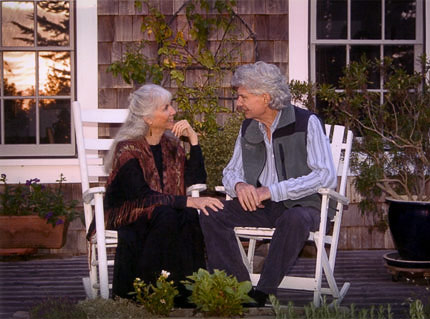
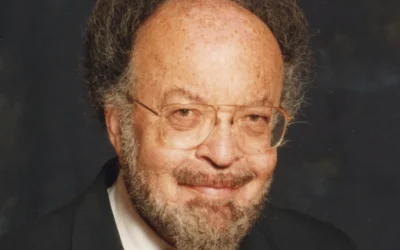
Hal Stone studied at UCLA and received his Ph.D. in psychology in 1953, then served as a U.S. Army psychologist from 1953 to 1957, attaining the rank of captain. He finished analytic training at the C. G. Jung Institute of Los Angeles in 1961 and practiced as a Jungian analyst through the 1960s. His growing interest in the new experiential therapies pulled him away from that world: he separated from the Institute in 1970 and resigned as an analyst in 1975. In 1973 he founded the Center for the Healing Arts, which his official biography calls perhaps the first holistic health training center in the United States, and ran it until 1979.3 He died in 2020 at 92.1
Sidra Stone, born Sidra Levi in Brooklyn, graduated from Barnard College in 1957, began doctoral work at the University of Maryland and completed her Ph.D. in 1962. She worked as a community mental health psychologist in Washington, then, as Dr. Winkelman, for the Veterans Administration in New York and the Lincoln Center for Psychotherapy. She moved to Los Angeles in 1967, became psychological consultant to Hamburger Home, a home for teenage girls, in 1968, and its executive director in 1972. She rebuilt it as a residential treatment center that paired behavior modification with psychotherapy built on psychoanalytic principles.4
An earlier version of this page called both Stones “classical analysts” and Sidra an academic behaviorist. Hal was a Jungian analyst. Sidra’s documented career was clinical: she was a psychologist and program director, not an analyst or an academic. The kernel of truth is her own description of herself in 1972 as “someone who viewed psychology from a pragmatic Skinnerian viewpoint,” which, she wrote, put the two of them about as far apart as two psychologists could be.1
They married in 1977. After Hal left the Center in 1979 they collaborated more closely, and from the early 1980s they taught the work in the United States and abroad. Their company, Delos Inc., now operates as Voice Dialogue International.3 The core book, Embracing Our Selves, first appeared in 1985 from DeVorss with Sidra credited as Sidra Winkelman; the 1989 New World Library edition carries the subtitle The Voice Dialogue Manual.5 Hal’s Embracing Heaven and Earth (1985) tells his own story.6 Then came Embracing Each Other (1989), Embracing Your Inner Critic (1993), Sidra’s The Shadow King (1997) on the Inner Patriarch in women’s lives, and Partnering (2000).7, 8, 9, 10
How Voice Dialogue started in 1972
The method did not come from a theory of therapy. In Sidra’s account of the first session, she went to Hal in 1972 to learn Roberto Assagioli’s guided imagery, then new in the United States; Hal knew Jung’s active imagination, a related practice. Their six planned sessions drifted into talk about their own contrasting inner processes and, one day, about vulnerability, which neither felt much access to. Hal said he would rather talk directly to hers than about it. She moved off the couch, sat on the carpet and rested her head on his coffee table, and what emerged was, in her words, a very young child: colors more saturated, sounds sharper, old memories returning. At the next meeting Hal met his own inner child. From there they interviewed other selves, in each other and then in other people.1
Writing for clinicians in 1994, they stressed that Voice Dialogue “grew from our own relationship” rather than a clinical setting, which is why it was meant to be non-pathologizing: an exploration of what is there, without assumptions about what should be.2 The claim on an earlier version of this page, that they invented it out of dissatisfaction with the hierarchy of therapy, appears in none of the accounts of theirs cited here.
Primary selves, disowned selves and the Aware Ego
Primary selves are the selves we identify with. They develop in response to family, school, religion and culture to help us succeed, and when we say “I,” the Stones argued, we are usually speaking as them.11 Their recurring examples include the Pusher, the Responsible Parent, the Rational Mind, the Pleaser and the Perfectionist. Disowned selves are the opposites those selves push down, a term the Stones credited to Nathaniel Branden, author of The Disowned Self (1971).11, 12 A disowned self works out of sight, and the easiest place to find it is in what a person cannot stand in others. A client who calls someone “so self-involved and inconsiderate,” they suggested, has probably disowned her own selfishness.2
Beneath both sits the vulnerable child. At its simplest, the map of a psyche is primary selves, disowned selves, and the vulnerable child being protected.2 Vulnerability here does not mean weakness. It means the basic sensitivity that registers other people’s moods and the feel of a room, and if it is not cared for consciously it ends up in other people’s hands.13
The Inner Critic got a book of its own.8 In the Stones’ account it forms in childhood to spare us shame and pain by criticizing us before anyone else can, then does not know when to stop. They separated it from the Judge, which criticizes other people, and noted that the Critic enforces whatever primary selves are in charge.14 The original version of this page said every part has a “positive intent.” That is IFS language. The Stones said something narrower: each self has a good side and a problematic side, and none is to be thrown out.2, 11
The Aware Ego is where the model departs from the traditional idea of the ego and from most meditation teaching. The Stones described three levels of consciousness. Awareness is the witness, close to the witness state in meditation, and it sees without acting. The second level is the lived experience of the selves. The third, the Aware Ego, takes in both and makes the choice. Awareness alone, they insisted, does not drive the car; left there, the primary selves keep deciding. They described the old ego as “a panel of people in the board room,” and the Aware Ego as “not a thing” but “a process” that strengthens each time a person separates from another primary self.11
Bonding patterns: the selves in relationships
The Stones’ relationship theory starts from infancy. Mother and baby bond as parent and child, and the baby needs that bond. Adults keep the same default setting, so the parental selves in one partner lock onto the child selves in the other, in both directions at once.11, 7 Their illustration is a caretaking woman who tends a man’s unspoken feelings while he becomes the steady, rational father who plans for both. In a positive bonding pattern this feels safe and slowly turns airless. In a negative one, judgmental or withdrawn parental selves face hurt or stubborn child selves, each partner feels the other holds all the power, and every attempt to fix it makes it worse, because the selves caught in the pattern are the ones trying to fix it.11
The way out mirrors the individual work: each partner cares for his or her own vulnerability, reclaims the disowned self the other has been carrying, and gains enough Aware Ego to choose. Sidra later put the lesson in one line: “It is not just what you say, it is who says it!”1 An earlier version of this page called bonding patterns the Stones’ model of trauma. It is a theory of ordinary relationship, close to what we describe in the parts couples miss in marriage counseling.
Jung, Assagioli and IFS: where Voice Dialogue fits
Hal Stone’s Jungian training shows throughout. Jung’s 1934 review of complex theory described the feeling-toned complex as an image with its own coherence and a relatively high degree of autonomy, so that conscious will controls it only in part.15 Jolande Jacobi’s account of the autonomous complex made that idea teachable. Read one way, a Voice Dialogue self is a complex invited to sit in its own chair and give an interview. Jung’s own method for meeting such figures was active imagination, which Robert A. Johnson brought to general readers in Inner Work (1986).16 The difference is where the dialogue happens. In active imagination the ego meets the figures in the imagination, usually alone. In Voice Dialogue the client physically moves, and a second person does the interviewing.
The Stones also distinguished the Aware Ego from the Jungian Self. The Self, in their reading, names deeper non-ego states that can become the guiding center of the personality; the Aware Ego can make room for it, but its daily job is separating from primary selves.11 That is a humbler idea than the relationship Edward Edinger mapped as the ego-Self axis in Ego and Archetype (1972).17 Assagioli is the other ancestor: his Psychosynthesis (1965) treated subpersonalities as part of normal mental life, to be recognized and synthesized.18
Internal Family Systems is the comparison most readers want. Richard Schwartz developed IFS in the 1980s out of structural and strategic family therapy, applying family systems thinking to the inner world; his book-length statement of the model appeared in 1995.19, 20 The resemblance is real. Both treat multiplicity as normal, both see protective parts guarding something vulnerable, and both approach the protective parts first: the Stones turned to disowned selves only after the primary selves were understood, and IFS asks protectors for permission before approaching the exiles they guard.2, 21
The differences matter more clinically. IFS holds that every person has an undamaged Self with qualities such as calm, curiosity and compassion, and therapy helps parts trust that Self and release the burdens they carry.21 Voice Dialogue posits no such core. Its facilitator “does not negotiate amongst selves,” tries neither to change nor to mature any of them, and leaves the client to live with the tension of opposites. The Aware Ego is built a little at a time rather than uncovered.2 Calling Voice Dialogue a forerunner of IFS is fair on dates and ideas, but Schwartz’s own published history traces IFS to family therapy, and nothing I found shows that he drew on the Stones.19
What the research does and does not show
Voice Dialogue has almost no controlled research behind it. The academic page of Voice Dialogue International lists mostly theses and practitioner papers. The Stones’ FAQ floats speculative ideas about brain correlates of the selves, and even suggests that different selves can have different eye colors, while admitting they knew of no research testing their brain hypotheses. Voice Dialogue International does not certify practitioners; a group of teachers known as IVDA wrote voluntary guidelines instead, so clients have to check a facilitator’s background themselves.11
The peer-reviewed work is recent and small. Nine women with anorexia nervosa who experienced an “eating disorder voice” had one Voice Dialogue session; most found it acceptable and helpful and described more separation from the voice, better understanding of it, and feeling hopeful, motivated and afraid of recovery at once.22 In a 2026 study, nine university participants with low self-esteem had one session with their self-critic and described the value of changing chairs, new insight into where the critic came from, and a shift in how they related to themselves.23 Both are single-session interview studies without comparison groups. They show the method is tolerable and meaningful, not that it outperforms anything.
The most tested descendant is Talking With Voices, a therapy for distressing voices that its developers derived from the theory and practice of Voice Dialogue.24 In a 50-person, single-site randomized feasibility trial for adults with schizophrenia-spectrum diagnoses, adding up to 26 sessions to usual care was feasible and acceptable, kept 80 percent of participants at six months, and showed signals of benefit on voice-hearing, dissociation and recovery measures, but no difference in general psychosis scores.25 A 2026 review groups it with relating therapy and AVATAR therapy as relational therapies for voices and notes that a multicenter trial is under way.26
Neighboring methods have a little more data. An uncontrolled pilot of emotion-focused two-chair dialogue in nine self-critical clients found gains in self-compassion and drops in self-criticism, depression and anxiety.27 For IFS, a proof-of-concept randomized trial in 79 people with rheumatoid arthritis found improvements in joint pain, self-compassion and depressive symptoms that held a year later, but none in anxiety or disease activity, and an uncontrolled pilot in 17 adults with PTSD after childhood trauma reported large symptom reductions.28, 29 Parts-based dialogue is promising. Voice Dialogue itself rests mainly on clinical experience and a handful of small studies.
What this looks like in therapy
The Stones’ sequence is simple. The therapist listens for primary selves in phrases like “I never seem to get enough done,” and for disowned selves in the client’s harshest judgments of others. With the client’s agreement, the therapist asks to speak with one self, and the client shifts to another chair. The therapist interviews that self as one would a person: why it came into being and how it has protected the client. Then the client returns to the original seat. That return is the point. The client has just met a part that has been running things and can now feel the difference between being it and hearing it.2, 11
The Stones built in cautions that still hold. Work with primary selves before disowned ones, because the protectors know what needs protecting. Never leave someone inside a self at the end of a session, and leave time to settle before the person goes back out. And, in their words, Voice Dialogue “is not for everyone.”2 With significant trauma or dissociation those cautions are essential, and the work goes slower and stays anchored in safety, as in our dissociation therapy.
Many people meet their primary selves when those selves stop working: after a promotion, a divorce or a death, or in the midlife unraveling of a once-reliable personality that James Hollis calls the Middle Passage.30 The Pusher that built a career cannot rest; the Pleaser that kept a family calm cannot say no. The Stones offered a way to talk with those selves without declaring war on them and without mistaking them for the whole person.
At Taproot, parts-based therapy draws on Internal Family Systems therapy, ego-state therapy and Jung’s theory of complexes, which work the same territory the Stones mapped. If a harsh inner critic or a self that will not stop pushing sounds familiar, you can reach out to our Hoover office to talk about whether this approach fits.
References
- Stone, S. (2022). In celebration of fifty years of Voice Dialogue: The origin story. Voice Dialogue International. https://voicedialogue.org/articles/In_Celebration_Of_Fifty_Years.htm
- Stone, H., & Stone, S. (1994). Voice Dialogue: An introduction to the use of Voice Dialogue. Voice Dialogue International. https://voicedialogue.org/articles/Voice_Dialogue-_An_Introduction.htm
- Voice Dialogue International. (2022). Hal Stone, Ph.D. https://voicedialogue.org/index-Hal_Stone.htm
- Voice Dialogue International. (2022). Sidra L. Stone, Ph.D. https://voicedialogue.org/index-Sidra_Stone.htm
- Stone, H., & Winkelman, S. (1989). Embracing our selves: The voice dialogue manual. New World Library. (Original work published 1985)
- Stone, H. (1985). Embracing heaven & earth. DeVorss.
- Stone, H., & Winkelman, S. (1989). Embracing each other: Relationship as teacher, healer & guide. New World Library.
- Stone, H., & Stone, S. (1993). Embracing your inner critic: Turning self-criticism into a creative asset. HarperSanFrancisco.
- Stone, S. (1997). The shadow king: The invisible force that holds women back. Nataraj.
- Stone, H., & Stone, S. L. (2000). Partnering: A new kind of relationship. New World Library.
- Voice Dialogue International. (2022). Voice Dialogue FAQs. https://voicedialogue.org/FAQ/index.htm
- Branden, N. (1971). The disowned self. Nash.
- Stone, H., & Stone, S. (2003). About vulnerability. Voice Dialogue International. https://voicedialogue.org/articles/About_Vulnerability.htm
- Stone, H., & Stone, S. (1994). The inner critic. Voice Dialogue International. https://voicedialogue.org/articles/The_Inner_Critic.htm
- Jung, C. G. (1969). A review of the complex theory. In The structure and dynamics of the psyche (R. F. C. Hull, Trans.; 2nd ed., Collected Works Vol. 8). Princeton University Press. (Original work published 1934)
- Johnson, R. A. (1986). Inner work: Using dreams and active imagination for personal growth. Harper & Row.
- Edinger, E. F. (1972). Ego and archetype. Putnam, for the C. G. Jung Foundation for Analytical Psychology.
- Assagioli, R. (1965). Psychosynthesis: A manual of principles and techniques. Hobbs, Dorman.
- Brenner, E. G., Schwartz, R. C., & Becker, C. (2023). Development of the internal family systems model: Honoring contributions from family systems therapies. Family Process, 62(4), 1290–1306. https://doi.org/10.1111/famp.12943
- Schwartz, R. C. (1995). Internal family systems therapy. Guilford Press.
- Schwartz, R. C., & Sweezy, M. (2019). Internal family systems therapy (2nd ed.). Guilford Press.
- Ling, N. C. Y., Serpell, L., Burnett-Stuart, S., & Pugh, M. (2022). Interviewing anorexia: How do individuals given a diagnosis of anorexia nervosa experience Voice Dialogue with their eating disorder voice? A qualitative analysis. Clinical Psychology & Psychotherapy, 29(2), 600–610. https://doi.org/10.1002/cpp.2652
- Indramohan, S., Brown, R. J., Reid, K., Pugh, M., & Bell, T. (2026). “From a place of vulnerability”: Experiences of Voice Dialogue to explore self-criticism. Psychology and Psychotherapy: Theory, Research and Practice, 99(2), 386–404. https://doi.org/10.1111/papt.70028
- Corstens, D., Longden, E., & May, R. (2012). Talking with voices: Exploring what is expressed by the voices people hear. Psychosis, 4(2), 95–104. https://doi.org/10.1080/17522439.2011.571705
- Longden, E., Corstens, D., Bowe, S., Pyle, M., Emsley, R., Peters, S., Branitsky, A., Chauhan, N., Dehmahdi, N., Jones, W., Holden, N., Larkin, A., Miners, A., Murphy, E., Steele, A., & Morrison, A. P. (2022). A psychological intervention for engaging dialogically with auditory hallucinations (Talking With Voices): A single-site, randomised controlled feasibility trial. Schizophrenia Research, 250, 172–179. https://doi.org/10.1016/j.schres.2022.11.007
- Thomas, N., Ward, T., Longden, E., Bell, I. H., Brand, R. M., Christensen, M. J., Glenthøj, L. B., Rus-Calafell, M., & Hayward, M. (2026). Relational therapies for people who hear voices: Operationalisation and current status of an emergent group of psychological therapies. Schizophrenia Bulletin, 52(1), sbaf142. https://doi.org/10.1093/schbul/sbaf142
- Shahar, B., Carlin, E. R., Engle, D. E., Hegde, J., Szepsenwol, O., & Arkowitz, H. (2012). A pilot investigation of emotion-focused two-chair dialogue intervention for self-criticism. Clinical Psychology & Psychotherapy, 19(6), 496–507. https://doi.org/10.1002/cpp.762
- Shadick, N. A., Sowell, N. F., Frits, M. L., Hoffman, S. M., Hartz, S. A., Booth, F. D., Sweezy, M., Rogers, P. R., Dubin, R. L., Atkinson, J. C., Friedman, A. L., Augusto, F., Iannaccone, C. K., Fossel, A. H., Quinn, G., Cui, J., Losina, E., & Schwartz, R. C. (2013). A randomized controlled trial of an internal family systems-based psychotherapeutic intervention on outcomes in rheumatoid arthritis: A proof-of-concept study. The Journal of Rheumatology, 40(11), 1831–1841. https://doi.org/10.3899/jrheum.121465
- Hodgdon, H. B., Anderson, F. G., Southwell, E., Hrubec, W., & Schwartz, R. (2022). Internal family systems (IFS) therapy for posttraumatic stress disorder (PTSD) among survivors of multiple childhood trauma: A pilot effectiveness study. Journal of Aggression, Maltreatment & Trauma, 31(1), 22–43. https://doi.org/10.1080/10926771.2021.2013375
- Hollis, J. (1993). The middle passage: From misery to meaning in midlife. Inner City Books.














0 Comments