
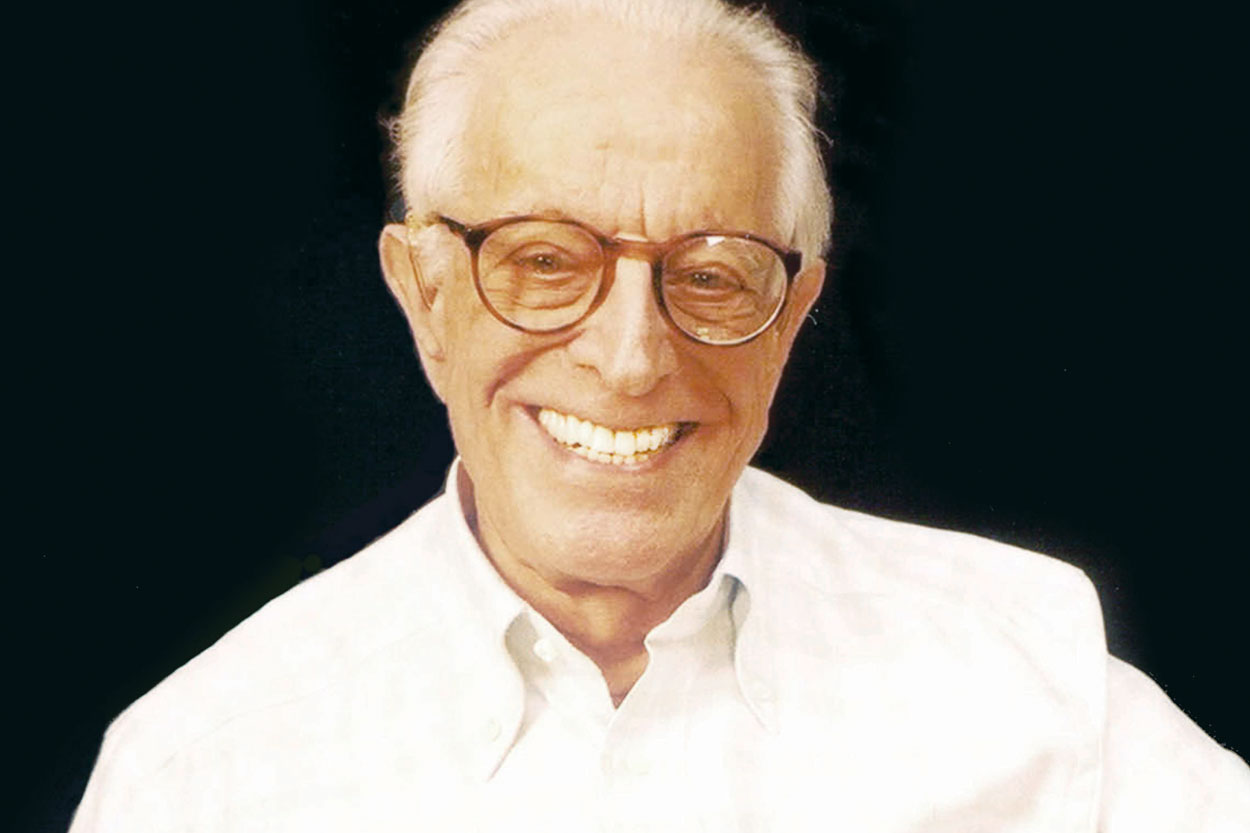
Rational Emotive Behavior Therapy (REBT) is a short-term, active therapy created by psychologist Albert Ellis in 1955. It holds that people are disturbed less by events than by the rigid demands they make about those events: “I must succeed,” “you must treat me well,” “life must be easy.” REBT teaches clients to find those demands, dispute them and replace them with flexible preferences, so that change can come quickly.
Key takeaways
- Rational Emotive Behavior Therapy, begun by Albert Ellis in 1955, holds that rigid demands about events, not the events themselves, drive most emotional disturbance.
- The ABC model traces upset from an Activating event through Beliefs to emotional and behavioral Consequences, then Disputes the belief to build an Effective new outlook.
- REBT separates healthy negative emotions such as sadness and concern from unhealthy ones such as depression and anxiety, and aims for the first, not for calm.
- A 2018 meta-analysis of 84 studies found medium effects of REBT on outcomes and on irrational beliefs, supporting both the therapy and its theory of change.
- Ideas from REBT, such as secondary disturbance and unconditional self-acceptance, remain useful in depth, existential and somatic therapy.
What is Rational Emotive Behavior Therapy?
REBT is the oldest of the cognitive-behavioral therapies. Ellis began practising what he first called Rational Therapy in 1955, several years before Aaron Beck developed cognitive therapy, and the two approaches later grew up side by side. Daniel David and colleagues describe REBT as “the original form and one of the main pillars” of cognitive-behavioral therapies.15
Its central claim is philosophical as much as clinical. Ellis argued that human beings are born with two tendencies at once: a capacity for flexible, realistic thinking and a strong pull toward absolutist, demanding thinking. Emotional disturbance, in his view, comes mostly from the second tendency. When a preference (“I would like to be loved”) hardens into a demand (“I must be loved, or I am worthless”), an ordinary disappointment turns into depression, anxiety or rage.3
The therapy that follows from this is direct. An REBT therapist does not wait for insight to surface over years. From the first sessions the therapist helps the client name the demand behind a painful feeling, question it, and practise a different stance in daily life. That is the sense in which REBT aims to create psychotherapy change quickly: it goes straight to the belief that keeps the problem going.
Ellis’s life, personality and public career are covered in our profile Who was Albert Ellis? Here the focus is the therapy: where it came from, what it assumes, which techniques it uses, what the research shows and what a therapist can take from it.
Where did REBT come from?
Albert Ellis: the short biography behind the method
Albert Ellis was born in Pittsburgh on 27 September 1913, the eldest of three children in a Jewish family, and grew up in New York City, mostly in the Bronx. His parents separated while he was still a boy. He later described his father, a travelling salesman, as rarely present and his mother as uninterested in home life. A serious kidney illness in childhood pushed him from sports toward books.
Ellis was painfully shy as a young man, especially with women and with public speaking. He treated himself with the methods he would later teach. He often told the story of giving himself a month, at 19, to approach more than a hundred women on park benches in the Bronx Botanical Garden and start a conversation. Almost none went well, and that was the point: he found that rejection was unpleasant but survivable, and his fear faded.
He earned a degree in business administration from the City College of New York in 1934, during the Depression, and spent several years in small business ventures while writing on the side. He then entered the clinical psychology program at Teachers College, Columbia University, receiving his master’s degree in 1943 and his PhD in 1947. By then he had a part-time practice in family and sex counselling.
Ellis first believed psychoanalysis was the deepest form of therapy. Most analytic institutes would not train psychologists without medical degrees, so he found an analyst from the Karen Horney group who took him on, completed a full training analysis and practised classical psychoanalysis under supervision. Through the late 1940s and early 1950s he grew frustrated. Clients talked for months, gained insight, and stayed stuck. When he became more active and directive, they seemed to improve faster. By 1955 he had given up psychoanalysis entirely.
The philosophical influences on REBT
Before his analysis, Ellis had worked through many of his own problems by reading philosophy, and he brought that reading into the consulting room. The Stoics were first among his sources. The Greek teacher Epictetus put the idea in a sentence that Ellis quoted for the rest of his life: “Men are disturbed, not by things, but by the principles and notions which they form concerning things.”6 Epictetus also taught the division between what is in our control and what is not, and the Roman emperor Marcus Aurelius and his Meditations developed the same discipline of examining one’s own judgments. Ellis also named Spinoza and Bertrand Russell as early teachers.
Several other influences shaped the model:
- Alfred Korzybski and general semantics. Korzybski argued that language shapes perception, and that words like “is” smuggle in false certainty (“I am a failure”). Ellis took from him the habit of listening to how clients talk to themselves.
- Karen Horney. In Neurosis and Human Growth (1950) Horney described “the tyranny of the should,” the inner demands a neurotic person makes about who they must be.7 Ellis’s later attack on “musts” builds directly on Karen Horney’s psychoanalytic work.
- Alfred Adler. Adler held that people act on their private interpretations of the world and their goals for the future. Ellis wrote on the overlap in “Rational psychotherapy and individual psychology” (1957), and Adler’s contributions to psychotherapy run through REBT’s emphasis on present choices.
- Behaviorism and learning theory. From the behaviorists Ellis took the idea that habits of feeling and acting are learned and can be unlearned through practice, exposure and reinforcement.
- Existentialism. The existentialists insisted that each person is responsible for their choices and for the meaning they make. REBT shares that stance: whatever happened in the past, the client is the one now holding the belief.
- Erich Fromm and Paul Tillich. Fromm, in Man for Himself (1947), distinguished a “rational faith” grounded in one’s own experience from irrational faith in authority, a theme close to Ellis’s own humanism; see our essay on Erich Fromm’s relevance to depth psychology. The phrase “the courage to be” belongs to the theologian Paul Tillich, whose 1952 book of that name described accepting oneself as accepted in spite of being unacceptable.8 Ellis drew on Tillich’s existential theology when he wrote about unconditional self-acceptance.
From Rational Therapy to REBT
Ellis presented his approach to the American Psychological Association in 1956 and published it as “Rational Psychotherapy” in the Journal of General Psychology in 1958.2 His first book applying the method to everyday life, How to Live with a Neurotic, appeared in 1957.1 In 1959 he founded the Institute for Rational Living in Manhattan, later the Institute for Rational-Emotive Therapy and today the Albert Ellis Institute, to train therapists and run workshops.
In the early 1960s he renamed the approach Rational-Emotive Therapy (RET) to answer critics who said it ignored feeling. A Guide to Rational Living, written with Robert Harper in 1961, became a long-selling self-help book, and Reason and Emotion in Psychotherapy (1962) set out the theory for professionals, including Ellis’s list of common irrational ideas.3 In the early 1990s he changed the name again, to Rational Emotive Behavior Therapy, because behavioral practice had always been part of the work.15
What cultural forces shaped REBT?
Ellis developed REBT in post-war America, a time of economic growth and confident social change. Several forces shaped how his ideas emerged and how they were received.
Faith in science and reason
After the Second World War, American culture placed great trust in science, technology and rational planning to improve life. A therapy that spoke the language of logic and evidence fitted that mood, and Ellis presented REBT as a scientific way of thinking that clients could learn for themselves.
Efficiency and practical results
Business, education and government all prized streamlined, results-oriented methods. REBT’s focus on the present problem and on practical change suited that ethos. Ellis liked to say that therapy did not have to take years, a claim that offended many colleagues at the time.
Individualism and self-improvement
The 1950s saw a boom in self-help books and a cultural focus on personal growth. REBT’s message that people largely upset themselves, and so can learn to stop, fitted that individualist mindset. Ellis wrote dozens of popular books, which carried the method far beyond clinics.
The challenge to psychoanalysis
Psychoanalysis still dominated American psychiatry, but it was increasingly questioned for its length, its cost and its focus on the distant past. REBT offered a more active and direct alternative, and Ellis attacked Freudian theory in print and in public debate. The longer story of that rivalry is told in our brief history of psychotherapy from Freud to the fourth wave.
The cognitive revolution
During the 1950s and 1960s, academic psychology turned back toward the study of inner mental processes such as attention, memory, judgment and decision-making. REBT was an early clinical expression of this “cognitive revolution,” treating beliefs as real causes of feeling and behavior rather than as by-products of conditioning.
Demand for briefer, cheaper treatment
The pressure for time-limited treatment grew in stages. Employee assistance programs spread from the 1970s, and managed care took hold in the 1980s and 1990s. By then REBT and the wider cognitive-behavioral family were well placed: they were brief, structured and easy to describe in a treatment plan, and that helped them spread.
Existential and humanistic currents
Existentialism, with its stress on responsibility and authenticity, and humanistic psychology, with its focus on growth and potential, gained wide influence in the same decades. REBT absorbed elements of both, especially their respect for the client’s freedom to choose, while rejecting the idea that people should rate themselves at all.
How REBT was received
These forces opened doors and created resistance. Many therapists welcomed a practical method that put the client in charge of change. The psychoanalytic establishment, and others who saw REBT as superficial or as neglecting emotion and the unconscious, pushed back hard. Ellis recalled that most psychologists and psychiatrists of the 1950s dismissed his approach as superficial.
Ellis answered with constant writing, teaching and public appearances. For decades he ran Friday night workshops in Manhattan where he worked with volunteers in front of an audience, often with blunt humour and deliberate profanity. He found common cause with other cognitive and behavioral therapists, including Aaron Beck and Donald Meichenbaum, even while arguing with them about details.
In the 1960s and 1970s new criticisms arrived. A culture newly interested in social justice, systemic change and altered states of consciousness found REBT’s focus on individual rational control too narrow. Some critics called it conformist or culturally biased, or blind to deeper emotional and spiritual needs.
Ellis kept refining the model through these debates, adding material from emotion research, behavior therapy and cognitive science. By the time he died on 24 July 2007, aged 93, REBT had training centres on several continents, a dedicated journal and thousands of practitioners.
What are the core assumptions of REBT?
REBT rests on a small set of assumptions about how thought, feeling and behavior work together:
- Thought, emotion and behavior are interlinked. How we evaluate an event affects how we feel and what we do, and our feelings and actions in turn reinforce the evaluation.
- People lean both ways. We are capable of realistic, flexible appraisal, and we also have strong pulls toward rigid, global and self-defeating beliefs.
- Irrational beliefs drive disturbance. When we meet adversity through demands, awfulizing, low frustration tolerance and global rating of ourselves or others, we create far more distress than the event alone would bring.
- Irrational beliefs can be caught and disputed. Through attention, argument and practice, people can notice their demands and challenge them.
- Rational beliefs lead to healthy emotions. Replacing demands with preferences does not make a person feel nothing. It turns unhealthy negative emotions into healthy negative ones.
The ABC model
Ellis summed up the theory in his ABC framework:5
- A, the Activating event: the situation or trigger, such as being criticised by a manager.
- B, the Beliefs: the evaluations a person brings to that event, such as “My work must always be approved of. It is awful that it wasn’t. I am incompetent.”
- C, the Consequences: the emotional and behavioral results, such as anxiety, a sleepless night and avoiding the manager the next day.
Most people assume A causes C. REBT teaches that B does most of the work. Treatment then adds D, Disputing the irrational belief, which leads to E, an Effective new philosophy (“I would much prefer my work to be approved, and it is disappointing when it isn’t, but one critique does not make me incompetent”), and in many textbooks to F, new Feelings and behaviors.
The four irrational beliefs
Ellis’s 1962 book listed a dozen common irrational ideas. Over time he reduced them to a core of rigid demands, which he called “musts,” about oneself (“I must do well”), other people (“you must treat me fairly”) and life (“conditions must be comfortable”). He joked that people suffer from “musturbation.” From each demand flow three other beliefs:5
- Awfulizing: rating a bad event as more than 100 percent bad, as the end of the world.
- Low frustration tolerance: “I can’t stand it,” which in practice means avoiding anything uncomfortable, a pattern close to cognitive rigidity.
- Global rating: condemning oneself, another person or the world as a whole on the basis of a single act or event.
Healthy and unhealthy negative emotions
One of REBT’s most useful contributions is its distinction between healthy and unhealthy negative emotions. Rational beliefs do not produce calm about real loss. They produce sadness rather than depression, concern rather than anxiety, remorse rather than guilt, disappointment rather than shame, and healthy annoyance rather than destructive rage. The healthy emotion is often just as strong. The difference is that it motivates action rather than paralysis or attack.
REBT’s view of the unconscious
Unlike psychoanalysis, REBT does not posit a powerful unconscious full of repressed drives and conflicts. Ellis granted that people are often unaware of their beliefs and self-talk, but he held that these can be brought into awareness and changed through reflection and practice.
For Ellis, what others call the unconscious consisted mostly of habitual evaluations learned early and running automatically. He spoke of the “internalized sentences” people repeat to themselves. By tuning in to those sentences and testing them, a person can shift even long-standing beliefs.
REBT accepts that childhood experiences and relationships shape the belief system, and that some core irrational ideas grow out of early hurt or unmet need. But it stresses that people keep their disturbance going in the present by re-indoctrinating themselves with the same demands. The goal is less to uncover hidden causes than to take responsibility for the habits that keep the pain alive now.
REBT’s view of the self
REBT promotes unconditional self-acceptance, which separates a person’s being from their behavior. Ellis argued against global self-rating in either direction. A person is never worthless, however many bad acts they commit, and never superior because they perform well. Ellis even distrusted the idea of self-esteem, because esteem that rises with success falls with failure.
Instead, REBT encourages people to rate only their specific traits and actions, while accepting themselves as complex, fallible humans who can keep trying to do better. Unconditional self-acceptance means acknowledging faults without shame or self-downing. Ellis extended the same attitude to unconditional acceptance of other people and of life.
This view differs from the psychoanalytic picture of a self caught between instinct and social demand. It also differs from the humanistic ideal of an inherently good self waiting to be actualized. Carl Rogers’ unconditional positive regard is offered by the therapist to the client; Ellis wanted clients to learn to give that acceptance to themselves. For REBT, the self is less a fixed thing to be discovered than an ongoing process of choosing how to live.
The primacy of thinking in REBT
REBT gives evaluative thinking a central place as the link between events and emotions. Ellis acknowledged the role of biology, environment and behavior, but argued that beliefs are the most direct determinants of how people feel.
That sets REBT apart from strictly behavioral models, which treat thinking as just another behavior to condition, and from experiential therapies, which put emotion and sensation ahead of language. For REBT, it is a person’s evaluative judgments that produce emotional consequences.
REBT also insists that thoughts, feelings and actions are tightly bound together. Irrational beliefs arise from, and feed, unhealthy emotions and self-defeating behavior. The aim is never to eliminate emotion, but to change self-defeating beliefs so that feelings fit the situation.
What techniques does an REBT therapist use?
REBT uses cognitive, emotive and behavioral methods together. Ellis insisted that insight alone rarely changes anything: a belief held for decades has to be argued with, felt differently and acted against before it gives way.
Cognitive techniques
- Logical disputing: asking whether the demand follows from the preference. “You want very much to be liked. Does it follow that you must be liked?”
- Empirical disputing: testing the belief against reality. “Where is the evidence that you can’t stand being rejected? You have been rejected before, and you are here.” Behavioral experiments can gather new evidence.
- Pragmatic disputing: looking at what the belief does for the client. “Where does telling yourself you must be perfect get you, apart from anxious and stuck?”
- Rational coping statements: writing and rehearsing alternatives, such as replacing “I must always be perfect” with “I’d like to do well, and I can accept myself when I make mistakes.”
- Reframing and perspective: looking at a setback from other angles, such as its long-term weight, past times the client coped with something similar, or the goals and values that matter more.
- Disputing worksheets and reading: structured ABC forms and self-help books that let clients practise between sessions.
Emotive techniques
- Rational emotive imagery: first developed by the psychiatrist Maxie Maultsby and adapted by Ellis, this asks the client to vividly imagine a feared event, feel the unhealthy emotion, and then change it to the healthy one by changing what they tell themselves.
- Shame-attacking exercises: deliberately doing something harmless but mildly embarrassing in public, such as calling out the stops on a subway train or wearing mismatched socks to work, to learn that disapproval is survivable. These target the fear of judgment that sits under so much shame and its neurobiology.
- Role-play and reverse role-play: rehearsing a difficult conversation, or having the therapist voice the client’s irrational belief while the client argues against it.
- Humour and forceful language: exaggeration and irony to show how absurd a demand is and to loosen its grip. Ellis’s own style was colourful, confrontational and funny, and he used it to jolt people out of habits of thought.
Behavioral techniques
- Exposure: repeatedly facing feared situations, in life or in imagination, to reduce anxiety and build tolerance. In REBT, exposure is also a test of beliefs such as “I couldn’t stand it.”
- Activity scheduling: doing valued and enjoyable things even before the mood follows, to counter depressive withdrawal.
- Skill training: practising assertiveness, communication and problem-solving, so that new beliefs rest on real competence.
- Penalties and rewards: Ellis sometimes had clients reward themselves for completing difficult homework and set a mild penalty for skipping it.
REBT therapists combine these flexibly, according to the problem and the client. The work is active and directive, and much of it happens as homework between sessions, so that clients practise in the places where their problems actually occur.
What are the goals and stages of REBT treatment?
The broad goal of REBT is for the client to adopt a more flexible philosophy of life, one that keeps their preferences but drops the demands. Specific goals include:
- Recognising one’s irrational beliefs and how they create disturbance
- Catching and disputing them as they occur
- Replacing rigid demands with flexible preferences
- Building unconditional self-acceptance and tolerance for frustration and discomfort
- Pursuing meaningful work, relationships and leisure
- Becoming one’s own therapist, able to use the method without help
Treatment usually moves through recognisable stages:
- Assessment and alliance. The therapist learns the presenting problem, relevant history and goals, builds a working relationship and explains the REBT model.
- Insight into the ABCs. The client learns to see the beliefs behind specific upsets. Ellis also checked early for “secondary” problems, such as shame about being depressed, which often need attention first.
- Disputing and cognitive change. Therapist and client challenge the irrational beliefs together, and the client practises building rational alternatives.
- Emotional and behavioral change. Imagery, role-play, exposure and homework turn intellectual insight into what Ellis called emotional insight, a change in how the client actually feels and acts.
- Generalising and maintaining. The client applies the method to new problems, plans for setbacks and develops a self-therapy plan for after formal treatment ends.
Length varies with the complexity of the problem. Ellis designed REBT as brief therapy, and many courses are a matter of months rather than years, with more complex or long-standing difficulties taking longer. Brevity is not unique to REBT: short-term depth approaches such as intensive short-term dynamic psychotherapy also aim for rapid change, by a very different route.
What does the research say about REBT?
REBT has more than half a century of outcome research behind it. Early quantitative reviews pooled dozens of outcome studies and found consistent gains for RET over untreated comparison groups.10 A 1993 meta-analysis of 28 controlled studies by Engels, Garnefski and Diekstra found RET superior to placebo and no treatment and about as effective as other active treatments such as systematic desensitization and combination therapies.11
The largest review so far, by David, Cotet, Matu, Mogoase and Stefan in 2018, gathered 84 articles spanning five decades. Compared with other conditions, REBT showed a medium effect on outcomes (d = 0.58) and on irrational beliefs (d = 0.70) at the end of treatment, and the authors concluded that REBT is “a sound psychological intervention.”15 Against control groups, effects were large for distress and school performance at the end of treatment.
Randomized trials reviewed by David and colleagues found REBT helpful for obsessive-compulsive disorder, social phobia, depression, distress from breast-cancer treatment, psychotic symptoms, parental distress and disruptive behavior in children. Clinicians have also applied it widely to anger, addictions, eating and body-image problems, health worries and chronic pain, personality difficulties, and relationship and family conflict.
The research also supports REBT’s theory of change. A 2016 meta-analysis of 100 samples found that irrational beliefs are moderately and consistently associated with distress, including anxiety, depression, anger and guilt (r = 0.38).14 In the 2018 review, studies where REBT reduced irrational beliefs more also tended to show larger improvements in outcomes, which is what the model predicts.15
Self-help has been part of REBT since the beginning. Ellis wrote his popular books, from How to Live with a Neurotic to A New Guide to Rational Living, so that people could learn the method without a therapist, and the method has been carried into classroom programs, workbooks and online courses.4
Researchers within the REBT tradition have also named open questions: more trials with severe mental illness, with children and with diverse cultural groups, and better tests of the mechanisms. Some clients find the active-directive style uncomfortable, and the model has long been criticised for underplaying emotion and the therapeutic relationship, a criticism Ellis answered by adding more emotive and relational methods over the years.
Where is REBT used?
REBT has been used in many settings and formats:
- Individual, group and couples therapy
- Brief therapy in primary care, employee assistance and managed-care settings
- Schools, through rational emotive education, for underachievement, test anxiety and behavior problems
- Coaching and performance work in business, sport and the military
- Prevention and stress-management programs
- Addiction and rehabilitation counselling
- Parenting and family education
- Self-help workshops and personal development programs
Its structured, skill-building format makes it easy to fit into time-limited, problem-focused work, and it can be adapted for different ages, abilities and cultures by changing the language and examples.
Contemporary REBT practitioners also borrow from newer models. Acceptance and commitment therapy, dialectical behavior therapy, mindfulness-based cognitive therapy and schema therapy all share REBT’s interest in acceptance, and integrative REBT combines disputing with mindfulness, emotion regulation and values-based action.
REBT ideas have also travelled outside the clinic, into education, business, sport and philosophy. Ellis argued that rational living skills should be taught in schools as a basic subject, and versions of REBT are used for leadership, decision-making and sales coaching, under names such as rational emotive coaching and rational effectiveness training.15
What makes REBT different from other cognitive therapies?
REBT shares much with Aaron Beck’s cognitive therapy, but Ellis and Beck took different routes. Christine Padesky and Beck described the core difference as one of starting point: cognitive therapy built itself up from empirical models of specific disorders, while REBT started from a philosophy of living.12 Several features follow from that.
A philosophical emphasis
REBT is not just a toolkit. It is a theory of human nature and well-being grounded in Stoic and humanistic philosophy, and it offers rational living as a way of life rather than only as a treatment for disorders. Windy Dryden and Daniel David argue that this philosophical core is what kept REBT distinct as cognitive-behavioral therapy grew around it.13
A focus on evaluative beliefs
REBT puts rigid, absolute evaluations at the centre of disturbance. Beck’s cognitive therapy works more with inferences, the automatic thoughts and cognitive distortions such as mind-reading and fortune-telling. An REBT therapist will often assume the worst inference is true (“suppose your boss really does think your work is poor”) and go after the demand beneath it. Other cognitive approaches focus more on information-processing biases or on maladaptive schemas.
Elegant simplicity
The ABC model is easy to teach. REBT avoids jargon and aims to give clients a clear, common-sense method they can use on their own for life.
Vigorous disputation
REBT uses active and sometimes forceful disputing. Ellis encouraged therapists to be persistent in arguing against a client’s self-defeating beliefs, with logic and a touch of irreverent humour, rather than leading slowly by guided discovery.
Secondary disturbance
REBT pays close attention to the distress people create about their distress: shame about being depressed, anxiety about having panic attacks, anger at oneself for being angry. Ellis saw these “problems about problems” as a key target, because they block work on the original difficulty.
Unconditional acceptance
REBT teaches unconditional acceptance of oneself, of others and of life, even while working to change what can be changed. It asks people to respect all humans as fallible, rather than rating anyone as good or bad on the basis of their acts.
Multimodal methods
Although it puts cognition first, REBT always used emotive and behavioral methods to turn insight into felt and lived change. Ellis’s renaming of the therapy in the 1990s made that explicit.
The binary model of emotion
Cognitive therapy tends to treat emotion as a single scale, from mild to severe anxiety. REBT treats concern and anxiety as different kinds of emotion, produced by different beliefs. The goal is not to turn the volume down but to change the quality of the feeling.
How do REBT ideas show up in depth and somatic therapy?
At Taproot we work mainly with depth, existential, somatic and brain-based approaches, but several of Ellis’s ideas are useful in that work, and many clients arrive having already tried REBT or other cognitive methods.
The first is secondary disturbance. Many clients carry a second layer of suffering on top of the first: “I should be over this by now,” “something is wrong with me for still feeling this.” Naming that layer, and helping a person meet their own pain without condemnation, often frees energy for the deeper work. Ellis’s unconditional self-acceptance is close to the stance that IFS therapy takes toward protective parts: the harsh inner critic is not the whole person and need not be obeyed.
The second is the Stoic and existential core of REBT. The question of what is in our power, and what meaning we choose to make of what is not, sits at the heart of existential therapy as well. Ellis’s insistence that people are responsible for the stance they take toward their suffering is one we share, though we tend to reach it through relationship and experience rather than through argument.
The third is what to do when disputing does not reach the feeling. Many people can recite the rational belief perfectly and still feel the old terror in their chest. Ellis called this the gap between intellectual and emotional insight, and he answered it with imagery, exposure and shame-attacking. Depth and somatic therapists answer it differently, by working with the emotional memory where the belief was learned, a process described in our comparison of experiential and somatic therapy with cognitive and behavioral therapy.
Research on memory reconsolidation, explored in coherence therapy and the emotional brain, suggests that a deeply held belief can change quickly when the emotional learning behind it is reactivated and met with a vivid, contradicting experience. That is close to Ellis’s rational emotive imagery, and it is also the logic of brain-based methods such as Brainspotting for trauma, where the client stays with a body-felt activation rather than arguing with it. Experiential approaches such as accelerated experiential dynamic psychotherapy pursue the same goal of rapid change through felt experience.
In practice this means a client with social anxiety, perfectionism, chronic shame or anger may hear REBT-style questions in our sessions: “What are you demanding of yourself here?” “What would it be like to prefer this rather than require it?” Those questions open the door. The work that follows often takes place in the body, in the memory and in the relationship.
What is the legacy of REBT?
REBT made the case, early and loudly, that how people evaluate their lives shapes how they feel, and that this can be changed in the present. In 1982, a survey of clinical and counselling psychologists ranked Ellis second only to Carl Rogers, and ahead of Freud, among the most influential psychotherapists.9 The cognitive-behavioral therapies that dominated the following decades grew partly out of his work.
Its lasting appeal lies in its simplicity, its philosophical roots and its practical focus on teaching people skills for dealing with self-defeating patterns. Its central ideas are that beliefs shape feelings and behavior, that people can learn to evaluate and change irrational beliefs, and that unconditional acceptance of oneself and others matters to well-being. Research has supported each of these in broad terms.
REBT has also kept changing. Ellis himself added emotive and behavioral methods, and contemporary practitioners borrow from mindfulness and schema approaches while keeping active disputing as the signature method. It has been adapted for schools, addiction treatment and executive coaching, and Dryden and David describe it as a distinctive yet integrated part of the wider cognitive-behavioral tradition.13
Perhaps Ellis’s deepest contribution was his conviction that people can change themselves. REBT’s message is that anyone can learn to notice and let go of their demands, meet adversity with more resilience, and create their own meaning. In a period of rapid technological and social change, that call to thoughtful and responsible living remains relevant.
A short timeline of REBT
- 1913: Albert Ellis is born in Pittsburgh on 27 September.
- 1934: Ellis earns a business degree from the City College of New York.
- 1943 and 1947: Ellis receives his master’s degree and then his PhD in clinical psychology from Columbia University.
- Late 1940s to early 1950s: Ellis completes a training analysis with an analyst of the Horney group and practises psychoanalysis, growing dissatisfied with its slowness.
- 1955: Ellis begins practising Rational Therapy.
- 1956: He presents rational psychotherapy at the American Psychological Association convention; the paper appears in 1958.
- 1957: How to Live with a Neurotic is published.
- 1959: Ellis founds the Institute for Rational Living in New York.
- Early 1960s: the approach becomes Rational-Emotive Therapy (RET); A Guide to Rational Living (1961, with Robert Harper) and Reason and Emotion in Psychotherapy (1962) appear.
- 1975: A New Guide to Rational Living is published, and Maxie Maultsby publishes Help Yourself to Happiness through Rational Self-Counseling, a self-help version of his related rational behavior therapy.
- 1970s and 1980s: controlled outcome studies of RET multiply, and it is increasingly combined with behavior therapy.
- 1982: a survey of psychologists ranks Ellis the second most influential psychotherapist.
- Early 1990s: RET is renamed Rational Emotive Behavior Therapy (REBT).
- 1990s and 2000s: REBT is applied to personality difficulties, anger, addiction and other new problems, and integrated with other cognitive-behavioral methods.
- 2007: Ellis dies in New York on 24 July, aged 93. The Albert Ellis Institute continues his training and clinical work.
- 2000s to today: REBT research and practice continue worldwide, including coaching, organisational work and online delivery, and its ideas feed into the “third wave” cognitive-behavioral approaches.
Ellis’s insistence that suffering has a shape we can learn to see, and that we take part in keeping it alive, carries into every kind of therapy. At Taproot we bring that same respect for the client’s freedom into existential therapy in Birmingham, where the questions of meaning and responsibility that Ellis cared about are met through experience as well as reason.
Frequently asked questions
What is the ABC model in REBT?
The ABC model is the core of Rational Emotive Behavior Therapy. A is the activating event, B is the belief a person holds about it, and C is the emotional and behavioral consequence. Albert Ellis argued that B, not A, mainly causes C, so therapy targets the belief through D, disputing, which leads to E, an effective new philosophy.
What are the irrational beliefs in REBT?
REBT identifies rigid demands, or musts, about oneself, other people and life as the core irrational belief. From each demand flow awfulizing (treating a bad event as catastrophic), low frustration tolerance (I can’t stand it) and global rating, which condemns a whole person or the world because of a single act or event.
How is REBT different from Beck’s cognitive therapy?
Albert Ellis’s REBT began from Stoic and humanistic philosophy, while Aaron Beck’s cognitive therapy grew from models of specific disorders. REBT targets evaluative demands, uses more forceful disputing, and treats healthy and unhealthy negative emotions as different kinds of feeling, while cognitive therapy works more with automatic thoughts and distorted inferences through guided discovery.
How long does REBT take?
Rational Emotive Behavior Therapy was designed as a brief, active therapy. Albert Ellis believed therapy did not need to take years, and many courses of REBT last months rather than years, with homework between sessions. Long-standing or complex problems take longer, and the aim is for clients to become their own therapists.
What is a shame-attacking exercise?
A shame-attacking exercise is an REBT homework task in which a person does something harmless but mildly embarrassing in public, such as calling out the stops on a subway train. Albert Ellis used these exercises to show clients that disapproval is unpleasant but survivable, weakening the fear of judgment behind social anxiety and shame.
Does REBT work?
Research on Rational Emotive Behavior Therapy spans more than fifty years. A 2018 meta-analysis by David and colleagues of 84 studies found medium effects on symptoms and on irrational beliefs, and trials have found REBT helpful for depression, social anxiety, obsessive-compulsive disorder, parental distress and disruptive behavior in children.
Related reading
- The Developmental Model of Couples Therapy: Origins, Techniques, and Modern Relevance
- Attachment-Based Family Therapy (ABFT): A Comprehensive Overview
- Positive Psychotherapy: Harnessing Strengths for Flourishing
- Unveiling Systemic Constellations: A Comprehensive Guide to Family Healing Through Generational Insights
- Panic-Focused Psychodynamic Psychotherapy (PFPP): An In-Depth Look at this Innovative Treatment for Panic Disorder
- Radically Open Dialectical Behavior Therapy (RO-DBT): An Innovative Treatment for Disorders of Overcontrol
References
- Ellis, A. (1957). How to live with a neurotic. Crown Publishers.
- Ellis, A. (1958). Rational psychotherapy. The Journal of General Psychology, 59(1), 35-49. https://doi.org/10.1080/00221309.1958.9710170
- Ellis, A. (1962). Reason and emotion in psychotherapy. Lyle Stuart.
- Ellis, A., & Harper, R. A. (1975). A new guide to rational living. Prentice-Hall.
- Ellis, A., & Dryden, W. (2007). The practice of rational emotive behavior therapy (2nd ed.). Springer Publishing Company.
- Epictetus. (1758). The enchiridion (E. Carter, Trans.). The Internet Classics Archive. (Original work written ca. 125 C.E.)
- Horney, K. (1950). Neurosis and human growth: The struggle toward self-realization. W. W. Norton.
- Tillich, P. (1952). The courage to be. Yale University Press.
- Smith, D. (1982). Trends in counseling and psychotherapy. American Psychologist, 37(7), 802-809. https://doi.org/10.1037/0003-066X.37.7.802
- Lyons, L. C., & Woods, P. J. (1991). The efficacy of rational-emotive therapy: A quantitative review of the outcome research. Clinical Psychology Review, 11(4), 357-369. https://doi.org/10.1016/0272-7358(91)90113-9
- Engels, G. I., Garnefski, N., & Diekstra, R. F. W. (1993). Efficacy of rational-emotive therapy: A quantitative analysis. Journal of Consulting and Clinical Psychology, 61(6), 1083-1090. https://doi.org/10.1037/0022-006X.61.6.1083
- Padesky, C. A., & Beck, A. T. (2003). Science and philosophy: Comparison of cognitive therapy and rational emotive behavior therapy. Journal of Cognitive Psychotherapy, 17(3), 211-224. https://doi.org/10.1891/jcop.17.3.211.52536
- Dryden, W., & David, D. (2008). Rational emotive behavior therapy: Current status. Journal of Cognitive Psychotherapy, 22(3), 195-209. https://doi.org/10.1891/0889-8391.22.3.195
- Vîslă, A., Flückiger, C., grosse Holtforth, M., & David, D. (2016). Irrational beliefs and psychological distress: A meta-analysis. Psychotherapy and Psychosomatics, 85(1), 8-15. https://doi.org/10.1159/000441231
- David, D., Cotet, C., Matu, S., Mogoase, C., & Stefan, S. (2018). 50 years of rational-emotive and cognitive-behavioral therapy: A systematic review and meta-analysis. Journal of Clinical Psychology, 74(3), 304-318. https://doi.org/10.1002/jclp.22514




















0 Comments