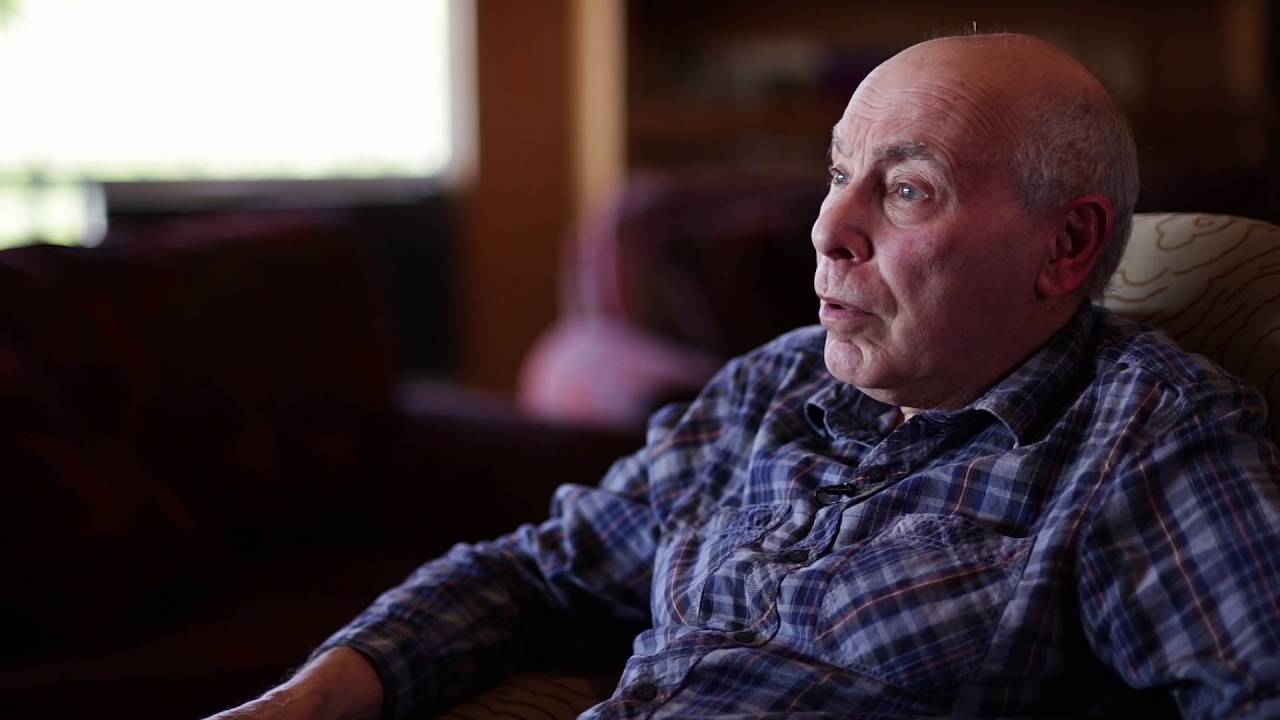
Lionel Corbett: Exploring the Psyche, Spirituality, and the Sacred

by | Jul 9, 2024 | 0 comments

Lionel Corbett Jungian Analyst

The Psychologist of the Sacred

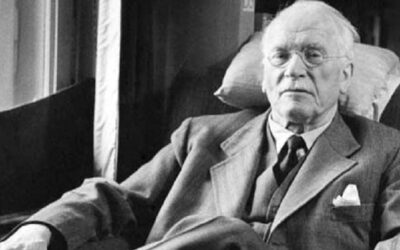
In a secular age, many people feel spiritually homeless. They cannot return to the dogmas of traditional religion, yet they cannot live in the cold emptiness of materialism. Lionel Corbett (b. 1945) is the Jungian analyst who speaks most directly to this condition. He argues that we do not need a priest or a church to experience the divine; the psyche itself is a “religious organ.”

Corbin’s work focuses on the Religious Function of the Psyche. He suggests that the “numinous” (the feeling of awe and sacredness) is a natural psychological event, not a supernatural one. By attending to our dreams, symptoms, and synchronicities, we can have a direct, personal encounter with the sacred—a “spirituality without religion.”

Biography & Timeline: Lionel Corbett

Born in England, Corbett trained as a psychiatrist before becoming a Jungian analyst. He moved to the United States and became a core faculty member at Pacifica Graduate Institute, where he has influenced a generation of depth psychologists. His background in medicine gives his work a grounded, clinical rigor, while his training in Jungian analysis allows him to explore the heights of spiritual experience.

Corbett is a bridge between the clinical and the mystical. He challenges the pathologizing tendency of modern psychiatry, arguing that many “symptoms” (like anxiety or depression) are actually the psyche’s attempt to break through the ego’s defenses and initiate a spiritual awakening.

Key Milestones in the Life of Lionel Corbett

Year Event / Publication
1945 Born in England.
1970s Trains in medicine and psychiatry; becomes a Jungian analyst.
1996 Publishes The Religious Function of the Psyche.
2011 Publishes The Sacred Cauldron: Psychotherapy as a Spiritual Practice.
2016 Publishes The Soul in Anguish: Psychotherapeutic Approaches to Suffering.

Major Concepts: The Numinous and the Personal God-Image

The Religious Function of the Psyche

Corbett argues that the psyche produces religious imagery (mandalas, gods, demons) just as naturally as the body produces blood cells. This is not a “defense mechanism” (as Freud thought) but a primary instinct.

The Insight: We don’t have to “believe” in God; we have to experience the God-image that the psyche presents to us. This shifts spirituality from faith (belief in something external) to gnosis (knowledge of something internal).

The Personal God-Image

Traditional religion offers a collective God-image (e.g., Yahweh, Jesus, Allah). Corbett suggests that in the process of individuation, we develop a personal God-image. This image evolves as we grow. A child’s God-image might be a stern father; an adult’s God-image might be a loving presence or a cosmic void.

The Conceptualization of Trauma: The Soul in Anguish

In The Soul in Anguish, Corbett addresses the problem of suffering. He rejects the idea that suffering is always “meaningful” or “God’s will.” Sometimes, suffering is just suffering. However, the response to suffering can be soulful.

He views trauma not just as a breakdown of the ego, but as an injury to the Self (the divine spark). Healing involves not just symptom reduction, but repairing the connection to the Self. Therapy becomes a “sacred cauldron” where the lead of trauma is transmuted into the gold of consciousness.

Legacy: Spirituality for the Modern Skeptic

Lionel Corbett provides a path for the “spiritual but not religious.” He validates the experiences of those who find the sacred in nature, art, or relationships rather than in church.

His legacy is the democratization of the divine. He teaches that the burning bush is not just in the Bible; it is in your dream from last night. The voice of God is not just in the scripture; it is in your intuition. He invites us to become the priests of our own inner temples.


Bibliography

  • Corbett, L. (1996). The Religious Function of the Psyche. Routledge.
  • Corbett, L. (2011). The Sacred Cauldron: Psychotherapy as a Spiritual Practice. Chiron Publications.
  • Corbett, L. (2015). The Soul in Anguish: Psychotherapeutic Approaches to Suffering. Chiron Publications.


Explore More on Psychology and Religion

Explore the Other Articles by Categories on Our Blog 

What are the most common images in dreams?

What are the most common images in dreams?

Dreams keep their place in therapy because they are the purest projective material available. Nobody wrote them, nobody edited them, and the person who produced them was not trying to make an impression. In a way, dreams are our own personal mythology. Patients bring...

The Psychoanalytic Theories of Melanie Klein

The Psychoanalytic Theories of Melanie Klein

Exploring the Earliest Stages of Psychic Life "The early ego lacks cohesion, and a tendency towards integration alternates with a tendency towards disintegration, a falling into bits... The result is an acute feeling of insecurity." 1. Who Was Melanie Klein Melanie...

Mircea Eliade’s Insights into the Sacred

Mircea Eliade’s Insights into the Sacred

Mircea Eliade's Insights into the Sacred “A religious symbol conveys its message even if it is no longer consciously understood in every part. For a symbol speaks to the whole human being and not only to the intelligence.” ― Mircea Eliade, The Sacred and the Profane:...

Why are Trauma Patients Afraid of Space

Why are Trauma Patients Afraid of Space

Our phobias are often metaphors for our most unconscious parts of self. In the 2013 movie Gravity, Sandra Bullock plays an astronaut marooned in space. At every moment she is seconds from spinning into the hopeless oblivion of deep space. Bullock’s character must use...

Richard Tarnas: Cultural History Through Astrology

Richard Tarnas: Cultural History Through Astrology

The Historian of the Western Soul In 1991, Richard Tarnas published a book that became standard reading in universities worldwide: The Passion of the Western Mind. It was a brilliant, sweeping history of Western thought from Plato to Hegel to Jung. But in 2006, he...

3 Ways Your Shadow Shows Up as Animals in Myths and Dreams

3 Ways Your Shadow Shows Up as Animals in Myths and Dreams

Carl Jung thought that dreams were the way that we use the past to try and conceptualize what the future will be like. When we are on the edge of a big often unavoidable change in our life we begin to dig into our unconscious mind to try to predict the future. Our...

The Neuroscience and Phenomenology of Brainspotting

The Neuroscience and Phenomenology of Brainspotting

 An In-Depth Exploration of What Brainspotting Does in the Brain Brainspotting is a relatively new psychotherapy approach that combines elements of psychodynamic, somatic, and mindfulness-based therapies to facilitate deep emotional healing and trauma resolution [1]....

Why We Recommend Hardy Nutritionals: A Clinical Perspective on the Research That Changed How We Think About Treatment Resistance

Why We Recommend Hardy Nutritionals: A Clinical Perspective on the Research That Changed How We Think About Treatment Resistance

Why Taproot Therapy Collective recommends Hardy Nutritionals Daily Essential Nutrients for treatment-resistant mood disorders, ADHD, and emotional dysregulation. Discovered not through advertising but through patients whose bipolar disorder and other conditions finally responded. Over 40 peer-reviewed studies support the NutraTek chelation technology. Use code TAPROOT at gethardy.com for 15% off for life.

Who Is Victor Lamme?

Who Is Victor Lamme?

The Neuroscientist Who Found Consciousness in the Feedback Loops of the Brain When you look at a face, what happens in your brain? The answer turns out to be surprisingly complex. First, visual information streams forward from your eyes through your visual cortex,...

What the Ancient Mysteries Knew About Healing Trauma

What the Ancient Mysteries Knew About Healing Trauma

The Eleusinian, Mithraic, and Dionysian mysteries weren’t religious observances. They were orchestrated psychodramas designed to shatter the ego and rebuild the self. Modern trauma therapy has inadvertently reconstructed their methods.

Naomi Quenk’s Work on the Inferior Function

Naomi Quenk’s Work on the Inferior Function

You've had the experience. You're usually calm, but suddenly you're screaming at your partner over dishes. You're normally logical, but you're sobbing uncontrollably about something that "shouldn't" matter. You're typically easygoing, but you've become rigidly fixated...

0 Comments

Submit a Comment

Your email address will not be published. Required fields are marked *