
The Cartographer of the Deep Psyche
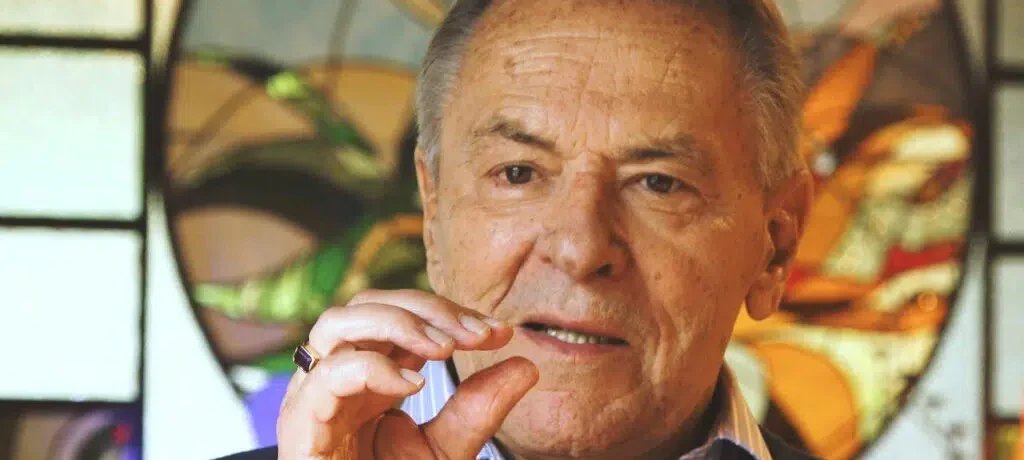
In the mid-20th century, psychiatry was dominated by two rigid maps: the psychoanalytic map, which traced all neurosis back to childhood, and the behaviorist map, which reduced human experience to stimulus and response. Stanislav Grof (b. 1931) shattered these boundaries. He discovered that the human psyche does not end at the skin, nor does it begin at birth.
Grof is the principal architect of Transpersonal Psychology. Through decades of clinical research with LSD and later Holotropic Breathwork, he mapped a territory of the mind that Freud had dismissed as “oceanic feeling.” Grof demonstrated that non-ordinary states of consciousness are not psychotic breaks, but potential evolutionary mechanisms. His work challenges the biomedical model by suggesting that healing requires a descent into the perinatal and transpersonal realms that conventional therapy fears to tread.
From Prague to Esalen: A Life in Consciousness
Born in Prague, Czechoslovakia, Grof began as a strict materialist. His worldview was dismantled in 1956 when he volunteered for an experiment with LSD-25 at the Psychiatric Research Institute in Prague. Under the strobe light of the psychedelic experience, he witnessed the cosmic architecture of his own consciousness.
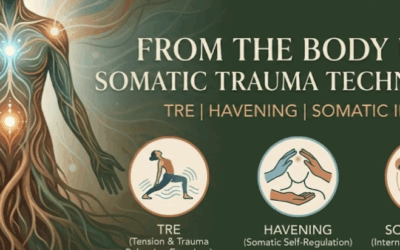
He eventually moved to the United States, becoming the Chief of Psychiatric Research at the Maryland Psychiatric Research Center. There, he conducted the last government-approved psychedelic therapy sessions with terminal cancer patients. When the political tide turned against psychedelics, Grof did not stop; he pivoted. With his wife Christina, he developed Holotropic Breathwork, a somatic technique to induce psychedelic states without drugs, proving that the mechanism of transcendence is endogenous to the human body.
Key Milestones in the Life of Stanislav Grof
| Year | Event / Publication |
| 1931 | Born in Prague, Czechoslovakia. |
| 1957 | Completes medical studies and begins research with LSD at the Psychiatric Research Institute in Prague. |
| 1967 | Moves to the United States; accepts a fellowship at Johns Hopkins University. |
| 1975 | Publishes Realms of the Human Unconscious, introducing the Perinatal Matrices. |
| 1978 | Co-founds the International Transpersonal Association (ITA). |
| 1985 | Publishes Beyond the Brain, challenging the materialistic paradigm of psychiatry. |
| 2007 | Featured in the documentary Hofmann’s Potion. |
The Basic Perinatal Matrices (BPM)
Grof’s most enduring theoretical contribution is the discovery that the trauma of biological birth forms a template for all future psychological struggles. He identified four distinct experiential patterns, or Basic Perinatal Matrices (BPM).
BPM I: The Amniotic Universe
This is the state of the fetus before labor begins. It is an experience of cosmic unity, boundarylessness, and oceanic bliss. Psychologically, this is the root of mystical union and the “Golden Age” mythology.
Distortion: If the womb was toxic, this matrix manifests as paranoid ideation or a feeling of being poisoned by the environment.
BPM II: Cosmic Engulfment (No Exit)
Labor begins. The uterus contracts, but the cervix is not yet open. The fetus is crushed with no way out.
Psychological Correlate: This is the archetype of Hell. In adult life, it manifests as severe depression, claustrophobia, and the feeling of being trapped in a meaningless situation with no escape.
BPM III: The Death-Rebirth Struggle
The cervix opens, and the fetus is propelled through the birth canal. There is crushing pressure, suffocation, and contact with biological fluids.
Psychological Correlate: This is the “Volcanic” stage. It is associated with aggression, sadomasochism, and high-energy states. It is the archetype of the Warrior’s struggle or the Purgatorial fire.
BPM IV: The Death-Rebirth Experience
Emergence. The tension is released, and the child is born.
Psychological Correlate: This is the moment of liberation and spiritual rebirth. It is often experienced as a blinding white light or a sense of salvation.
The Conceptualization of Trauma: COEX Systems
Grof revolutionized trauma theory with his concept of COEX Systems (Systems of Condensed Experience). He observed that the psyche does not store memories randomly; it clusters them emotionally.
A COEX system is a “constellation” of memories from different times in a person’s life (infancy, childhood, adulthood) that share the same emotional charge and physical sensation. For example, a “Suffocation COEX” might link a near-drowning at age 7, a panic attack at age 30, and the biological memory of the birth canal (BPM II/III).
Clinical Implication: Conventional talk therapy often fails because it only addresses the biographical layer (the panic attack at age 30). Grof argued that deep healing requires a “transpersonal” approach—such as somatic processing or breathwork—to discharge the energy held in the deeper, perinatal layers of the COEX system.
Holotropic Breathwork and the Inner Healer
Grof posited the existence of an “Inner Healer”—an innate intelligence in the psyche that knows how to heal itself if given the chance. Holotropic Breathwork (accelerated breathing + evocative music) is designed to lower the ego’s defenses and allow this Inner Healer to select the material that needs processing.
This aligns with the Jungian concept of Active Imagination, but enacted through the body. The “Holotropic” state (moving toward wholeness) allows the patient to access the pre-verbal and archetypal resources necessary to integrate fragmented trauma.
Legacy: The Cosmic Game
Stanislav Grof’s work bridges the gap between the shamanic hut and the psychiatric ward. He validated the spiritual experiences of millions, framing them not as madness, but as “Spiritual Emergencies”—crises of transformation that require support, not suppression.
He leaves us with the vision of the Cosmic Game: the idea that consciousness is playing hide-and-seek with itself. Trauma is the forgetting of our divine nature; healing is the remembering.
Further Reading & Resources
- Grof Transpersonal Training: Official Holotropic Breathwork Information.
- MAPS (Multidisciplinary Association for Psychedelic Studies): Psychology of the Future (Grof).
- California Institute of Integral Studies (CIIS): Center for Transpersonal Studies.












0 Comments