

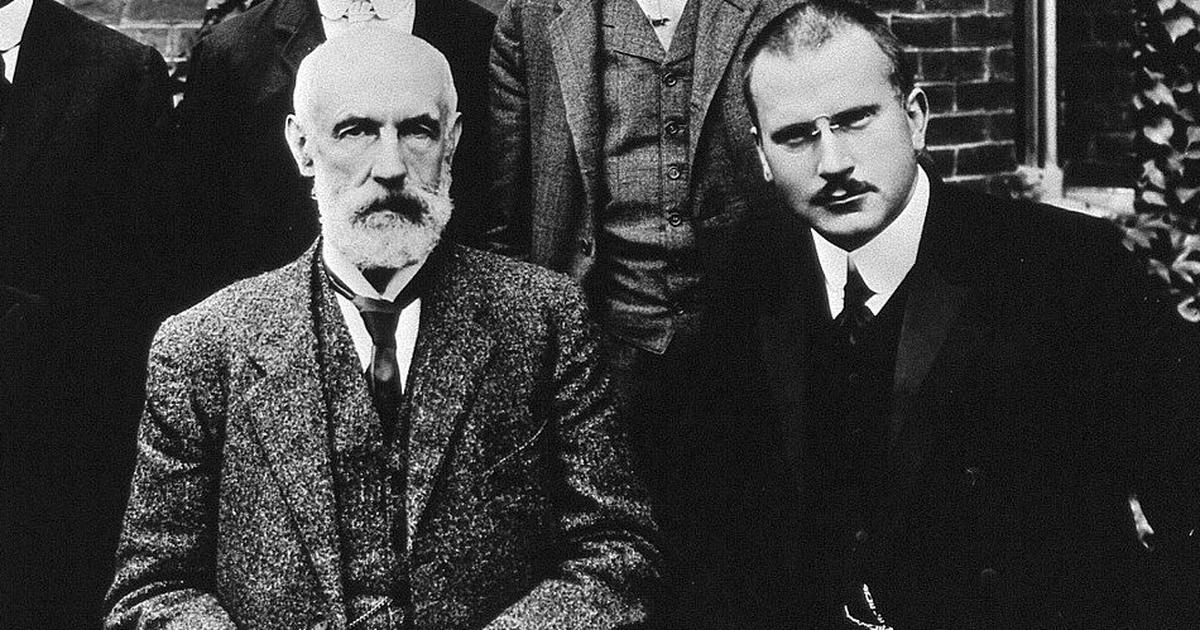
🏛️ The Great Divide: When Giants Collided
The relationship between Sigmund Freud and Carl Jung remains one of the most foundational and dramatic ruptures in modern intellectual history. It was a clash of titans that went far beyond a personal squabble, creating a fundamental schism in the young science of psychology that continues to define its different branches today. What began as a passionate friendship between the established father of psychoanalysis and his chosen heir descended into bitter acrimony by 1913. This split was not just a personal tragedy for the two men; it was a theoretical explosion that sent the study of the mind hurtling in two distinct directions. Their conflict, centered on the very nature of the human soul, sex, and the hidden world of the unconscious, shaped the future of psychotherapy for the next century.
✨ The Golden Years: A Fated Friendship
When Carl Jung, a 31-year-old rising star from the prestigious Burghölzli clinic in Zurich, traveled to Vienna in March 1907, he was already a great admirer of Sigmund Freud. He came to meet the man whose book, The Interpretation of Dreams, had confirmed his own clinical observations. The meeting was electric. They famously began talking and did not stop for thirteen consecutive hours. Freud, then 51, was the embattled and brilliant founder of a controversial movement. He was surrounded by disciples in Vienna but longed for a successor, a figure with the intellect and stature to carry his “new science” into the wider world. In Jung, a tall, charismatic, and non-Jewish Swiss doctor, Freud saw his “Joshua,” the man who would lead psychoanalysis out of its perceived “Jewish” confines and into the promised land of international scientific acceptance.
Their correspondence from this period burns with intense mutual admiration. Freud wrote to Jung calling him “my heir and crown prince.” Jung, for his part, found in Freud the powerful father figure he had always lacked, expressing his “unconditional veneration.” They were an intellectual super-couple, and their bond seemed unbreakable. In 1909, they traveled together, along with Freud’s loyal follower Sándor Ferenczi, to America to deliver a landmark series of lectures at Clark University in Massachusetts. This trip was the high-water mark of their relationship, a moment of shared triumph where it seemed psychoanalysis, under their joint leadership, was poised to conquer the world. But even on this trip, the seeds of their future discord were being sown.
💥 The Seeds of Discord: A Clash of Worldviews
The partnership, which seemed so destined, was built on a foundation of critical misunderstandings and unresolvable theoretical differences. These disagreements were not minor; they struck at the very heart of what it means to be human.
The Libido: A Sexual or a General Force?
The most famous and irreconcilable disagreement was over the nature of libido. For Freud, this was the bedrock of his entire theory. Based on his clinical work with hysterical patients in Vienna, he had concluded that libido was fundamentally a sexual energy. He believed that repressed sexuality, often stemming from the infantile Oedipus Complex, was the primary engine of all human behavior and the root of all neurosis. Art, culture, ambition, and even religion were, in his view, simply “sublimations” of this basic, primitive sexual drive. He famously begged Jung to never abandon the sexual theory, calling it a “bulwark” against what he most feared.
Jung, however, could not accept this. His own clinical work at the Burghölzli was with psychotic patients, whose fantasies were not just personally sexual but were filled with grand, mythological, and religious imagery. He found Freud’s sexual theory far too narrow and restrictive to explain the vastness of the human psyche. Jung proposed a radical redefinition. He argued that libido was not just sexual energy but a broad, undifferentiated “life force,” a general psychic energy that fueled all human activity, including creativity, intellectual pursuits, and spirituality. For Jung, sexuality was just one expression of this larger life force, not its sole source. This was not a minor tweak; it was a direct challenge to the central pillar of Freud’s entire system.
A Tale of Two Unconsciouses
This brings us to the core of their divide. Both men were united in their belief that the unconscious mind was the single most important discovery in psychology. They both agreed it was a powerful, hidden realm that governed conscious life and that dreams were the “royal road” to understanding it. The tragedy of their split is that they discovered the same continent but drew completely different maps of it, disagreeing profoundly on its contents and its purpose.
For Sigmund Freud, the unconscious was primarily a dark repository for repressed material. It was like a locked cellar beneath the conscious mind. Its contents were personal, consisting of all the unacceptable desires, traumatic memories, and animalistic instincts of the “id” that the conscious mind, or “ego,” could not bear to face. The mechanism that filled this cellar was repression. Neurosis, in Freud’s model, was the symptom of this repressed material leaking out. The goal of Freudian psychoanalysis was therefore a kind of archaeology: to excavate this buried personal past, make the unconscious conscious, and allow the rational ego to gain control. His famous maxim was, “Where id was, there ego shall be.” The unconscious was a problem to be solved, a primitive enemy to be tamed.
Carl Jung accepted Freud’s model, but only as the first floor. He called this layer the “personal unconscious” and agreed it contained an individual’s repressed experiences, which he famously grouped into “complexes.” But Jung’s revolutionary step was to propose a second, deeper layer that lay beneath it: the collective unconscious. This layer, he argued, was not personal at all. It was a “psychic inheritance,” a vast, shared database of ancestral memories and experiences common to all human beings, regardless of their culture or personal history.
He believed he saw evidence for this everywhere: in the recurring motifs found in world mythology, in the universal symbols of religion, and in the dreams of his patients. This collective unconscious, he said, was structured by archetypes. These are not memories themselves but are universal, primordial patterns or “instincts of the imagination,” such as the Shadow (our dark side), the Anima and Animus (the inner feminine and masculine), the Wise Old Man, and the Great Mother. For Jung, the unconscious was not a dark cellar of pathology; it was also a vast library of ancestral wisdom, a creative and balancing force. The goal of Jungian therapy was not just to excavate personal repressions but to engage in a lifelong dialogue with this collective layer. This process, which he called individuation, was about integrating the conscious and unconscious to become a whole, authentic self.
Spirituality and the Occult
This fundamental difference in their models of the unconscious led directly to their clash over religion. Freud, a staunch atheist and scientific materialist, famously dismissed religion in works like The Future of an Illusion as a collective neurosis, a form of wish-fulfillment.
Jung, the son of a Swiss pastor and a man fascinated by Gnosticism, alchemy, and world spirituality, saw things very differently. He believed the archetypes of the collective unconscious were the source of all religious and mystical experiences. For Jung, a human being’s search for meaning and a connection to the transcendent was a fundamental psychological need, not a symptom to be cured. When Freud dismissed Jung’s interest in parapsychology, it was a personal and theoretical insult. A famous incident in 1909 crystallized this: while arguing about the topic, Jung felt a burning sensation in his chest and a loud crack suddenly emanated from Freud’s bookcase. Jung “predicted” it would happen again, and it did. Freud, the rationalist, was deeply shaken and terrified, seeing it as a sign of Jung’s dangerous mysticism.
✉️ The Final Break: A Friendship in Ruins
The father-son dynamic that had once been so productive had turned toxic. Jung felt suffocated by Freud’s dogmatism and his insistence that all followers accept his sexual theory without question. Freud saw Jung’s theoretical departures as a personal betrayal. The tension culminated in a series of increasingly bitter letters. In January 1913, Freud wrote the final, cutting dismissal, essentially accusing Jung of being a neurotic who lacked any insight into his own illness. He concluded, “Accordingly, I propose that we abandon our personal relations entirely.” Their final, cold meeting at the Fourth International Psychoanalytical Congress in Munich in 1913 was a formality. Jung resigned from his post as president of the association, and the split was complete. They never saw or spoke to each other again.
The aftermath was brutal. Freud, to protect his movement, wrote his 1914 essay On the History of the Psycho-Analytic Movement, a polemic that officially excommunicated Jung and another dissenter, Alfred Adler, casting them as heretics. For Jung, the break was personally and professionally devastating. He was cut off from the only intellectual community he had known, and he fell into a profound period of psychological crisis that lasted from 1913 to about 1918. He called this his “confrontation with the unconscious.” During this time, he deliberately dove into his own dreams and fantasies, a terrifying journey he secretly documented in his illustrated manuscript, The Red Book: Liber Novus, which was not published until 2009. This “creative illness” was not a breakdown but a breakthrough. It was in this crucible of personal suffering that Jung’s entire mature system of thought, including individuation and the archetypes, was truly born.
🏆 The Hidden Influence: Who Really Won?
In the century since, a quiet paradox has emerged. While Sigmund Freud remains by far the most famous name, his direct clinical influence has waned. Yet the ideas of the “losers,” Jung and Adler, have become so deeply embedded in our culture that we often use them without knowing their origin. Jung’s concepts of introversion and extraversion are now the foundation of modern personality psychology, most famously captured in the Myers-Briggs Type Indicator (MBTI). The entire self-help and personal growth industry, with its focus on “shadow work,” “finding your purpose,” and “integrating your masculine and feminine sides,” is almost purely Jungian.
Similarly, Alfred Adler, who wisely avoided the feud, gave us the ubiquitous term “inferiority complex” and the popular theories about birth order. His emphasis on “community feeling” and social interest became the basis for modern school counseling and community mental health. In many ways, Freud won the battle for fame, but Jung and Adler won the war for cultural influence.
Today, the rigid boundaries that defined this old feud are largely dissolved. Most modern therapists no longer belong to strict Freudian or Jungian camps. Instead, they practice an integrative psychodynamic therapy, which honors the insights of all these pioneers. They recognize that Freud was right about the power of early childhood and defense mechanisms, that Jung was right about the human need for meaning and wholeness, and that Adler was right about our fundamental nature as social beings. The split, though painful, ultimately enriched psychology. It ensured that the study of the human mind would never be the territory of a single, dogmatic theory, but rather a rich, complex, and evolving landscape.
📚 A Deeper Dive: Further Reading on Freud, Jung, and The Great Split
The division between Sigmund Freud and Carl Jung is one of the most documented and analyzed events in the history of psychology. For those wishing to move beyond summaries and engage directly with the minds of these two pioneers, as well as the historians who have chronicled their break, the following resources provide a comprehensive starting point.
Primary Sources: The Works of Sigmund Freud
To understand Freud’s position, it is essential to read his own foundational texts. These works establish the core theories that Jung first embraced and later challenged.
The Interpretation of Dreams (1900) This is arguably Freud’s most important work, where he introduces the concept of the unconscious, dream analysis, and the Oedipus complex. It is the book that captivated Jung and forms the bedrock of all psychoanalysis. This public domain version is a great place to start.
Introductory Lectures on Psycho-Analysis (1917) Delivered during World War I, this collection provides a broad overview of his theories on dreams, parapraxes (Freudian slips), and the theory of neuroses. It is Freud in his own words, written for a general audience.
On the History of the Psycho-Analytic Movement (1914) This is Freud’s “official” version of the split. Published shortly after the break, it is a polemical and deeply personal essay where Freud formally excommunicates both Jung and Alfred Adler, defends his sexual theory, and frames their departures as a betrayal of the cause.
The Future of an Illusion (1927) To grasp the profound gap between Freud and Jung on spirituality, this book is essential. Here, Freud, a staunch atheist, systematically dismantles religion, arguing it is a collective neurosis and a form of wish-fulfillment.
Civilization and Its Discontents (1930) This late-career masterpiece explores the fundamental conflict between the individual’s instinctual desires (libido and the “death drive”) and the demands of society. It offers a powerful, pessimistic view of human nature that contrasts sharply with Jung’s more optimistic vision.
Primary Sources: The Works of Carl Jung
Jung’s writings can be more complex and sprawling than Freud’s, but they are essential for understanding his side of the story and the unique system he created.
Symbols of Transformation (Originally Psychology of the Unconscious, 1912) This is the book that broke their friendship. In it, Jung analyzes the fantasies of a young woman and reinterprets libido not as purely sexual, but as a general psychic energy. He fills the text with mythological parallels, a direct move toward what would become the collective unconscious. Freud saw it as a catastrophic departure from science.
The Archetypes and the Collective Unconscious (Collected Works, Vol. 9i) This is the core text for understanding Jung’s most famous theory. It lays out his ideas on the archetypes, such as the Shadow, the Anima and Animus, and the Self, and explains his concept of a shared, inherited psychic structure.
Memories, Dreams, Reflections (1961) This is Jung’s autobiography, dictated at the end of his life. It is a deeply personal and subjective account of his own inner life, his “confrontation with the unconscious” after the split with Freud, and his side of their relationship. It is perhaps the single best introduction to Jung the man.
The Red Book: Liber Novus (Published Posthumously, 2009) For decades, this was Jung’s secret book. It is a large, illustrated manuscript chronicling his terrifying, visionary journey into his own unconscious during the years immediately following his break with Freud. It is the raw, primary source material from which his entire later system of thought was born.
Psychological Types (1921) This major work is Jung’s attempt to classify different attitudes and functions of consciousness. It is here that he introduces his famous concepts of introversion and extraversion, which would go on to form the basis for the Myers-Briggs Type Indicator and much of modern personality theory.
The Relationship and The Split
These works focus directly on the correspondence, context, and consequences of their famous breakup.
The Freud/Jung Letters: The Correspondence Between Sigmund Freud and C. G. Jung (1974) This is the single most important document of their relationship. This volume contains every known letter and postcard exchanged between the two men, from the first fawning introductions in 1906 to the final, ice-cold dismissals in 1914. You can watch their friendship blossom, deepen, and then tragically disintegrate in real-time.
A Most Dangerous Method: The Story of Jung, Freud, and Sabina Spielrein by John Kerr (1993) This is the definitive historical account of the split. Kerr’s masterful book re-examines the entire relationship through the discovery of letters between Jung and Sabina Spielrein, a brilliant woman who was first Jung’s patient, then his student (and alleged lover), and later a psychoanalyst in her own right. Kerr argues she was a crucial, and often overlooked, third member of the triangle.
Freud: A Life for Our Time by Peter Gay (1988) This is widely considered the standard, most comprehensive biography of Sigmund Freud. Gay, a respected historian, masterfully situates Freud within his cultural and historical context, providing a detailed and balanced account of his life, his work, and his complex relationships, including the crucial one with Jung.
Jung: A Biography by Deirdre Bair (2003) This exhaustive and meticulously researched biography provides the most complete picture of Carl Jung’s life, from his childhood in Switzerland to his post-Freud crisis and his controversial activities during World War II. Bair provides a critical, unvarnished look at the man behind the theories.
Modern Analysis and Legacy
These books help place the feud in a wider context and explore the lasting influence of both men on contemporary thought.
The Hero with a Thousand Faces by Joseph Campbell (1949) While not directly about the split, this book is the most famous example of Jung’s ideas in action. Campbell, a mythologist, takes Jung’s concept of the archetype and applies it to world mythology, outlining the universal “monomyth” of the hero’s journey. It demonstrates the profound cultural legacy of Jung’s work.
Jung: A Very Short Introduction by Anthony Stevens (2001) For a clear, concise, and highly readable overview of Jung’s entire system of thought, this book is an excellent choice. It explains complex topics like the collective unconscious, archetypes, and individuation in simple, accessible terms.
Why Freud Was Wrong: Sin, Science and Psychoanalysis by Richard Webster (1995) For a modern, critical perspective, this book offers a powerful critique of Freud’s work. Webster argues that psychoanalysis is not a science but a pseudo-science, a complex mythology of the mind. Reading critiques like this is essential for a balanced understanding of Freud’s true legacy.








0 Comments